Introduction
Poultry products such as chicken, duck, and turkey are highly sensitive to temperature changes after slaughter. Without rapid cooling and stable cold storage, bacterial growth accelerates quickly, leading to spoilage, dehydration, discoloration, and reduced shelf life.
In modern poultry processing plants, cold storage is no longer just a storage space. It is part of the entire production workflow — from carcass chilling and processing to freezing, packaging, and distribution.
For fresh poultry distribution, temperature stability determines shelf life and food safety. For frozen poultry export, freezing speed and storage conditions directly affect meat texture, product quality, and transport reliability.
As poultry production scales up globally, processing facilities increasingly rely on integrated cold chain systems that combine:
- Poultry chilling rooms
- Blast freezing systems
- Frozen storage warehouses
- Refrigeration control systems
This guide explains how poultry cold storage works, recommended temperature ranges, cold room design considerations, and the refrigeration equipment commonly used in poultry processing facilities.
Why Poultry Cold Storage Matters
Food Safety and Bacterial Control
Fresh poultry carries residual body heat immediately after slaughter, usually close to 38°C (100°F). If the carcass temperature is not reduced quickly, bacteria can multiply rapidly during processing and storage.
Common contamination risks in poultry processing include:
- Salmonella
- Listeria
- Campylobacter
Proper temperature control slows bacterial activity and helps maintain food safety throughout processing, transportation, and retail distribution.
Even short interruptions in the cold chain can increase product risk, especially during loading, packaging, or temporary storage.
Shelf Life and Product Quality
Temperature management directly affects how long poultry products remain marketable.
Poor cooling conditions can cause:
- Surface dehydration
- Weight loss
- Meat discoloration
- Texture damage
- Faster spoilage
Stable cold storage helps processors reduce waste while maintaining consistent product quality for wholesalers, supermarkets, and export buyers.
Reducing Operational Losses
In large poultry processing plants, small temperature fluctuations can lead to significant financial losses over time.
Well-designed poultry cold rooms help reduce:
- Product rejection during export inspection
- Inventory waste
- Frost buildup
- Excessive compressor workload
- Energy consumption
For facilities handling high daily production volumes, efficient refrigeration design becomes both a food safety requirement and an operational cost factor.
Poultry Processing Workflow & Integrated Cold Storage System
In modern poultry plants, cold storage functions are embedded into each production stage. The system is designed around process flow rather than individual rooms.
Slaughtering & Initial Cooling Zone
Fresh carcasses enter the system at approximately 38°C.
Key conditions:
- High heat load
- Rapid bacterial growth risk
- Immediate cooling required
Typical systems: - Water chilling or air pre-cooling
- High-capacity heat removal design
- Short residence time control
This stage defines the required capacity of the entire refrigeration system.
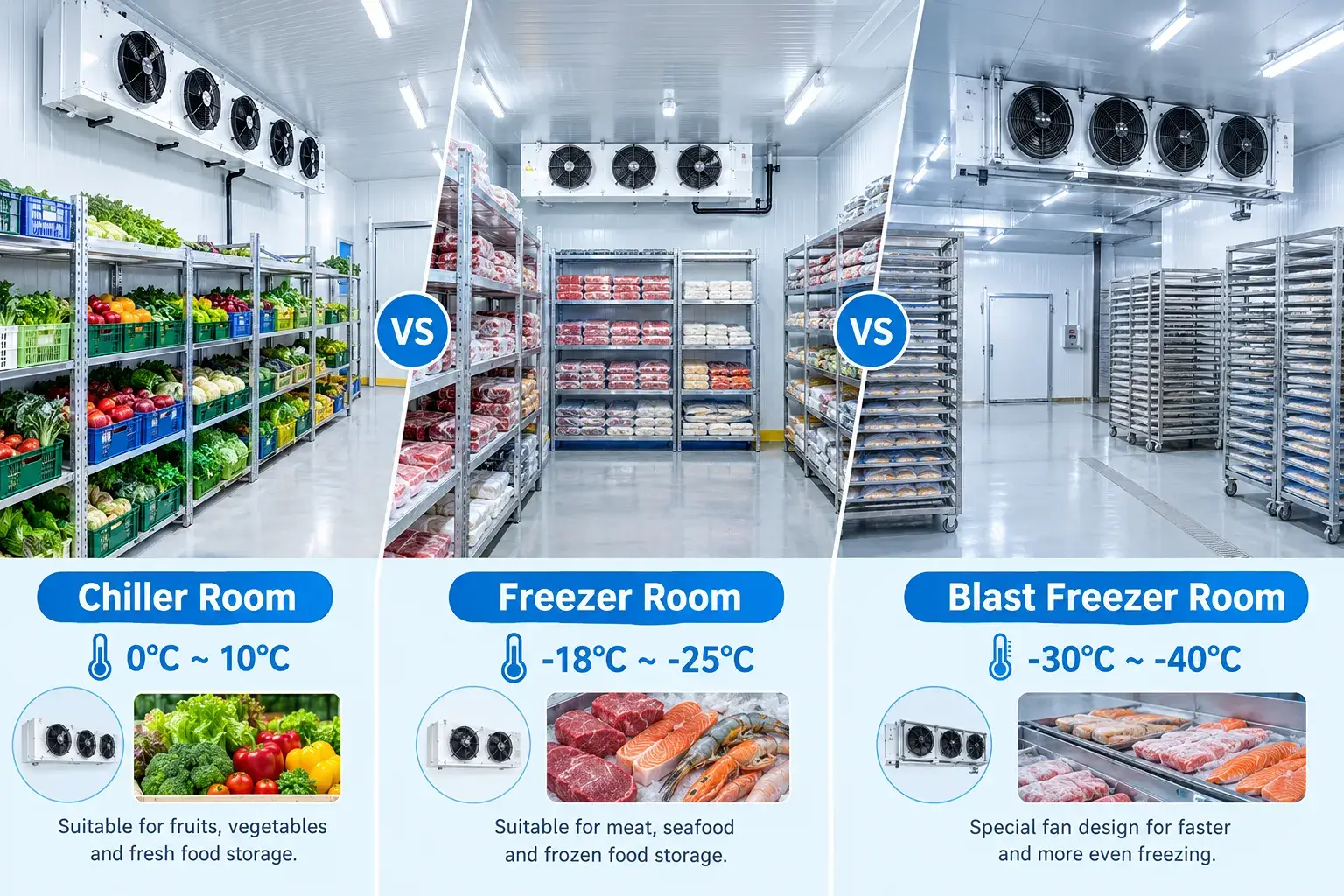
Poultry Chilling Room (0°C to 2°C)
The chilling room stabilizes product temperature after initial cooling.
Key design features:
- High air circulation
- Uniform temperature distribution
- Controlled humidity
Function: - Transition zone between slaughtering and processing
- Short-term temperature stabilization
Cutting & Processing Area (Controlled Temperature Space)
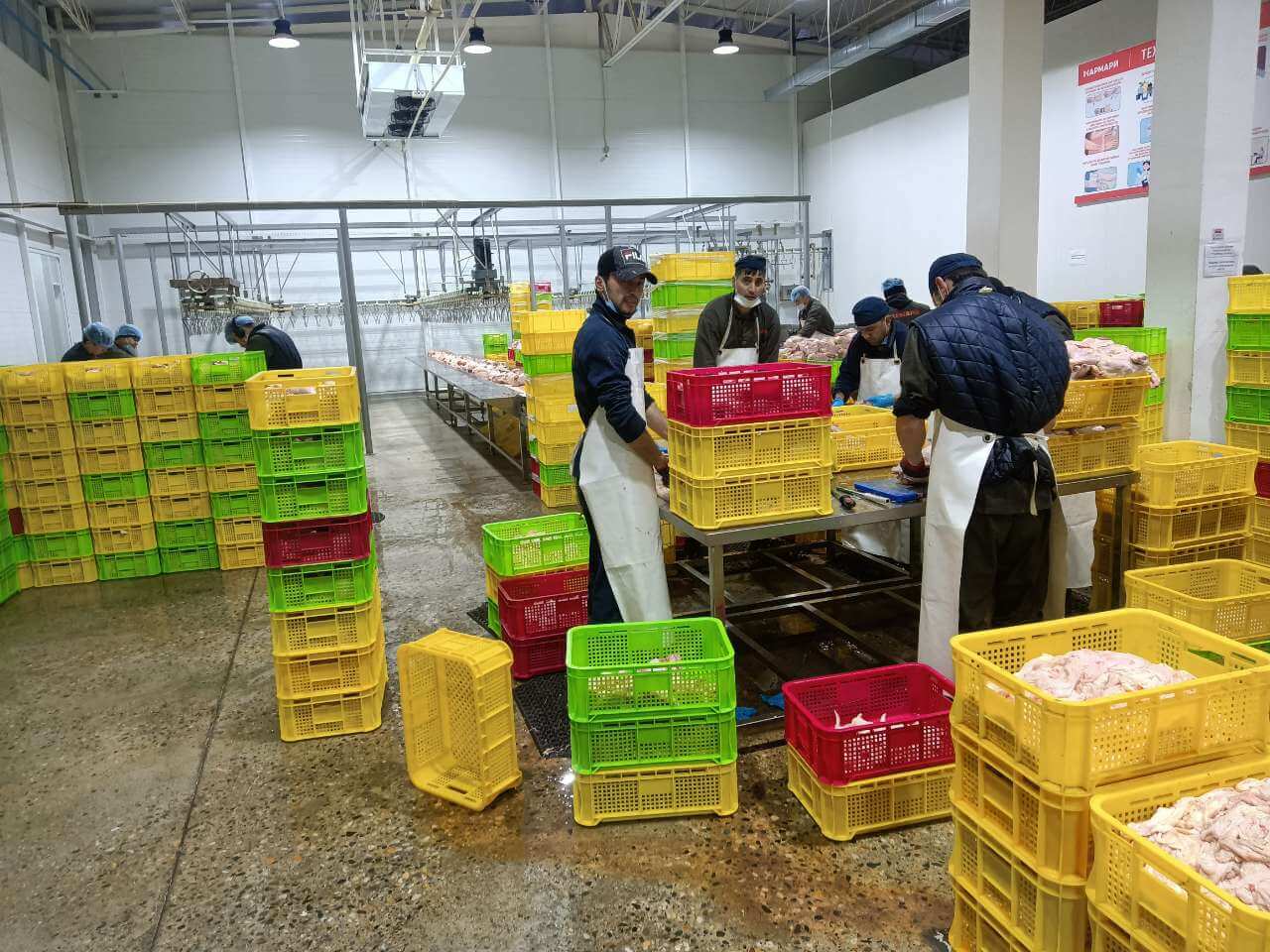
After chilling, poultry enters processing lines.
Typical design:
- Ambient temperature around 10–12°C
- Controlled airflow for operators and product
- Strict hygiene zoning
This stage often carries higher contamination risk than storage rooms if poorly designed.
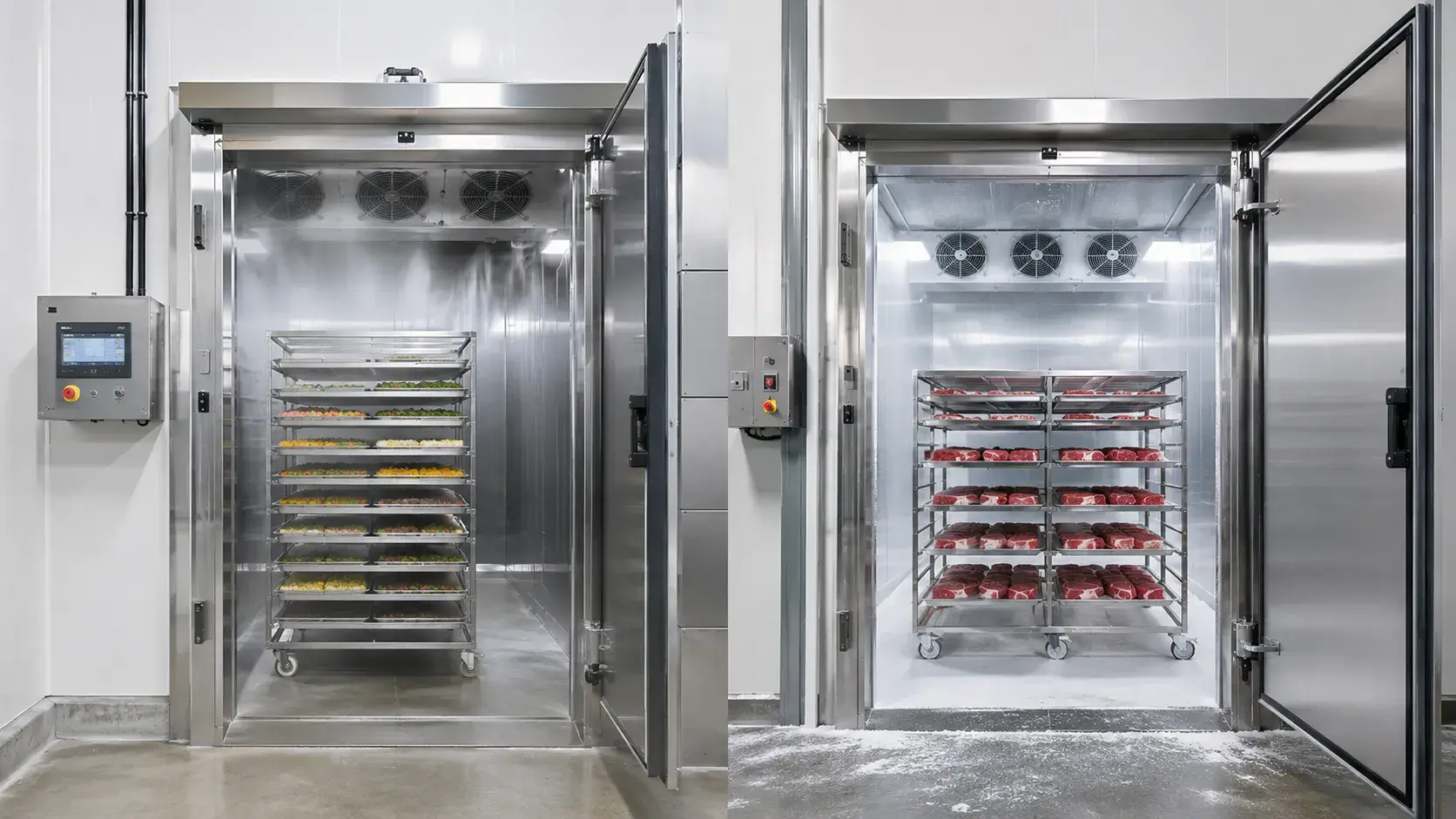
Blast Freezing System (-35°C to -40°C)
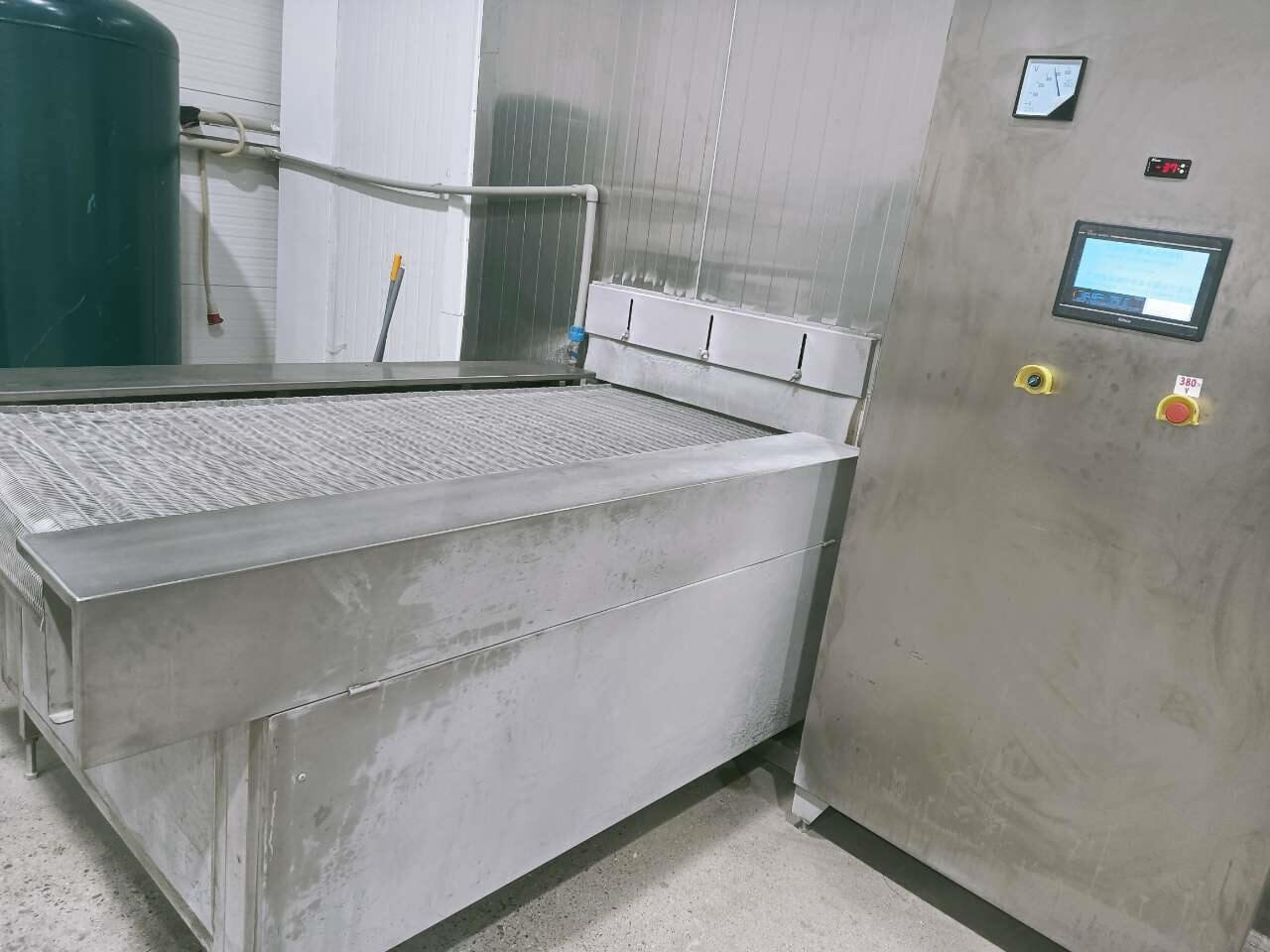
Blast freezing is a rapid freezing process, not a storage function.
Purpose:
- Quickly pass the critical freezing zone
- Control ice crystal formation
Benefits: - Preserves meat texture
- Reduces drip loss
- Improves thawing quality
- Maintains export consistency
System requirements: - High air velocity evaporators
- Strong refrigeration capacity
- Controlled defrost strategy
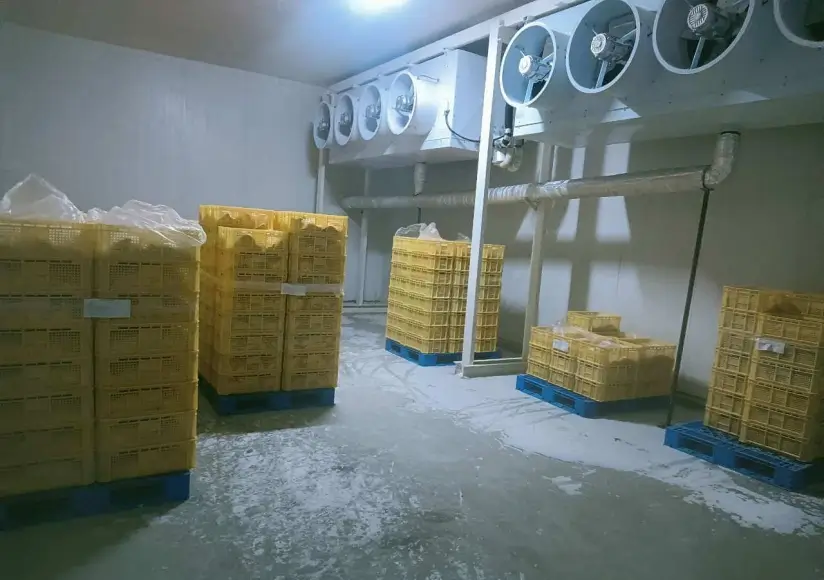
Frozen Storage Room (-18°C or Below)
This stage is used for long-term preservation.
Key priorities:
- Temperature stability
- Low infiltration during loading
- Uniform air distribution
Common issues: - Door opening losses
- Poor stacking airflow blockage
- Temperature fluctuations in loading zones
Distribution Cold Storage Warehouse (Multi-Zone System)
Large facilities combine multiple functional zones:
- Chilled buffer area
- Frozen storage zone
- Loading and staging area
- Dispatch zone
At this stage, the system focus shifts from cooling to logistics efficiency: - Faster loading
- Reduced temperature recovery time
- Optimized traffic flow
Poultry Cold Storage Temperature and Shelf Life
Proper temperature control is the foundation of poultry preservation.
Recommended Poultry Storage Conditions
| Poultry Product | Storage Temperature | Typical Shelf Life | Storage Type |
|---|---|---|---|
| Whole fresh chicken | 0°C to 2°C | 3–5 days | Chilled storage |
| Chicken parts | 0°C to 2°C | 2–4 days | Chilled storage |
| Vacuum packed poultry | -1°C to 0°C | 7–10 days | Super chilled storage |
| Frozen whole chicken | ≤ -18°C | 8–12 months | Frozen storage |
| Frozen poultry cuts | ≤ -18°C | 6–10 months | Frozen storage |
| Processed poultry products | ≤ -18°C | 4–8 months | Frozen storage |
Actual storage duration may vary depending on:
- Packaging quality
- Hygiene standards
- Temperature stability
- Product handling conditions
- Transportation management
For export-oriented poultry operations, maintaining stable temperature throughout the cold chain is critical for preserving product quality.
Poultry Cold Room Design Considerations
Cold room design affects both product quality and operating efficiency.
Layout Planning
A typical poultry processing facility may include:
- Receiving area
- Pre-cooling section
- Chilling room
- Cutting and deboning area
- Blast freezer
- Frozen storage room
- Packaging area
Proper layout planning helps: - Improve workflow efficiency
- Reduce cross-contamination risks
- Minimize unnecessary product movement
Airflow Design
Air circulation is one of the most overlooked parts of poultry cold storage design.
Poor airflow can cause:
- Uneven freezing
- Temperature hot spots
- Product dehydration
- Frost accumulation
Evaporator placement, aisle spacing, and stacking height all affect cooling performance.
In high-capacity poultry warehouses, airflow balance becomes especially important for maintaining stable temperatures throughout the room.
Hygiene and Food Safety Design
Poultry processing environments require strict hygiene control.
Important design considerations include:
- Easy-to-clean wall surfaces
- Proper drainage systems
- Separation of raw and finished products
- Moisture-resistant insulation materials
Floor slope and drainage layout are particularly important in poultry processing areas where frequent cleaning is required.
Insulation and Energy Efficiency
Modern poultry cold rooms commonly use:
- PU insulation panels
- Airtight cold room doors
- Energy-efficient refrigeration systems
Good insulation helps reduce: - Temperature fluctuations
- Compressor operating time
- Long-term electricity costs
In tropical regions such as Southeast Asia, high ambient temperatures increase refrigeration load significantly, making insulation quality especially important for operating efficiency.
Common Challenges in Poultry Cold Storage Projects
In real poultry processing operations, several problems appear repeatedly if the cold room is not properly designed.
Uneven Freezing
Improper airflow distribution can cause some products to freeze slower than others, especially in densely stacked storage areas.
Excessive Frost Buildup
Frequent door opening and high humidity increase frost formation on evaporators, reducing refrigeration efficiency over time.
Product Dehydration
Strong airflow combined with improper packaging can cause moisture loss during frozen storage.
Temperature Fluctuation During Loading
Loading zones are often the weakest point in the cold chain.
Without proper staging areas or insulated loading docks, warm air infiltration can affect product temperature stability.
High Energy Consumption
Oversized or poorly configured refrigeration systems may increase electricity costs unnecessarily.
System design should match:
- Daily processing capacity
- Product turnover rate
- Local climate conditions
- Operating schedule
Key Equipment Used in Poultry Cold Storage
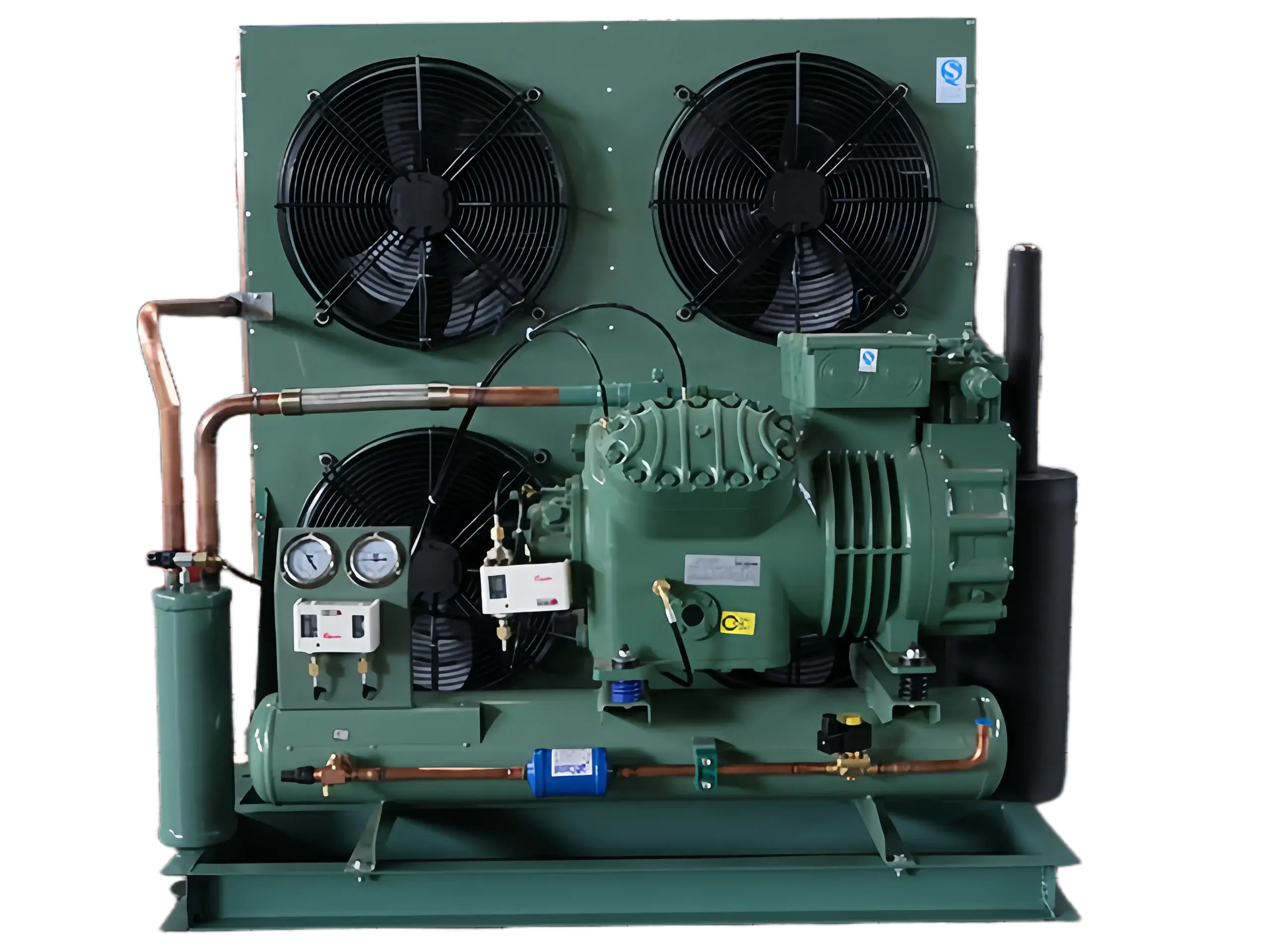
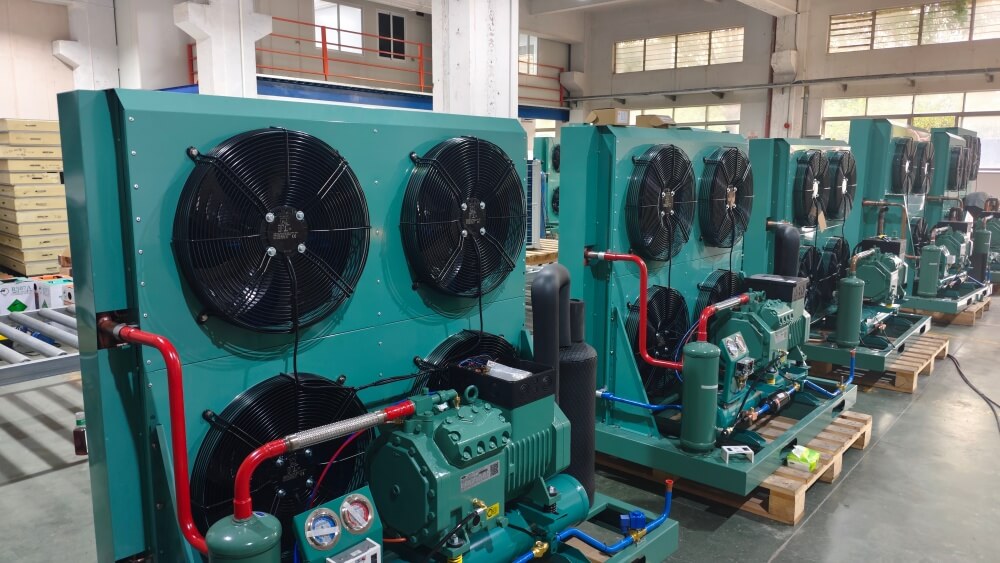
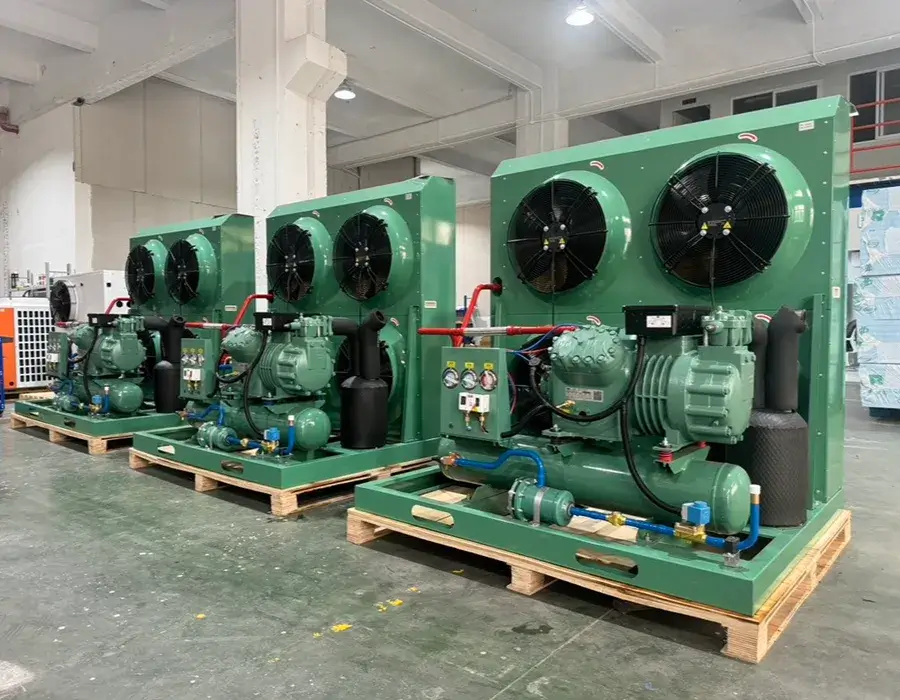
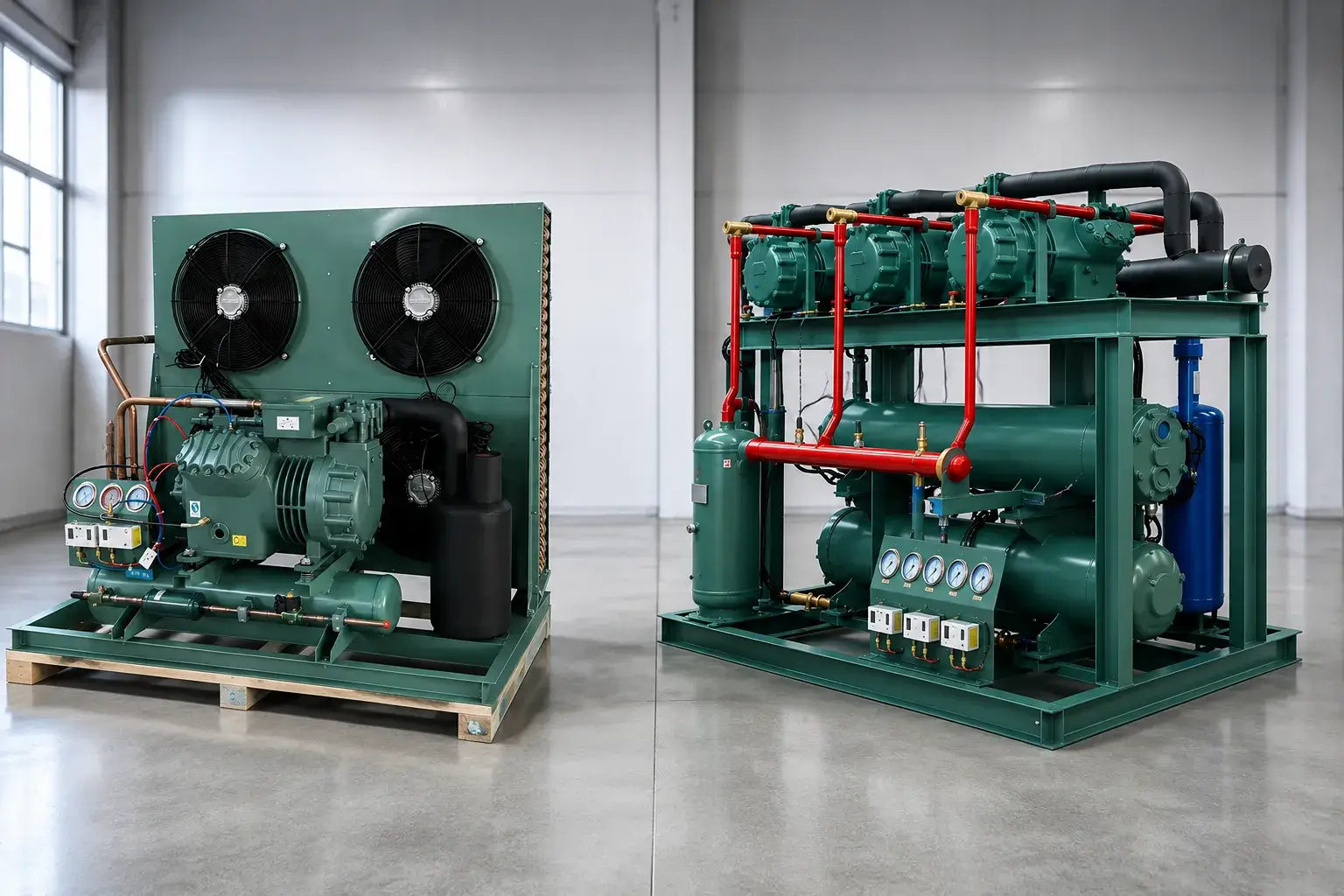
Refrigeration System
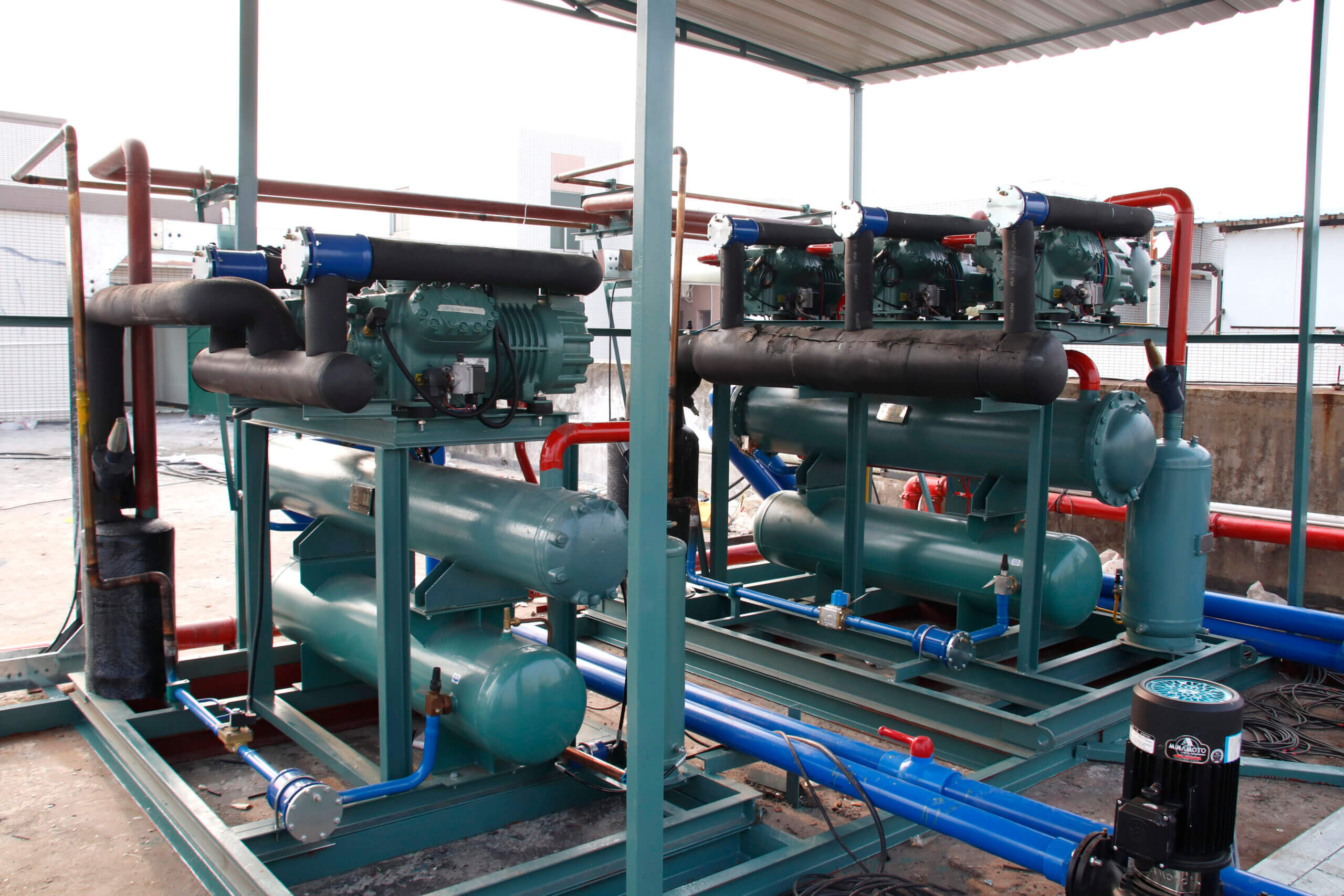
The refrigeration system is the core of the entire cold storage facility.
Main components include:
- Compressors
- Condensers
- Evaporators
- Expansion valves
- Control systems
Equipment selection depends on: - Storage capacity
- Temperature requirements
- Ambient climate
- Processing load
Blast Freezers
Blast freezers are designed for rapid heat removal during freezing.
Industrial blast freezing systems often use:
- High-capacity evaporators
- Large airflow circulation
- Low-temperature refrigeration units
Monitoring and Control Systems
Modern poultry cold rooms usually include:
- Digital temperature controllers
- Remote monitoring systems
- Alarm systems
- Temperature recording devices
These systems help operators monitor storage conditions continuously and reduce operational risks.
Poultry Cold Storage Cost Factors
The cost of a poultry cold storage project depends on multiple factors.
Storage Capacity
Typical project scales include:
| Capacity | Typical Application | Suggested Temperature | Recommended Equipment |
|---|---|---|---|
| 10–20 Tons | Small poultry processing plants | -18°C | Scroll condensing unit |
| 50–100 Tons | Medium commercial facilities | -18°C | Semi-hermetic compressor system |
| 300+ Tons | Industrial cold storage warehouses | -25°C | Parallel compressor rack system |
Temperature Requirements
Lower temperatures require:
- Larger refrigeration capacity
- More insulation
- Higher operating costs
Blast freezing projects are generally more expensive than standard chilled storage rooms.
Equipment Configuration
Project cost also depends on:
- Compressor type
- Refrigeration brand
- Automation level
- Defrost system
- Monitoring system
Installation Conditions
Site conditions can significantly affect installation complexity.
Factors include:
- Building structure
- Ambient climate
- Power supply
- Loading area design
- Production workflow
Because every poultry facility operates differently, most industrial cold storage projects require customized engineering design.
FAQ
What temperature should poultry be stored at?
Chilled poultry is typically stored at 0°C–2°C, while frozen poultry is stored at -18°C or lower.
How long can frozen poultry be stored?
Under stable frozen conditions, poultry products can usually be stored for several months.
Why is blast freezing important for poultry?
Blast freezing reduces ice crystal damage, helping maintain meat texture and product quality after thawing.
What is the difference between chilled and frozen poultry storage?
Chilled storage is designed for short-term fresh distribution, while frozen storage is used for long-term preservation and export logistics.
What equipment is commonly used in poultry cold storage?
Common equipment includes refrigeration units, evaporators, condensers, blast freezers, and digital monitoring systems.
Conclusion
Poultry cold storage plays a critical role in modern food processing and cold chain logistics. From carcass chilling to blast freezing and long-term frozen storage, every stage depends on stable temperature control and reliable refrigeration performance.
Well-designed poultry cold rooms help processing plants:
- Maintain food safety
- Extend shelf life
- Reduce product loss
- Improve operational efficiency
- Support export-quality production
As poultry processing capacity continues to grow worldwide, efficient cold storage systems are becoming an essential part of industrial poultry operations.