Introduction
As bakery production continues shifting toward centralized kitchens, industrial automation, and frozen dough distribution, cold chain systems have become a core part of modern bakery operations.
Large bakery brands, food factories, and chain stores increasingly rely on temperature-controlled environments to maintain consistent product quality across production, storage, transportation, and retail distribution.
A complete bakery cold chain system may include:
- Bakery Cold Storage
- Cake Cold Storage Room
- Dough Freezing Room
- Frozen Dough Storage
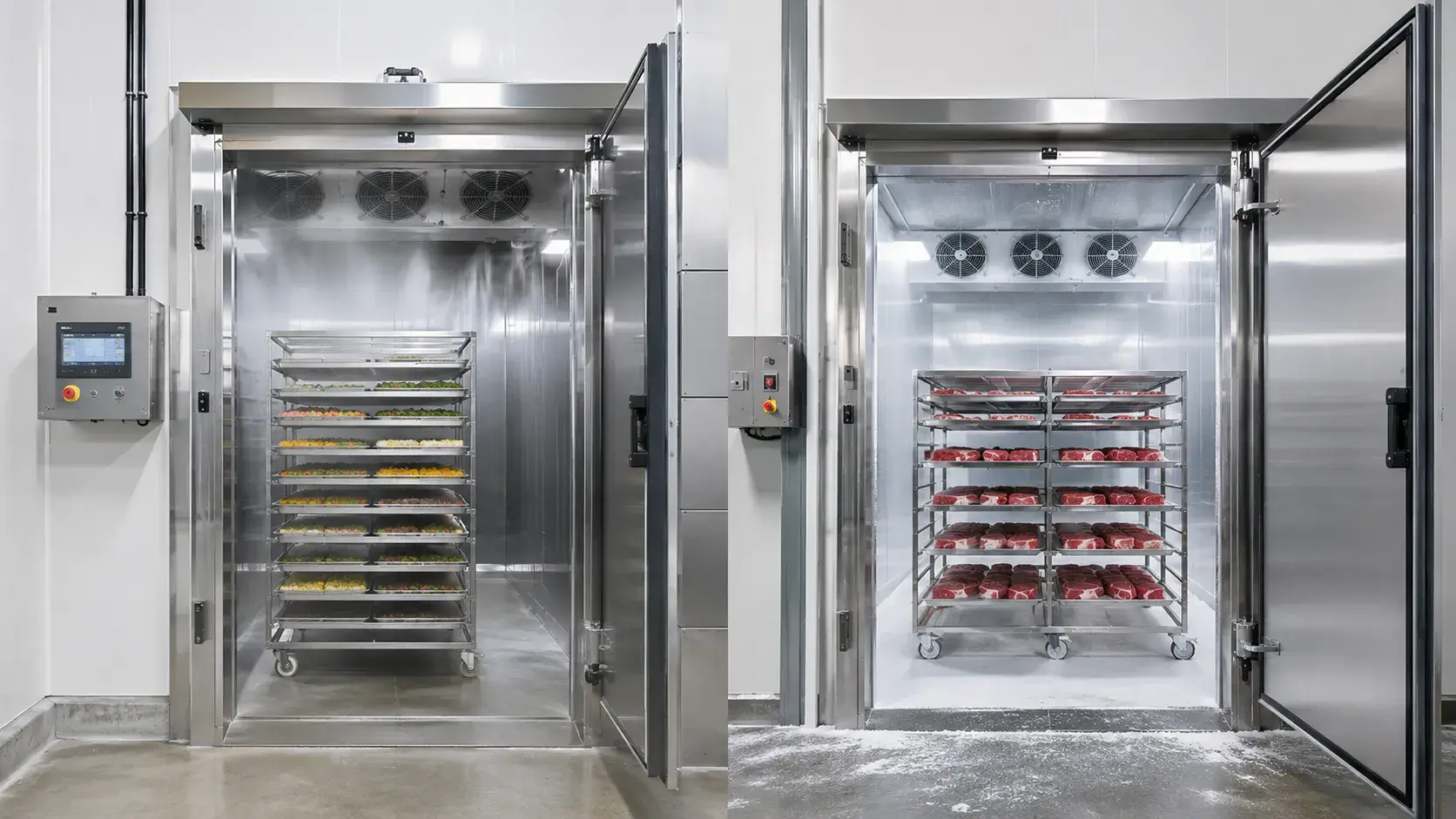
- Blast Chiller
- Bakery Blast Freezer
Each system serves a different role in the bakery production workflow.
For example: - A Blast Chiller rapidly cools freshly baked products before packaging or refrigerated storage.
- A Bakery Blast Freezer is designed for rapid freezing of dough and pastry products before long-term frozen storage.
- Cake Cold Storage rooms help preserve cream stability, fruit freshness, and product appearance during retail distribution.
In modern bakery factories, refrigeration is no longer just about “keeping products cold.”
It directly affects: - Shelf life
- Dough fermentation performance
- Product texture
- Moisture retention
- Food safety
- Distribution efficiency
This guide explains: - Bakery cold storage temperature standards
- Frozen dough processing and storage
- Differences between blast chillers and blast freezers
- Bakery cold room design considerations
- Common cold chain problems in bakery production
Why Bakery Cold Storage Is Critical in Modern Bakery Production
Shelf Life Control Is No Longer Optional
Bakery products contain moisture, fats, sugar, dairy ingredients, and fillings that are highly sensitive to temperature fluctuations.
Without proper cold storage, bakeries commonly face problems such as:
- Mold growth
- Cream collapse
- Surface dehydration
- Texture hardening
- Shortened shelf life
- Filling spoilage
This becomes even more serious in centralized production models where products may travel through: - Production plants
- Distribution centers
- Refrigerated transportation
- Retail stores
- Supermarkets
- Coffee chains
For example:
Cream cakes exposed to unstable temperatures often develop condensation and decoration damage during transport.
Fruit toppings may deteriorate rapidly if cooling is delayed after production.
This is why professionally designed Cake Cold Storage systems are essential for modern bakery distribution.
Frozen Dough Production Is Reshaping the Bakery Industry
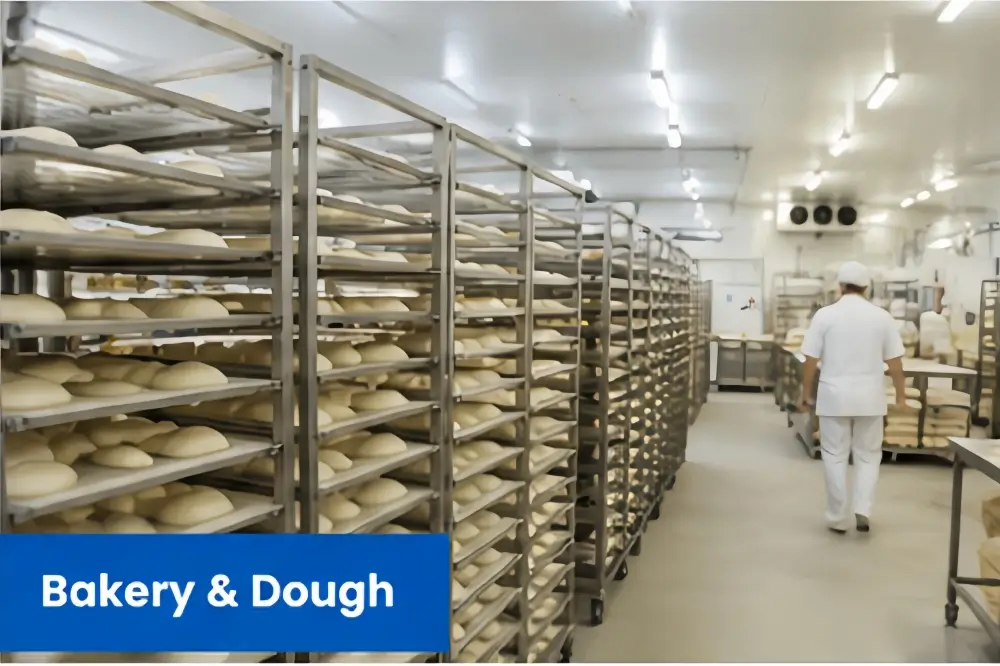
Many industrial bakeries now use Frozen Dough Production Lines to improve efficiency and standardize product quality across multiple locations.
Typical workflow:
Dough Mixing
↓
Dividing & Forming
↓
Bakery Blast Freezer
↓
Frozen Dough Storage
↓
Distribution to Retail Stores
↓
Proofing & Baking
This production model offers major advantages:
- Centralized mass production
- Reduced labor dependency in retail stores
- More flexible baking schedules
- Consistent product quality
- Easier expansion for bakery chains
Frozen dough systems are widely used in: - Croissant production
- Pizza dough processing
- Danish pastry manufacturing
- Bakery chain operations
- Hotel and catering supply systems
However, frozen dough storage is highly sensitive to temperature fluctuation.
In real factory operations, unstable freezer temperatures often cause: - Yeast activity loss
- Dough cracking
- Butter separation in laminated dough
- Ice crystal damage
- Uneven proofing performance
These problems are especially common in croissant and puff pastry production where dough layers are highly temperature-sensitive.
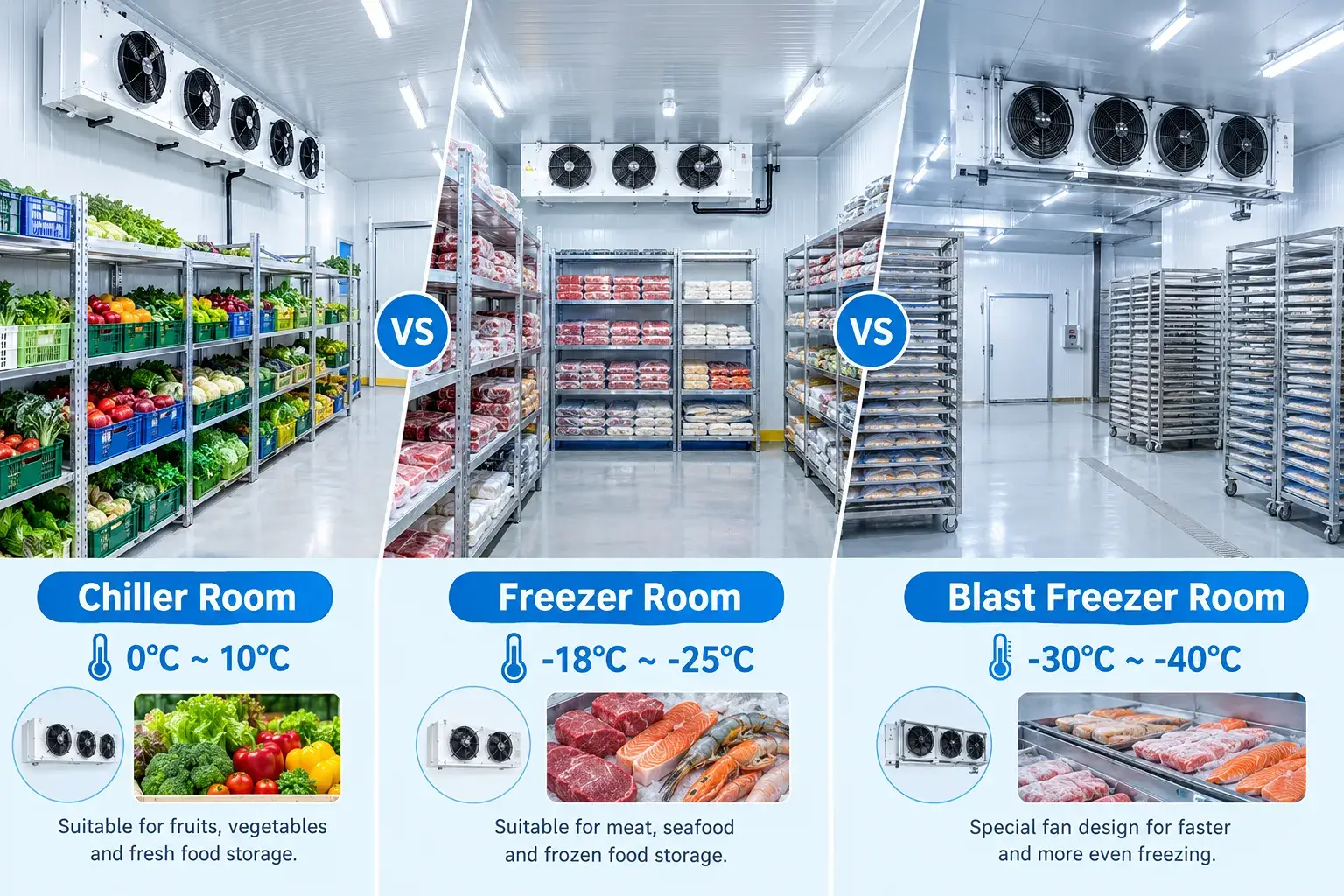
Recommended Bakery Cold Storage Temperatures
Different bakery products require different storage conditions depending on ingredients, shelf-life targets, and distribution methods.
In industrial bakery systems:
- Chilled storage is mainly used for ready-to-sell products
- Frozen storage is used for dough preservation and long-distance distribution
Recommended Bakery Cold Storage Temperature Table
| Bakery Product | Cold Storage Temperature | Storage Type | Key Purpose / Notes |
|---|---|---|---|
| Fresh Bread | 0°C – 4°C | Chilled Storage | Extends shelf life, maintains softness and moisture balance |
| Cake (Cream Cake / Celebration Cake) | 2°C – 6°C | Cake Cold Storage Room | Prevents cream melting, preserves decoration and fruit freshness |
| Croissants & Pastries | 0°C – 4°C (short-term) / -18°C to -25°C (frozen dough) | Chilled / Frozen Storage | Supports bake-off retail model and frozen dough logistics |
| Donuts & Sweet Bakery Products | 2°C – 6°C / -18°C (dough) | Chilled / Frozen Storage | Maintains glaze stability and texture quality |
| Frozen Dough Products | -18°C to -25°C | Frozen Storage | Industrial bakery supply chain, long-term storage |
| Cheesecake & Dairy Desserts | 2°C – 4°C | Chilled Storage | Maintains dairy structure stability and prevents spoilage |
| Artisan / Sourdough Bread | 0°C – 4°C | Chilled Storage | Preserves fermentation structure and flavor profile |
Blast Chiller vs Blast Freezer: What’s the Difference?
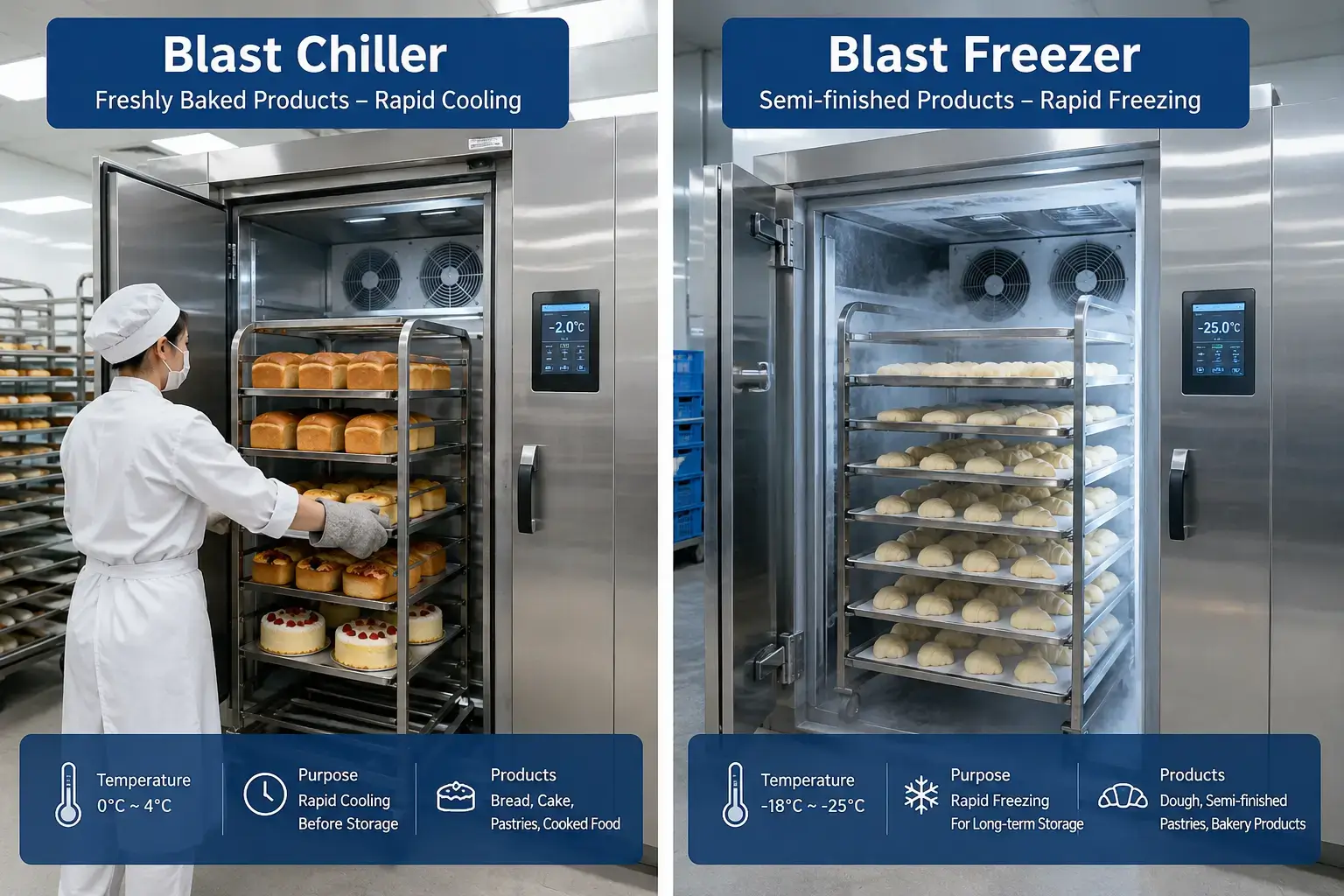
Many bakery businesses confuse Blast Chillers and Blast Freezers, but they serve completely different purposes in the bakery cold chain.
| Feature | Blast Chiller | Blast Freezer |
|---|---|---|
| Core Task | Rapidly lower food temperature without freezing | Rapidly freeze food, forming tiny ice crystals |
| Final Core Temperature | Typically around +3°C | Typically -18°C or lower |
| Speed / Rate | From +70°C to +3°C within about 90 minutes | To -20°C within several hours |
| Typical Bakery Uses | Freshly baked bread, cake layers, fillings, sauces, whipped cream preparation | Frozen dough, tart shells, mousse cakes, ice cream cakes, semi-finished products |
The Role of Blast Chillers in Bakery Production
Freshly baked products often remain inside the bacterial danger zone for a long period after leaving the oven.
If cooling is too slow, bakeries may experience:
- Increased bacterial growth
- Surface moisture loss
- Texture instability
- Condensation during packaging
A Blast Chiller rapidly reduces product temperature before storage or packaging.
Typical bakery applications include: - Cake layers
- Pastries
- Bread products
- Cream fillings
- Prepared desserts
Unlike ordinary refrigeration rooms, blast chillers use high-speed cold airflow to remove heat quickly and evenly.
Key Point:
Blast Chiller = Rapid Cooling Stage (Not Freezing)
Why Rapid Freezing Matters for Frozen Dough
A Bakery Blast Freezer is designed to freeze dough products quickly before long-term storage.
Rapid freezing is critical because slow freezing forms large ice crystals that damage dough structure.
In laminated dough production, this often leads to:
- Butter leakage after thawing
- Layer separation failure
- Poor baking expansion
- Reduced product consistency
Blast freezers help minimize these risks by rapidly lowering product temperature below -18°C.
Common applications include: - Frozen croissant dough
- Puff pastry
- Pizza dough
- Frozen tart shells
- Semi-finished bakery products
Key Point:
Blast Freezer = Fast Freezing for Quality Preservation
Common Problems in Bakery Cold Storage
Many bakery cold storage issues are not caused by refrigeration capacity itself, but by poor airflow management, unstable temperatures, or incorrect storage design.
1. Dough Surface Drying
Excessive evaporator airflow may dry the dough surface during frozen storage.
This can cause:
- Cracking
- Poor proofing
- Uneven baking color
Air velocity control is especially important in frozen dough rooms.
2. Frost Buildup Near Evaporators
Frequent door opening introduces moisture into freezer rooms.
This often results in:
- Frost accumulation
- Reduced cooling efficiency
- Increased energy consumption
Proper airflow planning and defrost systems are critical.
3. Uneven Cooling in Rack Storage Systems
Poor rack spacing may block airflow circulation.
As a result:
- Products near evaporators freeze faster
- Products in corners cool more slowly
- Product consistency becomes unstable
This is a common issue in overloaded bakery cold rooms.
4. Yeast Activity Loss After Temperature Fluctuation
Repeated thawing and refreezing can damage yeast performance.
This may cause:
- Weak dough expansion
- Longer proofing time
- Inconsistent final texture
Stable freezer temperature is essential for frozen dough logistics.
Bakery Cold Room Design Considerations
Airflow Design Matters More Than Many Bakeries Realize
In bakery cold storage, airflow design directly affects:
- Cooling uniformity
- Product moisture retention
- Frost formation
- Energy efficiency
Excessively high air velocity may dry out bread surfaces or damage delicate pastry products.
Proper evaporator selection and airflow direction are therefore critical.
Humidity Control for Cakes and Desserts
Cake cold rooms require balanced humidity control.
Low humidity may cause:
- Cream cracking
- Dry cake surfaces
- Fruit dehydration
High humidity may lead to: - Condensation
- Decoration instability
- Mold risk
This is especially important for premium dessert products and retail display cakes.
Insulation and Hygienic Construction
Modern bakery cold rooms commonly use:
- PU sandwich panels
- Food-grade interior materials
- Anti-slip flooring
- Hygienic drainage systems
These materials help improve: - Thermal insulation
- Food safety
- Cleaning efficiency
- Energy savings
Bakery Cold Chain Workflow
Option 1: Fresh Bakery Production
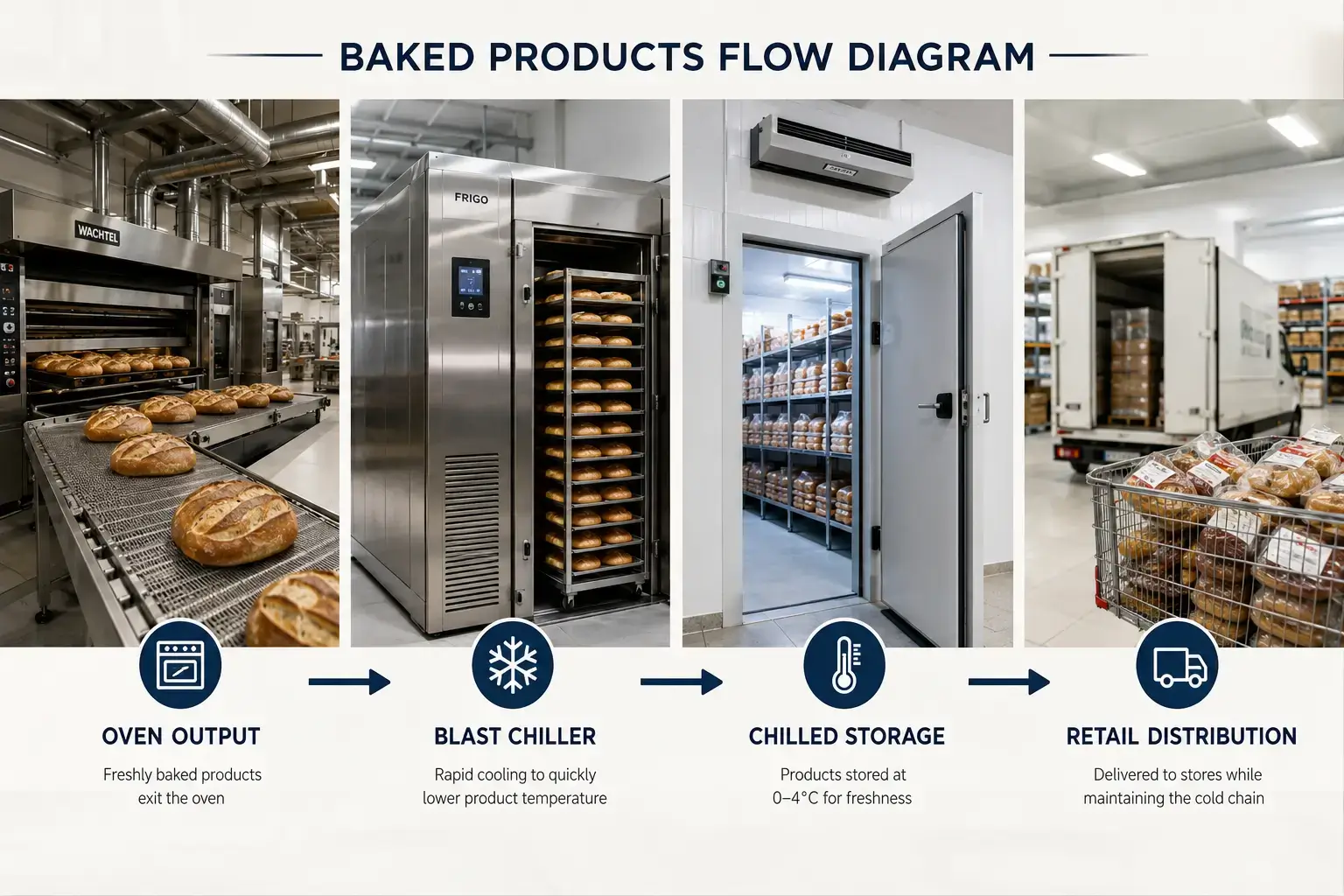
Baked Products
↓
Blast Chiller
↓
Cake / Bread Cold Storage (0–4°C)
↓
Retail Distribution
Option 2: Frozen Dough Production
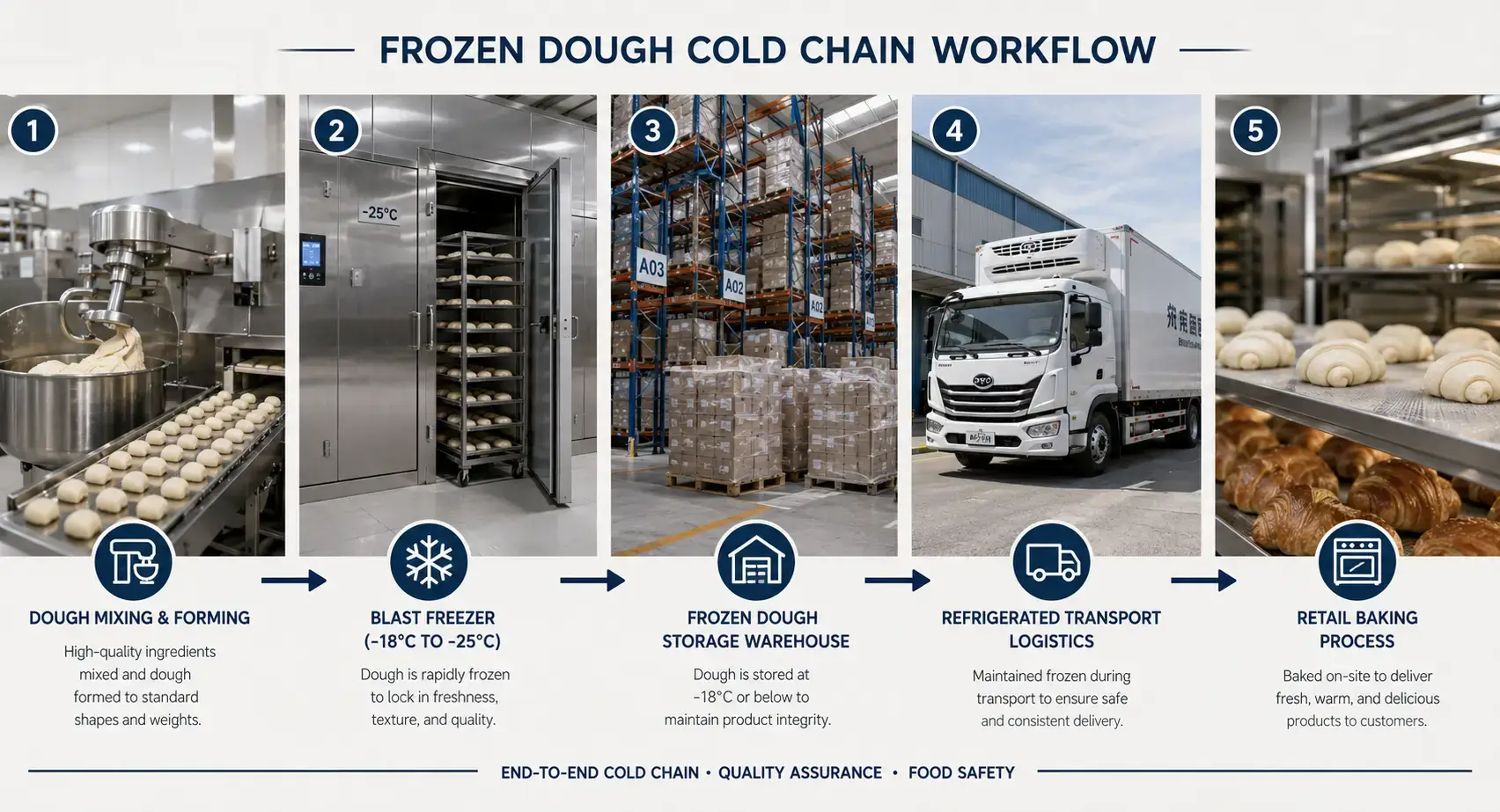
Dough Preparation
↓
Bakery Blast Freezer
↓
Frozen Dough Storage (-18°C to -25°C)
↓
Cold Chain Transportation
↓
Retail Baking
Walk-in Freezers for Small and Medium Bakeries
Small bakeries often choose Walk-in Freezers because they are:
- Cost-effective
- Flexible
- Easier to install
- Suitable for limited production spaces
Typical applications include: - Dough storage
- Dessert storage
- Frozen inventory management
For bakery chains and food factories, larger centralized freezer systems are more common.
Frequently Asked Questions
How do you properly freeze bread dough?
Bread dough should be:
- Divided and shaped
- Properly packaged
- Rapidly frozen using a Bakery Blast Freezer
- Stored below -18°C
How long can frozen dough be stored?
Frozen dough is typically stored for:
- 2 weeks to 3 months
Depending on: - Dough formulation
- Packaging quality
- Storage temperature stability
What temperature should a dough freezer maintain?
Most dough freezer rooms operate between:
-18°C and -25°C
Can frozen dough be baked directly?
Some products can be baked directly, while others require:
- Thawing
- Proofing
- Final baking
before sale.
Conclusion
Modern bakery operations increasingly depend on complete cold chain systems, including:
- Bakery Cold Storage
- Cake Cold Storage
- Dough Freezing Rooms
- Blast Chillers
- Bakery Blast Freezers
These systems help bakeries: - Improve production efficiency
- Extend shelf life
- Maintain product consistency
- Support large-scale distribution networks
As frozen dough production continues expanding globally, professionally designed bakery refrigeration systems are becoming essential for maintaining product quality, operational stability, and long-distance cold chain performance.