Introduction
Fish and seafood are among the most temperature-sensitive products in the food industry. From the moment they are harvested, quality begins to decline due to enzymatic reactions, bacterial growth, and oxidation. In warm and humid environments, this process accelerates noticeably.
In actual seafood processing plants, cold storage is not just a preservation step. It determines whether raw materials can be accepted, processed, and finally exported at the required grade. A slight temperature deviation at the wrong stage is often enough to affect product grading or even lead to rejection.
Compared with other food categories, seafood has several characteristics that make temperature control particularly critical:
- High moisture content, which accelerates microbial activity
- Soft muscle structure, easily damaged by ice crystal formation
- High fat oxidation sensitivity in species such as tuna and mackerel
Because of this, fish cold storage is usually integrated into the production system rather than treated as an independent facility.
This article looks at how industrial fish cold storage rooms are actually planned and applied in seafood processing plants, including temperature zoning, system configuration, layout considerations, hygiene control, and cold chain integration.
Why Fish Cold Storage Is Critical for the Seafood Industry
Rapid Spoilage Characteristics of Fish and Seafood
Fish starts to deteriorate soon after harvest, mainly because biological processes continue even after death.
In practical operations, spoilage is driven by a few consistent factors:
- Enzymatic breakdown of muscle tissue continues post-harvest
- Bacteria multiply quickly at ambient temperatures
- Fatty species like tuna and mackerel oxidize rapidly
- Product quality is highly sensitive to temperature fluctuations during handling
In many plants, the difference between export-grade and downgraded product is often decided within the first few hours after landing.
Preserving Freshness, Texture, and Nutritional Value
Cold storage does more than extend shelf life. It protects the commercial value of seafood.
When temperature is stable, it helps maintain:
- Firmness and elasticity after thawing
- Natural color, especially in tuna and shrimp
- Lower drip loss during defrosting
- Nutritional stability, including Omega-3 content
In export markets, buyers usually judge quality based on thawed texture rather than frozen appearance, which makes freezing control even more important.
Supporting Global Fisheries Supply Chain
A typical seafood cold chain is not a single system but a continuous network:
- Fishing vessels equipped with onboard chilling (RSW systems)
- Port-side pre-cooling stations
- Processing plant cold rooms
- Freezing and storage warehouses
- Reefer container transport for export
If any link in this chain is unstable, the quality of the entire batch is affected. In practice, temperature breaks are difficult to recover from.
Food Safety and Export Compliance
Industrial fish cold storage systems are generally built in line with international requirements such as:
- HACCP food safety system
- ISO 22000 management standards
- EU, FDA, and Japanese import regulations
For export operations, temperature records, batch traceability, and storage logs are often required during audits and customs inspection. These are no longer optional—they are standard requirements.
Fish Processing Workflow and Cold Storage Temperature Standards
Cold storage design in seafood plants is based on processing stages rather than a single fixed temperature.
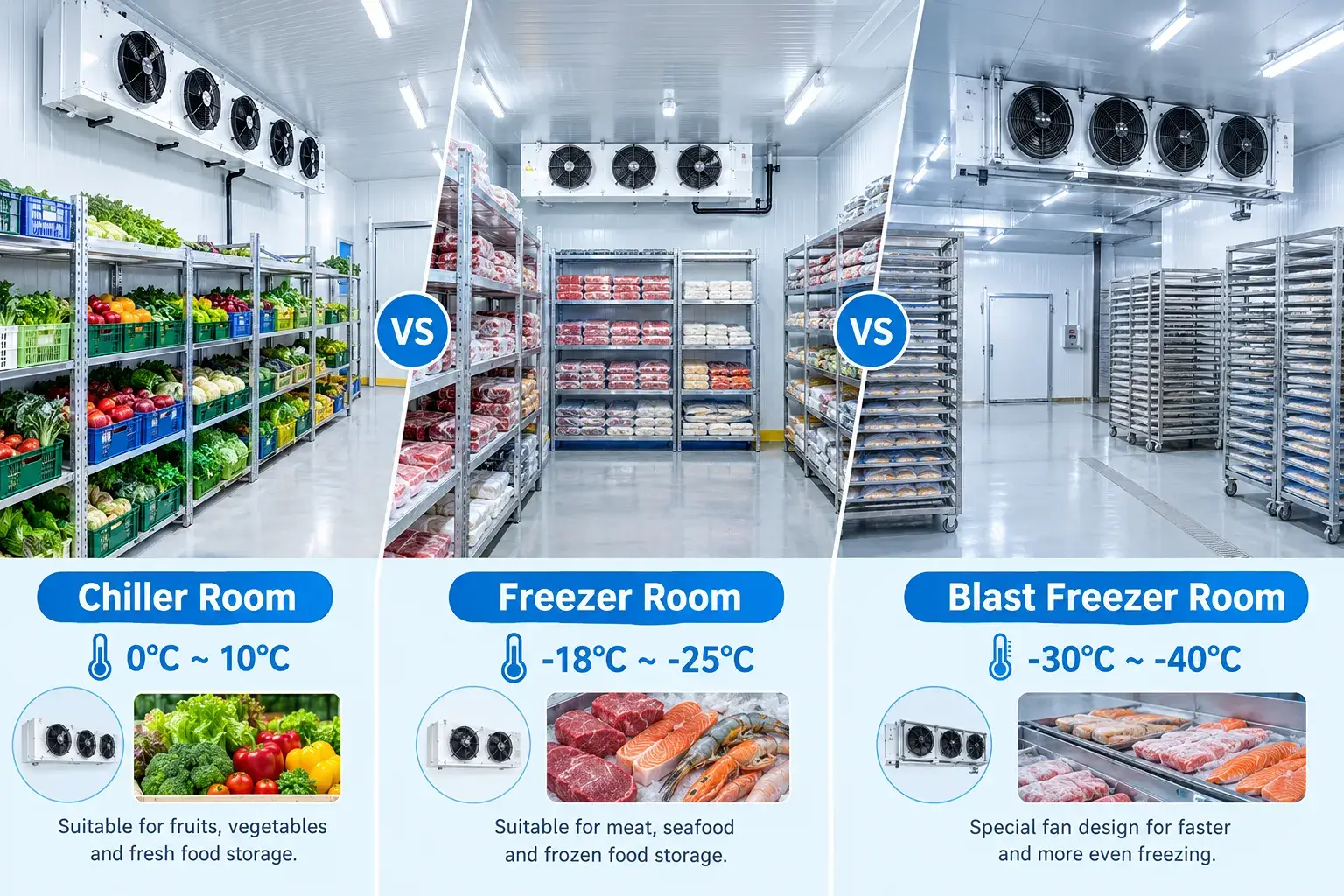
Temperature Design by Processing Stage
| Stage | Temperature Range | Function | Application |
|---|---|---|---|
| Fresh receiving & holding | 0°C to 2°C | Slow spoilage before processing | Raw fish storage, sorting area |
| Standard frozen storage | -18°C | Medium to long-term preservation | Frozen fillets, seafood blocks |
| Export-grade freezing | -25°C to -40°C | Higher quality retention | Tuna, premium seafood |
| Ultra-low temperature storage | -50°C to -60°C | Maximum quality protection | Sashimi-grade products |
In real projects, multiple zones are often combined to match production rhythm rather than operating independently.
Raw Material Receiving and Chilled Storage (0°C to 2°C)
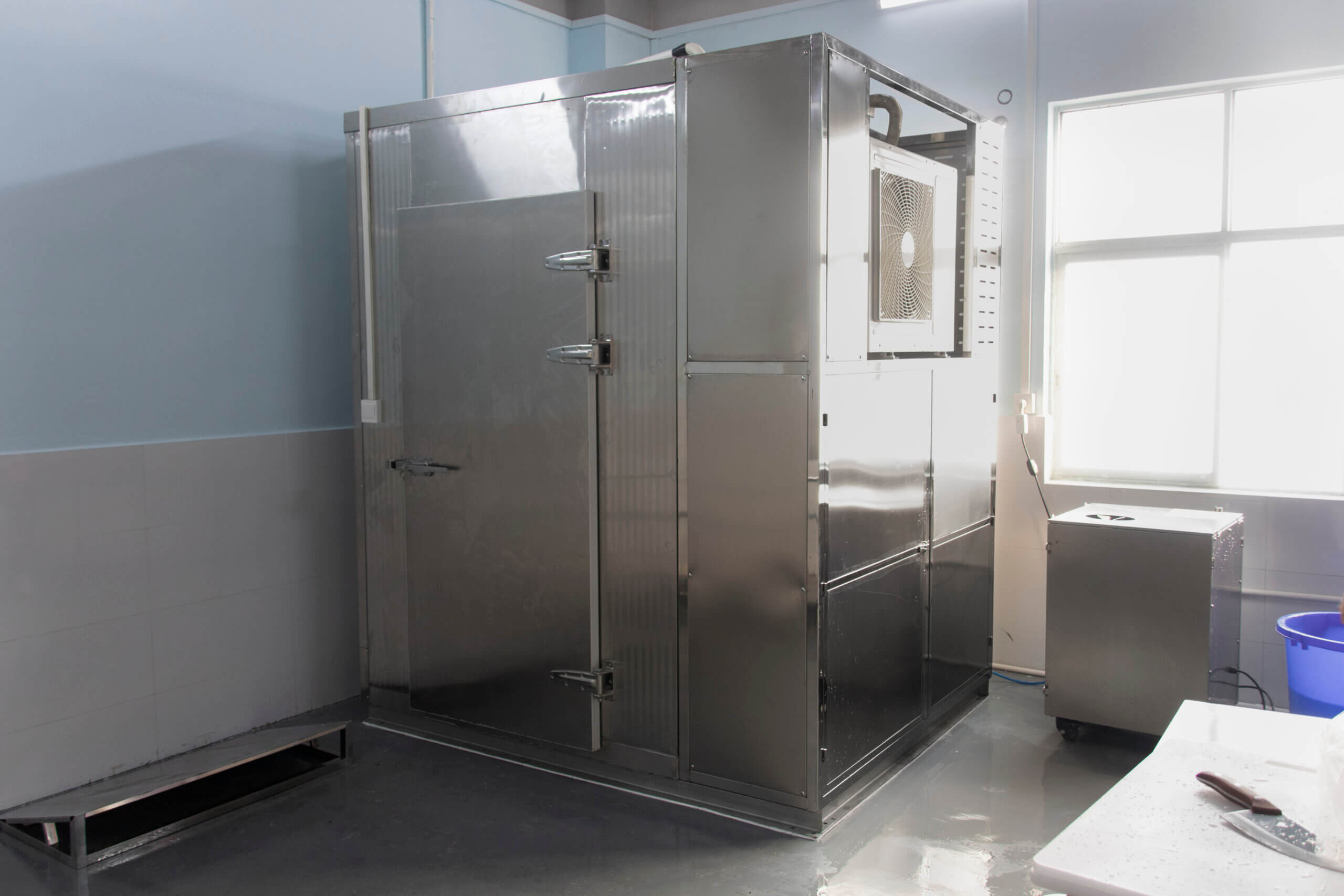
After landing, fish is quickly sorted and moved into chilled storage rooms.
This section mainly acts as a buffer between unloading and processing, especially during peak supply periods or large catch arrivals.
Typical usage includes:
- Temporary storage before processing
- Short-term holding for sorting and grading
- Preparation for distribution in fresh seafood markets
At this stage, stability is more important than deep freezing. Even small fluctuations are more harmful than a slightly higher temperature.
Processing and Frozen Storage (-18°C or Lower)
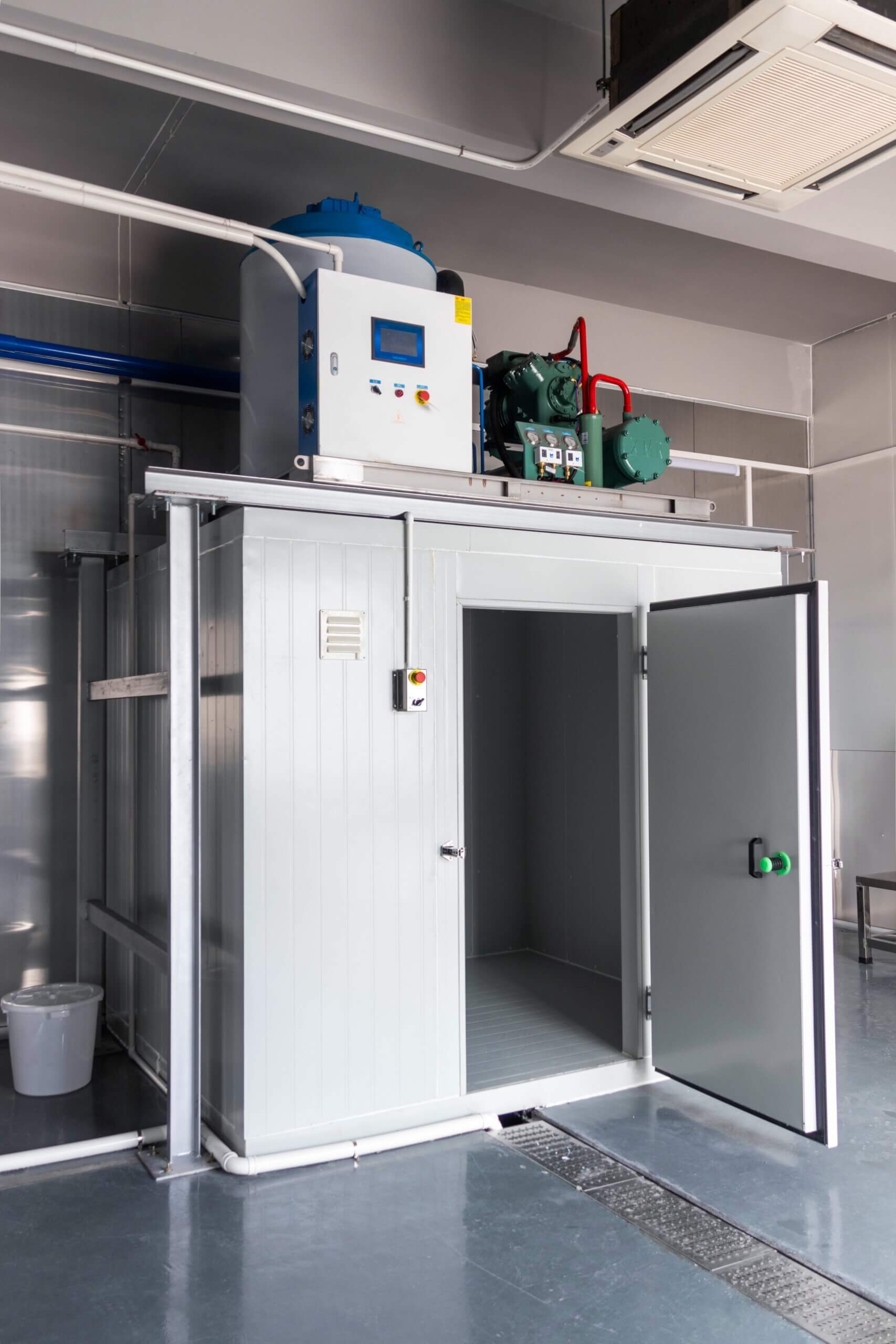
During processing, seafood goes through steps such as cleaning, gutting, filleting, portioning, and packaging.
Once processed, products are transferred into frozen storage at -18°C or below, which is widely accepted as the baseline standard for global frozen seafood logistics.
At this temperature range, microbial activity slows significantly, allowing stable storage over medium to long periods without major quality changes.
High-Value Product Processing and Ultra-Low Temperature Storage (-25°C to -60°C)
Premium seafood requires tighter control, especially for export markets where grading standards are strict.
Common products include:
- Tuna loins for sashimi supply chains
- High-grade shrimp and scallops
- Export seafood destined for Japan, EU, and premium retail channels
At ultra-low temperatures, the goal is not just preservation but maintaining cell structure integrity. This directly influences drip loss and texture after thawing.
In practice, better freezing control often translates into better market pricing.
Freezing Operations in Fish Processing
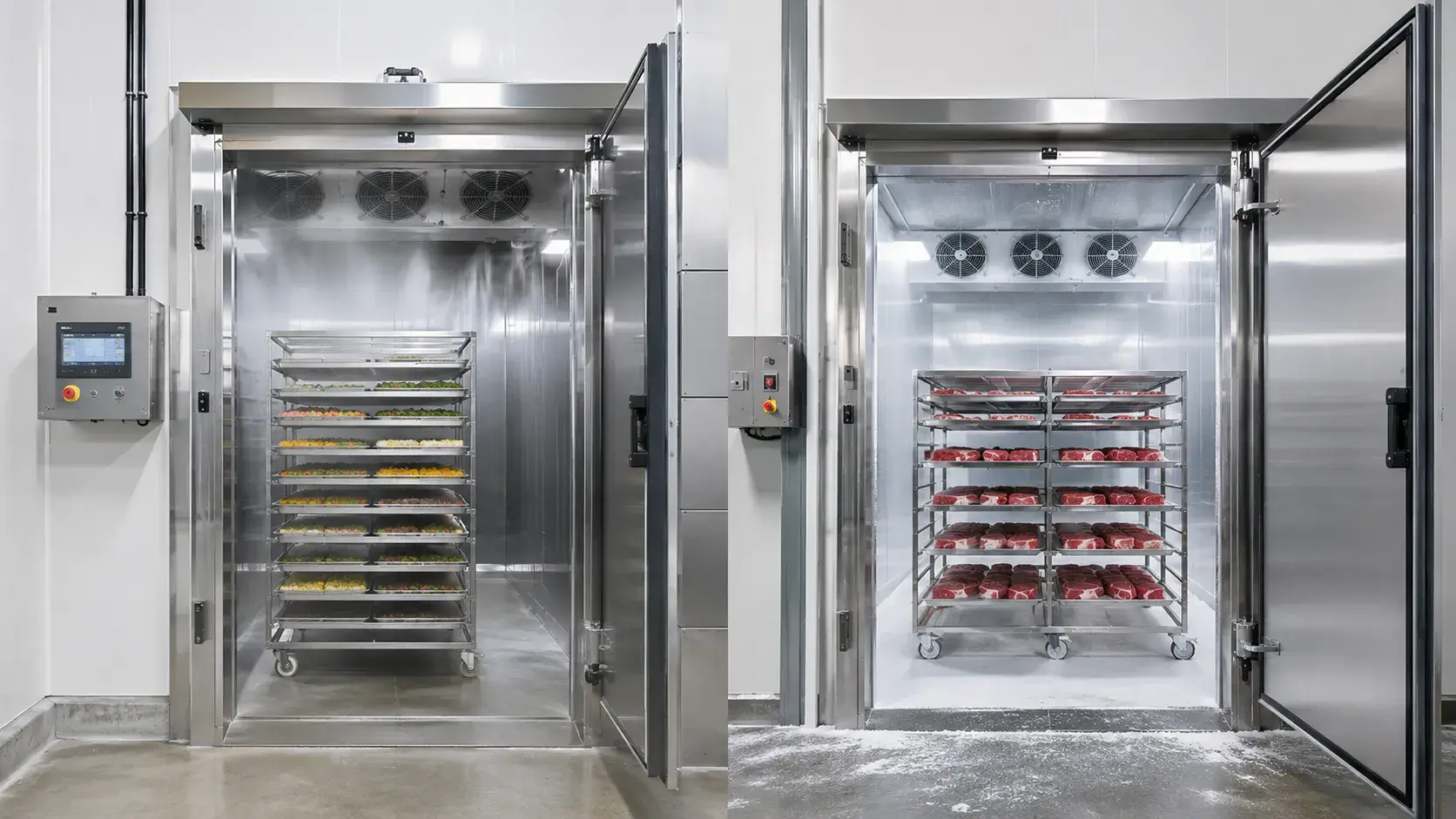
Blast Freezing
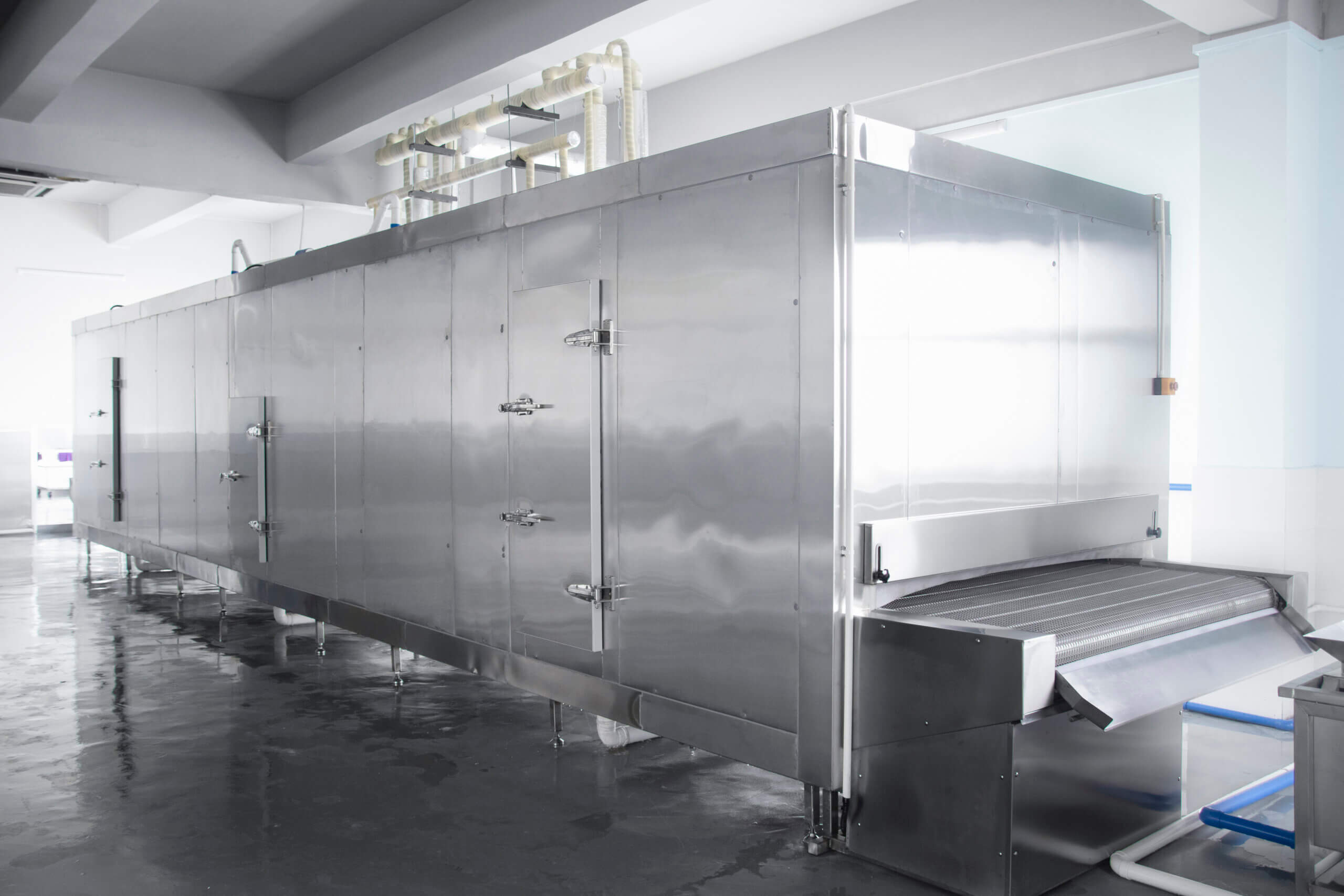
Blast freezing uses high-velocity cold air to rapidly reduce product core temperature.
It is commonly applied to:
- Whole fish
- Fillets
- Packaged seafood products
The key is to move quickly through the ice crystal formation zone, which helps reduce internal tissue damage.
IQF (Individual Quick Freezing)
IQF freezes products individually instead of forming blocks, keeping each piece separate after freezing.
It is widely used for:
- Shrimp
- Scallops
- Fish cubes
- Portion-controlled seafood
| Method | Product Form | Key Feature | Typical Use |
|---|---|---|---|
| Blast Freezing | Bulk frozen | Flexible production | General seafood processing |
| IQF | Individual pieces | No sticking, higher value | Export seafood products |
| Plate Freezing | Block frozen | High density storage | Large-scale bulk production |
Plate Freezing
Plate freezing works through direct contact between metal plates and seafood products.
It is often used for block freezing where uniform shape and storage efficiency are more important than product separation, especially in high-volume operations.
Temperature Control Throughout the Processing Flow
In real seafood plants, temperature control is not limited to cold rooms—it runs through the entire workflow.
Common engineering targets include:
- Temperature stability within ±0.5°C
- Automated defrost cycles for evaporators
- Real-time monitoring with alarm systems
From experience, many quality issues are not caused by storage temperature itself, but by unstable transitions during handling and transfer.
Fish Cold Storage System Types and Applications
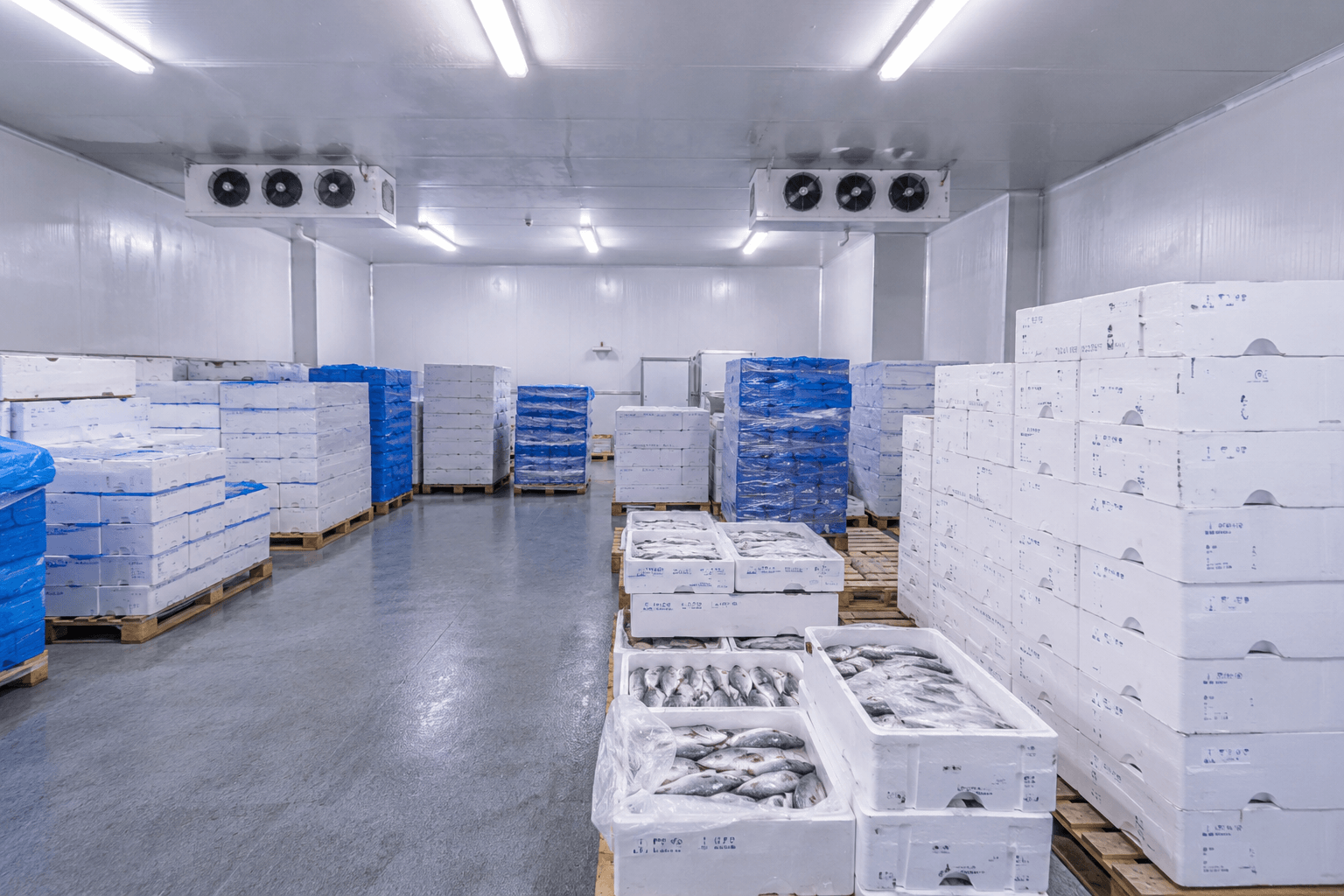
Fish Cold Rooms for Processing Plants
These rooms are integrated into production lines and used for:
- Raw material buffering
- Short-term chilled storage
- High-humidity fresh fish handling
The main concern here is minimizing dehydration and maintaining weight stability.
Seafood Cold Storage for Distribution Centers
Used in:
- Wholesale seafood markets
- Regional logistics hubs
- Fast-turnover supply chains
Compared with factories, these facilities focus more on throughput speed than processing stability.
Frozen Seafood Storage Warehouses
Designed for:
- Long-term export storage
- Large inventory management
- Automated pallet systems
Most of these warehouses operate continuously at -18°C or lower.
Marine Product Cold Storage for Export Supply Chains
Export cold chains typically connect:
- Processing factories
- Cold storage warehouses
- Reefer container loading points
- International logistics routes
In export business, buyers evaluate quality from origin to destination, so temperature continuity matters more than any single storage point.
Fish Cold Room Design and Engineering Solutions
High Humidity Design for Fish Cold Storage
Fresh fish storage usually requires:
- 85%–90% relative humidity
- Stable near-zero temperature
This helps reduce surface drying and prevents unnecessary weight loss during storage.
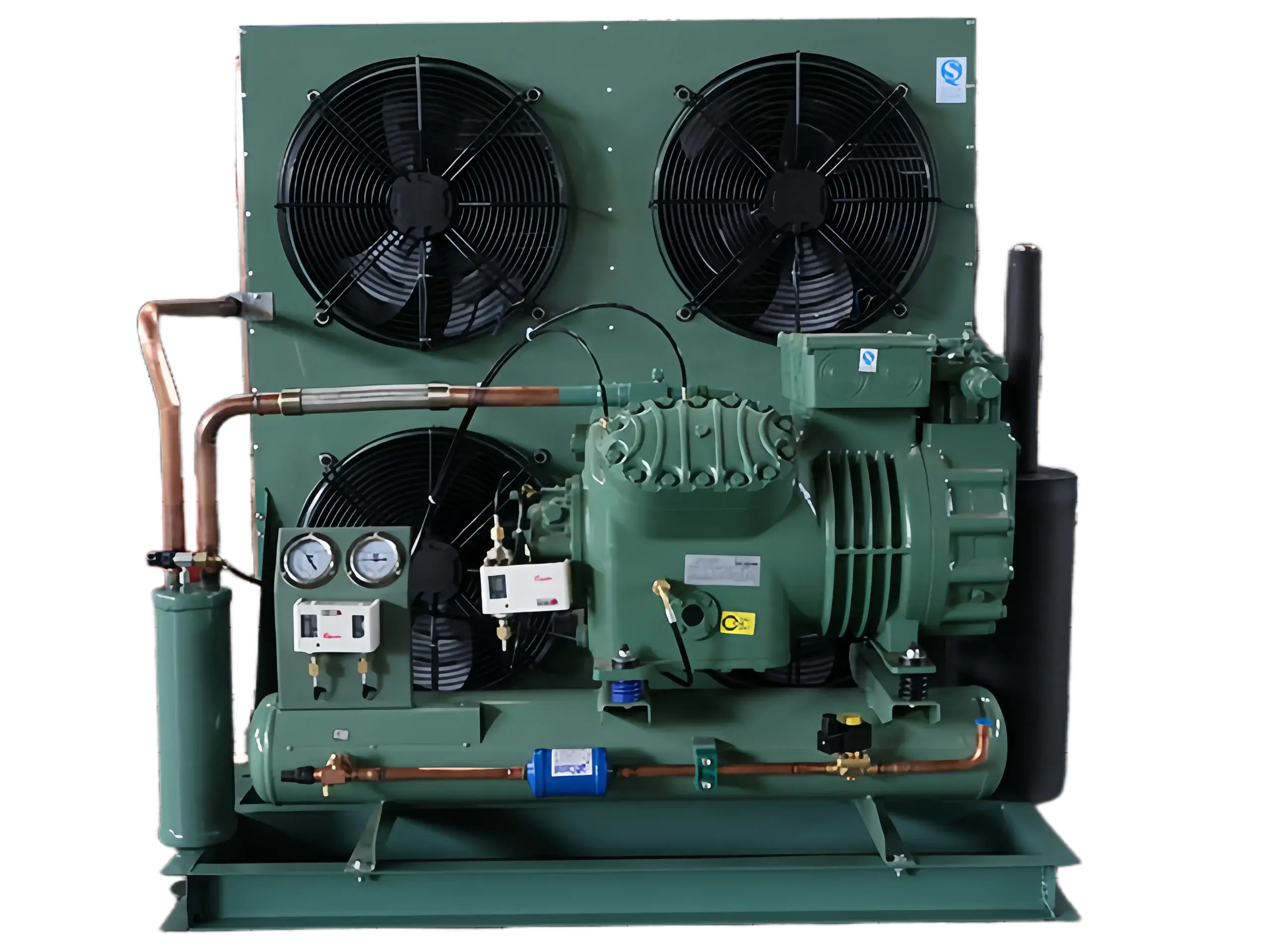
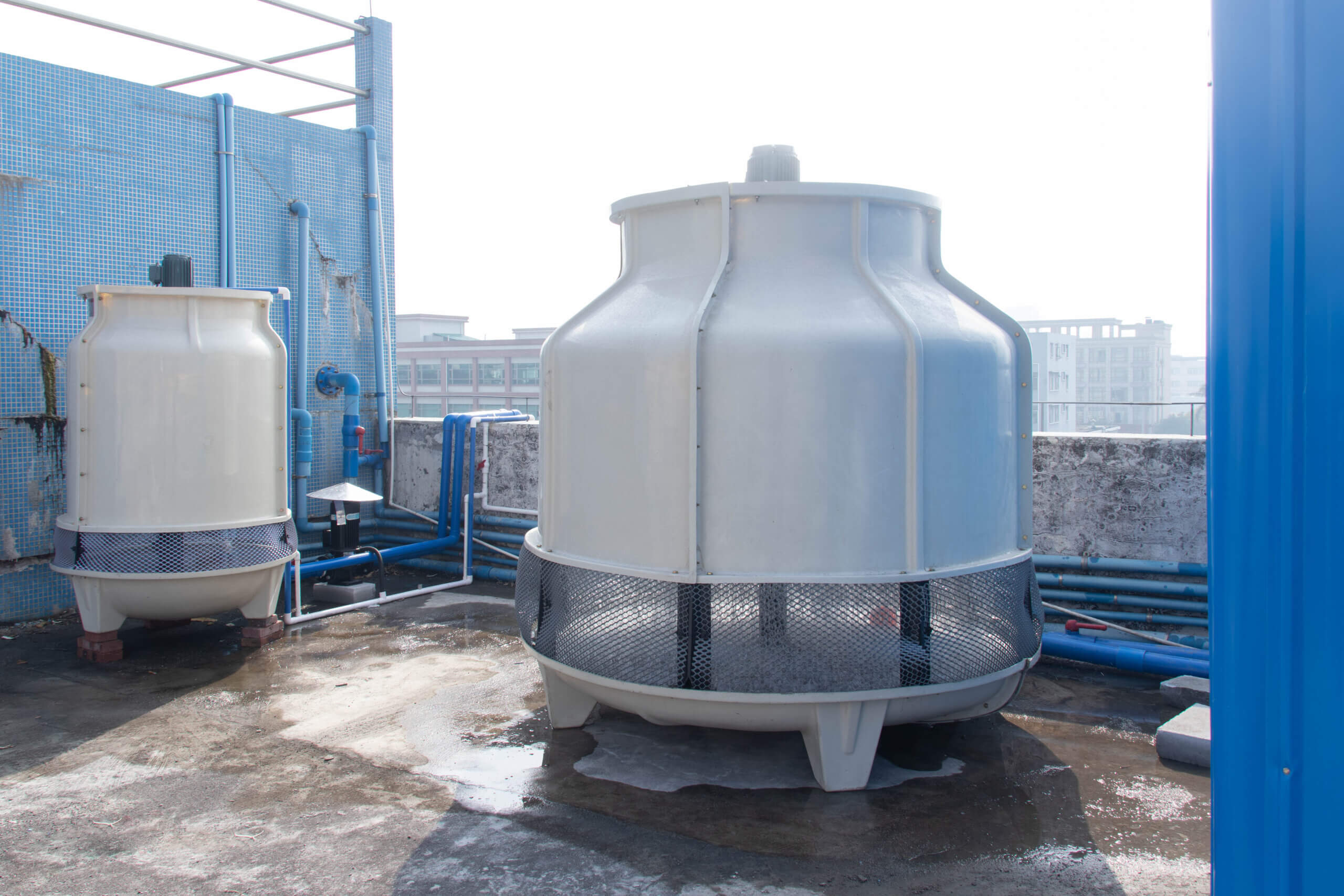
Refrigeration System Selection
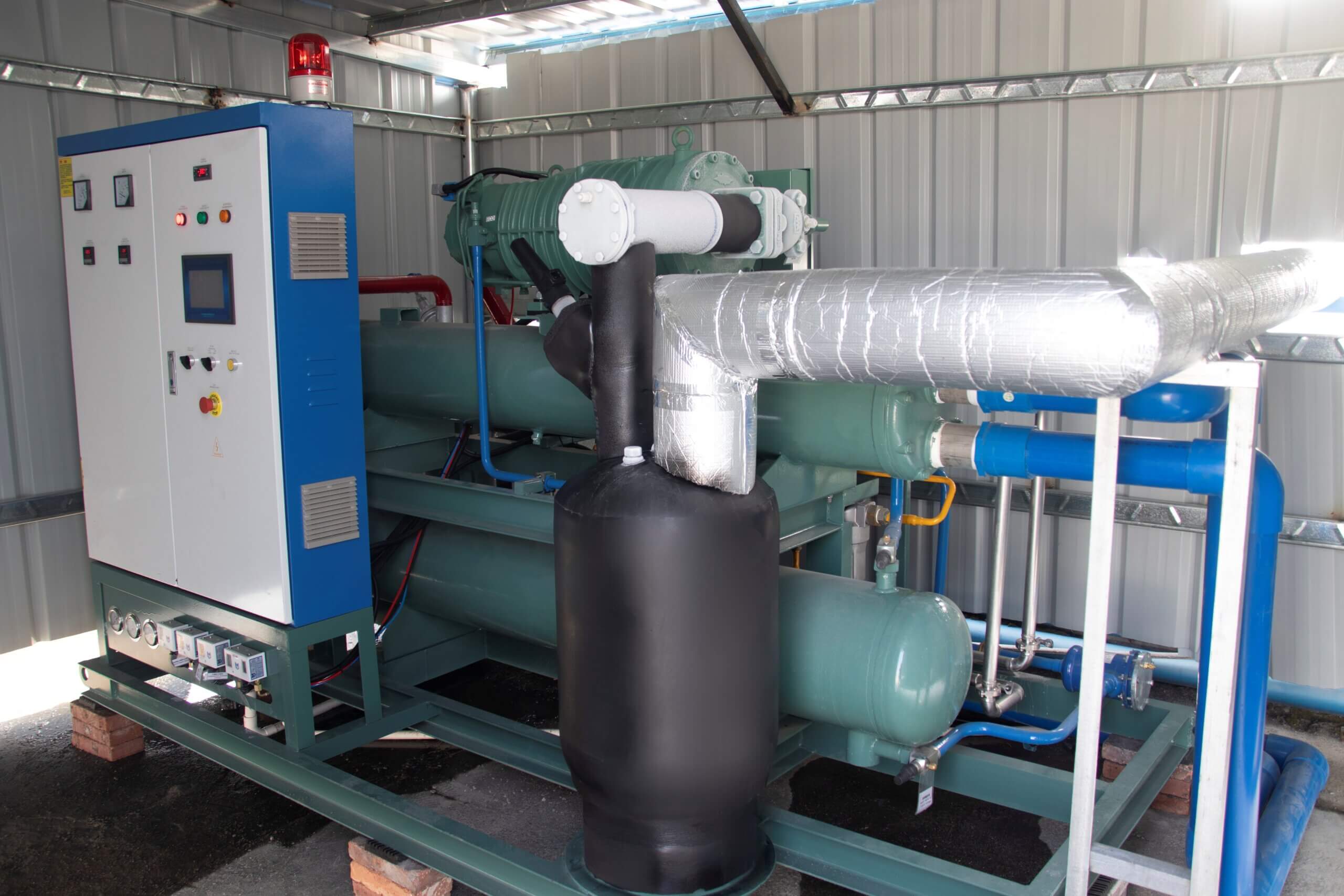
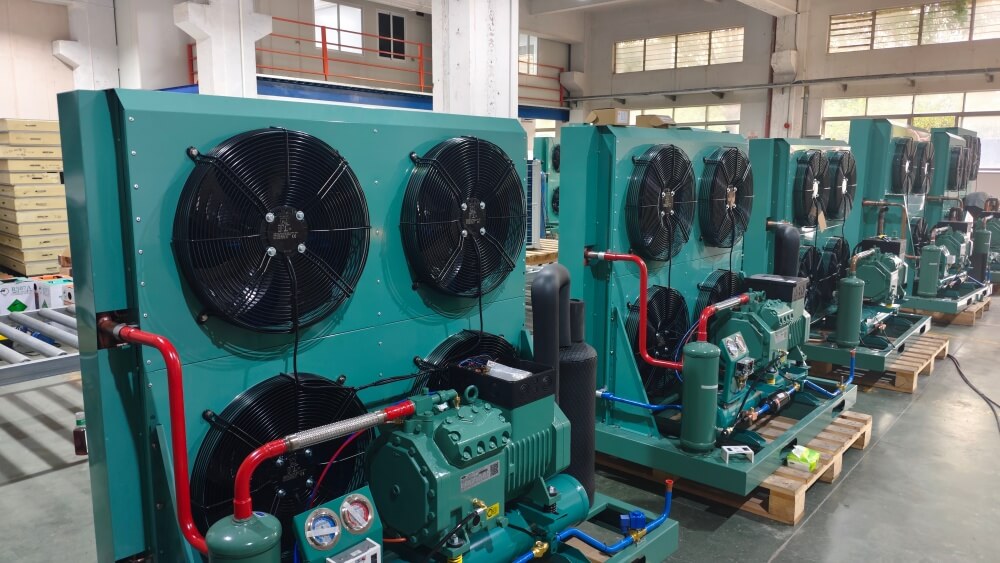
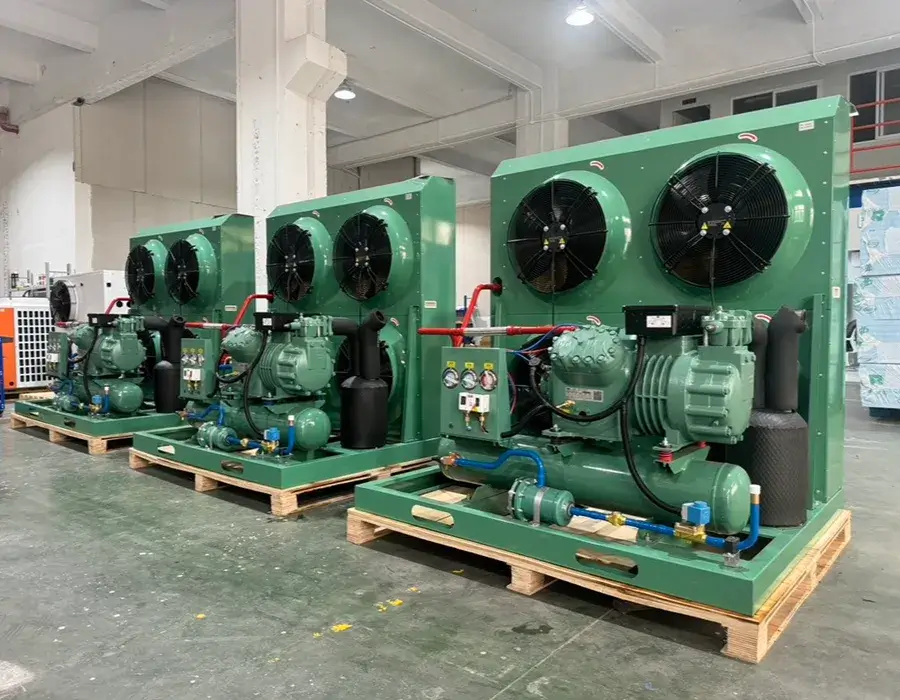
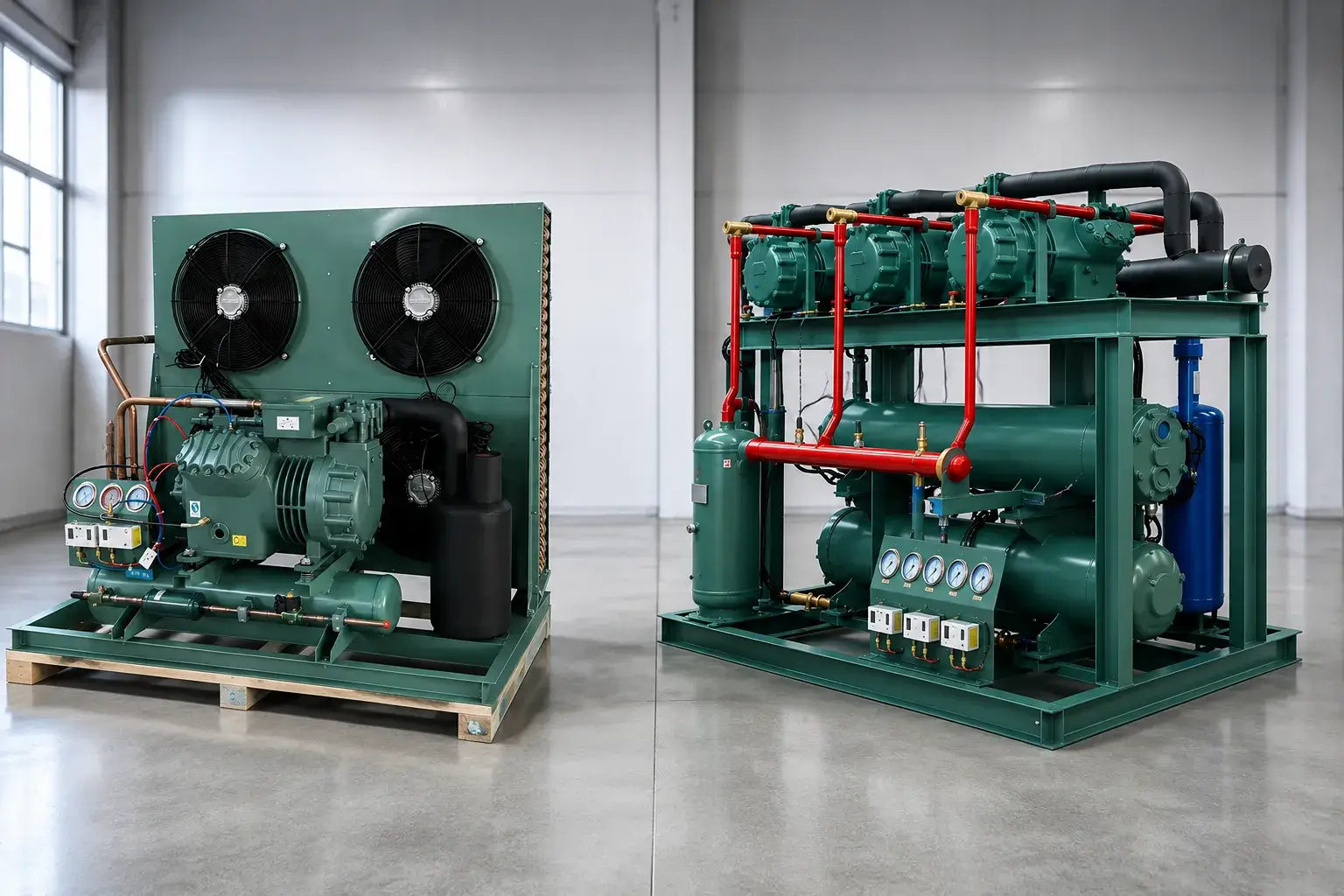
| System Type | Application Scale | Efficiency Level | Typical Use |
|---|---|---|---|
| Piston system | Small–medium plants | Medium | Local processing facilities |
| Screw system | Industrial plants | High | Large seafood factories |
| CO₂ / advanced systems | Modern export plants | Very high | Energy-focused projects |
System selection is usually based on capacity, temperature requirements, and long-term operating cost.
Cold Room Structure and Material Selection
Seafood environments are highly corrosive due to salt, moisture, and frequent washing cycles.
Common materials include:
- 304/316 stainless steel for wet areas
- Food-grade PU insulation panels
- Anti-corrosion coated evaporators
In coastal factories, 316 stainless steel is often used because it performs better in long-term corrosion resistance.
Airflow and Temperature Distribution Design
Good airflow design ensures:
- Even temperature distribution
- No hot or cold spots inside storage zones
- Stable conditions across all pallet positions
Large cold rooms typically rely on multi-fan evaporator systems to maintain consistency.
Floor, Door, and Drainage Engineering
Seafood plants operate in constant wet conditions, so structural design becomes important.
Key points include:
- Anti-slip industrial flooring
- Fast-opening insulated doors for frequent access
- Sloped drainage systems to avoid water accumulation
Poor drainage is often one of the first issues that leads to long-term maintenance problems.
Hygiene and Food Safety in Fish Cold Storage
HACCP and ISO Compliance Requirements
Cold storage systems are expected to support:
- Continuous temperature recording
- Critical control point monitoring
- Full traceability for each batch
These requirements are standard in export-oriented seafood operations.
Cross-Contamination Prevention Strategy
To reduce contamination risks:
- Separate raw and processed storage areas
- Clear zoning design within facilities
- Dedicated tools and handling equipment
In seafood plants, high humidity makes zoning especially important.
Cleaning and Sanitation Procedures
Common practices include:
- High-pressure cleaning systems
- Regular disinfection cycles
- Anti-bacterial surface treatment
Compared to dry food industries, seafood facilities require more frequent cleaning due to organic residue.
Corrosion and Material Protection
Salt and humidity accelerate corrosion significantly.
Typical solutions include:
- 316 stainless steel in exposed areas
- Condensation control systems
- Regular drying and maintenance routines
Without proper protection, equipment lifespan can be noticeably shortened in coastal environments.
Cold Chain Logistics for Seafood Industry
From Fishing Vessel to Processing Plant
Typical flow:
- Onboard RSW pre-cooling
- Port unloading and temporary storage
- Refrigerated transport to processing plant
The earliest cooling stage often has the greatest impact on final quality.
Transportation of Frozen Seafood
Common transport methods include:
- Refrigerated trucks
- Reefer containers
- Real-time temperature monitoring systems
Stable transport conditions are directly linked to export acceptance rates.
Cold Chain Break Risks and Impact
Temperature fluctuations during logistics can lead to:
- Texture degradation
- Shortened shelf life
- Product downgrade or rejection
- Financial loss in export operations
In practice, cold chain stability is often a key competitive factor in seafood export business.
People Also Ask
What is the ideal temperature for fish cold storage?
Fresh fish is usually stored at 0°C to 2°C, while frozen seafood is kept at -18°C or lower depending on product requirements.
What is IQF freezing in seafood processing?
IQF is a freezing method that freezes seafood individually so each piece remains separate after freezing, improving handling and product appearance.
How long can fish be stored in cold storage?
- Chilled fish: 1–7 days depending on species and handling conditions
- Frozen fish: 3–12 months depending on temperature and packaging
How do you design a fish processing cold room?
Key factors include:
- Temperature zoning based on workflow
- Humidity control system design
- Airflow distribution planning
- Corrosion-resistant material selection
- Stable refrigeration system configuration
How do you prevent cross-contamination in seafood cold rooms?
Main approaches include:
- Separation of raw and processed zones
- Dedicated tools and handling systems
- Controlled workflow layout inside the plant
Conclusion: Building an Efficient Fish Cold Storage System
An industrial fish cold storage system is not a single room, but a coordinated temperature-controlled production and logistics network.
A properly designed system typically includes:
- Chilled storage (0°C to 2°C)
- Frozen storage (-18°C and below)
- Ultra-low temperature systems (-25°C to -60°C)
- Refrigeration and airflow engineering
- Hygiene, drainage, and corrosion-resistant design
In real seafood processing operations, cold storage design directly affects product yield, export acceptance rate, and long-term operating cost.
For companies competing in international seafood markets, cold storage is not just infrastructure—it is part of production capability and pricing strength.