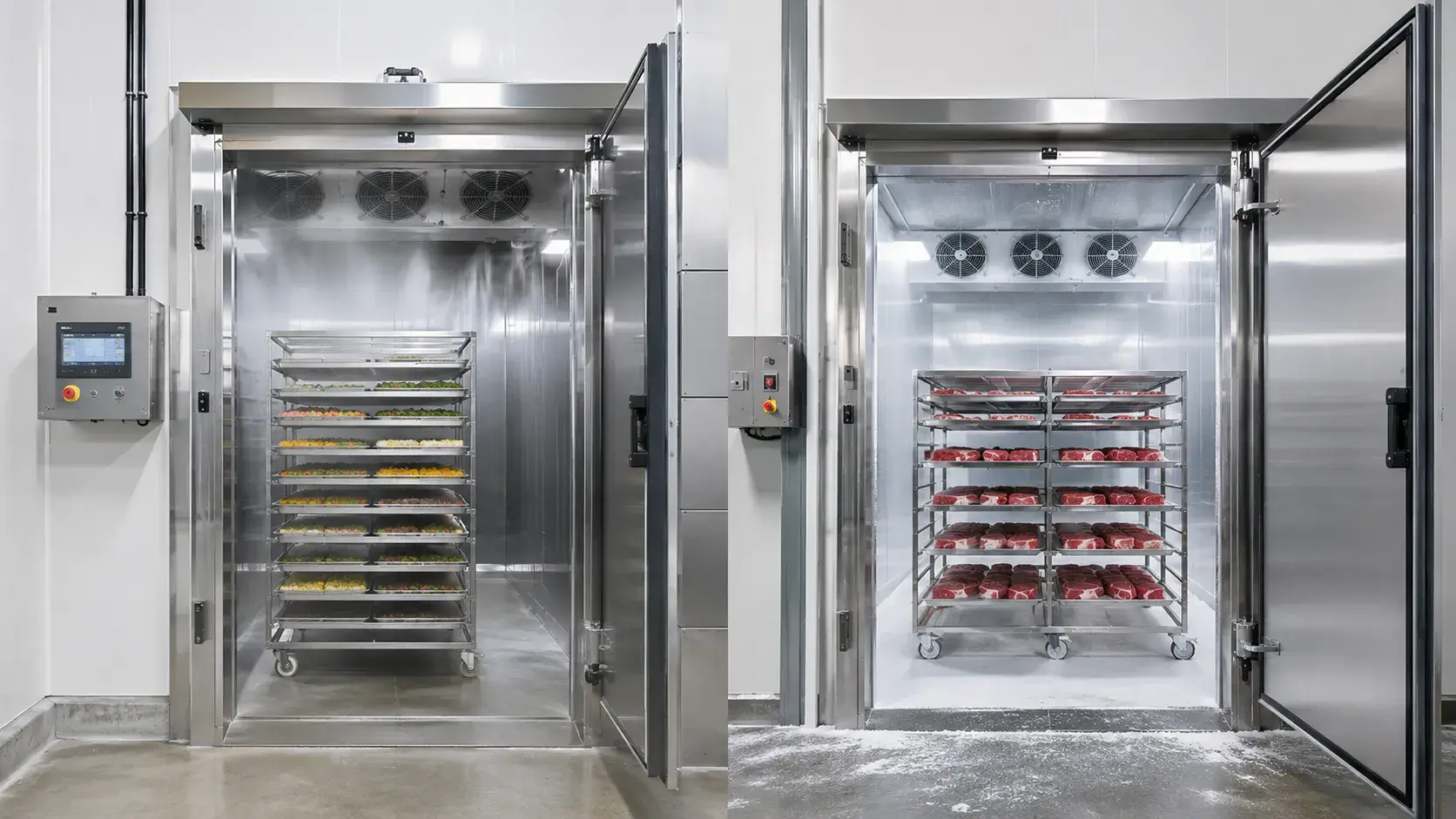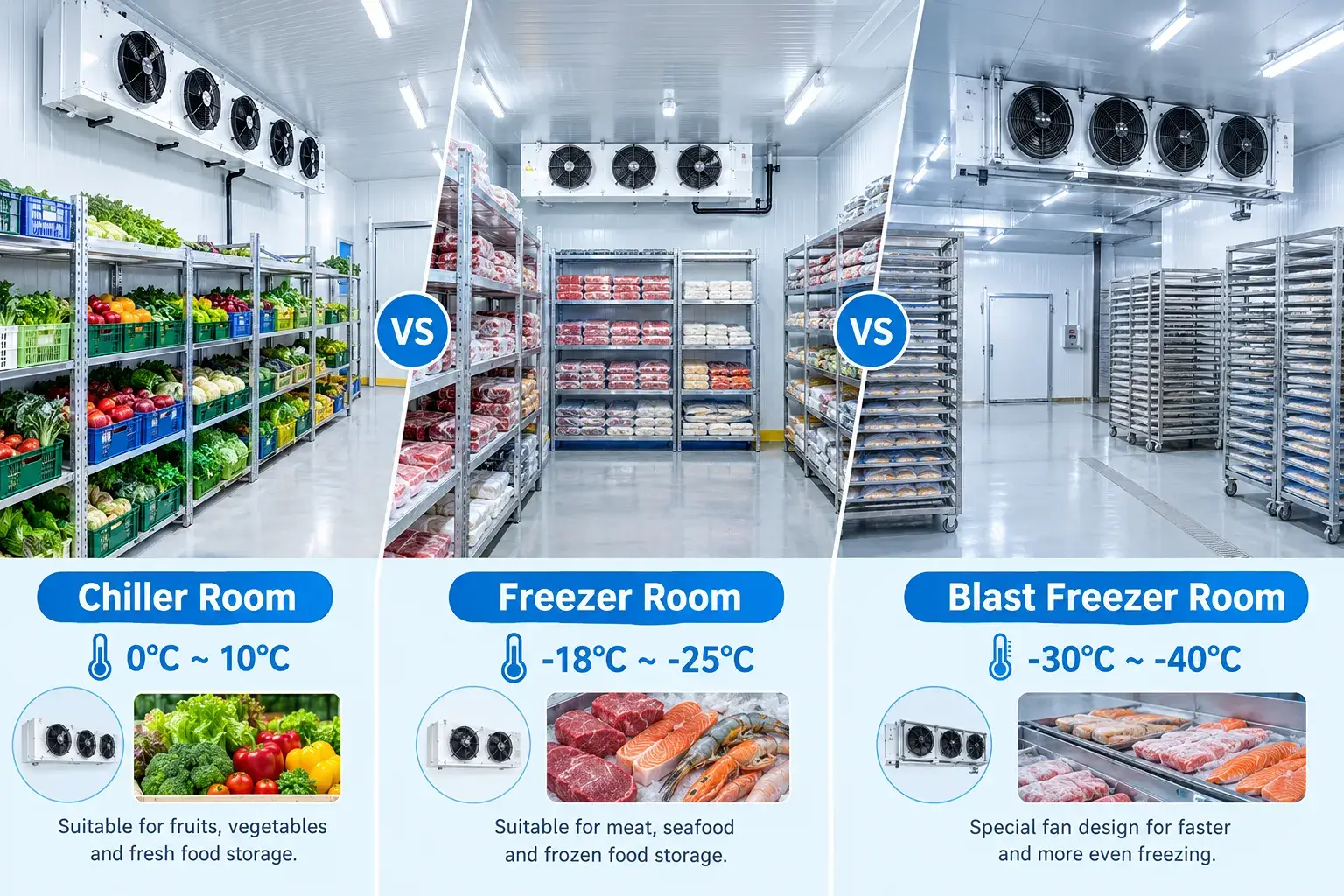
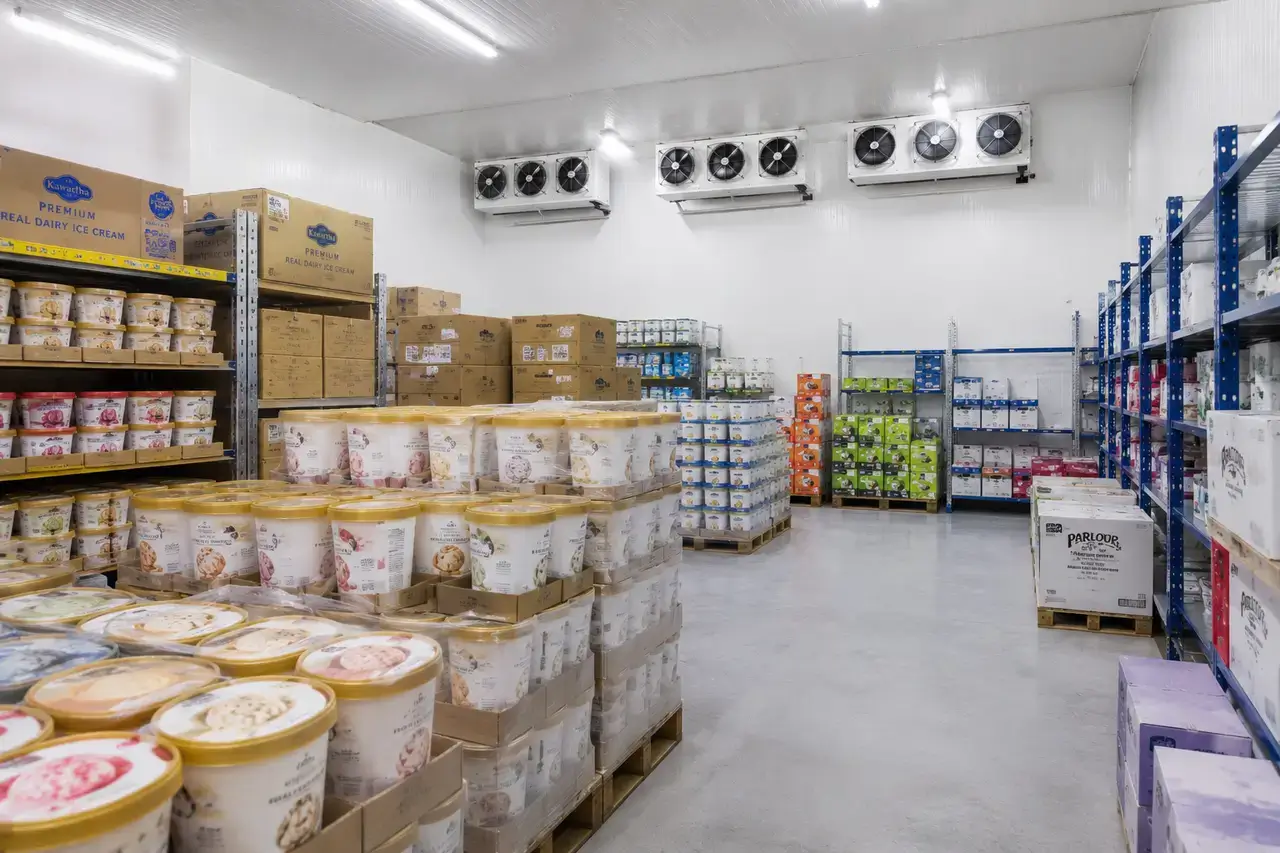
Introduction
Ice cream is a highly temperature-sensitive frozen dairy product. Unlike general frozen foods, its internal structure is composed of fine ice crystals, milk fat, air cells, and dissolved sugars. This structure is thermodynamically unstable when exposed to temperature fluctuations.
In real cold chain operations, the main quality loss does not come from storage duration itself, but from temperature instability during storage and handling cycles. Even small thermal fluctuations can trigger recrystallization, leading to coarse texture and reduced creaminess.
In industrial practice, maintaining ice cream quality is not only about “keeping it frozen”, but about controlling temperature stability, airflow uniformity, and phase change behavior inside the product.
This article explains industrial ice cream cold storage from an engineering perspective:
- Cold storage temperature design standards
- Cold room system configuration for ice cream
- Ice crystal formation mechanism and control
- Industrial freezer design principles
- Cold chain operation best practices
Why Ice Cream Cold Storage Requires Strict Control
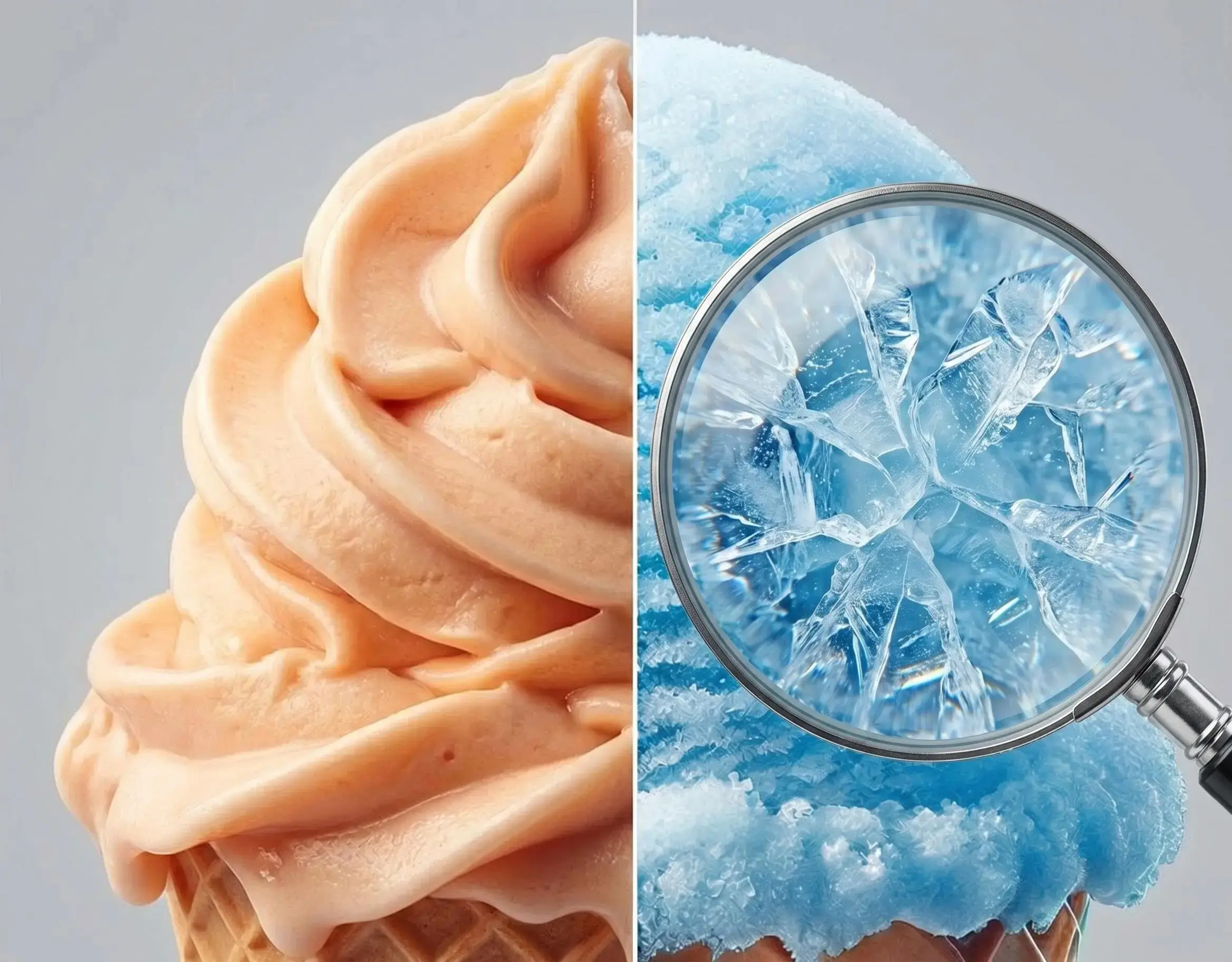
Ice Cream Is a Metastable Frozen System
Ice cream is not a solid block of ice. It is a multi-phase frozen emulsion system, and its stability depends on maintaining frozen microstructure.
When temperature fluctuates:
- Small ice crystals partially melt
- Water migrates within the matrix
- Re-freezing forms larger crystals
This process is irreversible in most commercial conditions.
Ice Crystal Growth Mechanism (Key Engineering Issue)
Ice crystal enlargement is mainly driven by:
- Temperature cycling near melting point
- Latent heat exchange inside packaging
- Moisture diffusion between micro-regions
- Air temperature instability inside cold rooms
In large warehouses, the problem is usually not low temperature, but temperature non-uniformity across storage zones.
Impact on Product Quality
Once recrystallization occurs, the following changes are observed:
- Loss of smooth mouthfeel
- Grainy or icy texture
- Structural collapse after thawing
- Reduced premium product perception
This is why industrial systems prioritize temperature stability over absolute temperature alone.
Ice Cream Cold Storage Temperature Design
Standard Storage Temperature Range
| Feature | Standard Frozen Storage | Deep Freezer Storage |
|---|---|---|
| Temperature | -18°C | -25°C to -40°C |
| Shelf Life | Medium | Long-term |
| Cost | Lower | Higher |
| Use Case | Retail distribution | Industrial bulk storage |
Industrial ice cream storage is typically designed at:
- -18°C to -25°C
However, in engineering practice: - Standard frozen storage: -18°C
- Long-term export storage: -22°C to -25°C
- Premium products: below -24°C
Why -18°C Is Not Always Enough
At -18°C, ice cream remains frozen, but:
- Micro-melting can still occur during door openings
- Surface recrystallization risk increases
- Thermal buffer capacity is limited
For high-value products, lower temperature improves structural stability.
Temperature Stability Requirement
More important than setpoint:
- Recommended fluctuation: ±0.5°C to ±1°C
- Avoid frequent short-cycle warming
In large cold rooms, stability depends more on: - Air distribution system
- Door system design
- Load handling behavior
Temperature Differences for Ice Cream, Butter, and Cream Storage
| Dairy Product | Temperature | Notes |
|---|---|---|
| ❄️ Ice Cream / Frozen Dairy | ≤ -18°C | Avoid temperature fluctuation |
| 🧈 Butter | 0–4°C | Short-term chilled; can be frozen for long-term |
| 🥛 Heavy / Whipping Cream | 2–6°C | Keep consistently refrigerated |
| 🥛 Pasteurized Fresh Milk | 2–6°C | Must maintain cold chain |
| 🥣 Yogurt / Fermented Milk | 2–6°C | Preserve taste and live cultures |
| 🧀 Cream Cheese / Mascarpone | 2–6°C | Best consumed soon after opening |
| 🧀 Processed Cheese | 2–6°C | Standard refrigeration |
| 🧀 Mozzarella | 2–6°C | Common chilled storage |
| 🧀 Hard Cheese | 4–10°C | Stable chilled storage |
| 🥛 UHT Milk / Shelf-stable Yogurt | < 25°C (unopened) | Refrigerate after opening |
| 🥫 Condensed Milk | Ambient / 2–6°C | Refrigerate after opening |
| 🥛 Milk Powder | Cool, dry place | Avoid moisture; no refrigeration |
Industrial Cold Room Design for Ice Cream Storage
Cold Room Structure Requirements
Ice cream cold rooms typically use:
- PU / PIR insulated panels (100–200mm)
- Thermal bridge-free structural joints
- Vapor-tight sealing system
The goal is to reduce: - Heat ingress
- Moisture infiltration
- Condensation risk
Airflow Design (Critical Factor)
Air distribution directly affects ice crystal stability.
Recommended engineering principles:
- Uniform airflow circulation across pallets
- Avoid direct high-velocity airflow on product surface
- Maintain consistent air return path
Typical design range: - Air velocity: 0.2–0.5 m/s
Poor airflow design leads to: - Local warming zones
- Uneven product quality
- Frost accumulation near evaporators
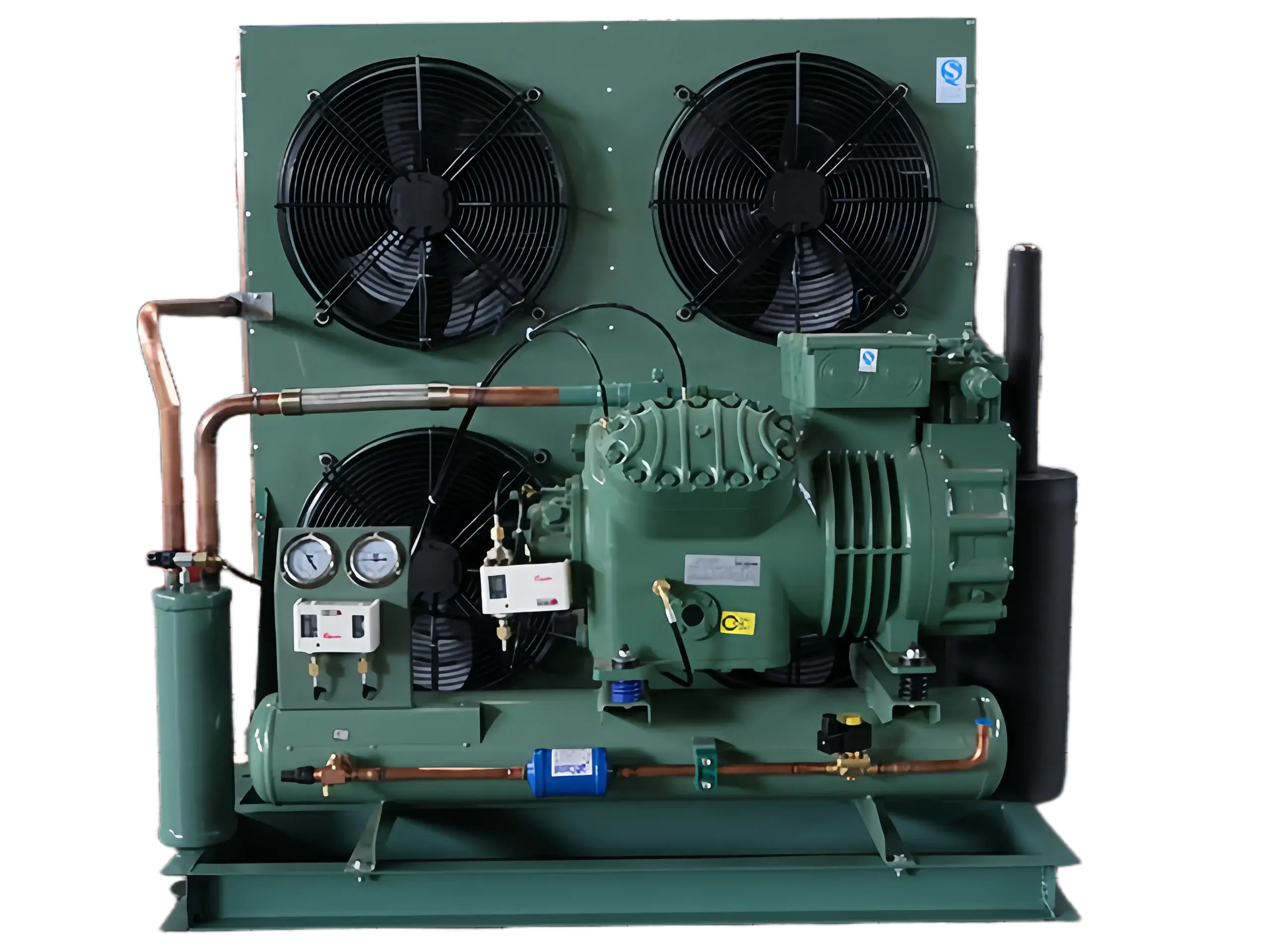
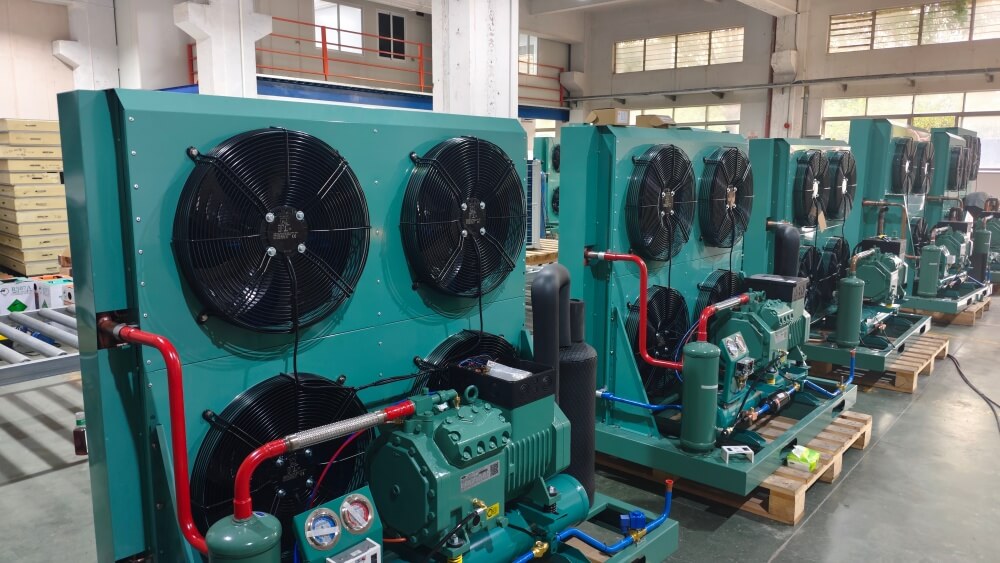
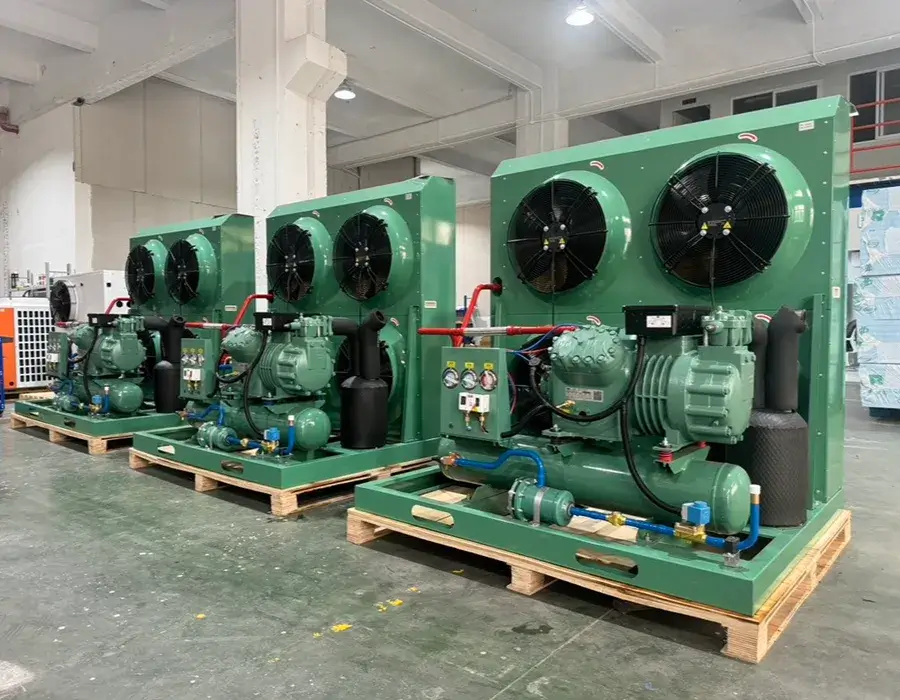
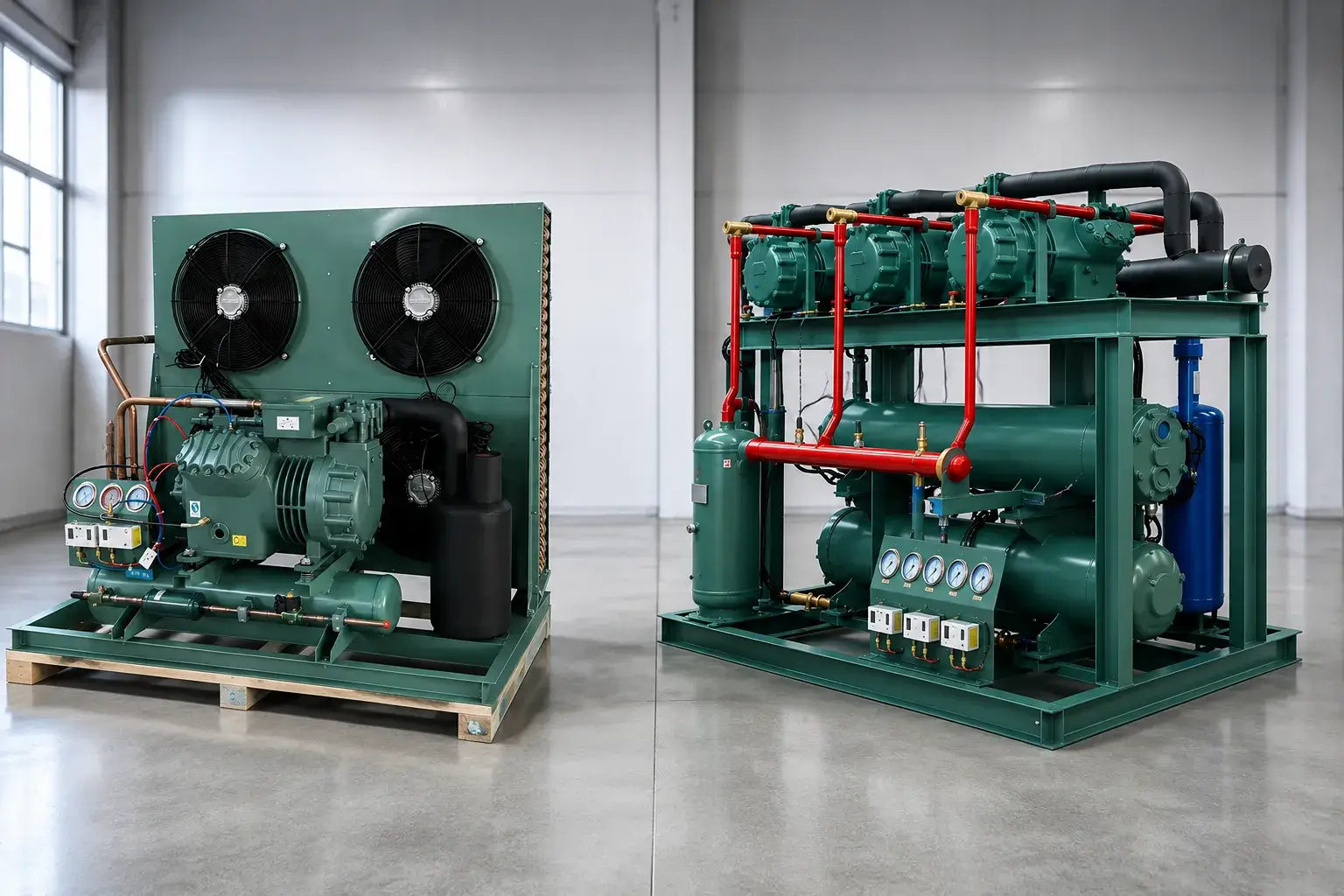
Refrigeration System Configuration
Industrial systems typically include:
- Screw or scroll compressors
- High-efficiency evaporators
- Air-cooled or evaporative condensers
Key engineering parameter: - Evaporating temperature usually 8–12°C lower than room temperature
System stability depends on: - Proper load matching
- Defrost cycle control
- Compressor staging design
Door and Loading Area Design
The highest thermal loss occurs at:
- Loading docks
- Door opening zones
Common engineering solutions: - Rapid roll-up freezer doors
- Air curtains
- Buffer rooms (pre-cooling zones)
In large facilities, door design often determines overall energy efficiency.
Ice Crystal Formation Control Technologies
Rapid Freezing
Before storage, ice cream must pass through a controlled freezing phase.
Blast freezing helps:
- Reduce ice crystal size
- Lock microstructure early
- Improve long-term texture stability
Critical zone: - -1°C to -5°C phase transition region
Avoiding Thermal Cycling
The most damaging factor is repeated:
partial thawing → refreezing cycles
This is usually caused by:
- Frequent handling
- Poor warehouse zoning
- Temperature instability near doors
Packaging Insulation Performance
Packaging acts as a micro thermal buffer.
Good packaging helps:
- Slow heat penetration
- Reduce surface recrystallization
- Stabilize internal moisture distribution
Industrial systems often combine: - Multilayer cartons
- Insulated liners for export logistics
Types of Ice Cream Cold Storage Systems
Manufacturing Plant Cold Rooms
Used directly after production:
- Short-term buffering storage
- Pre-distribution staging
Key features: - High turnover rate
- Fast access design
- Stable -18°C environment
Distribution Freezer Warehouses
Used for regional logistics:
- Palletized storage
- Batch inventory control
- Multi-client storage
Engineering focus: - Space utilization
- Airflow uniformity
- Energy efficiency
Deep Freezer Storage (-25°C Systems)
Used for:
- Export batches
- Long-term storage
- Seasonal production balancing
System characteristics: - Lower evaporating temperature
- Higher insulation requirement
- Stronger compressor load design
Automated Cold Storage Warehouses
Large-scale operations may include:
- ASRS pallet systems
- IoT temperature monitoring
- Smart defrost control systems
Main advantage: - Reduced human-induced temperature fluctuation
Key Equipment in Ice Cream Cold Storage Systems
Refrigeration System
Core components:
- Compressors
- Evaporators
- Condensers
System performance determines: - Temperature stability
- Energy consumption
- Recovery speed after door opening
Insulated Cold Room Panels
Material options:
- PU panels (cost-effective)
- PIR panels (higher fire resistance, better insulation)
Key design goal: - Minimize thermal bridging
Air Distribution System
Functions:
- Maintain uniform temperature
- Prevent stratification
- Balance load distribution
Large warehouses rely heavily on multi-fan evaporator systems.
Monitoring and Control System
Modern systems include:
- IoT temperature sensors
- Alarm thresholds
- Cloud-based monitoring
- Data logging for compliance
Critical for: - HACCP compliance
- Export certification
- Quality traceability
Cold Chain Practices for Preventing Ice Cream Quality Loss
Maintain Stable Temperature Discipline
- Keep storage below -18°C
- Avoid frequent fluctuations
- Minimize door opening time
Optimize Loading Operations
Engineering best practices:
- Use buffer loading zones
- Pre-cool incoming goods
- Reduce exposure time
Improve Pallet Layout Design
Correct stacking ensures:
- Airflow channels remain open
- No wall contact
- Even cooling distribution
End-to-End Cold Chain Monitoring
Cold chain should be controlled across:
- Production
- Storage
- Transportation
- Retail display
Weakest link determines final product quality.
FAQ
What temperature is ideal for ice cream storage?
Industrial ice cream storage is typically maintained at -18°C or lower, with premium storage often at -22°C to -25°C.
Why does ice cream develop ice crystals in storage?
The main cause is temperature fluctuation, which triggers partial melting and recrystallization of water inside the product.
How can ice crystal formation be prevented?
Key methods include:
- Stable low-temperature control
- Minimizing thermal cycling
- Proper airflow design
- Rapid freezing before storage
What is the best humidity level in cold storage?
Typical range is 70%–80% RH, depending on facility design and defrost control strategy.
Conclusion
Industrial ice cream cold storage is not simply a low-temperature environment. It is a controlled engineering system that manages:
- Temperature stability
- Airflow uniformity
- Phase change behavior
- Cold chain continuity
A properly designed system helps manufacturers and distributors: - Preserve product microstructure
- Reduce recrystallization risk
- Improve shelf life consistency
- Stabilize export quality standards
For industrial applications, the real performance difference comes not from “how cold the room is”, but from how stable and uniform the system operates under dynamic load conditions.