Introduction
The moment fresh produce is harvested, quality starts to shift. In real handling environments, the biggest losses rarely happen in the field itself, but in the delay before proper cooling kicks in.
It’s common to see leafy greens or fruit picked early in the morning, then left in bins or staging areas while waiting for transport or processing. Under rising ambient temperatures, internal product heat builds quickly. By the time the produce reaches a cold room hours later, part of the shelf life has already been lost—moisture has dropped, respiration has accelerated, and microbial activity has already started.
This is where post-harvest cooling and cold chain design become critical. Not as separate systems, but as one continuous temperature control sequence that determines whether products arrive with full marketable life or already halfway through deterioration.
Why Fresh Produce Cold Storage Is Essential After Harvest
Fresh produce is still biologically active after harvest. It keeps respiring, consuming stored sugars, and releasing moisture. Without temperature control, this activity accelerates sharply.
Rapid quality loss in fruits and vegetables
Three mechanisms usually drive most of the deterioration:
- Respiration continues at field temperature: Enzymatic activity remains high. A general rule in post-harvest handling is that every 10°C increase can significantly speed up respiration, directly shortening shelf life and reducing flavor quality.
- Moisture loss affects appearance and weight: Warm air increases vapor pressure difference, pushing water out of plant tissue. Even a small 2–3% weight loss in leafy vegetables is enough to cause visible wilting. - Microbial growth spreads faster in warm conditions: Once temperature is not controlled, bacteria and fungi develop quickly, especially in bruised or damaged areas, and can spread through bulk bins during storage or transport.
What cold storage actually improves
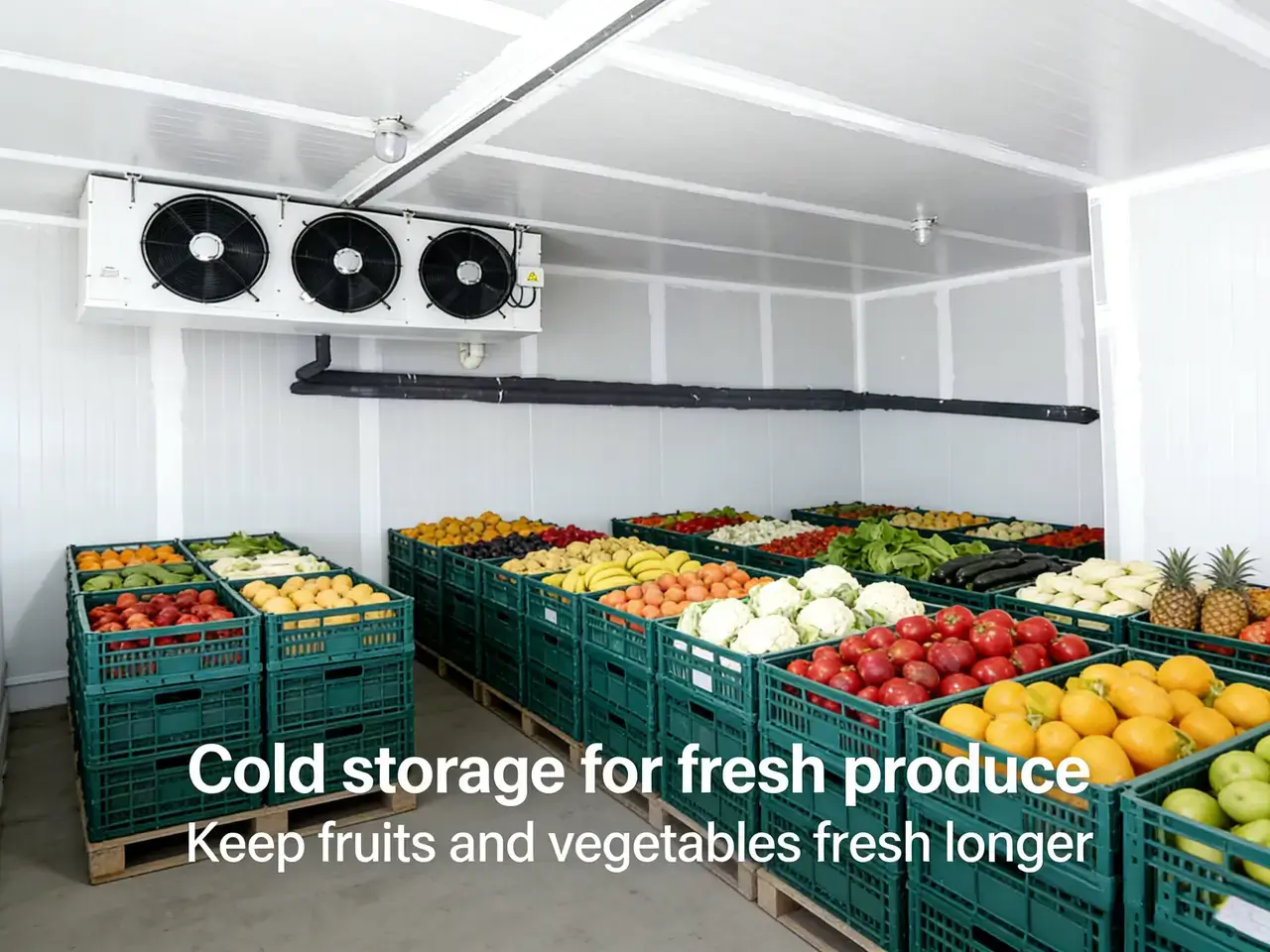
A properly designed cold storage system slows all of these processes at once. Lower temperatures reduce respiration rate, stabilize moisture levels, and limit microbial growth.
In practical terms, berries held close to 0°C can often maintain acceptable quality for 10–14 days, while the same product stored around 10°C may only last a few days before quality drops below market standards.Role of the post-harvest cold chain
Cold storage alone is not enough. It only works when every step—from field harvest, pre-cooling, transport, to distribution—stays within controlled temperature ranges.
Once the chain is broken at any point, the remaining shelf life cannot be recovered. This is why modern supply chains focus heavily on temperature consistency across all handling stages rather than just storage capacity.
Post Harvest Cooling Technology: The First Step to Preserving Freshness
Post-harvest cooling is not a single machine or system. It refers to a set of methods designed to remove field heat as quickly as possible before storage.
Why immediate cooling matters
Freshly harvested produce carries a large amount of field heat. A strawberry picked at around 30°C, for example, continues consuming sugars rapidly until that heat is removed.
The longer the delay before cooling, the more irreversible quality loss occurs. For high-respiration crops, even a short delay can noticeably reduce shelf life.
How soon should cooling start?
Timing depends on crop type, but the principle is consistent: cooling should begin as soon as operationally possible after harvest.
- Leafy greens: ideally within 1–2 hours
- Stone fruits: around 3–4 hours
- Citrus and some hardy crops: can tolerate longer, but still benefit from early cooling
The key point is that cooling delay does not affect quality in a linear way. The impact increases quickly as temperature remains high.
| Fruit Type | Optimal Pre-cooling Window (After Harvest) | Target Pulp Temperature | Key Notes |
|---|---|---|---|
| Strawberry | Best within 2 hours; no later than 4 hours | Fresh/local market: 8–10°C Long-distance transport: 0–5°C |
Extremely perishable; rapid pre-cooling is critical. The cooling process itself typically takes 1–2 hours. |
| Grape | Within 6 hours | -1 to 0°C | Pre-cooling duration: 12–24 h (dry northern regions) or 24–72 h (humid southern regions). For Kyoho, finish within 12 h to prevent stem drying. |
| Apple | Within 24 hours | 0 to 4°C (2–4°C for early or sensitive cultivars) | The entire cooling process should be completed within 48 hours. Critical for mid-/late-season Delicious strains (e.g. Huaniu) to prevent mealiness. |
| Pear | Within 24 hours | Crisp-flesh types: 5–8°C (1–2 days) Soft-flesh types (Nanguo): 5–7°C (2–3 days) |
Pre-cooling regimes differ markedly between crisp and soft types. Pears are chill-sensitive; step-down cooling is often required. |
| Citrus | Within 24 hours (orange/grapefruit) | Orange/grapefruit: 8–10°C or lower Pomelo: pre-cool to ~8–10°C within 4–6 h Shatangju: 12–15°C (stage 1), then 8–10°C (stage 2) Kumquat: 8–10°C |
Autumn/winter-harvested citrus may be stored without pre-cooling if ambient temperatures are already low. Tropical-origin grapefruit still needs pre-cooling within 24 h. |
| Kiwifruit | Within 24 hours; 8–12 hours is preferred | 0 to 2°C (alternatively, cure at 10–12°C for 24 h first) | Pre-cooling is relatively slow, lasting 24–48 hours. Maintain 90–95% relative humidity throughout. |
| Pineapple | As soon as possible (immediately) | 20–30°C (initial temperature reduction) | Tropical fruit; the main goal is to slow metabolism and prevent over-ripening. |
| Banana | Within 24–48 hours | 13 to 15°C | Highly chill-sensitive (injury occurs below 12°C). Forced-air cooling is recommended. |
Importance of pre-cooling in the system
Pre-cooling is often misunderstood as part of cold storage, but it actually serves a different function. Cold rooms are designed to maintain temperature, not absorb large heat loads from freshly harvested produce.
Without pre-cooling, storage systems get overloaded, room temperature rises, and already-cooled inventory may also be affected. That’s why pre-cooling is treated as a separate stage in most commercial facilities.
Main Pre-Cooling Methods for Fresh Produce
Different crops require different cooling approaches. Choice usually depends on product type, packaging, and throughput requirements.
| Pre-cooling Method | Description | Best Suited For | Key Advantages | Limitations |
|---|---|---|---|---|
| Forced-Air Cooling (Pressure Cooling) | Cold air is pulled or pushed through ventilated packages by creating a pressure difference across the stack. | Fruits (stone fruit, berries), fruiting vegetables (tomatoes, peppers), some roots, cut flowers. | Rapid and uniform; works with already-packed produce; versatile for many commodities. | Requires correctly aligned vent holes; can cause moisture loss if air is too dry; needs dedicated fan capacity. |
| Hydrocooling | Produce is showered with or submerged in chilled, sanitized water (near 0–1°C). | Water-tolerant produce: sweetcorn, celery, carrots, asparagus, radishes, peaches. | Very fast cooling; no water loss from produce; can simultaneously wash the product. | High water-sanitation requirement to prevent cross-contamination; not suitable for water-sensitive items (e.g., some berries, bulb onions for storage). |
| Vacuum Cooling | Produce is placed in a sealed chamber; a vacuum is drawn to evaporate water rapidly from the product, extracting heat. | Leafy vegetables (lettuce, spinach, cabbage), herbs, some cut flowers (high surface-to-volume ratio). | Extremely fast (15–30 min); cools evenly inside-out; ideal for leafy greens. | High capital cost; causes a small weight loss (~1% per 5–6°C drop); often requires pre-wetting. |
| Package Icing (Top Icing / Liquid Ice) | Crushed ice, flake ice, or an ice-water slurry is placed inside or on top of packages. | Broccoli, sweetcorn, green onions, some stone fruit; mixed loads with seafood. | Provides continuous cooling during transport; maintains high humidity; relatively low equipment cost. | Adds weight and bulk; requires water-resistant packaging; ice supply chain must be reliable. |
| Room Cooling (Passive Cold Storage) | Produce is simply placed in a cold room and left to cool by natural air circulation. | Only low-respiration or pre-cooled commodities; sometimes used for pumpkins, onions, or after initial pre-cooling. | Uses existing storage infrastructure; simple operation. | Very slow, especially in the centre of bins; high risk of quality loss if used as the sole cooling step for perishables; not recommended as a primary method for highly perishable produce. |
Layout is also important. Fresh product should move directly from receiving into pre-cooling without mixing with already-cooled inventory to avoid temperature instability and contamination risks.
Fresh Produce Cold Room Design and Storage Systems
Once field heat is removed, cold storage takes over to maintain stable conditions.
What is a fresh produce cold room?
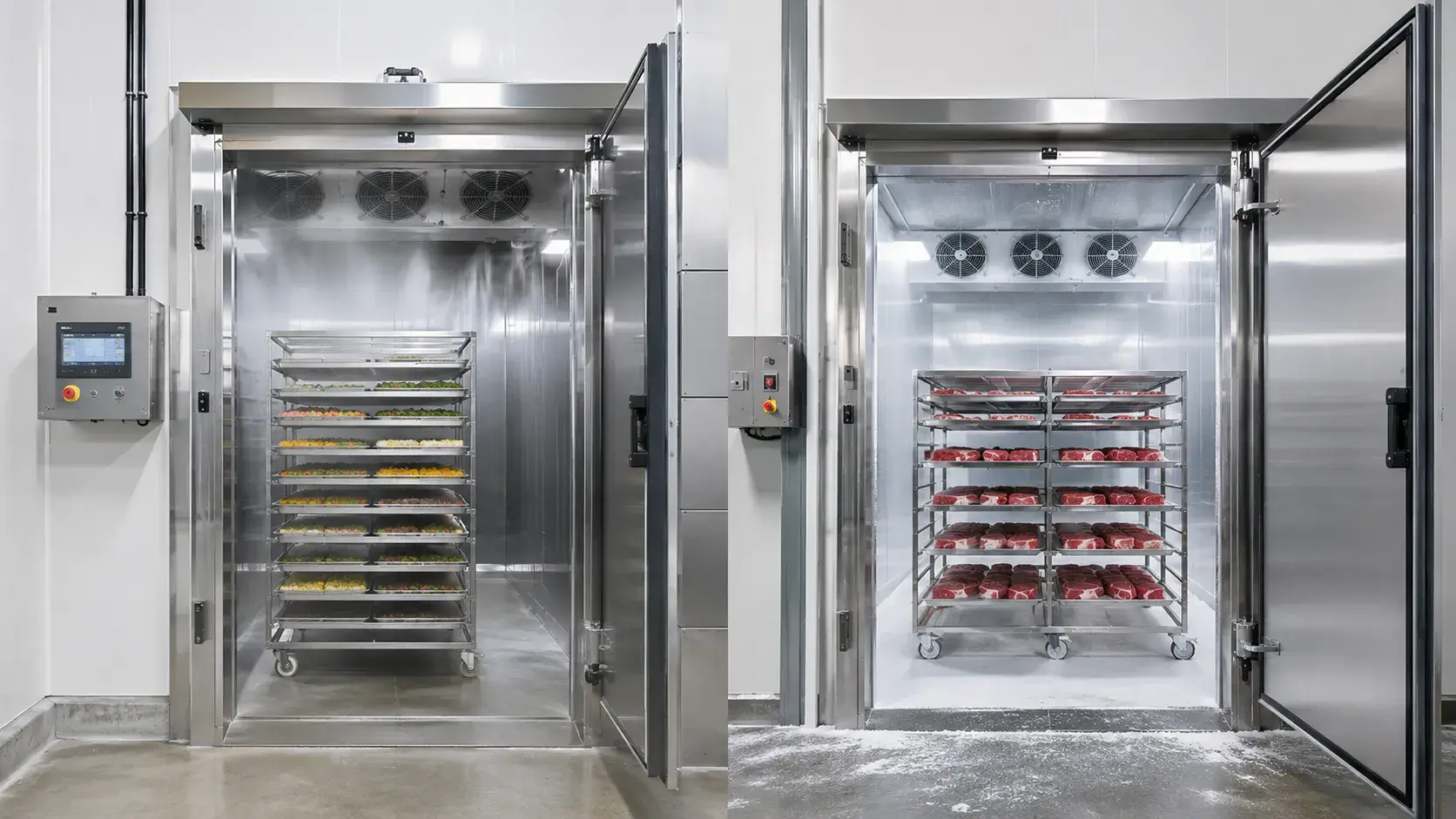
A cold room is an insulated, temperature-controlled space designed to maintain specific storage conditions over longer periods. Panels are usually made of insulated polyurethane materials with sealed joints to reduce heat leakage and moisture entry.
Floor structure is equally important, especially in facilities with forklift traffic and frequent washing. Poor floor insulation or structural design often leads to long-term maintenance issues.
Key system components
A typical cold storage system includes:
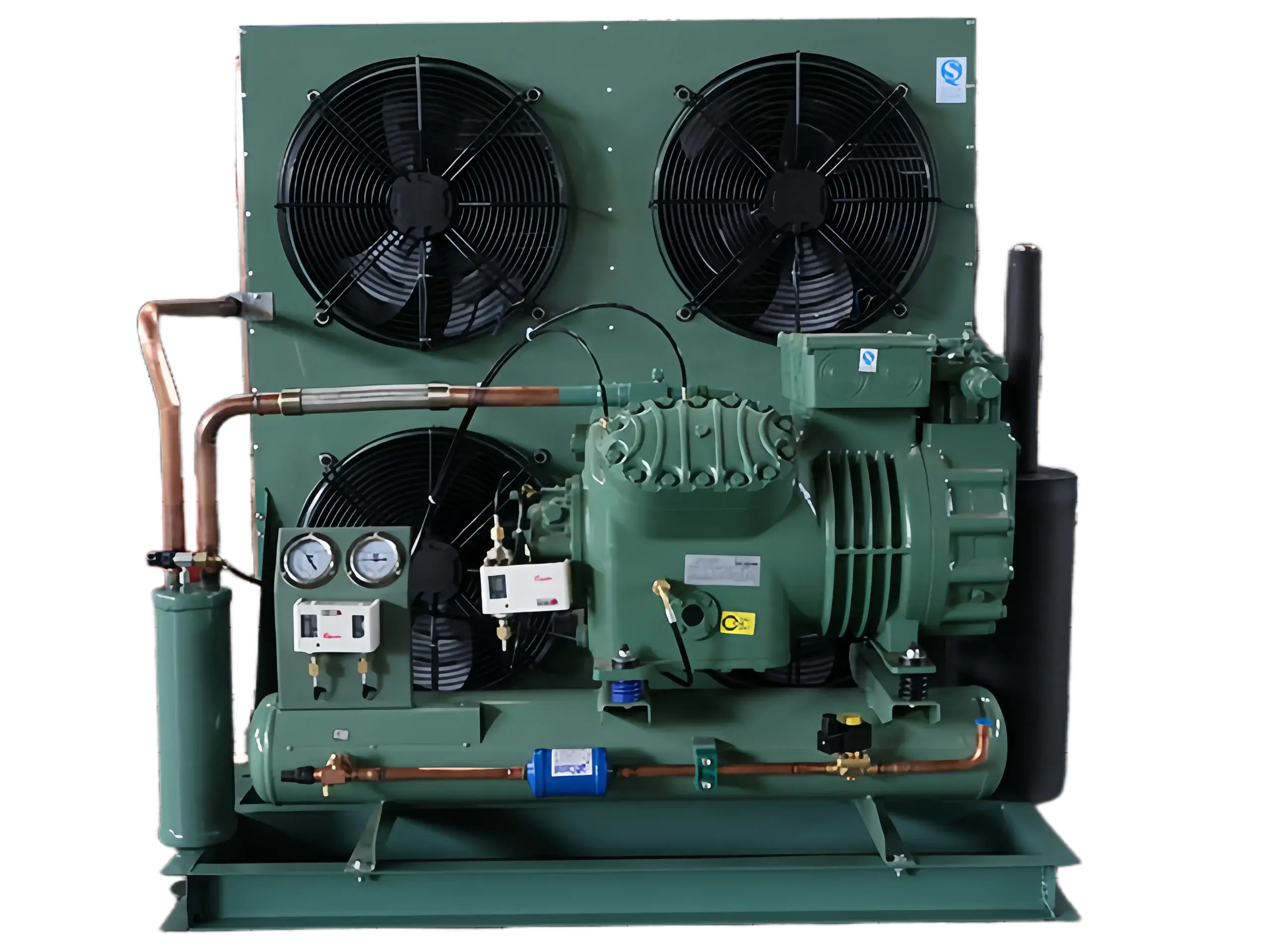
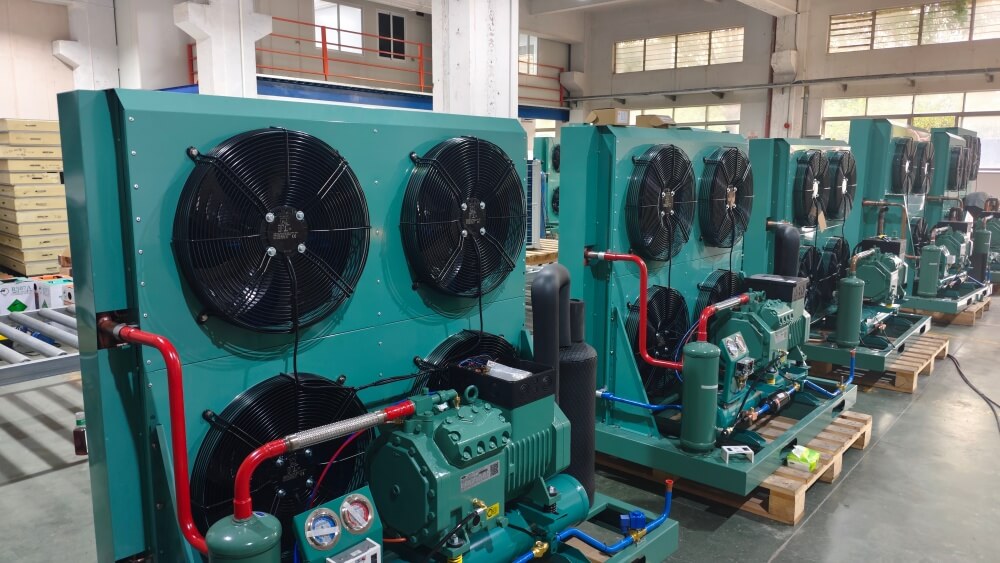
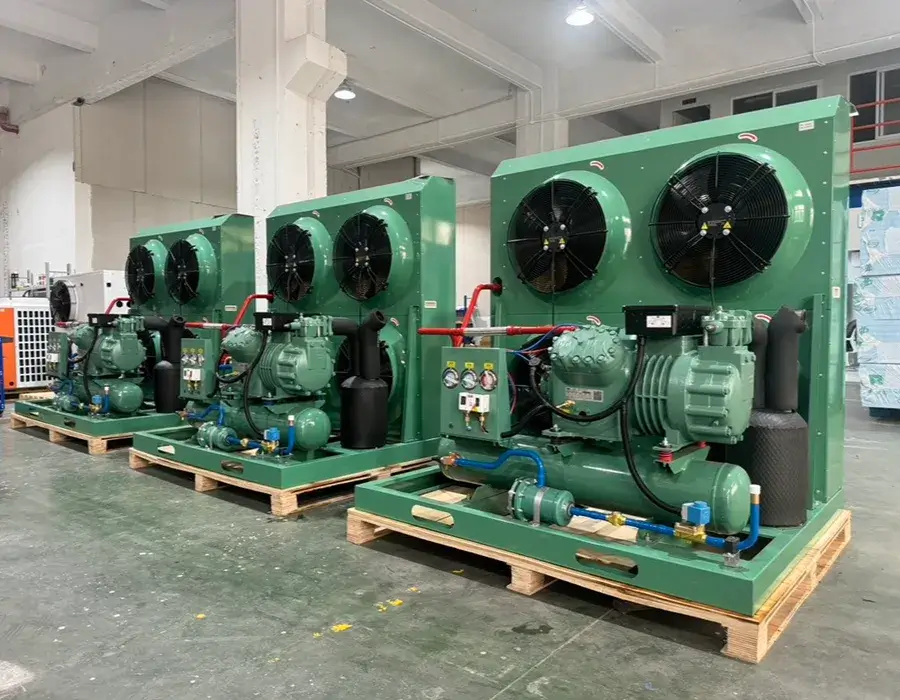
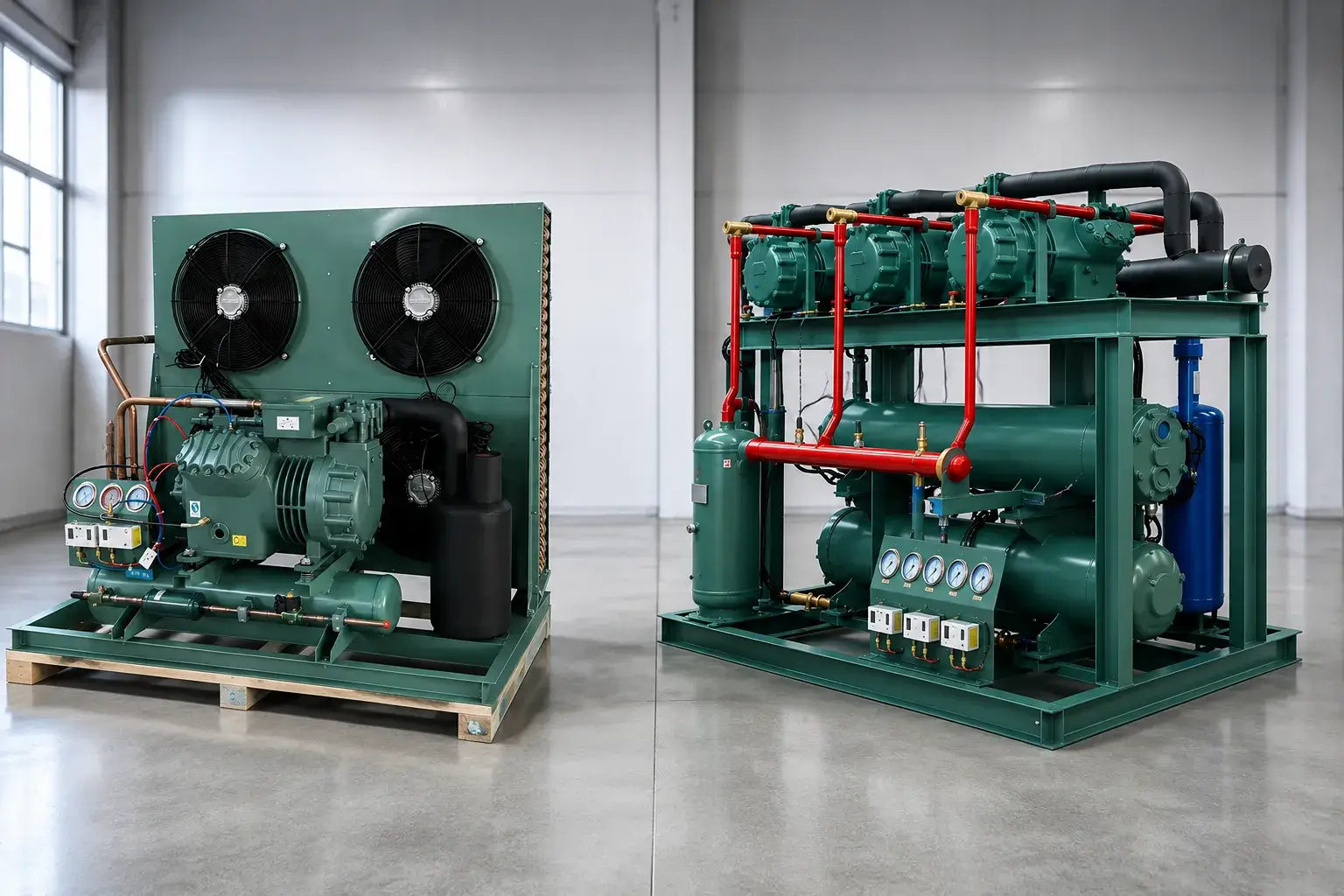
- Refrigeration system (compressor, condenser, expansion valve, evaporator)
- Air circulation system to maintain temperature uniformity
- Monitoring system for temperature and humidity logging
Each component must be sized based on real operating load, including product respiration, door openings, and handling activity.Types of cold storage use
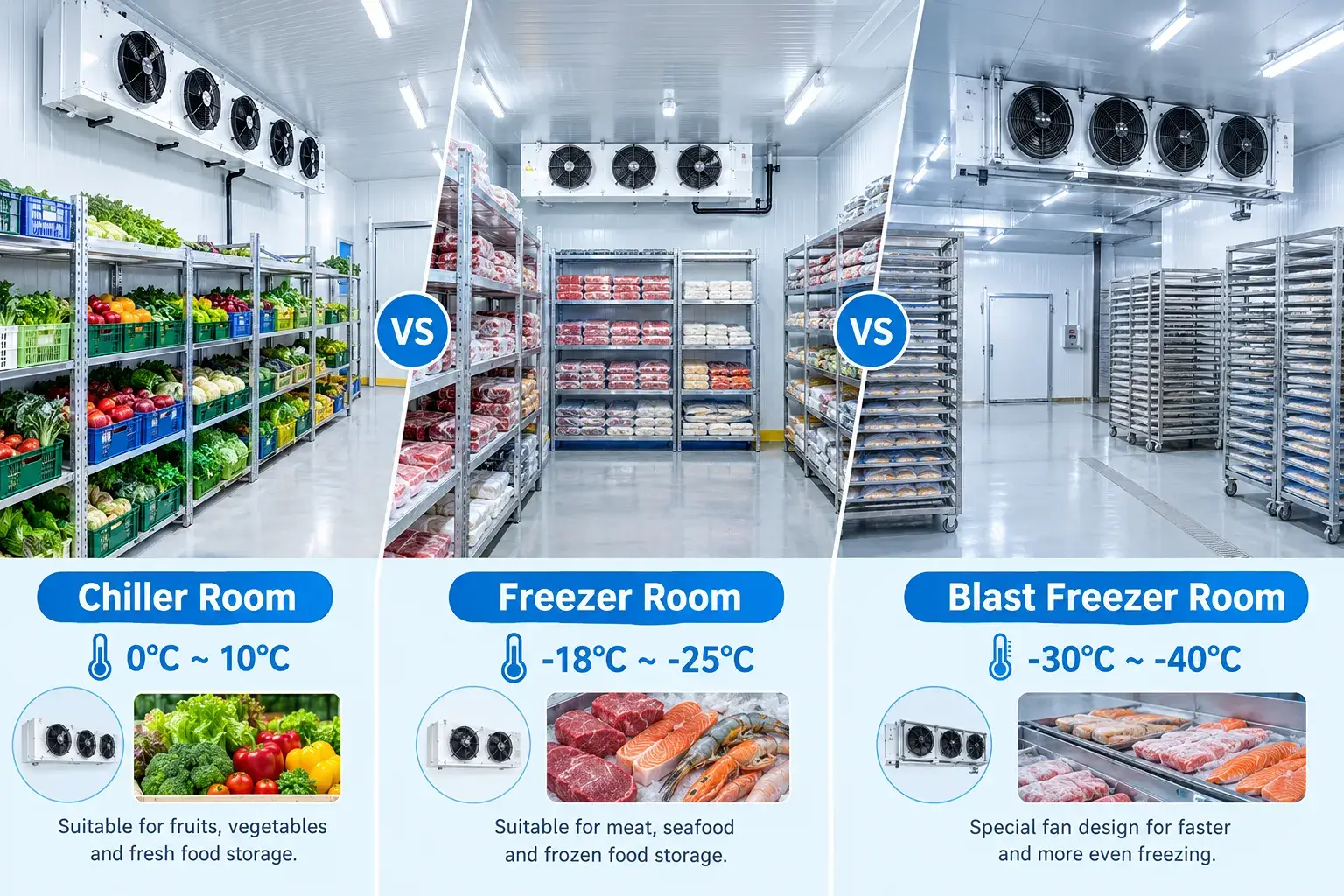
In practice, fresh produce storage systems fall into several categories:
- Standard cold rooms for short to medium storage
- Controlled atmosphere (CA) storage for long-term preservation of apples, pears, and similar crops
- Multi-temperature zones for handling different products within one facility
Optimal Fresh Produce Storage Temperature and Conditions
There is no universal storage temperature for all produce. Each crop responds differently to temperature stress.
| Commodity | Temperature (°C) | Humidity (% RH) | Life (Approx.) | Key Notes |
|---|---|---|---|---|
| Banana | 13–15 | 90–95 | 1–4 wks | Severe injury below 12°C (grey peel, hard core). |
| Mango | 10–13 | 85–90 | 2–4 wks | Chilling limit varies greatly by cultivar (8–13°C). |
| Pineapple | 7–13 | 85–90 | 2–4 wks | Mature-green: 10–13°C; riper fruit can tolerate 7°C. |
| Papaya | 10–13 | 85–90 | 1–3 wks | Injury below 10°C (scald, pitting). |
| Avocado | 5–13 (varies) | 85–90 | 2–4 wks | West Indian types need ≥12°C; Hass may tolerate 5–7°C. |
| Tomato (ripe) | 10–13 | 90–95 | 1–2 wks | Mature-green: 12–20°C for ripening; chilling injury below 10°C. |
| Cucumber | 10–12 | 90–95 | 10–14 d | Injury below 10°C (pitting, yellowing, decay). |
| Sweet Potato | 13–16 | 85–90 | 4–7 mos | Hard-core texture and off-flavors below 12°C. |
| Potato (table) | 4–7 | 90–95 | 4–8 mos | Below 4°C causes sweetening; sprouting above 7°C. |
| Winter Squash (Pumpkin) | 10–13 | 50–70 | 2–5 mos | Curing needed before storage; lower humidity reduces rot. |
| Eggplant | 8–12 | 90–95 | 1–2 wks | Chilling injury below 8°C (scald, pitting, browning). |
| Green Beans | 7–10 | 90–95 | 7–10 d | Rusty-brown spots and pitting below 5–7°C. |
| Citrus (Orange, Lemon, Lime) | 3–10 (varies) | 85–90 | 3–8 wks | Grapefruit: 10–15°C; lemons: 10–14°C; limes: 9–10°C. |
| Apple | 0–4 | 90–95 | 1–12 mos | Some cultivars are chill-sensitive; CA storage extends shelf life. |
| Pear (European) | -1 to 0 | 90–95 | 2–7 mos | Step-down cooling is often required. |
| Grape | -1 to 0 | 90–95 | 2–8 wks | SO₂ pads used for decay control; avoid free water. |
| Strawberry | 0–5 | 90–95 | 3–7 d | Extremely perishable; rapid forced-air pre-cooling is critical. |
| Blueberry | 0–2 | 90–95 | 2–4 wks | Prompt cooling is essential. |
| Peach / Nectarine | -0.5 to 0 | 90–95 | 2–4 wks | Mealy texture may develop during prolonged storage. |
| Cherry (Sweet) | -1 to 0 | 90–95 | 2–3 wks | Hydrocooling or forced-air cooling immediately after harvest. |
| Lettuce (Leaf, Head) | 0–2 | 98–100 | 2–3 wks | Very ethylene-sensitive; keep away from ethylene sources. |
| Broccoli | 0–1 | 95–100 | 10–14 d | High humidity is essential to prevent yellowing. |
| Cauliflower | 0–2 | 95–100 | 3–6 wks | Brown spotting may occur if humidity is too low. |
| Carrots (Topped) | 0–1 | 98–100 | 4–6 mos | Ethylene exposure can cause bitter flavors. |
| Cabbage | 0–2 | 95–100 | 3–5 mos | Ethylene causes leaf yellowing and abscission. |
| Mushroom | 0–2 | 90–95 | 5–7 d | Very high respiration rate; forced-air cooling recommended. |
| Onion (Dry Bulb) | 0–1 | 65–70 | 5–8 mos | Low humidity is critical to suppress sprouting and rot. |
| Garlic | 0–1 | 60–70 | 6–8 mos | Requires low humidity and proper curing before storage. |
General storage ranges
- Apples and pears: around 0–4°C depending on variety
- Berries: close to 0°C with high humidity
- Leafy vegetables: near 0°C with strict humidity control
- Tropical fruits: generally 7–13°C depending on ripeness stage
- Tomatoes and peppers: moderate cooling around 7–10°C in most cases
Humidity and airflow
Relative humidity is typically maintained between 85% and 95%. Below that range, moisture loss becomes noticeable. Above it, condensation can form, increasing the risk of decay.
Airflow needs to be enough to remove heat and gases like ethylene, but not so strong that it causes dehydration. Most systems aim for gentle, consistent circulation rather than high-speed airflow.
Practical storage principle
In real operations, the correct storage condition always depends on crop type and maturity stage. Standard charts provide a baseline, but adjustments are often made based on local varieties and handling experience.
Best Practices for Post Harvest Handling of Fruits and Vegetables
Even the best cold storage system cannot fix poor handling upstream.
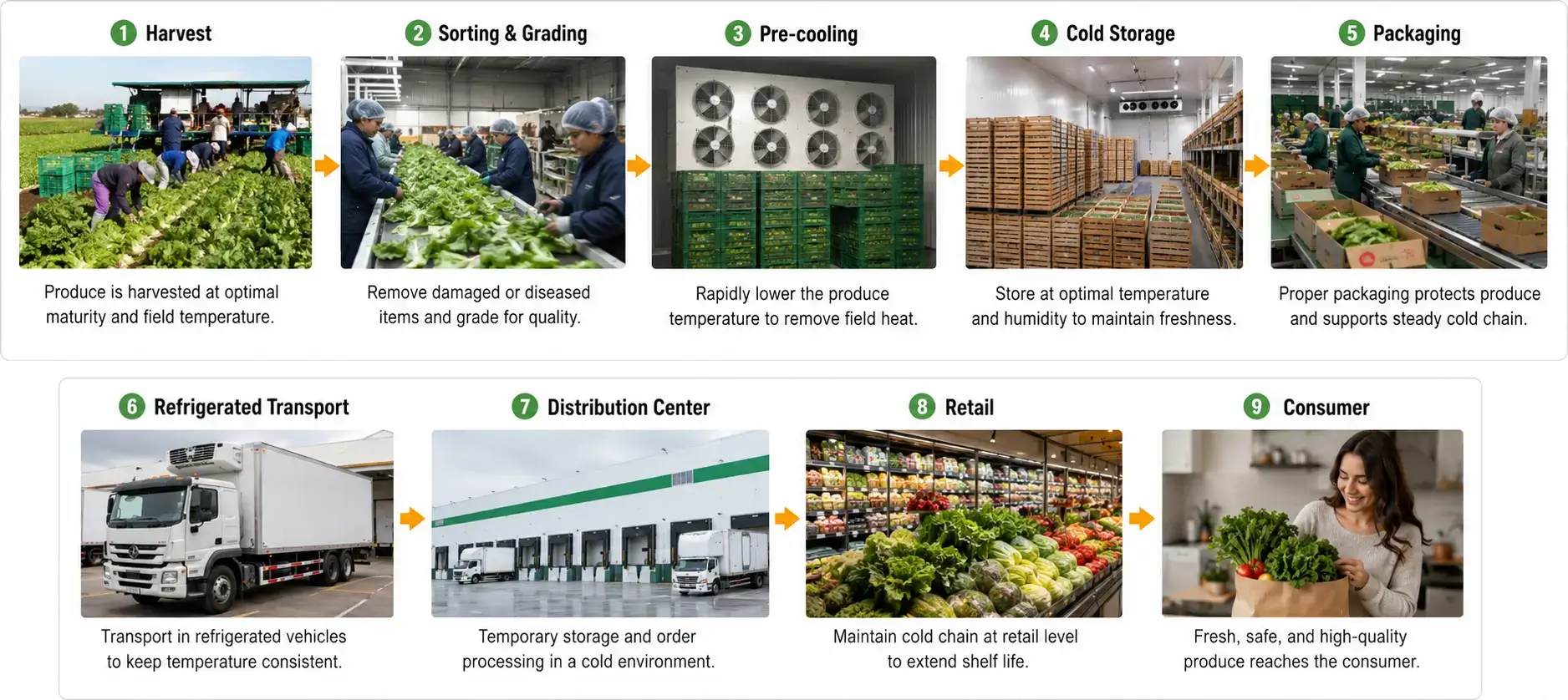
Storage process sequence
A typical workflow usually follows:
- Sorting and grading: Remove damaged or diseased product early
- Pre-cooling: Apply the correct cooling method quickly
- Packaging: Ensure airflow compatibility and protection during transport
Handling and transport considerations
Harvest timing also matters. Early morning harvesting helps reduce initial field temperature, making cooling more efficient.
Transport vehicles should be pre-cooled before loading. Otherwise, the initial temperature spike inside the truck can undo earlier cooling work.
Common storage issues
A few problems consistently appear in real projects:
- Ethylene sensitivity mismatch between products stored together
- Cross-contamination from poor sanitation or condensation
- Temperature fluctuations caused by unstable system control or frequent door openings
Pre-Cooling vs Cold Storage: What Is the Difference?
These two terms are often used interchangeably, but they serve different roles.
What is pre-cooling?
Pre-cooling is a rapid process aimed at removing field heat immediately after harvest. It is measured in hours or even minutes and focuses on speed rather than stability.
What is cold storage?
Cold storage is the long-term holding phase where already-cooled produce is kept at stable conditions for days or weeks.
Key difference
Pre-cooling protects freshness at the starting point. Cold storage preserves it over time. One without the other weakens the entire system. If produce is not pre-cooled properly, cold storage efficiency drops significantly.
How Fresh Produce Cold Storage Extends Shelf Life and Reduces Food Waste
The real value of cold chain systems is not just temperature control, but extending usable shelf life.
Shelf life extension factors
Three elements usually work together:
- Stable temperature control
- Continuous cold chain integrity
- Proper packaging design
When these are aligned, shelf life can be significantly extended, giving producers more flexibility in logistics and sales timing.Economic impact
In many developing cold chain systems, post-harvest losses can exceed 30%. With proper pre-cooling, cold storage, and refrigerated transport, losses can drop to single-digit levels.
This difference directly affects profitability, especially for exporters and large-scale distributors. It also reduces pressure to sell immediately after harvest, allowing better market timing.
Conclusion
Fresh produce cold storage is not a single technology. It is a coordinated system built around timing, temperature control, and handling discipline.
Pre-cooling removes field heat quickly. Cold storage maintains stability. Transport keeps the chain unbroken.
The technology itself is already well established. In most real projects, the difference comes down to how consistently the system is actually operated according to the biology of the product.