Introduction
Temperature control plays a central role in slaughterhouse operations. From the moment an animal is slaughtered to the time meat reaches the consumer’s table, every stage relies on a stable and well-managed cold chain system.
Immediately after slaughter, carcasses inside an abattoir can still retain a body temperature close to 38°C (100°F).Without rapid and effective cooling, this residual heat can create favorable conditions for bacterial growth. Consequently, bacteria can multiply quickly, increasing food safety risks and accelerating product spoilage.
For many slaughterhouses and meat processors, improper cold storage design leads to several common problems:
- Rapid bacterial growth
- Excessive moisture loss (shrinkage)
- Darkening or discoloration of meat
- Reduced shelf life and product spoilage
Moreover, poor temperature control can shorten product shelf life and accelerate spoilage. As a result, these issues not only affect food safety but can also lead to significant financial losses for abattoirs, meat processors, and butcher shops.
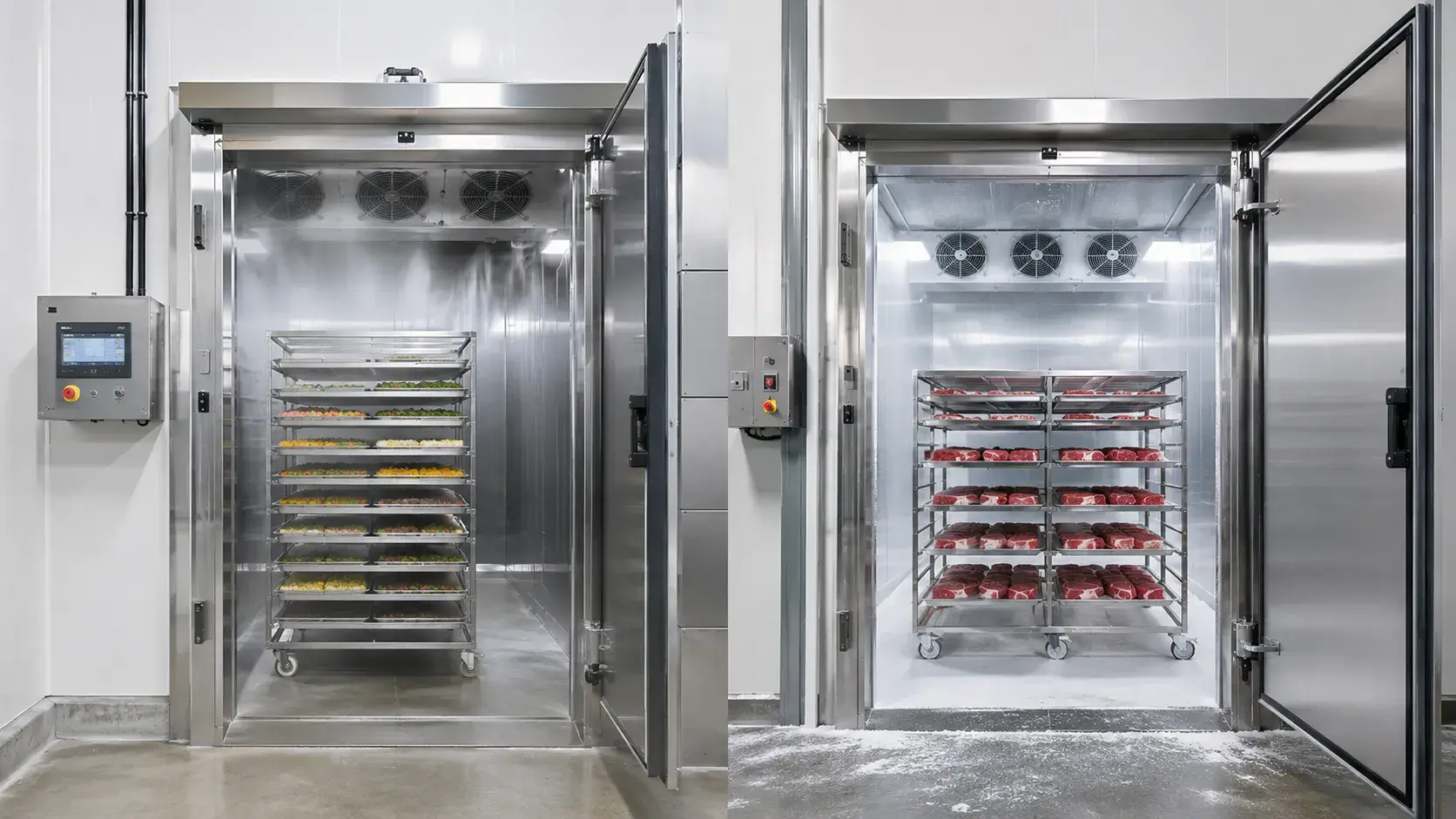
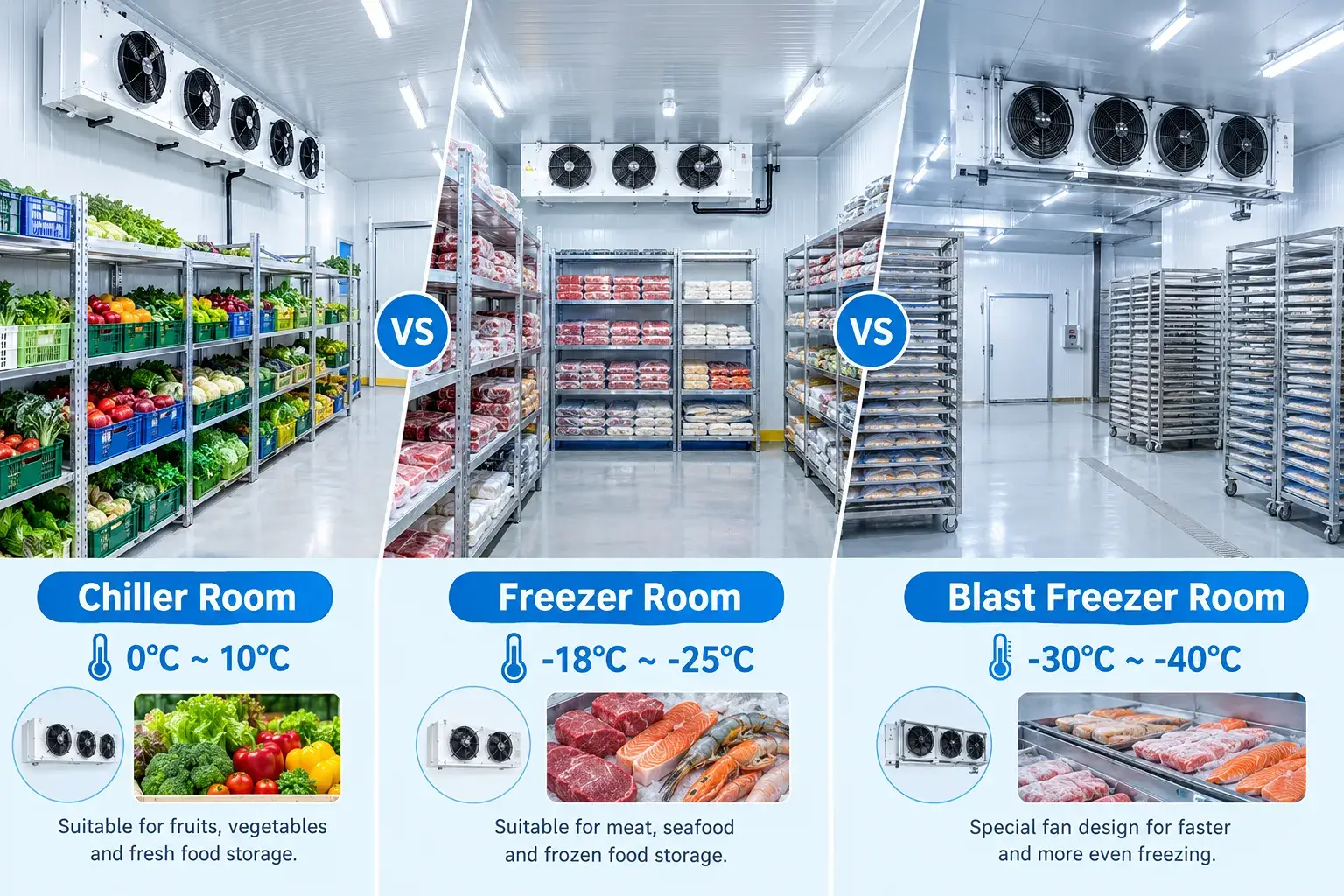
This is why a properly designed slaughterhouse cold room is essential. A modern abattoir cold storage system typically includes several specialized cooling zones that work together to maintain product quality throughout the processing cycle: - Meat Chilling Room – for carcass cooling and aging
- Blast Freezer – for rapid freezing and long-term preservation
- Meat Storage Cold Room – for refrigerated storage and distribution
Together, these facilities form the core temperature-control infrastructure of a modern meat processing plant.
What is an Abattoir Cold Room and Why Is It Essential?
In contrast to standard food cold storage rooms, slaughterhouse cold rooms must handle a much more demanding environment.They are designed to process:
- Hot carcasses directly after slaughter
- High levels of moisture and steam
- Blood and organic contamination
- Continuous heavy-duty operation
As a result, the design requirements for abattoir cold rooms are significantly stricter than those for ordinary cold storage facilities.
1. Inhibiting Bacterial Growth
One of the most important functions of a slaughterhouse cold room is to slow down microbial activity. For this reason, quickly reducing and maintaining meat temperature between 0°C and 4°C is essential for significantly suppressing the growth of harmful pathogens such as:
- Salmonella
- E. coli
- Listeria
As a result, maintaining the appropriate temperature throughout storage can help control microbial growth and reduce food safety risks. Therefore, proper temperature control is essential for supporting both food safety and regulatory compliance.
2. Improving Meat Tenderness Through Aging
Cold rooms are also essential for the meat aging (rigor resolution) process. When carcasses are hung in a controlled environment with stable temperature and humidity, natural enzymatic processes break down muscle fibers.
This controlled aging improves:
- Meat tenderness
- Flavor development
- Overall eating quality
For high-value meats such as beef, proper chilling and aging can greatly enhance product value.
3. Reducing Moisture Loss (Shrinkage)
Improper air circulation or low humidity can cause excessive surface dehydration, commonly known as dry loss.
A well-designed cold room helps minimize:
- Surface dehydration
- Weight loss during storage
- Economic losses for slaughterhouse operators
These benefits directly impact the profitability of meat processing operations.
Although slaughterhouse cold rooms are often associated with beef and lamb processing, they also play an important role in poultry processing, including chickens, ducks, and geese. In addition, poultry products require rapid and effective cooling after processing to maintain freshness and limit spoilage. Therefore, properly designed cold storage systems are an important part of maintaining temperature control throughout the poultry processing chain.
The Slaughterhouse Cold Chain Process
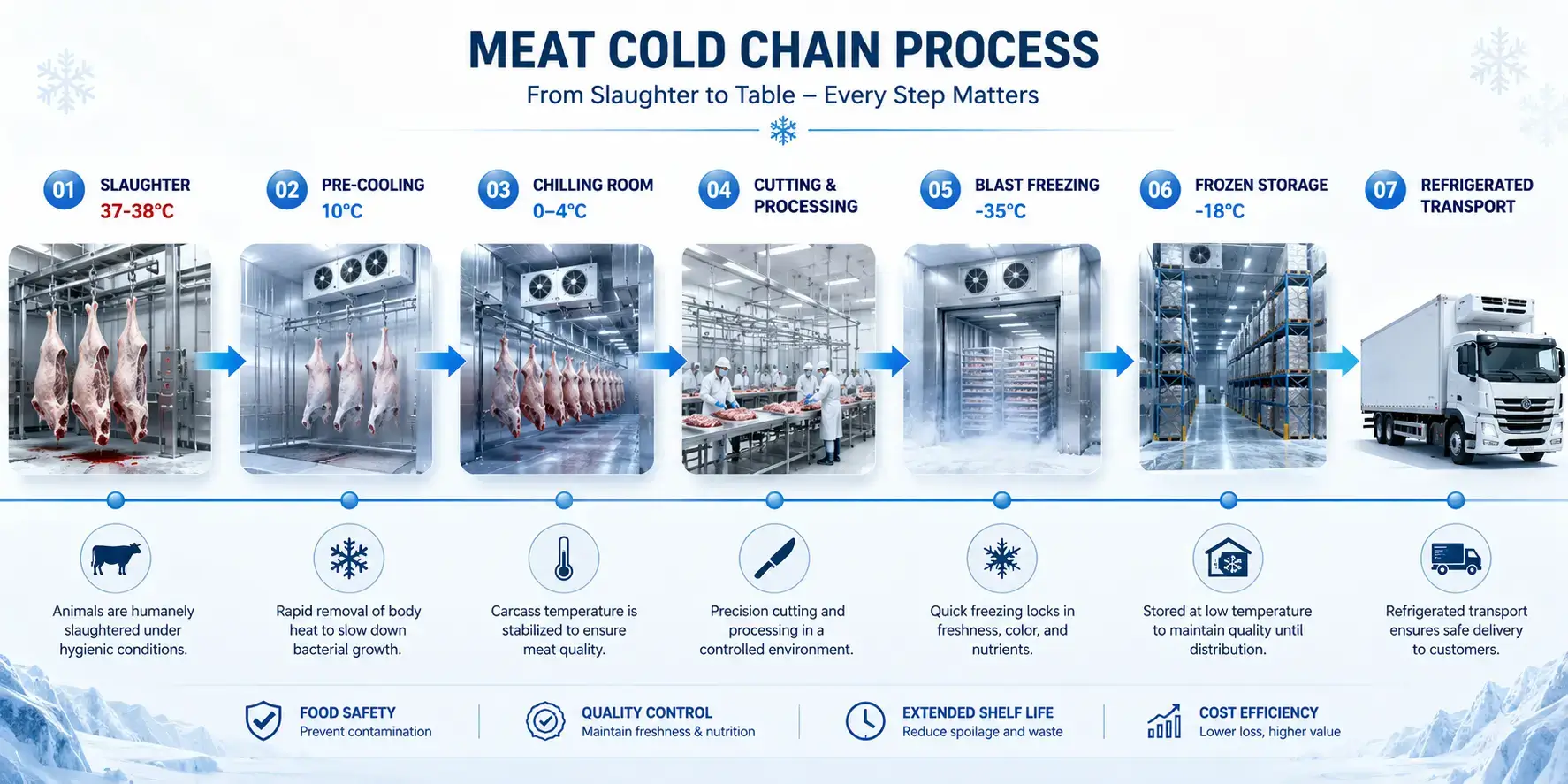
| Stage | Temperature | Purpose |
|---|---|---|
| Slaughter | 37–38°C | Animal processing |
| Pre-Cooling | 10°C | Remove body heat |
| Chilling Room | 0–4°C | Stabilize meat quality |
| Blast Freezing | -35°C | Rapid freezing |
| Frozen Storage | -18°C | Long-term storage |
Modern slaughterhouses operate within a carefully controlled cold chain system designed to preserve meat quality from slaughter to distribution.
A typical cold chain workflow includes:
- Slaughter and bleeding
- Carcass washing and inspection
- Pre-cooling or carcass chilling
- Cutting and portioning
- Packaging
- Cold storage or freezing
- Distribution and transport
Each stage must maintain strict temperature control to ensure compliance with food safety regulations and international export standards.
A well-designed cold chain system ensures:- Consistent product quality
- Longer shelf life
- Reduced contamination risk
- Compliance with global food safety standards
Types of Cold Rooms Used in Modern Slaughterhouses
Meat Chilling Room (Post-Slaughter Rapid Cooling)
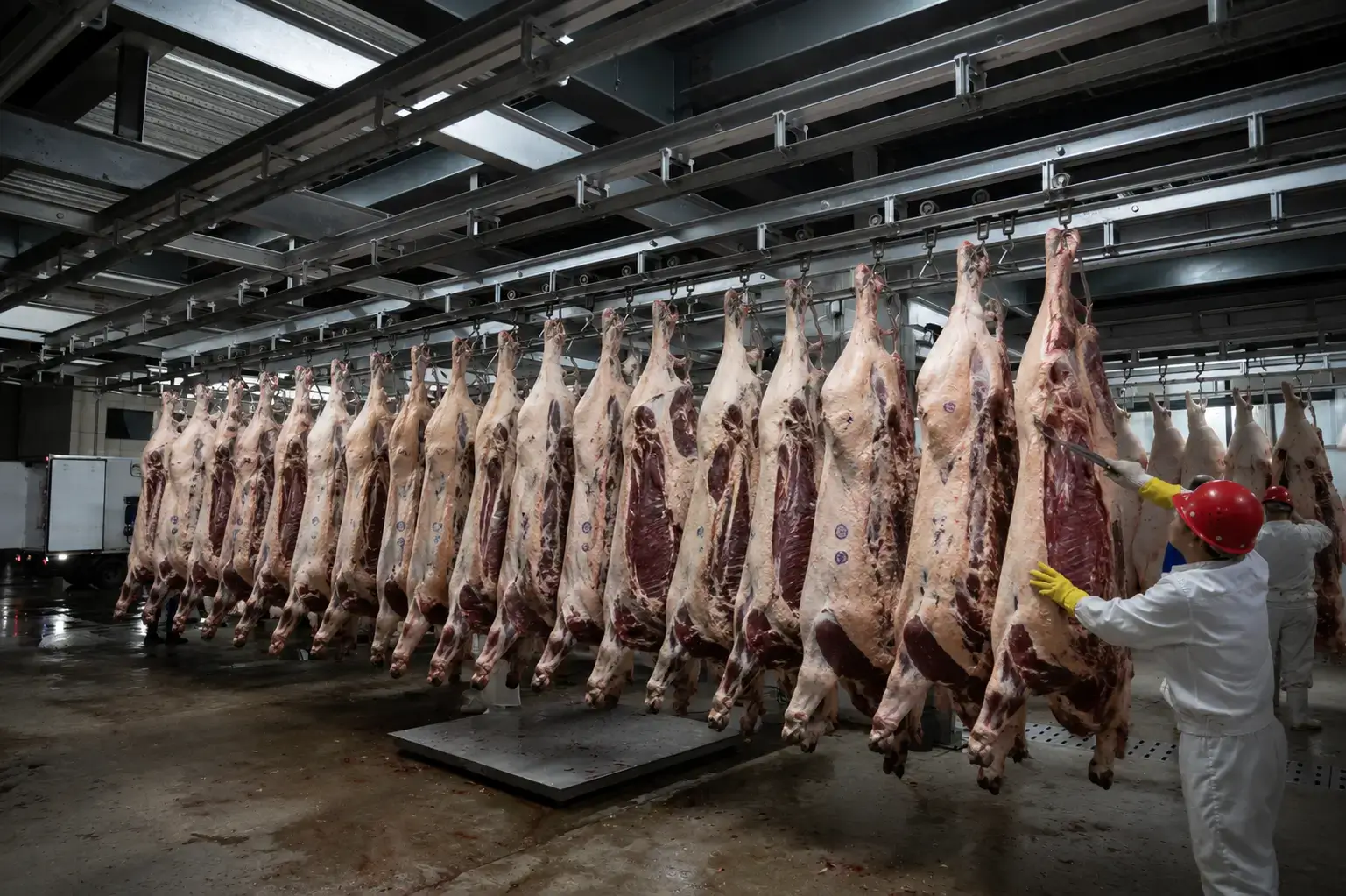
After slaughter, carcasses are typically hung on overhead rails inside a meat chilling room.
The main objective is to rapidly reduce carcass temperature from approximately 38°C to below 4°C while maintaining proper airflow and humidity levels.
Typical cooling times include:
- Beef carcasses: 16–24 hours
- Lamb carcasses: 12–16 hours
During this stage, forced air circulation helps remove heat from the carcass surface while ensuring uniform cooling throughout the meat.
Poultry processing often follows a different cooling method. Instead of hanging carcasses in chilling rooms, poultry processors may use: - Water immersion chillers
- Air chilling tunnels
These systems cool smaller carcasses more rapidly and efficiently.
Meat Blast Freezer (Shock Freezing for Longevity)
For long-term preservation, meat products are often transferred to a blast freezer.
Blast freezing works by rapidly passing the product through the critical ice crystal formation zone between 0°C and −5°C. This process minimizes ice crystal growth within muscle cells.
Key advantages include:
- Reduced cellular damage
- Lower drip loss after thawing
- Better preservation of meat texture
Typical blast freezer temperatures range between −35°C and −40°C.
Blast freezing is commonly used for: - Cut meat portions
- Poultry products
- Meat by-products
- Export-grade frozen meat
Meat Preservation Freezer Room
Once meat has been chilled or frozen, it is typically stored in a meat preservation cold room before distribution.
The typical temperature range for refrigerated meat storage is:
0°C to 4°C
These cold rooms are commonly used for:
- Short-term storage
- Meat distribution centers
- Supply chains serving butcher shops and supermarkets
Proper storage conditions during this stage ensure that meat remains fresh and safe until it reaches the final market.
Key Technical Requirements for a Slaughterhouse Cold Room
Precise Temperature and Humidity Control
| Meat Type | Temperature | Humidity |
|---|---|---|
| Beef carcass | 0-2°C | 85-90% |
| Lamb | 0-3°C | 85-90% |
| Poultry | 0-4°C | 80-85% |
Maintaining stable environmental conditions is critical for meat storage.
For carcass chilling rooms, recommended conditions typically include:
- Temperature: 0°C – 4°C
- Relative humidity: 85% – 90%
If humidity levels are too low, the meat surface may dry out and crack. On the other hand, excessive humidity can encourage bacterial growth and condensation.
Proper humidity control therefore helps maintain both product quality and food safety.
Airflow and Ventilation Design
Airflow design plays a crucial role in achieving uniform cooling throughout the cold room.
Effective air circulation helps:
- Eliminate temperature dead zones
- Accelerate carcass surface drying
- Prevent mold and bacterial growth
Typical airflow design parameters include:
Air velocity: approximately 0.5 – 2 m/s
Balanced airflow ensures that every carcass or meat product receives consistent cooling.
Hygienic Construction and Drainage
As slaughterhouse environments involve blood, organic matter, and frequent cleaning, cold room construction must meet strict sanitary standards.
Recommended design features include:
- Stainless steel wall panels
- Anti-slip flooring
- Sanitary drainage systems
Cold room design must also accommodate: - Blood drainage
- High-pressure cleaning systems
- Corrosion-resistant materials
These features ensure that the facility remains safe, hygienic, and compliant with food processing regulations.
Choosing the Right Meat Cold Room for Your Business
| Facility Type | Process Flow | Required Cold Room / Equipment | Temperature Range |
|---|---|---|---|
| Butcher Shop | Slaughter → Basic processing → Carcass chilling → Cutting → Refrigerated retail | Small cold room, display refrigerator | 0–4°C |
| Medium Slaughterhouse | Slaughter → Cleaning → Carcass chilling → Aging → Cutting → Packaging → Refrigerated/Freezing | Carcass chilling room, cutting/processing room, blast freezer, frozen storage room | 0–4°C / -18°C |
| Industrial Abattoir | Automated slaughter → Cleaning → Rapid chilling → Aging → Precise cutting → Further processing → Packaging → Blast freezing → Frozen storage | Carcass chilling room, processing cold room, blast freezer, IQF freezer, large-scale frozen warehouse | 0–4°C / -35°C / -18°C |
Small Butchers vs Large Abattoirs
The size and complexity of a cold storage system depend heavily on the scale of the operation.
Small Butcher Shops
Small butcher shops typically process limited quantities of meat and usually require:
- Walk-in refrigerators
- Small chilling rooms
- Basic refrigerated display storage
These systems focus mainly on short-term storage and retail supply.
Medium Slaughterhouses
Medium-scale slaughterhouses require more advanced refrigeration infrastructure, including:
- Meat chilling rooms for carcass cooling
- Cutting room refrigeration
- Refrigerated storage rooms
These facilities often handle daily processing operations and require consistent cold chain management.
Industrial Abattoirs
As slaughterhouse operations become larger and more complex, industrial facilities often operate multiple processing lines and require several temperature-controlled zones, including:
- Large carcass chilling tunnels
- Blast freezers for rapid freezing
- High-capacity frozen storage warehouses
These systems support large-scale meat production and export markets.
Energy Efficiency and Operational Cost
Energy consumption is one of the largest operational costs for slaughterhouse cold storage.
Several strategies can significantly reduce energy usage, including:
- High-density insulation panels
- Automatic defrost systems
- Thermal energy storage during off-peak hours
- Intelligent temperature control systems
By implementing these technologies, slaughterhouses can often reduce refrigeration energy consumption by 20–30%, lowering long-term operating costs while maintaining stable temperature control.
Energy-Saving Strategies by Facility Type
| Facility Type | Energy Saving Strategy Category | Specific Measures | Applied Equipment / Technology | Energy Saving Effect |
|---|---|---|---|---|
| Butcher Shop | Efficient Refrigeration Equipment | Use high-COP compressors or variable frequency condensing units | Small condensing unit, variable frequency compressor | Reduces equipment energy consumption |
| Cold Storage Insulation Optimization | Use 100–120mm PU insulation panels | Polyurethane (PU) cold room panels | Reduces cold loss | |
| Cold Room Door Sealing | Install PVC strip curtains or automatic door closers | Strip curtains, sealed cold room doors | Reduces cold air leakage | |
| Lighting Energy Saving | Use LED cold room lights with motion sensors | LED lighting system | Reduces lighting heat load | |
| Operation Management | Optimize entry/exit scheduling for cold rooms | Cold room management system | Reduces energy loss from frequent door opening | |
| Medium Slaughterhouse | Zoned Temperature Control | Set different temperatures for different processing areas | Temperature control system | Improves overall refrigeration efficiency |
| Variable Frequency Control | Use VFD for compressors, fans, and pumps | VFD system | Adjusts energy use based on load | |
| High-Efficiency Evaporator | Use evaporators with larger heat exchange area | High-efficiency evaporator | Reduces compressor load | |
| Intelligent Defrosting | Automatic defrost based on frost buildup | Hot gas defrost system | Reduces unnecessary energy consumption | |
| Cold Storage Insulation Upgrade | Use 120–150mm insulation panels | High-density insulation panels | Reduces cold loss | |
| Industrial Abattoir | Heat Recovery System | Use compressor waste heat to produce hot water | Heat recovery device | Improves energy utilization efficiency |
| Energy Management System | Centralized monitoring and control of refrigeration system | EMS (Energy Management System) | Optimizes overall energy consumption | |
| Multi-Stage Refrigeration System | Two-stage compression or cascade refrigeration system | Ammonia or CO₂ refrigeration system | Improves efficiency for large-scale cold storage | |
| Automated Freezing Optimization | Automatically adjust freezing equipment load | Blast freezer / IQF system | Reduces freezing energy consumption | |
| Waste Cold Utilization | Use waste cold for pre-cooling areas | Cold energy recovery system | Reduces additional refrigeration demand | |
| Automated Warehousing | Reduce door opening frequency via automation | Automated cold storage system | Reduces cold loss |
Conclusion
Slaughterhouse cold rooms are among the most critical infrastructure components in any meat processing facility. A properly designed cold storage system ensures that meat products remain safe, fresh, and marketable throughout the entire production and distribution process.
By maintaining precise temperature and humidity control, an optimized slaughterhouse cold storage system can:
- Improve food safety
- Extend meat shelf life
- Reduce product shrinkage and spoilage
- Increase operational efficiency and profitability
In addition to supporting food safety, a well-designed abattoir cold storage system can improve operational efficiency and help control long-term operating costs. For slaughterhouse operators, investing in a reliable cold storage solution can therefore be more than a compliance consideration; it can also support consistent product quality, smoother operations, and greater competitiveness in the meat industry.
If you are planning to build or upgrade a meat processing facility, evaluating your current cold storage system—or consulting with professional refrigeration engineers—can help you design a customized slaughterhouse cold room solution that meets both production demands and international food safety standards.