Introduction
In modern meat processing, production managers face a persistent technical challenge: scaling output volumes without compromising the structural integrity and sensory quality of the protein. Conventional static freezing methods introduce significant quality degradation risks, manifesting as excessive purge loss during thawing, irreversible texture softening, and oxidative rancidity due to prolonged residence in the microbial danger zone. The industrial meat blast freezer and dedicated shock freezing room represent the definitive engineering solution to this thermal bottleneck. By leveraging high-velocity, sub-zero airflow to accelerate the product core through the maximum ice crystal formation zone (-1°C to -5°C), this technology inhibits the growth of large, destructive extracellular crystals. Consequently, the processed meat retains its native water-holding capacity, color stability, and long-term meat freezing storage viability. This technical guide provides B2B procurement specialists and plant engineers with a comprehensive analysis of operational physics, equipment typologies, and selection criteria for a high-performance meat quick freezing room.
In this guide, we will help B2B buyers and meat processors understand:
- How blast freezing works
- Differences between blast freezing and conventional freezing
- Types of industrial freezing equipment
- How to choose the right Meat Quick Freezing Room
What Is a Meat Blast Freezer?
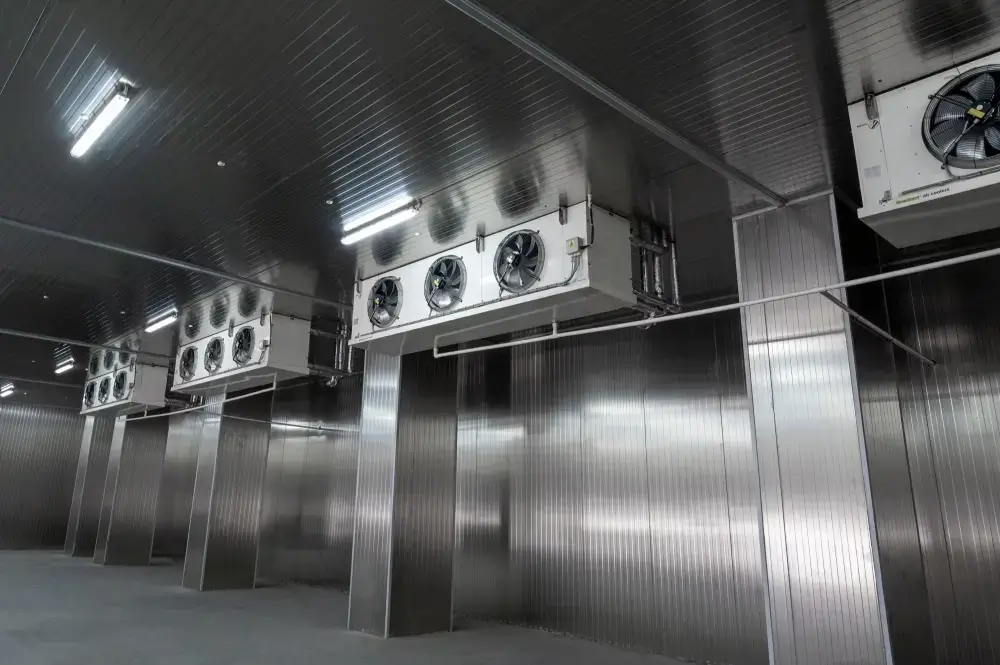
A meat blast freezer is an engineered thermal processing system designed to forcibly extract sensible and latent heat from meat products at an accelerated rate using directed, high-velocity airflow at cryogenic or deep refrigeration temperatures. Operating within an ambient envelope of -30°C to -40°C, the system utilizes industrial axial or centrifugal fans to maximize the convective heat transfer coefficient at the product surface. Unlike a standard cold storage room intended for static holding of pre-frozen inventory, a blast freezer is an active production tool that compresses the freezing plateau duration, thereby minimizing quality loss associated with slow phase change. The resultant fine-crystal matrix ensures that when the product eventually resides in a walk-in freezer or long-term meat cold storage, the cellular architecture remains intact and commercially viable.
What Is the Difference Between Blast Freezing and Regular Freezing?
Ice Crystal Size: The Defining Factor
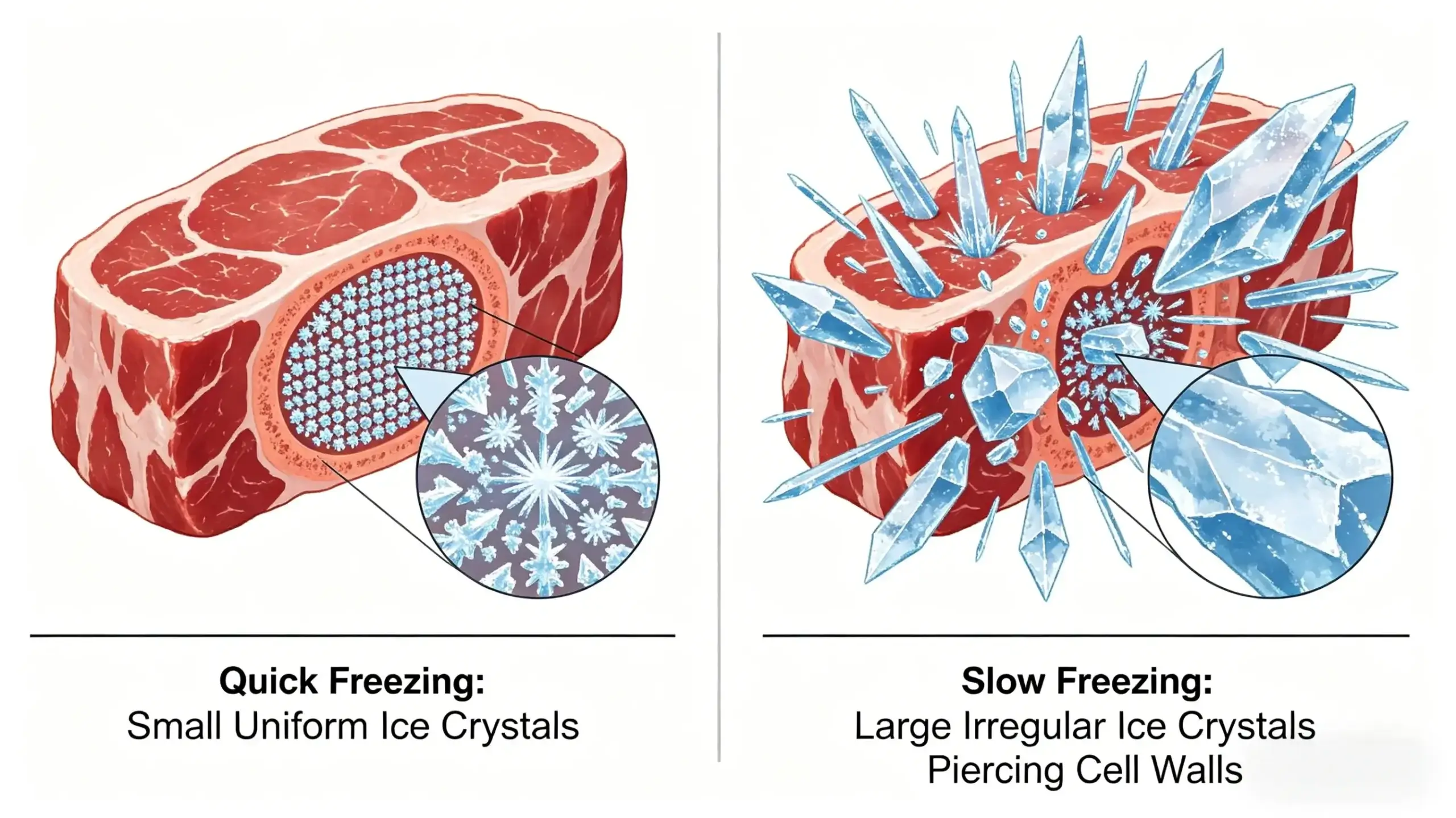
The morphological distinction in ice crystal formation is the primary determinant of end-product quality. Blast freezing technology induces high nucleation rates, resulting in a fine, uniformly distributed intracellular ice phase that minimizes mechanical stress on cellular membranes. In contrast, conventional slow freezing allows for Ostwald ripening, where larger ice crystals grow at the expense of smaller ones, leading to gross structural damage and high purge volume upon thawing. The resulting meat from a static cold storage room freeze often exhibits a darkened, desiccated appearance and a mealy texture profile.
Food Safety and Shelf Life Impact
From a microbiological safety perspective, the velocity of cooling correlates directly with the suppression of initial microbial loads. The rapid thermal decline in a blast freezer limits the time the meat surface resides within the psychrophilic growth range (4°C to 20°C). Conversely, the protracted cooling period of a static walk-in freezer environment provides a permissive window for bacterial adaptation and growth, establishing a higher initial bioburden that compromises long-term shelf stability even under deep-frozen meat freezing storage conditions.
Blast Freezer vs Conventional Freezer
The operational disparity between blast freezing and conventional freezing is defined by air velocity and temperature differential, not merely setpoint. A blast freezer utilizes air speeds typically exceeding 3 to 5 meters per second to strip the boundary layer of insulating warm air from the meat surface. In contrast, a conventional cold room design relies on minimal air movement, functioning primarily through natural convection and conduction between stacked cartons.
| Feature | Meat Blast Freezer | Conventional Freezer |
|---|---|---|
| Ambient Operating Temp | -30°C to -40°C | -18°C to -22°C |
| Air Velocity | High (>3 m/s forced circulation) | Low (<0.5 m/s static) |
| Core Freezing Rate | Rapid (4–7 hours to -18°C) | Slow (12–48 hours to -18°C) |
| Product Core Temperature (Final) | ≤ -18°C | Maintained at ≤ -18°C |
| Ice Crystal Morphology | Microscopic, intracellular | Large, extracellular (jagged) |
| Primary Function | Processing / Active Freezing | Storage / Inventory Holding |
Why Blast Freezing Is Critical for Meat Processing
The integration of an industrial freezing system into a slaughter or fabrication line addresses three critical control points in protein handling.
First, it locks in post-rigor quality by halting enzymatic and biochemical degradation within a narrow window immediately following harvest.
Second, it optimizes cold chain throughput, enabling a facility to transition fresh primals into frozen inventory within a single operational shift rather than over multiple days.
Third, it supports HACCP compliance by executing the mandated time-temperature requirements for cooling, thereby suppressing pathogen proliferation during the critical transition from post-mortem warmth to bacteriostatic deep-freeze temperatures.
How Does a Meat Blast Freezer Work? The Science of Ice Crystals
The fundamental mechanism of a blast freezer relies on forced convection thermal dynamics. High-static-pressure fans propel refrigerated air, cooled via industrial evaporator coils to between -30°C and -40°C, across the entire surface area of the meat product. This turbulent air circulation disrupts the thermal boundary layer, maximizing the rate of heat exchange (Q = hAΔT). The operational objective is not merely to reach storage temperature, but to minimize the temporal duration within the phase-change plateau.
Maximum Ice Crystal Formation Zone (-1°C to -5°C)
The thermodynamic interval between -1°C and -5°C represents the zone of maximum ice crystal formation, where free water in the muscle tissue solidifies. In a slow freezing scenario characteristic of a standard meat cold storage room, water molecules migrate from intracellular spaces to form large, sharp extracellular ice lattices. These structures act as microscopic blades, lacerating the sarcolemma and myofibrillar proteins, resulting in significant drip loss upon thawing and a perceptible loss of tenderness and succulence. The shock freezing room accelerates transit through this zone, inducing a state of nucleation where countless small crystals form simultaneously in situ. An industrial meat blast freezer typically achieves a core temperature reduction to -18°C within a 4 to 7-hour processing window, depending on loading density.
Blast Freezing Temperature and Freezing Speed
Ideal Temperature for Meat Blast Freezing
Optimal freezing parameters are dictated by the specific thermal conductivity of the protein and fat matrix. For most red meat primals and poultry, the blast cell environment should be maintained between -30°C for leaner cuts and -35°C to -40°C for denser, high-fat-content products.
Typical Meat Type blast freezing temperatures:
| Meat Type | Air Temperature | Air Velocity | Typical Freezing Time (to -18°C Core) | Final Core Temperature |
|---|---|---|---|---|
| General Industrial Standard | -30°C to -40°C | 1.5 – 6.0 m/s | Under 4 hours (varies by size) | -18°C |
| Beef (Large Primal Cuts) | -30°C to -40°C | 3.0 – 6.0 m/s | 4 – 72 hours (depends on cut size) | -18°C |
| Pork (Carcass / Large Cuts) | -35°C to -40°C | 2.5 – 5.0 m/s | < 4 hrs (cuts); up to 72 hrs (carcass) | -18°C |
| Lamb (Boxed / Cuts) | -40°C | 3.0 m/s | 4 – 12 hours | -18°C |
| Chicken (Whole Carcass) | -30°C to -40°C | 3.0 – 6.0 m/s | 2 – 4 hours | -18°C |
| Duck (Whole Carcass) | -35°C | 3.0 – 6.0 m/s | 13 – 19 hours | -18°C |
| Turkey (Whole Carcass) | -25°C to -40°C | 3.0 – 6.0 m/s | Up to 4 hours (≈240 min) | -18°C |
| Quail (Whole Bird) | -35°C to -40°C | 4.0 – 6.0 m/s | ~4 hours | -18°C |
| Rabbit (Carcass) | Below -25°C | 2.0 m/s (cooling stage) | Up to 72 hours | -15°C (pre-storage) |
| Fish (Fillets / Whole) | -28°C to -45°C | 4.0 – 8.0 m/s | Minutes to a few hours | -18°C to -20°C |
| Shrimp (Shelled) | -28°C ± 2°C | 4.0 – 8.0 m/s | Minutes to a few hours | -18°C to -20°C |
| Cooked / Processed Meats | ~0°C (cooling stage) | 3.0 m/s | 3.5 – 8.5 hours (to 10°C) | 10°C (cooling stage) |
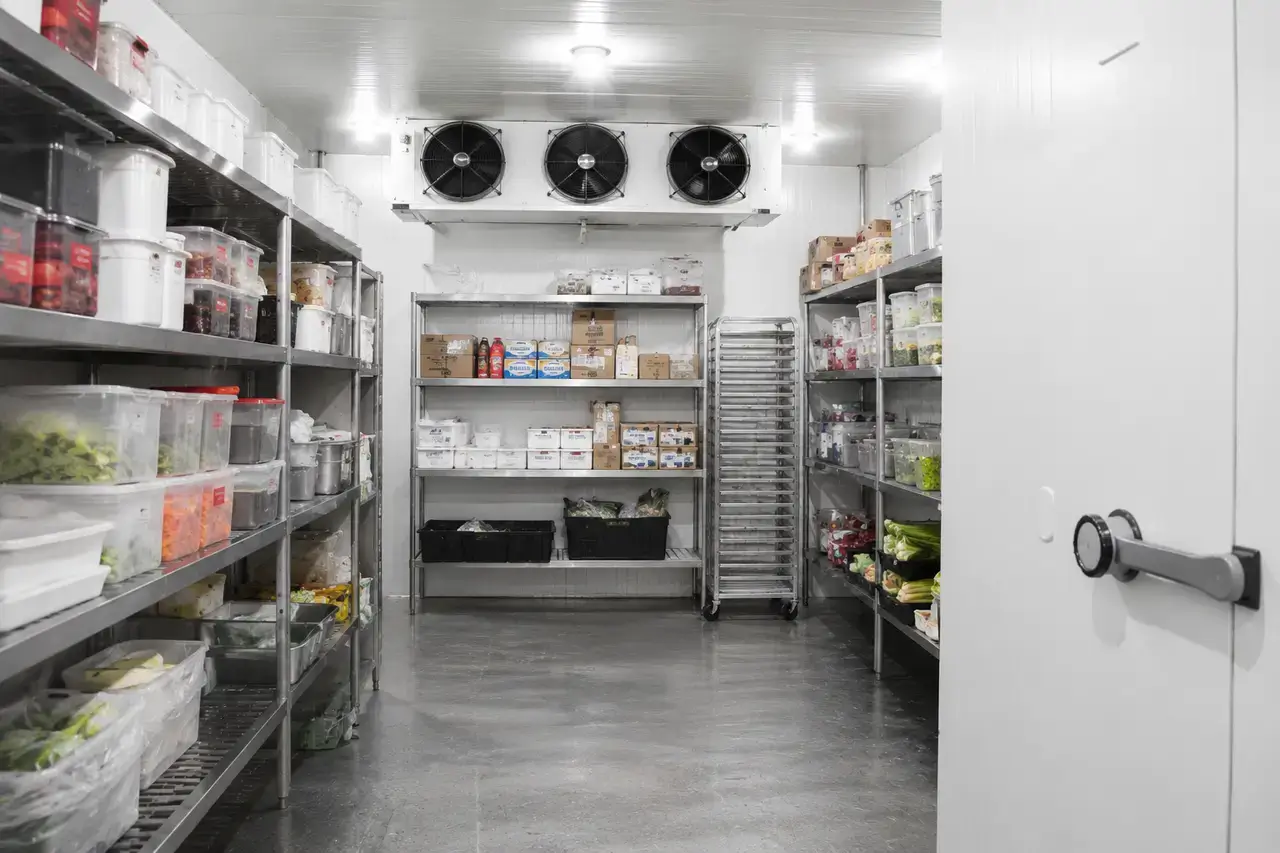
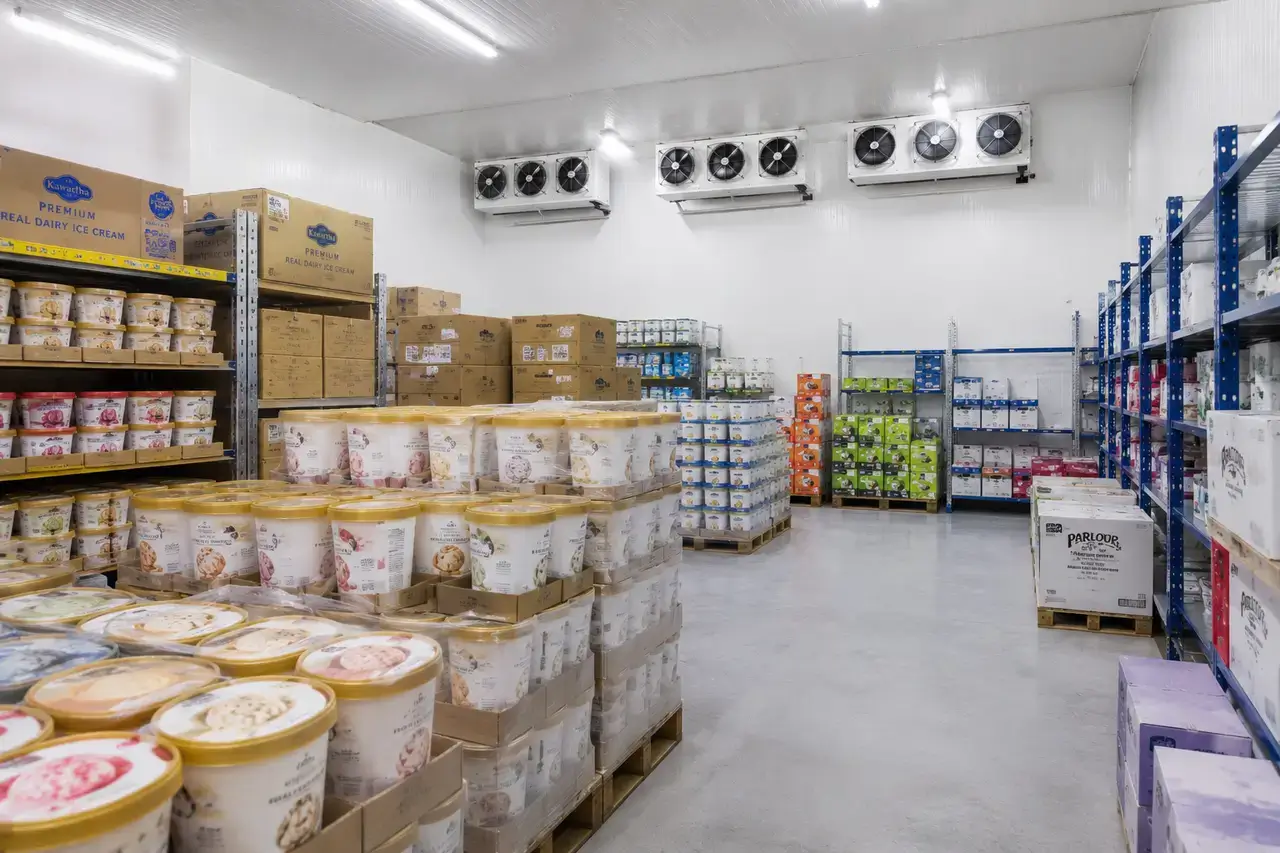
After blast freezing, products are transferred to Meat Freezing Storage for long-term storage.
What Are the Benefits of Blast Freezing Meat?
Locking in Freshness, Taste, and Safety
The commercial and sensory advantages of blast freezing are directly linked to the mitigation of ice crystal damage and oxidative stress. By achieving a glass transition state rapidly, the product maintains its water-holding capacity; the fine ice crystals formed within the muscle fibers do not disrupt the protein matrix, ensuring that a thawed steak retains firmness rather than collapsing into a soft, exudative state. Simultaneously, the accelerated cooling curve minimizes the microbial lag phase, swiftly suppressing the growth of psychrophilic and mesophilic pathogens. Additionally, the reduced duration of exposure to dry, moving air significantly curtails surface sublimation, effectively eliminating freezer burn and preserving the aesthetic appeal and weight yield of the meat cold storage inventory.
Operational and Supply Chain Advantages
Beyond intrinsic product quality, the industrial freezing system provides a strategic advantage in supply chain logistics. Frozen meat processed in a blast freezer maintains commercial viability for extended periods of 6 to 12 months within a standard meat freezing storage environment, enabling processors to buffer against seasonal supply fluctuations and volatile export market pricing. Furthermore, the drastic reduction in processing cycle time—from overnight holding to a few hours—enhances plant throughput and reduces the working capital tied up in work-in-progress inventory. This efficiency directly contributes to improved cash flow and operational responsiveness.
Key Factors Affecting Meat Blast Freezing Performance
Freezing duration in a meat quick freezing room is a function of thermal diffusivity, product geometry, and packaging interface. A blast freezer can typically reduce the core temperature of a palletized load to -18°C within 3 to 4 hours, whereas a conventional static freezer may require 6 to 12 hours or longer for equivalent penetration. Specific freezing times are influenced by several critical engineering factors:
- Product Density and Composition: High-fat-content cuts and dense bone-in primals exhibit slower thermal conductivity compared to lean, fabricated trimmings.
- Packaging Configuration: Vacuum-sealed bags and insulated cartons create thermal resistance layers. Optimal cold room design ensures airflow bypass or spacing to mitigate this "blanket" effect.
- Air Velocity and Distribution: Inadequate fan performance or improper load spacing results in stagnant pockets, creating a non-uniform freeze and extending total cycle time.
Other Types of Meat Blast Freezers
The category of industrial freezing system encompasses several distinct engineering configurations tailored to varying production scales and product formats.
- Tunnel Freezer: A linear conveyor system suitable for high-volume, uniform products such as boxed boneless beef or chicken portions. The product passes through a wind tunnel with counter-current or cross-flow air circulation for consistent heat extraction.
- Spiral Freezer: A vertical, self-stacking belt system that provides an extended retention path within a compact footprint. It is ideal for continuous processing lines handling value-added products like marinated chicken wings or burger patties destined for seafood cold storage and protein export markets.
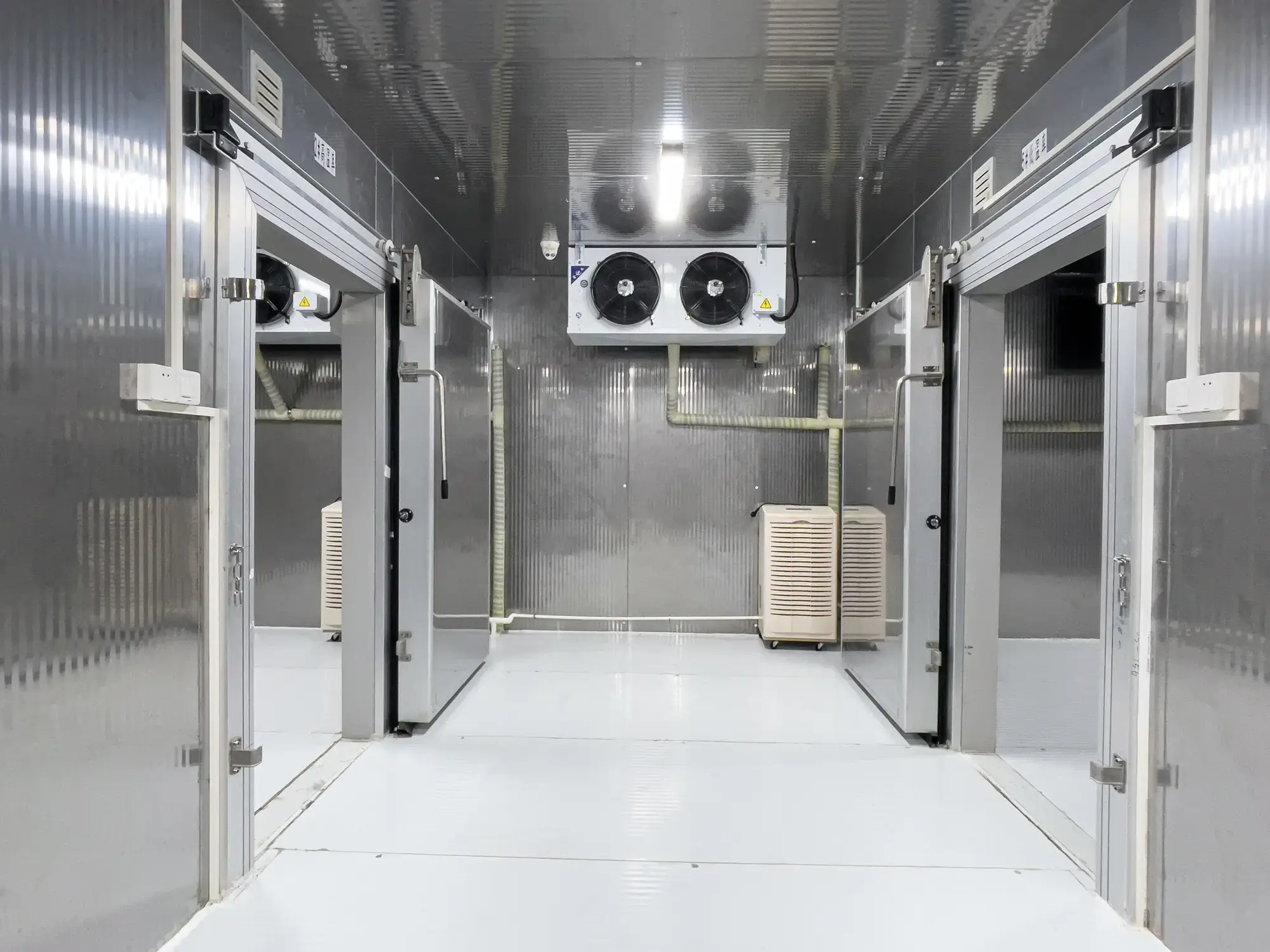
- Batch Blast Freezer (Blast Cell): A walk-in shock freezing room designed for palletized or racked product. This flexible solution is suited for medium-sized slaughterhouses processing whole carcasses or primals where conveyorization is impractical.
- Plate Freezer: A conduction-based system where packaged meat blocks are compressed between hollow, refrigerated metal plates. This method provides superior thermal contact and uniform freezing speed for regular-shaped cartons of offal or manufacturing meat.
Blast Freezing vs IQF — Which Freezing Method Is Right?
Both Blast Freezing and IQF (Individual Quick Freezing) use extremely cold air to freeze food quickly.However, they target different product types and markets.
Both Blast Freezing and IQF (Individual Quick Freezing) utilize forced convection of cryogenic-temperature air, yet they serve fundamentally different market segments and product presentations.
- Blast Freezing is optimized for bulk commodity processing. It handles large primals, bone-in cuts, and multi-pound case packs intended for wholesale distribution and further industrial processing. The product is typically frozen as a cohesive block or layer.
- IQF is engineered for discrete, free-flowing particles. This method fluidizes small items such as diced beef cubes, meatballs, chicken wings, and sausage slices on a perforated conveyor, ensuring each piece freezes independently without clumping.
From an investment return perspective, blast freezer equipment generally presents a lower capital expenditure per ton of throughput, generating ROI through volume efficiency and reduced weight loss in commodity trading. IQF systems require higher initial capital investment and more sophisticated cold room design, but unlock access to premium retail and food service markets where product convenience commands a price premium of 20% to 50% over bulk frozen equivalents.
| Criteria | Blast Freezing (Bulk/Batch) | IQF (Individual Quick Freezing) |
|---|---|---|
| Product Geometry | Whole carcasses, primals, cartons | Diced meat, patties, wings, strips |
| Market Positioning | Wholesale, Export Commodity | Retail, Food Service, Ready Meals |
| Freezing Result | May adhere together in layers | Completely free-flowing, non-stick |
| Typical Applications | Beef quarters, pork ribs, lamb carcass | Meatballs, beef cubes, chicken drumsticks |
| Value Proposition | Maximizes throughput & yield | Maximizes product flexibility & margin |
Applications of Meat Blast Freezing
The utilization of meat blast freezer technology is pervasive across the protein value chain.
- Slaughterhouses: Immediate thermal stabilization of carcasses to meet export certification standards before cold storage room transfer.
- Meat Processing Plants: Freezing of fabricated cuts, ground beef chubs, and value-added marinated items for national distribution.
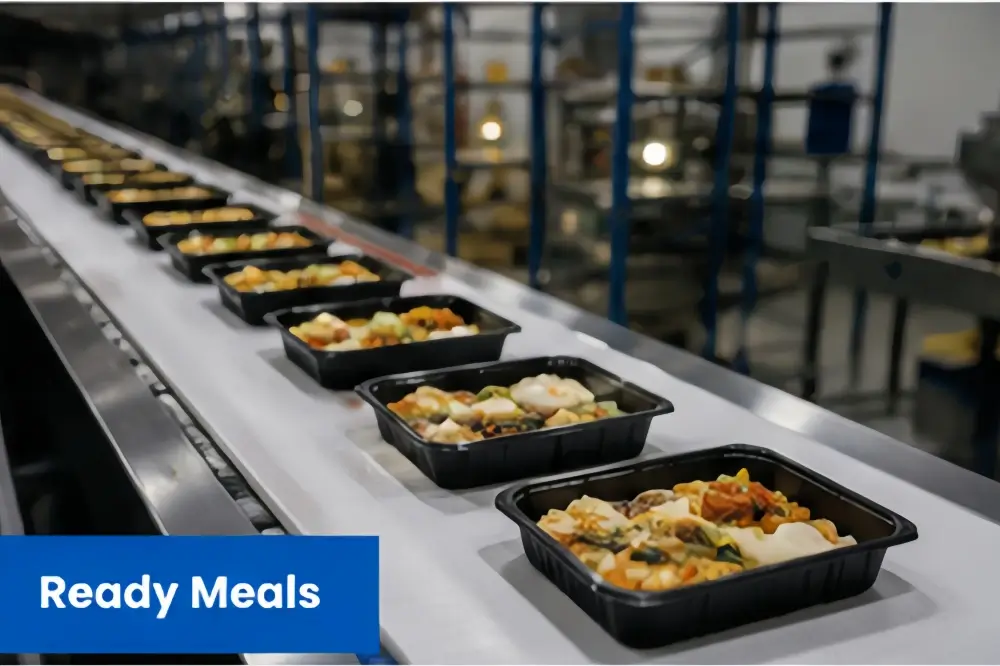
- Ready Meal & Central Kitchens: Shock freezing of cooked protein components (e.g., grilled chicken strips) to maintain texture during reheating by the end consumer.
- Frozen Food Manufacturers: High-volume production of meat cold storage inventory for use as ingredients in further-processed entrees, soups, and sauces.
Choosing the Right Meat Blast Freezer for Your Processing Facility
Selecting an appropriate industrial freezing system requires a rigorous analysis of operational parameters beyond simple square footage.
- Production Capacity Assessment: Accurately quantify the required thermal extraction rate (kW or BTU/hr) based on daily kill weight and desired cycle time.
- Product Morphology Analysis: Dense bone-in primals necessitate the flexibility of a batch blast cell, while uniform boxed manufacturing meat is efficiently handled by a tunnel freezer.
- Energy Efficiency Evaluation: Scrutinize the specific energy consumption (kW/ton of product) of different compressor and condenser configurations (air-cooled vs. evaporative) as this represents a significant long-term operating expense.
- Hygienic Design Compliance: Equipment must feature sloped surfaces, fully welded stainless steel construction, and accessible drain pans to meet USDA and EU sanitation mandates within a walk-in freezer environment.
- Supplier Technical Competency: Engage with providers offering complete lifecycle support, from initial heat load calculation and cold room design to commissioning and preventive maintenance of the meat freezing storage ecosystem.
Conclusion
A meat blast freezer is not an incremental upgrade to a standard freezer room; it is a critical process unit operation that dictates the commercial viability and export potential of frozen protein. Through precise control of ice crystal physics and air circulation, this industrial freezing system preserves the intrinsic value created during primary processing. The selection of a meat quick freezing room configuration is the definitive inflection point where operational efficiency and premium product quality converge before long-term meat freezing storage.