Introduction
From Bavaria’s famous Bratwurst to China’s sweet and savory Lap Cheong, from Spain’s smoky Chorizo to South Africa’s traditional Boerewors, sausage is present in almost every food culture around the world. Although recipes, seasonings, and processing techniques vary widely, all sausage products ultimately depend on one crucial factor: proper cold storage management.
In modern meat processing, sausage cold storage is not only about extending shelf life. It also directly affects several critical aspects of product quality and safety:
- Microbial safety
- Moisture retention
- Flavor stability
Transportation reliability
Historically, sausage itself was invented as a preservation technique. Long before refrigeration technology existed, humans relied on salting, smoking, and drying to extend the life of meat. Today, industrial processed meat cold storage systems and meat chilling rooms allow producers to maintain precise temperature and humidity conditions, transforming traditional preservation into a highly controlled scientific process.
This guide explores the essential principles of sausage cold storage, including: - Recommended sausage cold storage temperatures
- Ham cold storage requirements
- Processed meat cold room design
- The role of meat chilling rooms in sausage production
Whether you operate a meat processing plant, a food manufacturing facility, or a cold chain logistics business, understanding these principles will help ensure product quality, safety, and regulatory compliance.
Sausage Around the World: Why Cold Storage Matters Across All Varieties
A Global Staple with Local Identity
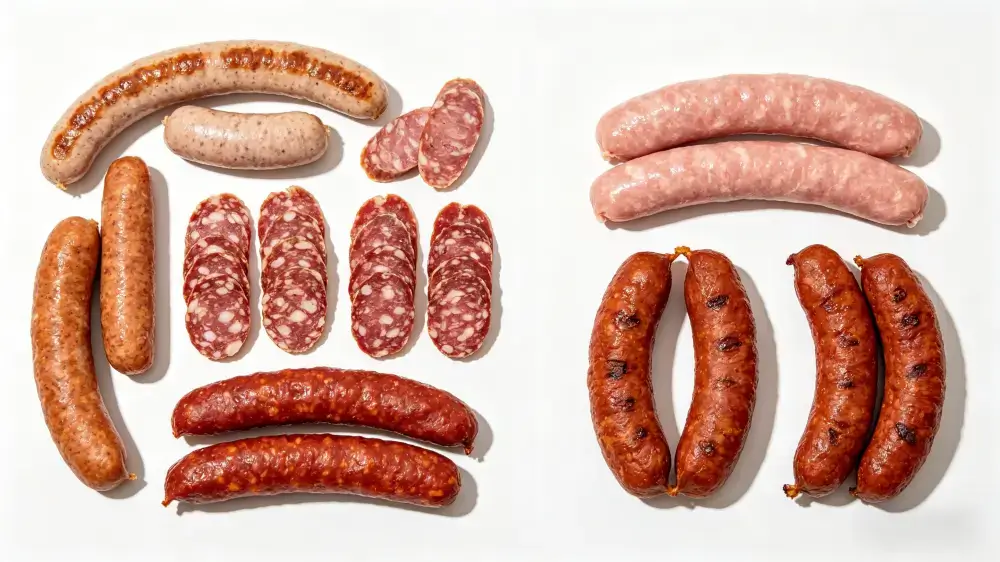
Sausage is one of the most diverse food categories in the world, with each region developing its own unique styles.
Germany alone produces more than 1,200 varieties of sausage, with Bratwurst being one of the most famous. Traditionally made from pork or veal, it is seasoned with spices such as nutmeg, coriander, and ginger.
In Spain, Chorizo is typically a cured sausage known for its deep red color caused by smoked paprika. Meanwhile, Mexican chorizo is a fresh sausage that must be refrigerated before cooking.
In China, Lap Cheong is a sweet dried sausage made from pork and seasoned with rice wine, soy sauce, and sugar. It is commonly used in stir-fried dishes or rice recipes.
Italy is well known for Salami, a dry-cured sausage flavored with garlic, fennel, or red wine. South Africa’s Boerewors is a coiled sausage made from beef and pork and seasoned with coriander seeds, making it a staple at traditional barbecues.
France’s Toulouse sausage is essential in the classic cassoulet dish, while Polish Kielbasa is commonly used in soups such as Zurek.
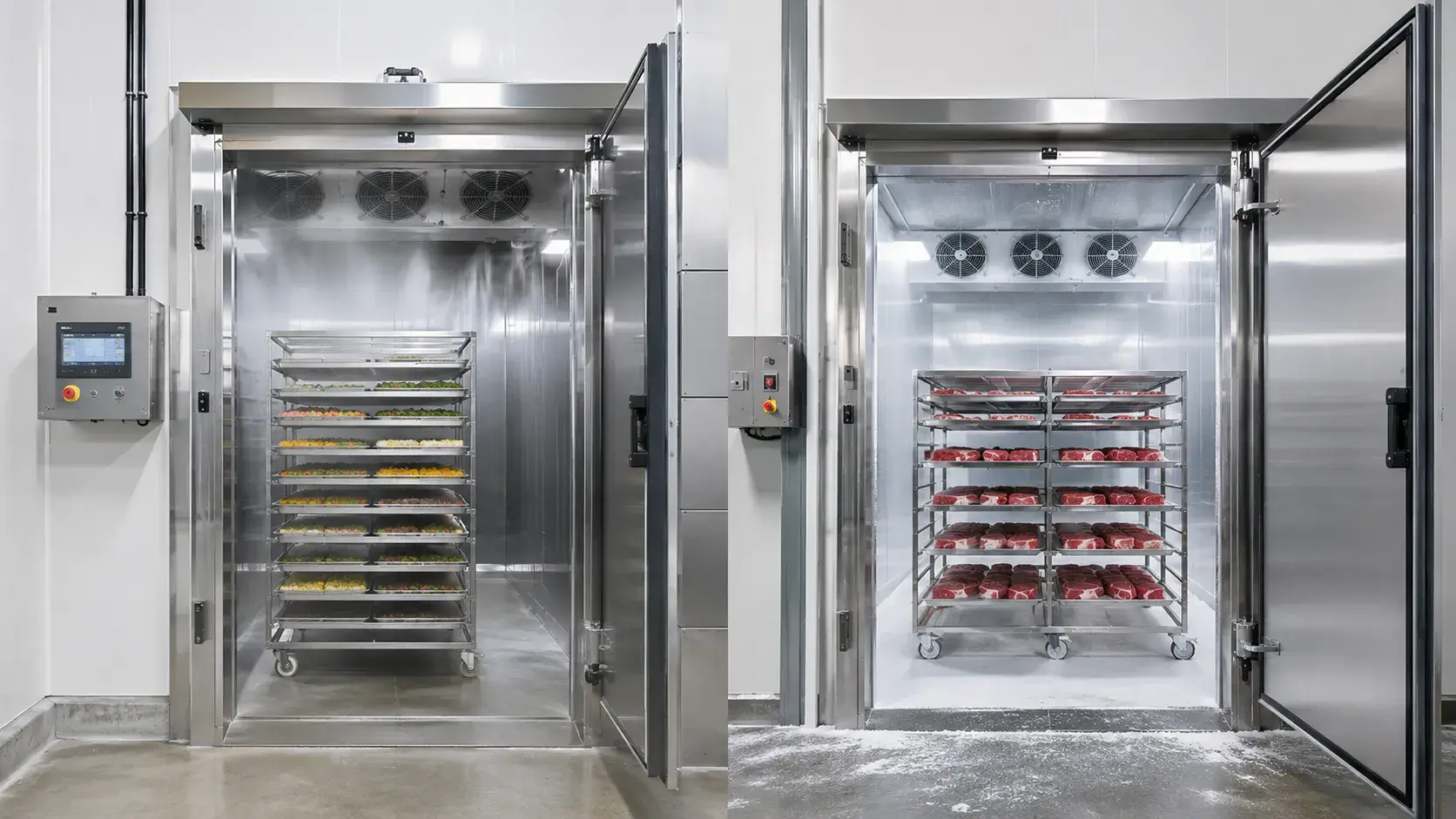
Despite these regional differences in ingredients and processing methods, all sausages share one common requirement: proper temperature control after production. Once processing is completed, sausages must enter a meat chilling room or cold storage facility, where temperature management becomes the final line of defense for maintaining product quality.
Why Processed Meat Cold Storage Is Different from Raw Meat Storage
Processed meat products like sausages differ from raw meat in several important ways, which directly affect their storage requirements.
First, sausages are made by grinding and mixing meat, which significantly increases the surface area exposed to air. This creates more opportunities for microbial contamination compared to whole muscle meat.
Second, the addition of ingredients such as spices, salt, curing agents, and water can influence moisture levels, pH, and microbial stability, affecting the product’s shelf life.
Third, different sausage types—such as fresh sausages, cooked sausages, fermented sausages, and dry sausages—require completely different storage environments.
Because of these factors, processed meat cold storage must provide:
- Precise temperature and humidity control
- Strict sanitary design
- Stable air circulation
Without these controls, product spoilage, mold growth, and food safety risks can increase significantly.
The Sausage Production Workflow and Where Cold Storage Fits In
From Raw Meat to Finished Sausage: Key Processing Steps
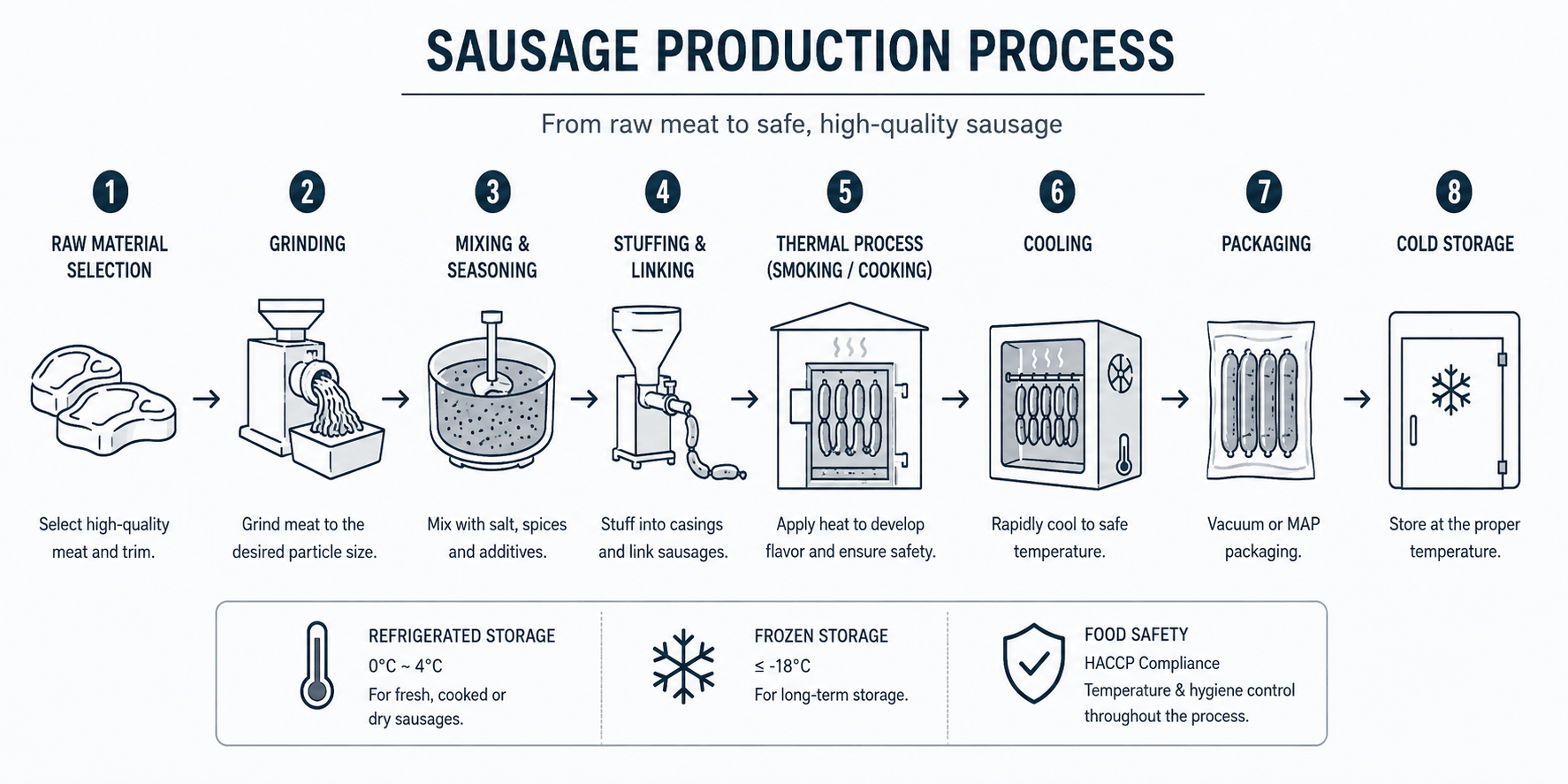
Modern sausage production typically follows a structured workflow designed to ensure both efficiency and food safety.
- Raw Material Selection and Trimming
High-quality meat cuts are selected, and excess connective tissue, fat, and membranes are removed. - Grinding
Industrial grinders reduce lean meat and fat into particles of uniform size to achieve the desired texture. - Mixing and Seasoning
The ground meat is blended with salt, spices, and additives to ensure even flavor distribution and proper binding. - Stuffing and Linking
Automatic stuffing machines fill the meat mixture into natural or synthetic casings. High-speed linking equipment then forms individual sausages. - Thermal Processing (Smoking or Cooking)
Many sausages undergo heat treatment in controlled smokehouses. This stage develops flavor while reducing microbial contamination.Fresh sausages do not require heat processing. Depending on whether they are intended as refrigerated or frozen products, they are then transferred to the meat chilling room or frozen storage room respectively. - Cooling
After heat treatment, sausages may have an internal temperature of around 54°C (130°F). According to food safety guidelines, the product must cool rapidly:- From 54°C (130°F) to 27°C (80°F) within about 1.5 hours
- Then to 7°C (45°F) within approximately 5 hours
These cooling curves are commonly required by food safety authorities such as USDA and CFIA.
- Packaging and Cold Storage
After cooling, sausages are typically vacuum packaged or packed under modified atmosphere and then transferred to a meat chilling room or freezer storage depending on whether they are refrigerated or frozen products.
Cooling After Thermal Processing: The Critical Control Point
The cooling stage is one of the most critical steps in sausage production. It serves as the bridge between heat processing and long-term cold storage.
Improper cooling can lead to several issues:
- Rapid bacterial growth
- Casing damage or bursting
- Texture deterioration
Cooling rooms or blast chillers are therefore used to remove heat quickly and uniformly. These systems use forced air circulation, programmable cooling curves, and humidity control to ensure safe temperature reduction.
In most facilities, rapid cooling is achieved using meat chilling rooms or blast chillers, which bring products down to safe storage temperatures before they are transferred to cold storage.
What Temperature Should Sausage Be Stored At?
Refrigerated Storage Temperatures for Processed Meat
Most fresh or ready-to-eat sausages are stored under refrigerated conditions.
General recommendations include:
- Fresh or raw sausage: stored at ≤4°C (40°F)
- Sausage meat or minced processed meat: stored between −2°C and +4°C
- Fully cooked sausage: also stored at ≤4°C
- Dry or semi-dry sausages: can be stored for extended periods when properly sealed and refrigerated
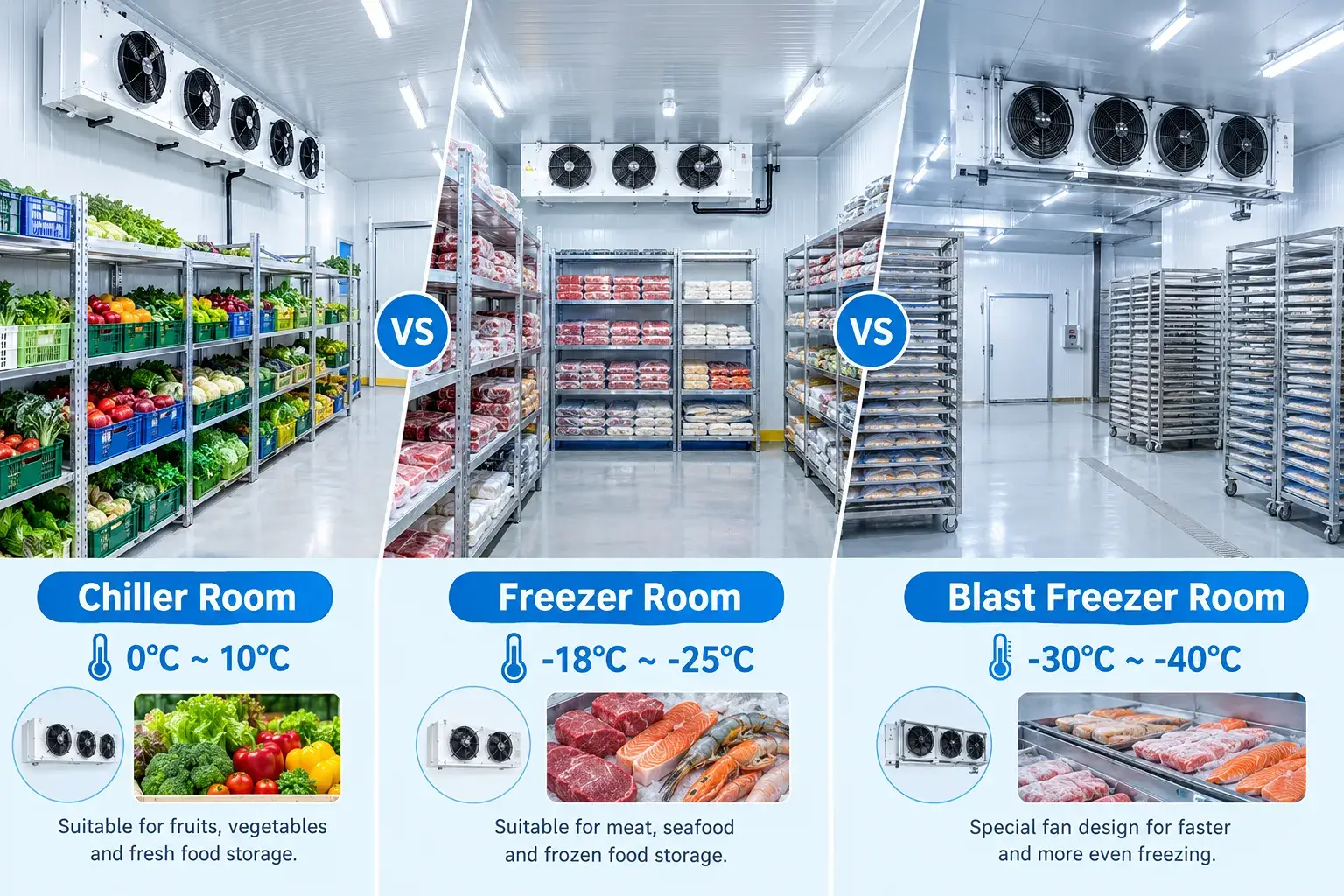
Cold storage systems used for these products should maintain a stable temperature range of 0°C to 4°C and include automatic defrost functions to prevent ice buildup on evaporators.
Frozen Storage Temperatures for Sausage and Ham
For long-term storage, sausages and ham products are typically frozen.
Standard frozen storage conditions include:
- Storage temperature ≤ −18°C (0°F)
- Frozen pork raw materials stored at ≤ −18°C
- Frozen processed meats should reach a core temperature of ≤ −15°C before entering frozen storage
These conditions significantly slow microbial activity and enzymatic reactions, preserving both safety and quality.
Sausage Cold Storage Temperature Reference Chart
| Product Type | Refrigerated Temperature | Frozen Temperature |
|---|---|---|
| Fresh sausage (pork/beef/poultry) | ≤ 4°C | ≤ -18°C |
| Fully cooked sausage | ≤ 4°C | ≤ -18°C |
| Dry or semi-dry sausage (unopened) | ≤ 4°C | ≤ -18°C |
| Cooked ham / pork raw materials | -2°C to +5°C | ≤ -18°C |
| Sausage meat or processed minced meat | -2°C to +4°C | ≤ -18°C |
How to Prevent Mold on Sausage in Cold Storage?
The Role of Humidity Control in Mold Prevention
Mold growth in cold storage environments is strongly influenced by humidity levels.
When relative humidity exceeds certain thresholds, mold spores can become active and begin colonizing product surfaces. For most sausage storage environments, maintaining humidity between 60% and 75% is recommended.
Proper humidity control offers several benefits:
- Prevents mold growth
- Reduces surface condensation
- Protects packaging materials from moisture damage
In many facilities, desiccant rotor dehumidifiers are used because they can operate efficiently even in low-temperature environments.
Best Practices for Mold-Free Sausage Storage
In addition to humidity control, several operational practices help prevent mold contamination:
- Maintain proper air circulation throughout the cold room
- Avoid overloading storage areas
- Clean and sanitize walls, shelving, and evaporators regularly
- Use vacuum or modified atmosphere packaging
- Install automatic temperature and humidity monitoring systems
Together, these measures ensure stable storage conditions and reduce spoilage risk.Cold Room Requirements for Processed Meats
Hygienic Design and Materials
Cold rooms used for processed meat storage must meet strict hygiene standards.
Common design features include: - Insulated panels: PU or PIR panels with thickness of 75–100 mm for thermal insulation
- Non-slip flooring: resistant to chemicals and equipped with drainage systems
- Lighting: IP65 rated LED lighting for safe operation
- Doors: stainless steel sliding doors with observation windows for easy cleaning and safety
These materials help prevent bacterial contamination and support routine sanitation procedures.
Refrigeration System and Air Circulation
The refrigeration system must maintain stable conditions even when doors open frequently.
Key design considerations include:
- Refrigeration capacity with safety margins
- Dual-airflow evaporators for gentle air distribution
- Air velocity of 1–2 m/s
- Air circulation rates of 50–60 cycles per hour
Systems should also comply with HACCP and food safety standards to ensure regulatory compliance.
Workflow Integration and Layout
Cold rooms should be integrated into the production workflow to maximize efficiency.
An ideal processing sequence might include:
Receiving → drying → cutting → grading → weighing → cooling → packaging → dispatch
Typical temperature zones include:
- Chilling rooms: 0–4°C
- Freezing rooms: −35°C to −28°C
- Dispatch areas: ≤12°C
Proper layout planning ensures smooth product flow and prevents bottlenecks during peak production periods.
How Do You Store Ham in a Cold Room?
Temperature and Humidity Requirements for Ham
Ham storage conditions depend on the product type.
Typical requirements include:
- Refrigerated ham storage: −2°C to +5°C
- Relative humidity: 85–90%
- Frozen ham storage: ≤ −18°C
Ham products usually have a slightly acidic pH and relatively high water activity, which means careful temperature control is necessary to prevent spoilage.
Under proper refrigerated conditions (0–4°C), ham can have a shelf life of up to 35 days.
Packaging and Shelf Life Considerations
Packaging plays a significant role in extending ham shelf life.
- Vacuum packaging can extend refrigerated shelf life to up to 7 months
- Fresh ham stored under refrigeration may last 3–5 days
- Frozen fresh ham may last up to 6 months
- Sliced cooked ham typically lasts 3–5 days refrigerated and 1–2 months frozen
Following the first-in-first-out (FIFO) principle helps ensure product rotation and reduces waste.
Choosing the Right Meat Chilling Room for Your Sausage Business
Selecting the right cold storage solution depends on production scale and product type.
Small butcher shops or artisanal producers may rely on walk-in refrigerators, while medium-scale processing plants often use modular meat chilling rooms. Large industrial facilities typically require multi-temperature cold storage systems.
Key factors to consider include:
- Temperature range capability
- Humidity control performance
- Hygiene design standards
- Energy efficiency
- Future scalability
Investing in a properly designed cold storage system offers long-term benefits such as reduced spoilage, improved regulatory compliance, and stronger brand reputation.
Conclusion
Sausage varieties may differ across cultures and cuisines, but the fundamental principles of cold storage remain universal. Temperature control is the foundation of safe storage, humidity management is essential for mold prevention, and hygienic cold room design ensures long-term operational reliability.
From rapid cooling after heat processing to refrigerated or frozen storage, maintaining a complete and controlled cold chain is essential for preserving the quality and safety of processed meat products.
For meat processors and food manufacturers, investing in professional sausage cold storage systems and meat chilling rooms designed to meet HACCP standards can significantly improve product stability and reduce losses.
If you are planning to build or upgrade a sausage processing facility, working with experienced refrigeration engineers to design a customized cold storage solution can help ensure your operation meets both safety requirements and production demands.