Introduction
Dairy products are among the most temperature-sensitive food categories in the cold chain industry. Milk, yogurt, cheese, butter, and cream all continue to change biologically and chemically after production. Without controlled refrigeration, quality degradation begins within hours.
The real challenge in dairy cold storage is not only “keeping things cold”, but maintaining:
- Stable product core temperature
- Controlled microbial growth rate
- Consistent humidity and airflow conditions
- Minimal temperature fluctuation during handling
In industrial dairy operations, even a ±1°C deviation or frequent door opening can significantly reduce shelf life and increase bacterial load.
This guide explains how dairy cold storage systems are engineered in real applications, including temperature standards, system design logic, and cold chain best practices.
Why Temperature Control Is Critical in Dairy Cold Storage
Microbial Growth Control in Dairy Cold Storage
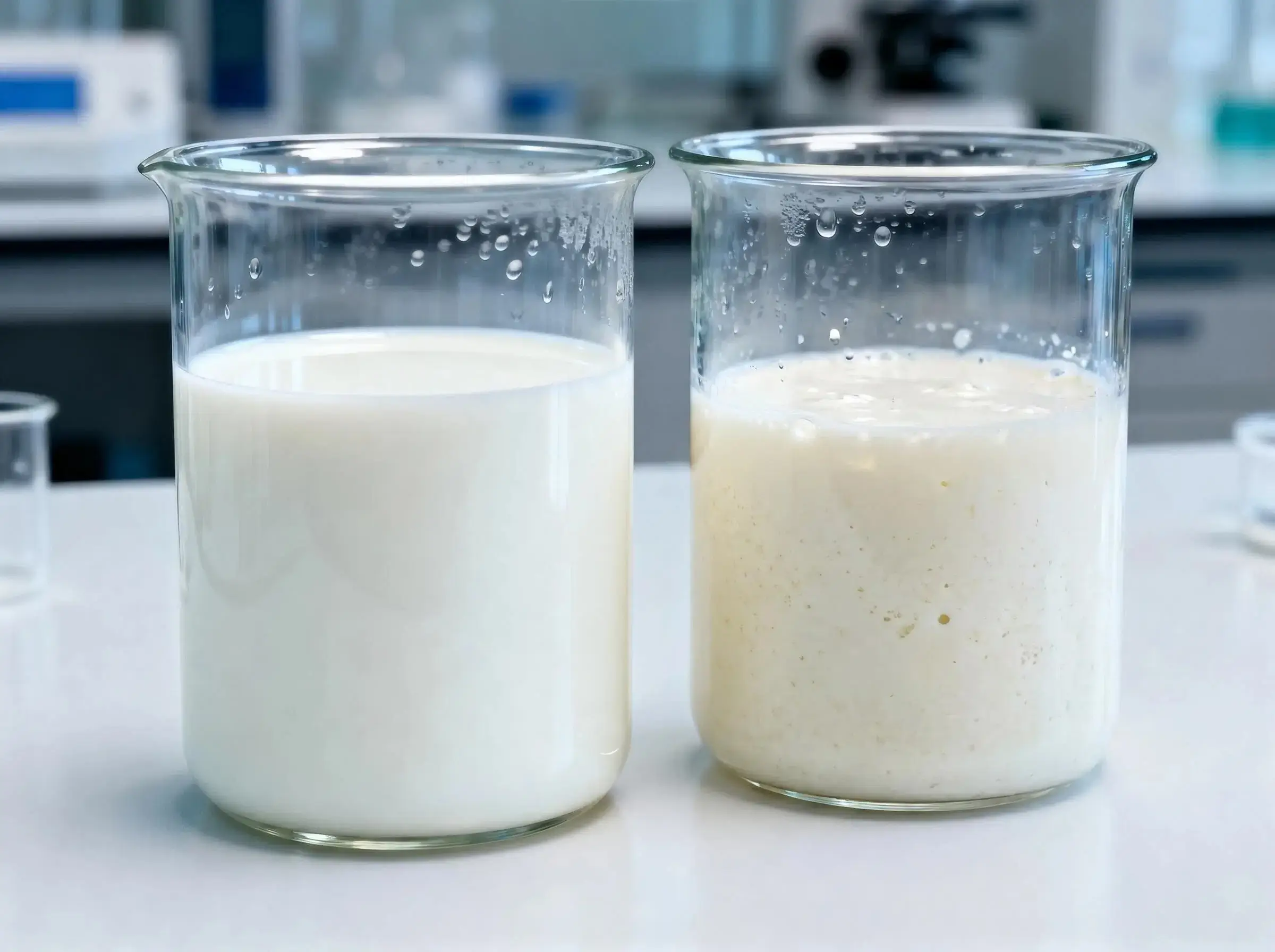
Milk is a high-risk biological medium. Once milking begins, microbial activity starts immediately. At higher temperatures, bacteria such as:
- Listeria monocytogenes
- Salmonella
- Escherichia coli
can multiply exponentially.
At above 7°C, bacterial growth rate can double within hours.
This is why industrial systems focus on rapid pull-down cooling, not just storage temperature.
Shelf Life Stability Depends on Cold Chain Continuity
Dairy products pass through multiple stages:
Farm → Cooling station → Processing plant → Cold storage → Transport → Retail
The weakest point is usually not storage—it is transitional exposure, especially:
- Loading/unloading areas
- Door opening cycles
- Transport delays
Even short interruptions can cause irreversible shelf-life loss.
Product Quality Depends on Cold Chain System Design
Temperature directly affects:
- Milk fat emulsion stability
- Protein denaturation rate
- Fermentation activity (yogurt/cheese)
Example: - Yogurt at slightly higher temperature → over-fermentation → acidic taste
- Cheese under unstable RH → surface cracking or texture collapse
This is why temperature + humidity + airflow must be designed together
Dairy Cold Storage Temperature Standards
Milk Cold Storage (Raw & Pasteurized)
- Raw milk: 0°C to 4°C
- Pasteurized milk: 2°C to 4°C
The goal is not only temperature reduction, but rapid core temperature pull-down to ≤4°C within a short time window after milking.
Typical system: - Milk cooling tank (bulk farm level)
- Blast pre-cooling room (processing plant level)
- Short-term buffer cold room (distribution level)
Yogurt Storage Conditions
- Standard storage: 2°C to 6°C
Key design challenge:
Yogurt is biologically active even after packaging.
If temperature rises: - Fermentation continues
- pH drops
- Texture becomes unstable
Stability depends on tight ±1°C control, not just nominal temperature
Cheese Storage Temperature and Humidity Control
- Soft cheese: 2°C to 6°C
- Hard cheese: 6°C to 12°C
Relative humidity: - Typically 80%–90% RH
Humidity deviation causes more damage than temperature: - Too dry → cracking and weight loss
- Too humid → surface mold and contamination
Key Types of Dairy Cold Storage Systems
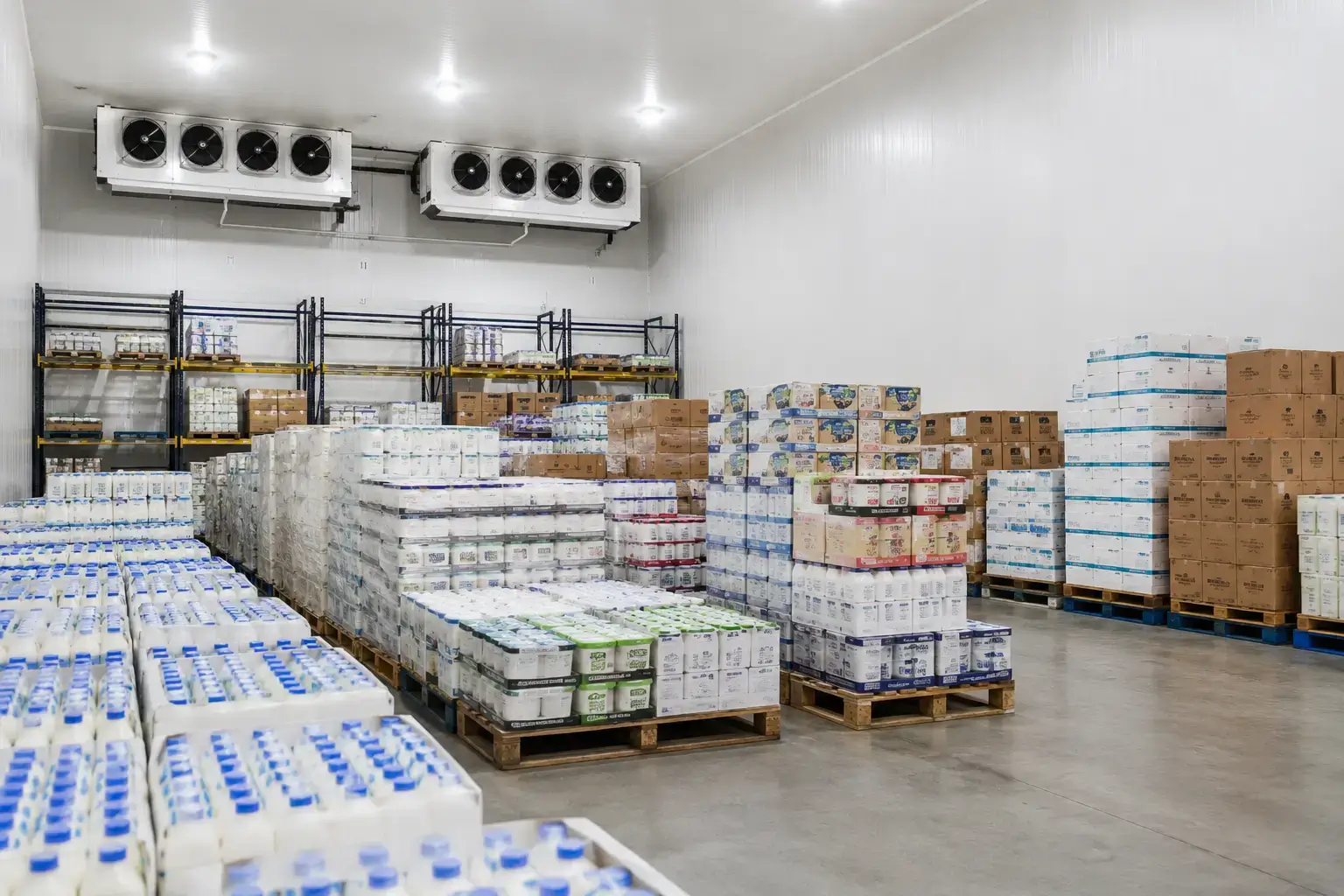
Dairy Processing Cold Room for Industrial Plants
Used in:
- Milk processing plants
- Cheese factories
- Yogurt production lines
Functional zones: - Raw material buffer zone
- Processing buffer cooling zone
- Finished product staging area
Engineering characteristics: - Multi-zone temperature control
- High air circulation uniformity (≤2°C deviation)
- Fast recovery after door opening
- Hygienic stainless steel or coated surfaces
Walk-in Dairy Cold Room for Small and Medium Facilities
Suitable for:
- Small dairy processors
- Farms and collection centers
- Regional distributors
Key advantages: - Modular installation
- Lower CAPEX
- Flexible expansion
Typical design focus: - Fast installation
- Stable temperature recovery
- Simple maintenance system
Large Dairy Cold Storage Warehouse for Logistics Operations
Used for:
- Export distribution
- National dairy brands
- Third-party cold chain logistics
System features: - High storage density
- Automated racking integration
- Multiple loading docks
- Real-time temperature monitoring system
Milk Pre-Cooling Systems for Dairy Cold Chain
At farm or collection points:
- Milk cooling tank (bulk cooling)
- Rapid plate cooling systems
- Small pre-cooling cold rooms
Key engineering target:
Bring milk from ~35°C → ≤4°C as quickly as possible
This stage determines:
final shelf life more than any later storage stage
Core Engineering Challenges in Dairy Cold Storage
Temperature Fluctuation During Door Operation
The biggest real-world issue is not system design—it is operation:
- Frequent door opening
- Long unloading time
- Poor air curtain performance
Result:
Warm air infiltration → localized warming → condensation risk
Cross-Contamination Risk
Improper layout leads to:
- Raw milk mixing with finished products
- Airflow crossover contamination
- Inadequate cleaning separation
Engineering solution: - Strict zoning design
- Positive/negative pressure control
- Separate airflow circuits
Energy Consumption Pressure
Dairy cold rooms run 24/7, making energy efficiency critical.
Typical energy loss sources:
- Door air exchange (30–40%)
- Poor insulation panels
- Defrost inefficiency
- Over-sized refrigeration systems
Cold Chain Break Risk and System Integrity
Cold chain failure usually happens at:
- Loading docks
- Transport delays
- Temporary staging areas
Not inside the cold room itself
Engineering Design Principles for Dairy Cold Rooms
Temperature Zoning Strategy
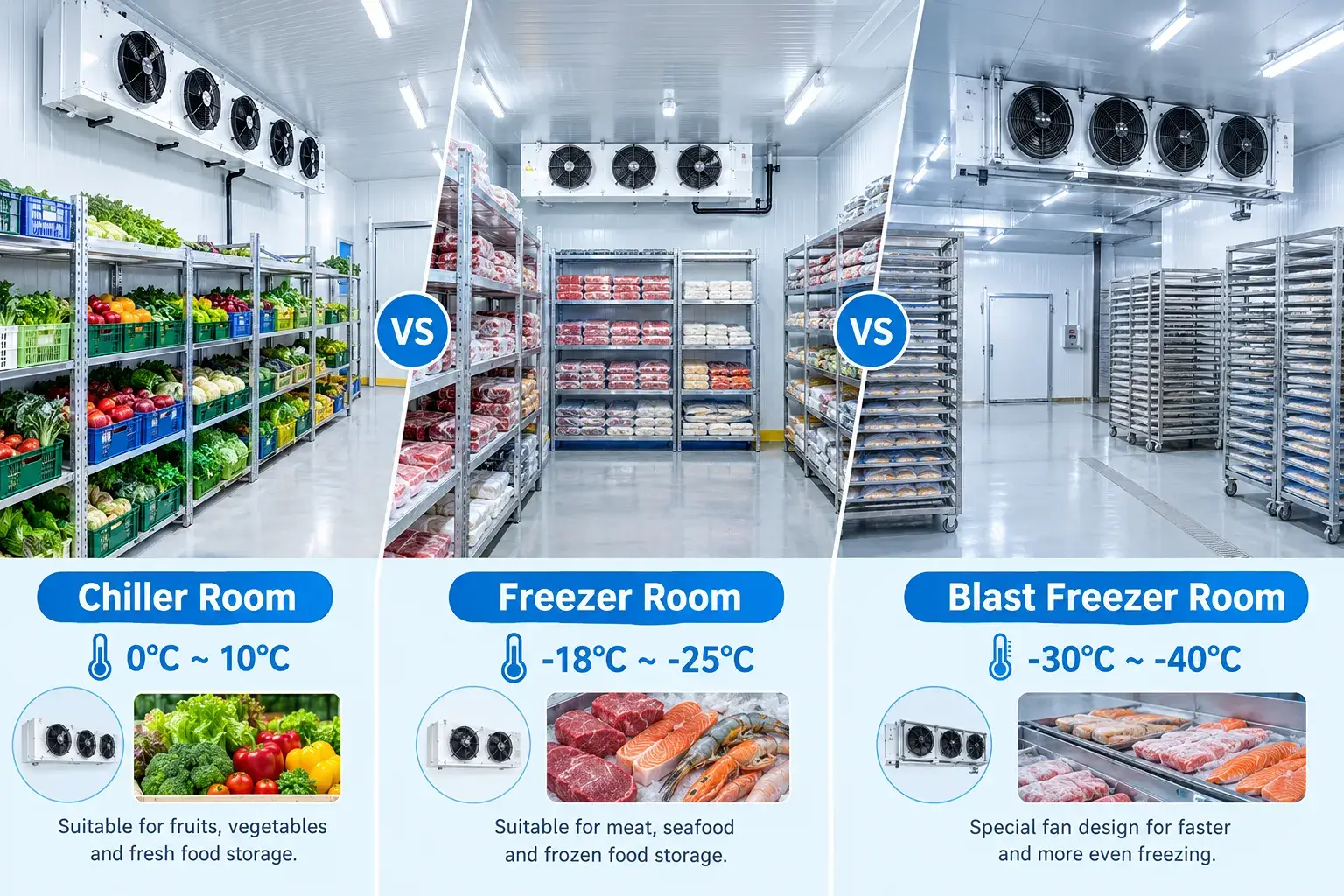
Professional dairy cold rooms are divided into:
- Raw milk zone (0–4°C)
- Fermentation products zone (2–6°C)
- Cheese curing zone (6–12°C + RH control)
Prevents cross-interference between biological products
Airflow Design in Cold Storage Systems
Key design targets:
- Uniform air distribution
- Avoid direct airflow on products
- Maintain stable return air path
Bad airflow = temperature instability even if equipment is correct
Humidity Control Integration
Especially important for cheese and cream products:
- Humidity sensor feedback loop
- Evaporator defrost synchronization
- Anti-condensation wall design
Smart Monitoring & Automation
Modern systems include:
- IoT temperature tracking
- Alarm threshold system
- Cloud-based logging
- HACCP compliance reporting
This is now a baseline requirement for export-oriented dairy factories
Common Design Mistakes in Dairy Cold Storage
- Oversized refrigeration system (causes unstable cycling)
- No zoning separation
- Ignoring humidity control
- Poor door sealing design
- Lack of pre-cooling stage
- No airflow simulation before installation
Cold Chain Operational Best Practices
- Maintain strict loading/unloading procedures
- Minimize door open time (< 30 seconds when possible)
- Use pre-cooled packaging materials
- Monitor product core temperature, not just room air
- Implement real-time logging for compliance
FAQ
What is the ideal milk storage temperature?
0°C to 4°C, with emphasis on maintaining stable core temperature and minimizing fluctuation.
Why is yogurt stored at slightly higher temperature?
Because fermentation cultures remain active; overly low temperatures may slow product stabilization.
Why is cheese humidity control important?
Because texture, weight, and surface microbiology are directly affected by moisture balance.
What is the biggest risk in dairy cold chain systems?
Not storage temperature—but temperature exposure during handling and transport transitions.
Conclusion
Effective dairy cold storage is not simply refrigeration equipment. It is a combined engineering system involving:
- Temperature control
- Airflow design
- Humidity regulation
- Operational discipline
- Cold chain continuity
A properly designed dairy cold storage system can: - Extend shelf life significantly
- Reduce spoilage rate
- Improve product consistency
- Support export compliance
- Lower long-term energy cost
For dairy processors, farms, and cold chain logistics companies, system-level cold room engineering is now a core competitiveness factor—not just infrastructure.