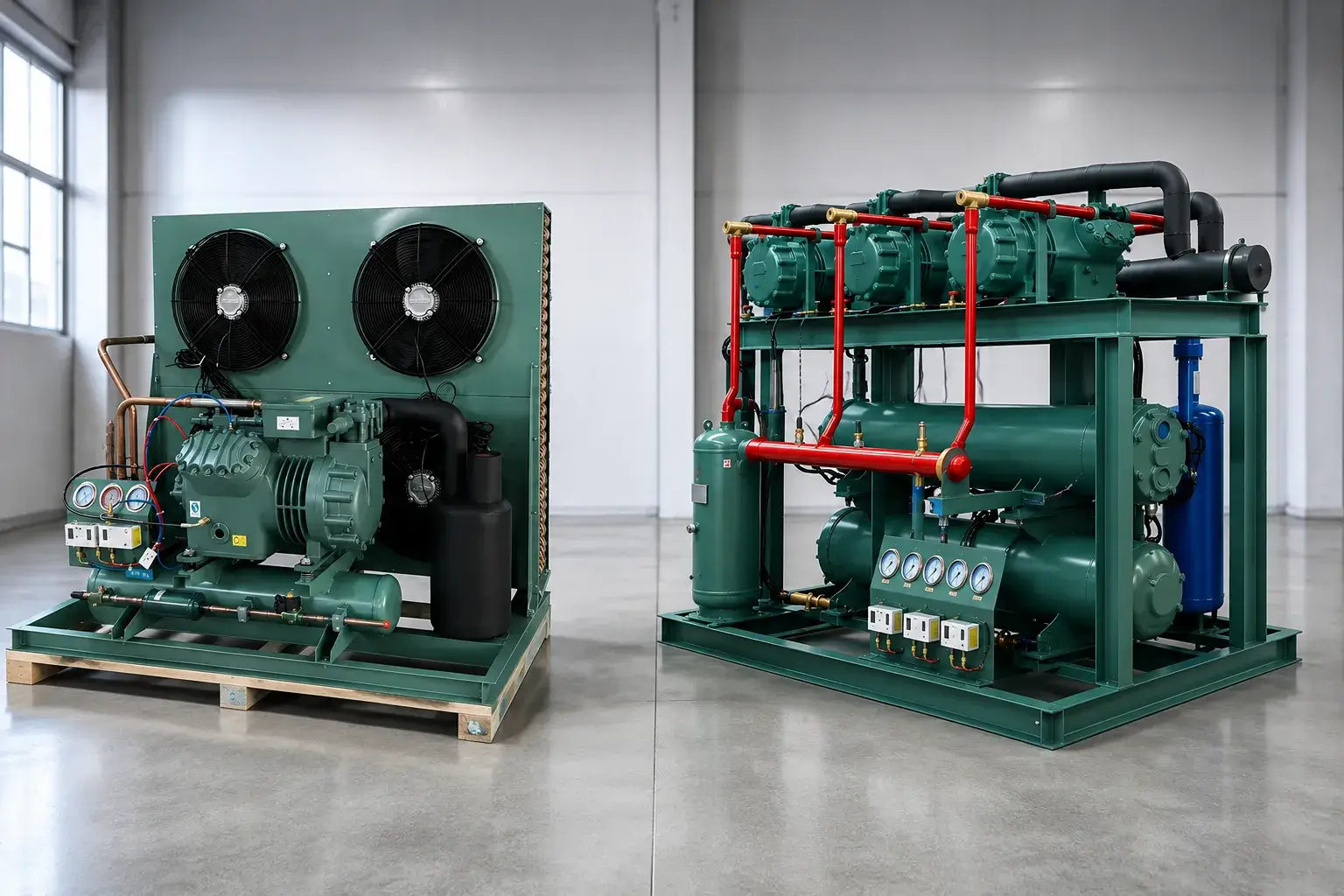
Condensing units are a key part of commercial refrigeration, industrial refrigeration, cold storage, and food processing systems. Choosing the wrong heat rejection method can increase energy consumption, complicate maintenance, or reduce refrigeration performance in demanding operating conditions. In general, refrigeration projects can use either air-cooled condensing units or water-cooled condensing units. However, engineers should consider the ambient temperature, required cooling capacity, water availability, installation conditions, and operating hours before selecting the right system.
The main difference is straightforward: an air-cooled condensing unit rejects heat to ambient air, while a water-cooled condensing unit transfers heat to cooling water. However, this difference in heat rejection method also affects several aspects of system operation. For example, installation requirements, operating performance, maintenance needs, water consumption, and overall system cost can vary significantly between the two options. Therefore, buyers and engineers should consider these factors carefully before selecting the most suitable solution for their refrigeration project.
What Is an Air-Cooled Condensing Unit?
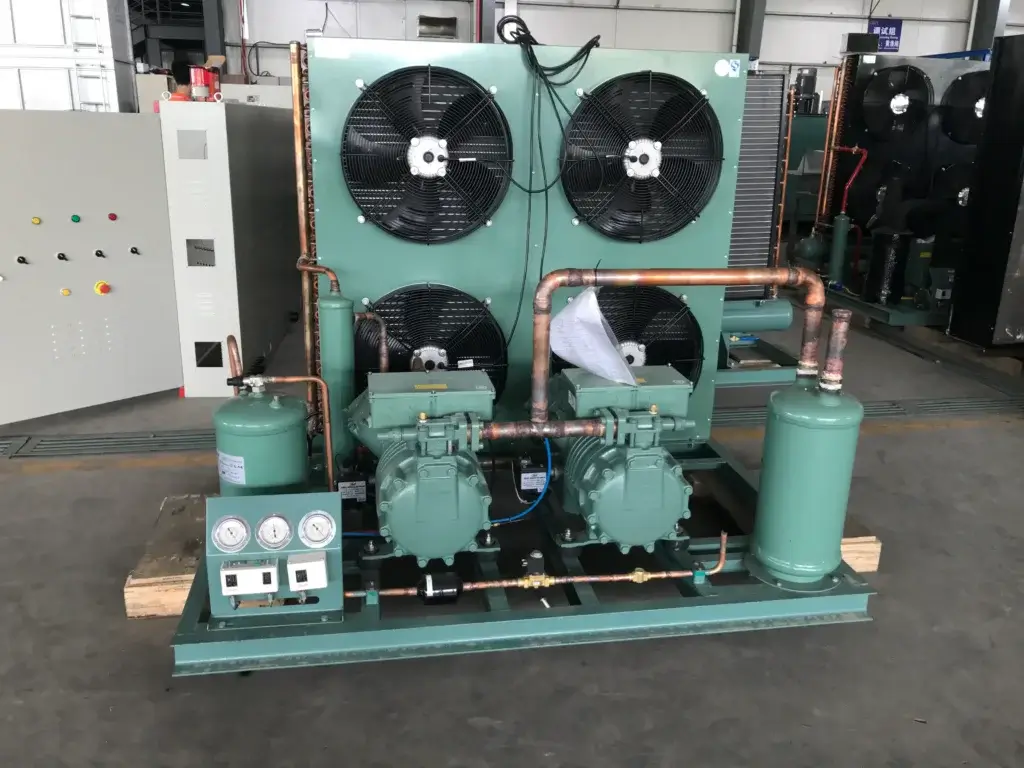
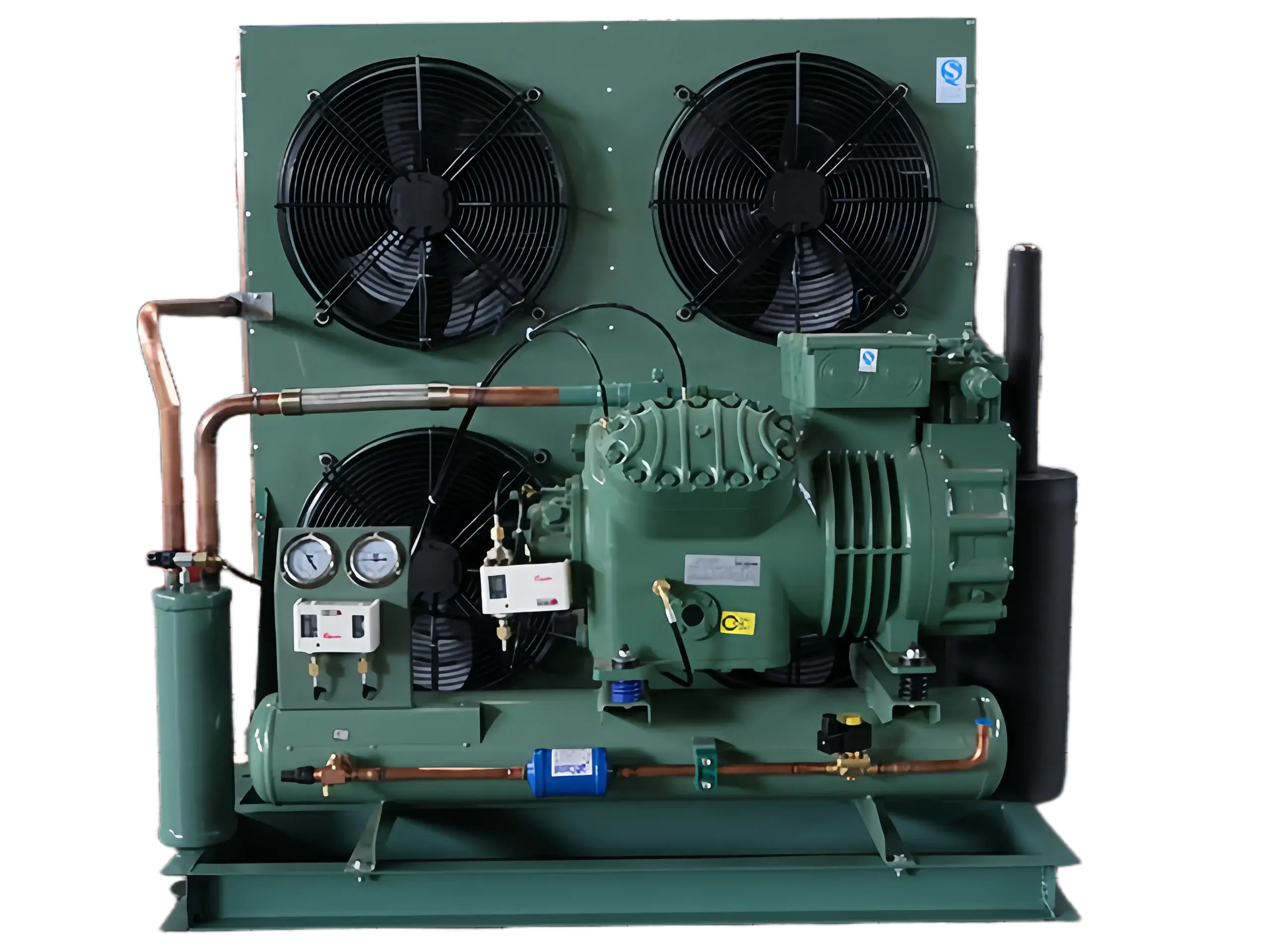
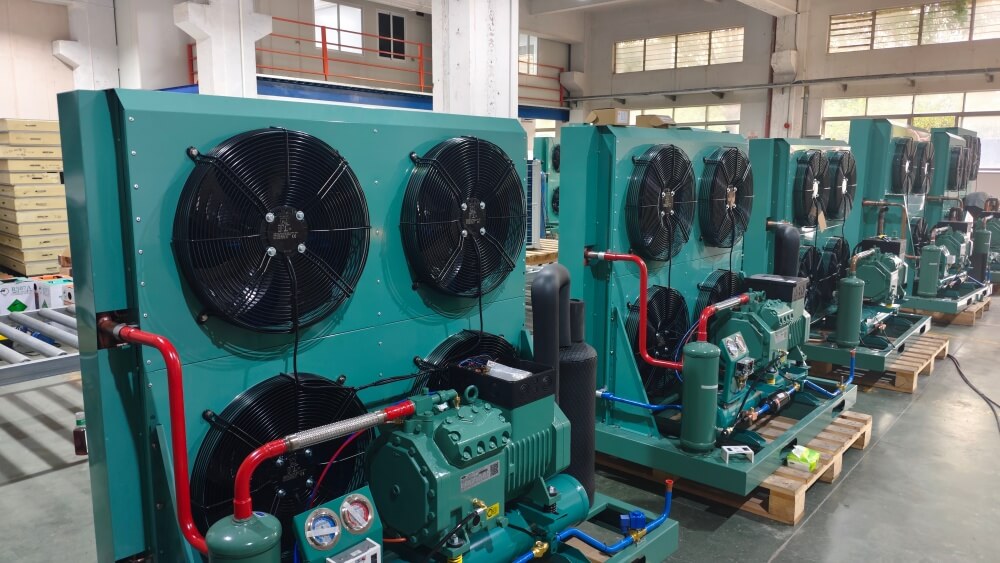
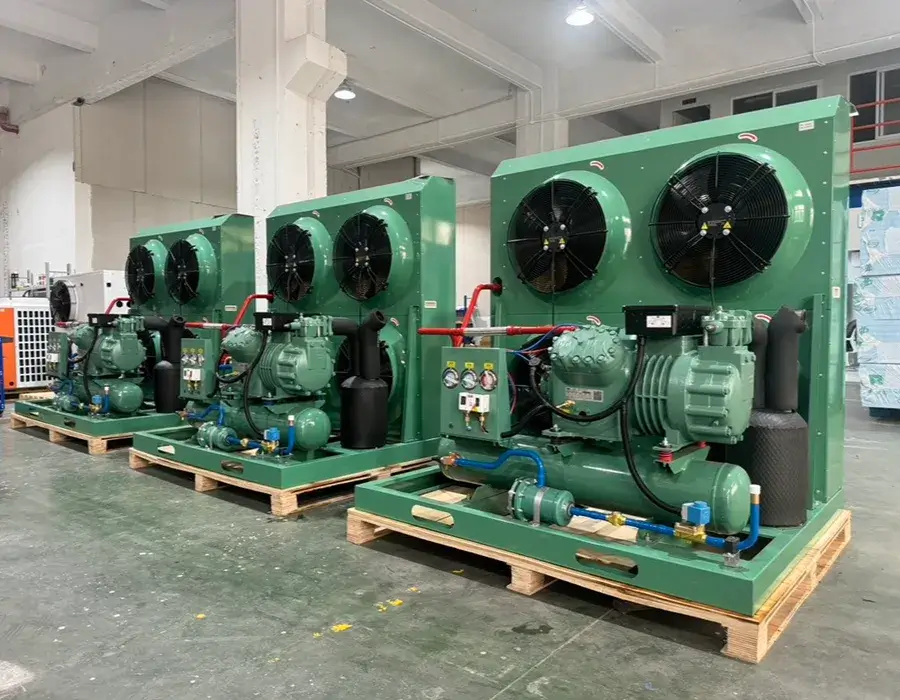
An air-cooled condensing unit is a refrigeration assembly that uses ambient air to remove heat from the refrigerant. A typical unit consists of a compressor, air-cooled condenser, condenser fan, receiver, and control and protection components.
During operation, the compressor continuously circulates refrigerant through the refrigeration circuit. First, the compressor compresses the refrigerant, increasing its pressure and temperature. Next, the high-temperature refrigerant enters the condenser, where condenser fans draw ambient air across the coil to remove heat. As a result, the refrigerant condenses into a high-pressure liquid and continues through the refrigeration system. Finally, it reaches the connected evaporator, where it absorbs heat from the refrigerated space and provides the required cooling.
Air-cooled systems do not require a cooling water circuit, making them practical where water availability is limited or installation simplicity is important. For a more detailed explanation, see What Is an Air-Cooled Condensing Unit?
What Is a Water-Cooled Condensing Unit?
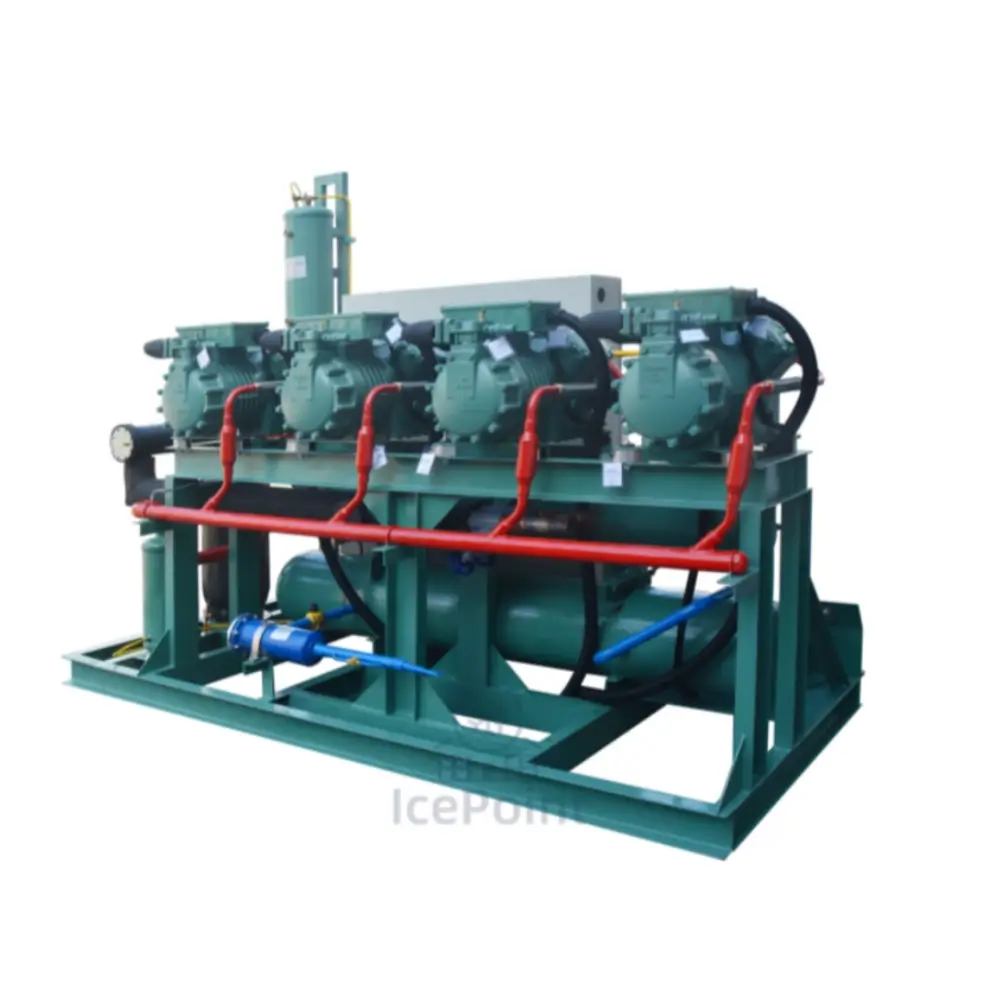
A water-cooled condensing unit uses cooling water to remove heat from the refrigerant. Its basic configuration includes a compressor, water-cooled condenser, water circulation system, pump, and control system.
Instead of using outdoor air directly, heat from the refrigerant is transferred through the water-cooled condenser to the cooling-water circuit. Depending on the project design, the system may also include a cooling tower, water pump, water treatment equipment, or other heat rejection components.
Water generally provides more effective heat transfer than air, allowing a water-cooled system to maintain relatively stable condensing conditions when the water circuit is properly designed. This can be useful for large refrigeration systems operating continuously under substantial cooling loads.
Air Cooled vs Water Cooled Condensing Unit: Key Differences
The most important difference is the way each system rejects heat. An air-cooled unit relies on fans and ambient air, while a water-cooled unit relies on a water circuit and water-side heat transfer.
| Factor | Air-Cooled Condensing Unit | Water-Cooled Condensing Unit |
|---|---|---|
| Heat rejection medium | Ambient air | Cooling water |
| Water requirement | None | Required |
| Installation | Relatively simple | More complex |
| Ambient temperature sensitivity | Higher | Lower direct dependence |
| Heat transfer | Dependent on airflow and air temperature | Generally more effective |
| Maintenance | Mainly refrigeration and condenser/fan maintenance | Refrigeration plus water-side maintenance |
| Initial system complexity | Lower | Higher |
| Water consumption | None | Required |
| Space requirements | Requires airflow around condenser | May require water-side equipment |
| Typical applications | Small and medium refrigeration projects | Large and continuous refrigeration systems |
Neither configuration is universally better. An air-cooled system can be the more practical choice when water is unavailable, while a water-cooled system may be more suitable for projects with high refrigeration capacity and a reliable water circuit.
Air-Cooled vs Water-Cooled Condensing Unit: Performance Comparison
Cooling Efficiency and Heat Transfer
The heat rejection medium has a direct effect on condenser performance. Air-cooled systems depend on the temperature difference between the refrigerant and surrounding air, as well as adequate airflow across the condenser coil.
Water-cooled systems transfer heat through cooling water, which can provide effective heat exchange and relatively stable condensing conditions. However, overall efficiency depends on water temperature, flow rate, condenser design, pump operation, and the performance of the complete water circuit.
Performance in High Ambient Temperatures
High ambient temperatures can create more demanding conditions for air-cooled condensing units. As outdoor temperature rises, the condenser has less temperature difference available for heat rejection. This can increase condensing temperature and pressure and may affect compressor operating conditions.
Water-cooled systems are less directly affected by outdoor air temperature because heat is rejected through the water circuit. However, their performance still depends on cooling-water temperature, water flow, and the design of the cooling tower or other heat rejection equipment.
For projects in hot climates, the condensing unit should therefore be selected according to the actual design ambient temperature rather than a nominal capacity alone.
Energy and Operating Considerations
Air-cooled systems avoid the additional energy requirements of water pumps and cooling towers. This can simplify operation, particularly for small and medium-sized installations.
Water-cooled systems may provide favorable heat transfer performance, but the complete system must also account for pump power, cooling tower operation, water treatment, and water consumption. The most energy-efficient option should therefore be evaluated based on the complete installation rather than condenser efficiency alone.
Advantages and Limitations of Air-Cooled Condensing Units
Advantages of Air-Cooled Condensing Units
Air-cooled units are often selected because they do not require cooling water and have a relatively simple system configuration. Installation is generally easier because there is no dedicated water circulation network.
Other advantages include flexible installation, lower water consumption, and relatively straightforward maintenance. These characteristics make air-cooled units suitable for projects where installation space, water availability, or maintenance resources are limited.
Limitations of Air-Cooled Condensing Units
The main limitation is sensitivity to ambient temperature. In hot weather, the condenser may operate at a higher condensing temperature and require greater compressor power.
The condenser also needs sufficient airflow. Poor ventilation, blocked coils, or inadequate installation clearance can reduce heat rejection performance. Fan noise may also need to be considered in some commercial installations.
Advantages and Limitations of Water-Cooled Condensing Units
Advantages of Water-Cooled Condensing Units
Water-cooled systems can provide efficient heat transfer and relatively stable condensing performance when the water circuit is correctly designed. As a result, they are particularly useful for high-capacity refrigeration systems and applications that require long operating hours. In addition, a properly designed water circuit can help maintain consistent operating conditions during continuous refrigeration operation.
Because the condenser is not directly dependent on outdoor air temperature, the system can also offer advantages in demanding ambient conditions. Water-cooled condensers can additionally provide a compact heat rejection configuration where the overall plant layout supports the required water-side equipment.
Limitations of Water-Cooled Condensing Units
The main consideration is system complexity. A water-cooled installation requires a reliable water supply or circulation system, and depending on the design, may require pumps, cooling towers, and water treatment.
Water quality also affects long-term operation. Scaling, corrosion, or fouling inside the condenser can reduce heat transfer performance. As a result, water-side inspection and maintenance must be included in the operating plan.
Applications of Air-Cooled and Water-Cooled Condensing Units
Applications of Air-Cooled Condensing Units
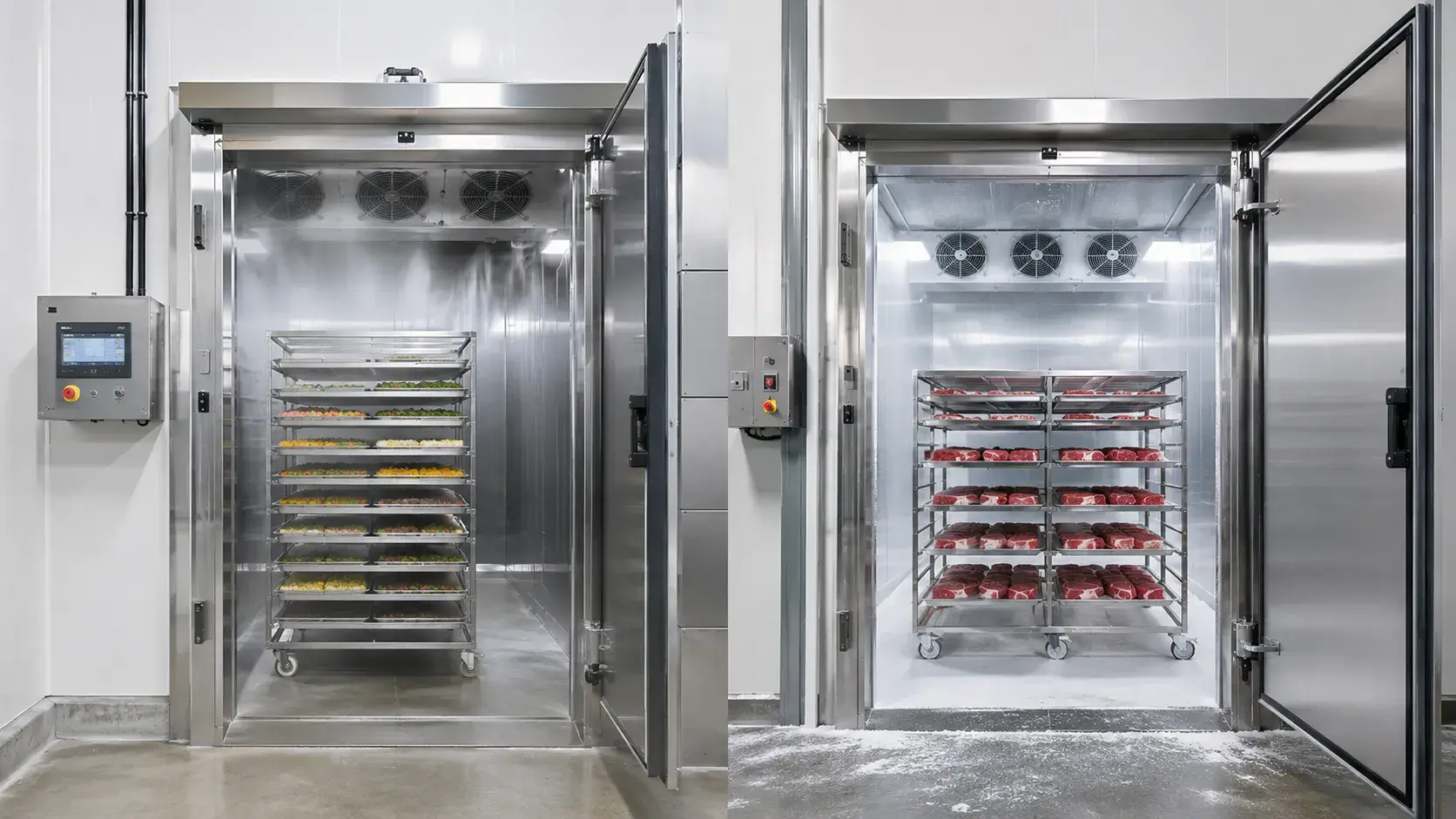
Air-cooled condensing units are commonly used for cold storage rooms, walk-in coolers, walk-in freezers, supermarkets, restaurants, and small to medium-sized food processing facilities.
They are particularly practical when the project does not have a stable cooling-water supply or when the owner wants a simpler installation and maintenance arrangement. For many distributed refrigeration applications, eliminating the water circuit can also simplify equipment layout.
Applications of Water-Cooled Condensing Units
Water-cooled systems are more commonly considered for large cold storage facilities, industrial refrigeration systems, large food processing plants, and central refrigeration systems.
They are especially suitable where a stable water supply or water circulation system is already available and the refrigeration plant operates for long periods at relatively high capacity. The final selection should still be based on the actual cooling load and operating conditions.
Which Is Better: Air-Cooled or Water-Cooled?
There is no universal answer. The appropriate choice depends on the project rather than simply on the rated refrigeration capacity.
Consider air-cooled when:
- No cooling water is available.
- Installation simplicity is important.
- The refrigeration load is small or medium.
- Easy maintenance is a priority.
Consider water-cooled when:
- A stable water supply is available.
- Refrigeration capacity is relatively high.
- The system operates continuously.
- Stable condensing conditions are important.
For hot climates, both options should be compared using the actual design ambient temperature, cooling-water conditions, and required operating capacity.
How to Choose the Right Condensing Unit for Your Project?
Selecting a condensing unit should start with the actual refrigeration requirements rather than the unit name alone. Important project information includes:
- Required cooling capacity
- Evaporation temperature
- Room temperature
- Ambient temperature
- Refrigerant
- Operating hours
- Available water supply
- Installation location
The final configuration should match the complete operating conditions. Compressor capacity, condenser type, refrigerant, control method, and heat rejection conditions all affect actual system performance.
Frequently Asked Questions About Air-Cooled vs Water-Cooled Condensing Units
What Is the Difference Between an Air-Cooled Condenser and a Water-Cooled Condenser?
An air-cooled condenser rejects refrigerant heat to ambient air, while a water-cooled condenser transfers heat to cooling water. Their main differences involve heat transfer, installation, maintenance, water requirements, and operating conditions.
Which Is Better, Air-Cooled or Water-Cooled?
Neither is always better. Air-cooled units are practical where water is unavailable, while water-cooled systems can be advantageous for larger installations with stable water circulation.
What Are Three Types of Condensers?
The three common condenser types are air-cooled condensers, water-cooled condensers, and evaporative condensers. They differ mainly in how heat is transferred from the refrigerant to the surrounding environment.
Does a Water-Cooled Condensing Unit Need Water?
Yes. A water-cooled condensing unit requires a cooling-water circuit. Depending on the system design, this may include a water pump, cooling tower, water treatment equipment, or other water-side components.
Which Condensing Unit Is Better for Cold Storage?
Air-cooled units are often suitable for small and medium cold storage projects, especially where water is unavailable. Water-cooled units may be considered for large industrial cold storage facilities with high cooling loads and stable water circulation.
Conclusion: Choosing Between Air-Cooled and Water-Cooled Condensing Units
Air-cooled condensing units offer simple installation, flexible operation, and no cooling-water requirement, while water-cooled units provide effective heat transfer and stable condensing performance when a suitable water system is available. However, these advantages do not make one option universally suitable for every project. Instead, buyers should evaluate factors such as cooling capacity, ambient conditions, water availability, installation requirements, energy consumption, and maintenance needs before selecting the appropriate system.
Icepoint provides air-cooled condensing units, water-cooled condensing units, cold storage refrigeration, food processing refrigeration, and industrial refrigeration solutions. Based on the specific project requirements, Icepoint selects and configures the appropriate system to match the required cooling capacity, operating conditions, and application. For a customized refrigeration solution, contact Icepoint with your cooling capacity, temperature, refrigerant, ambient conditions, and installation requirements to discuss your project and request an RFQ.