A cold storage project can have the right room size and insulation and still fail to maintain the required temperature if the refrigeration unit is incorrectly selected. A unit that is too small may struggle during product loading or frequent door opening, while an oversized system can increase equipment cost and cause inefficient operation. For food processors, cold-chain warehouses, supermarkets, and other temperature-controlled facilities, refrigeration capacity must be matched to the actual operating conditions rather than the room size alone.
A refrigeration unit is the equipment assembly used to provide the cooling capacity required for a cold storage application. It works with the evaporator, refrigeration piping, controls, and other system components to maintain the required room or product temperature. The correct configuration depends on factors such as room temperature, product load, entering product temperature, pull-down time, ambient conditions, insulation, and operating hours.
This guide explains how refrigeration units work, the main types used in cold storage, how refrigeration capacity is determined, typical temperature ranges, cost factors, maintenance requirements, and the key points to consider when selecting a unit for a commercial or industrial project.
What Is a Refrigeration Unit?
A refrigeration unit is a mechanical system designed to provide the cooling capacity required to maintain a specified temperature. In a cold storage application, it removes heat from the refrigerated space and transfers that heat to the surrounding environment.
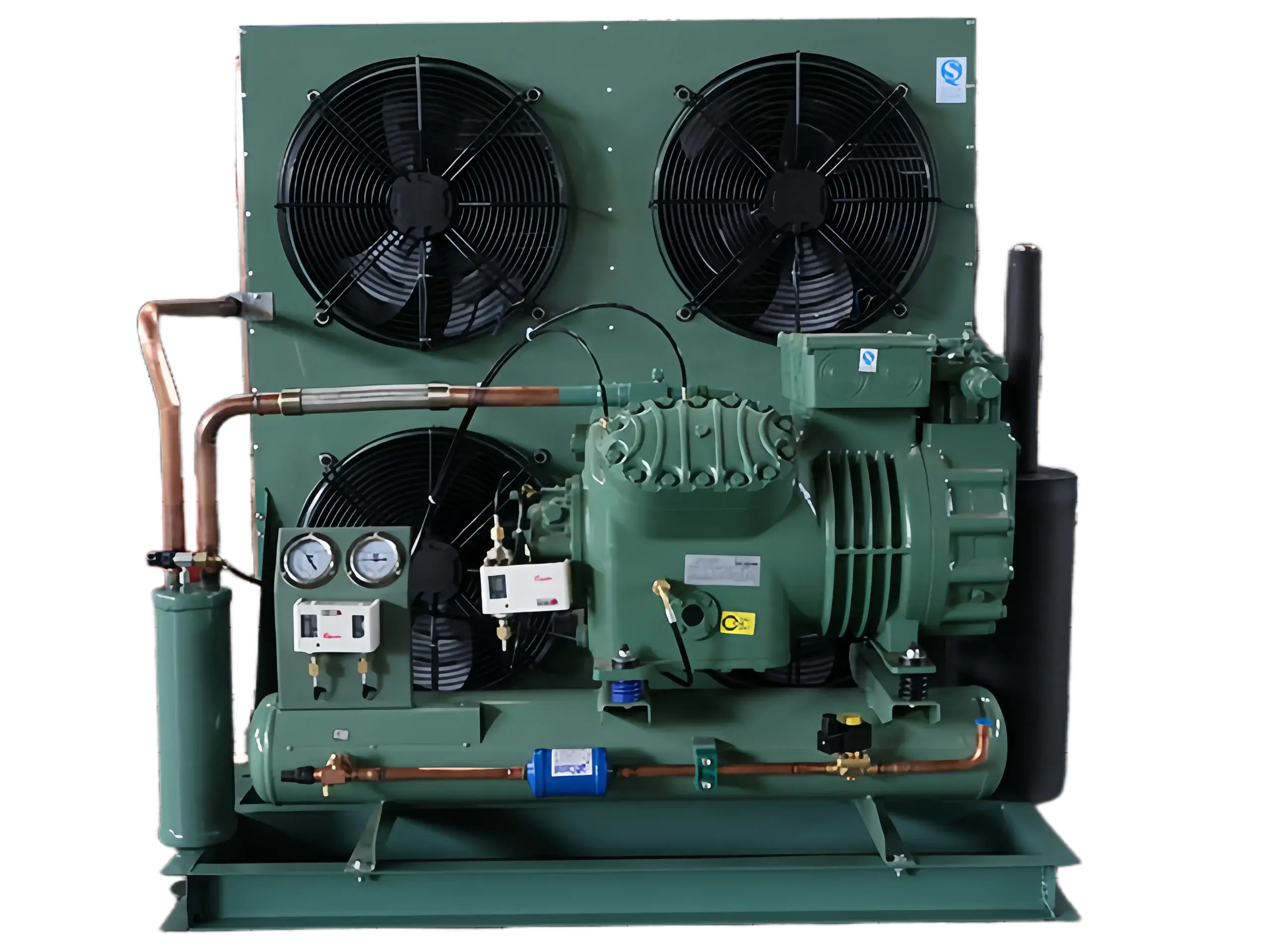
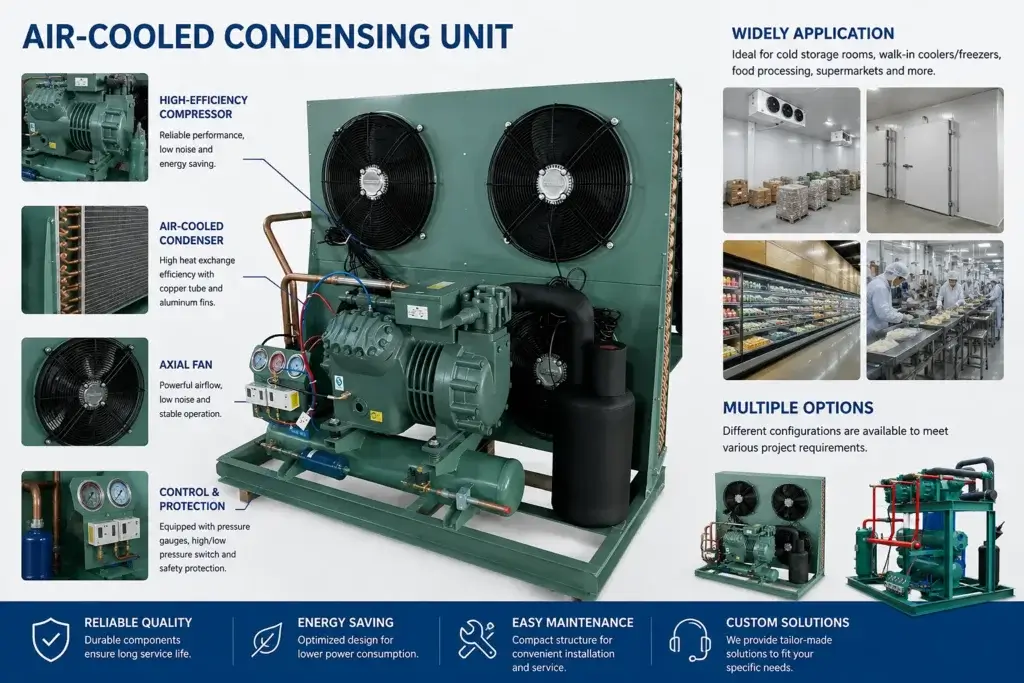
A typical refrigeration unit may include a compressor, condenser, refrigeration controls, and associated components. The evaporator is normally installed inside the cold room and connected to the unit through the refrigeration circuit.
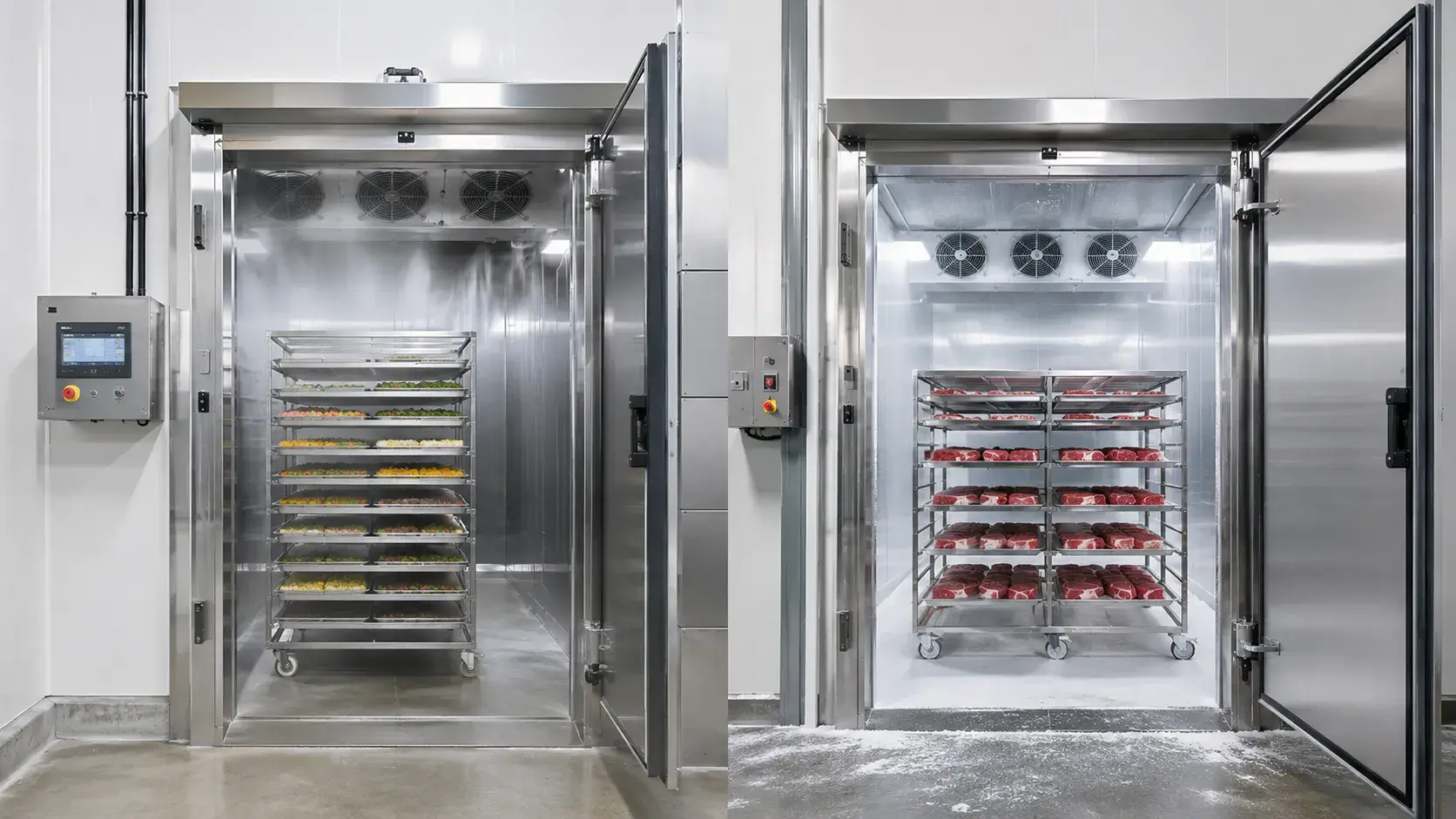
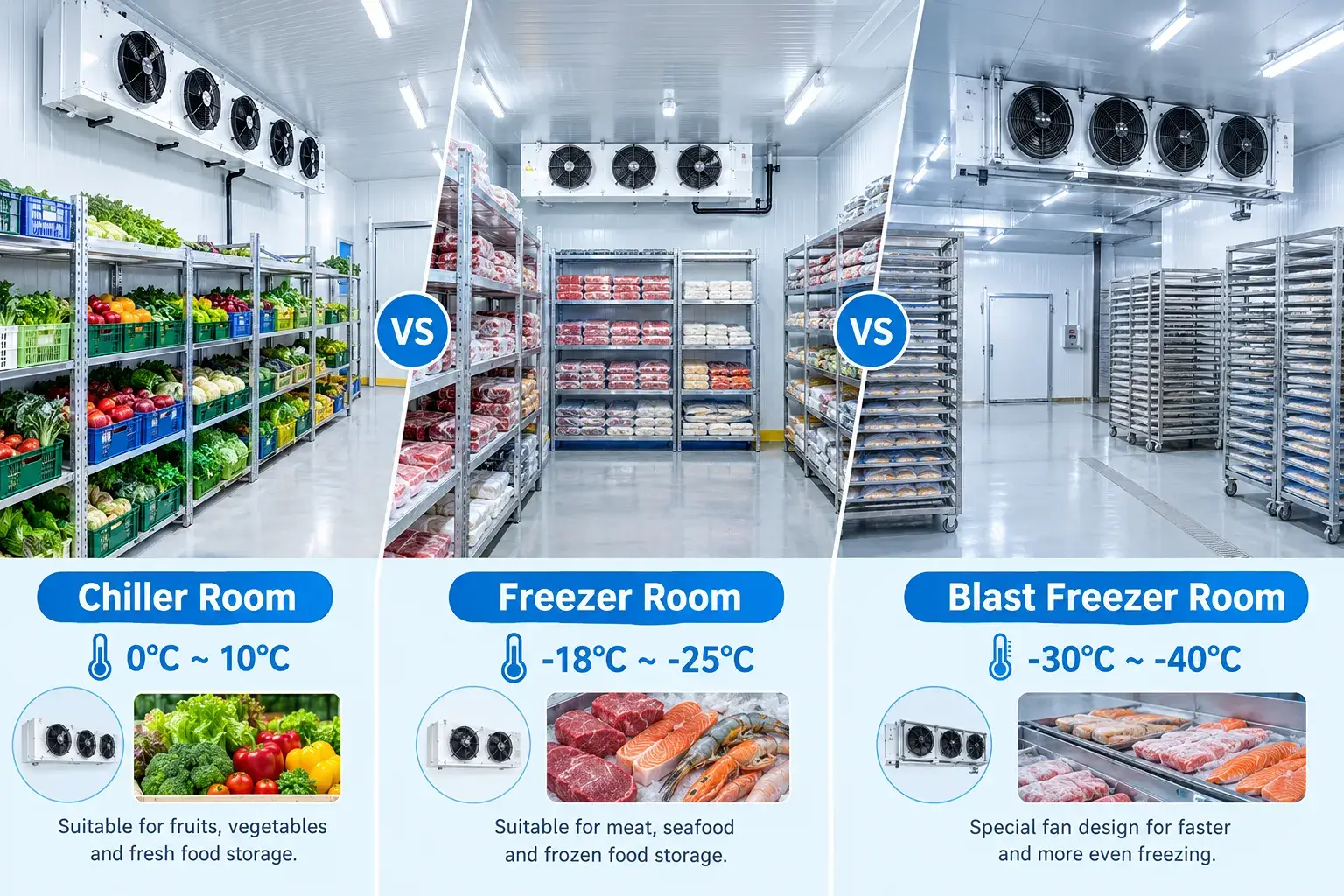
The equipment configuration varies according to the application. A chiller room, freezer room, and blast freezer operate under different temperature and load conditions, so they cannot normally use the same refrigeration configuration without engineering evaluation.
How Does a Refrigeration Unit Work?
Most cold storage refrigeration systems use a vapor-compression cycle. The refrigerant circulates through four basic processes, with each process performed by a corresponding component.
Compression — Compressor
The compressor draws low-pressure refrigerant vapor from the evaporator and compresses it into a high-pressure, high-temperature vapor. It also provides the pressure difference needed to keep refrigerant moving through the system.
Compressor selection depends on the required refrigeration capacity, evaporating temperature, condensing conditions, refrigerant, and expected operating hours.
Condensation — Condenser
The high-temperature refrigerant vapor enters the condenser, where heat is rejected to the surrounding air or another cooling medium. As heat is removed, the refrigerant changes from vapor to liquid.
For many commercial and medium-sized cold storage applications, an air-cooled condenser is a practical configuration. Larger installations may require different condenser arrangements depending on capacity and ambient conditions.
Expansion — Expansion Device
The expansion valve or other expansion device controls refrigerant flow into the evaporator and reduces its pressure. This pressure drop lowers the refrigerant temperature and prepares it to absorb heat in the evaporator.
The expansion device must be matched to the refrigerant, evaporator capacity, and operating conditions.
Evaporation — Evaporator
The low-pressure refrigerant enters the evaporator and absorbs heat from the cold room air. Fans circulate the cooled air through the room to maintain the required temperature.
Evaporator selection changes with the application. A chiller room may use a standard air cooler, while a freezer requires an evaporator designed for low-temperature operation and regular defrosting. Blast freezing applications generally require high airflow and high heat-transfer capacity to remove product heat quickly.
Refrigeration Controls and Protection
Temperature controllers, pressure controls, electrical protection, defrost controls, and alarm systems regulate the refrigeration system and protect the equipment during operation.
For larger installations, PLC-based control and monitoring can be used to manage multiple refrigeration units, temperature zones, alarms, and defrost cycles.
Types of Refrigeration Units for Cold Storage
Different cold storage projects require different refrigeration configurations.
Air-Cooled Condensing Unit
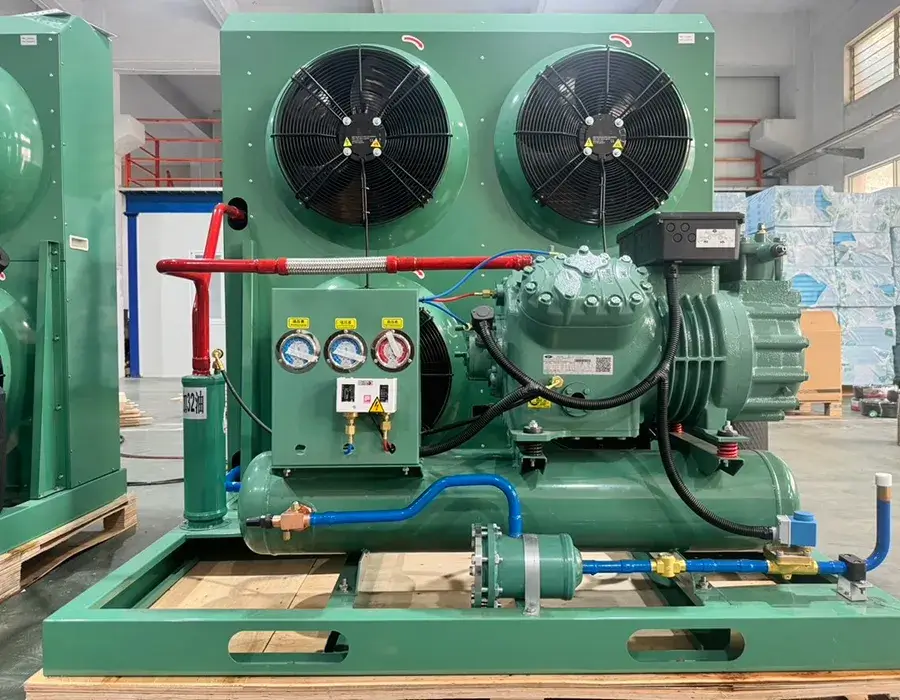
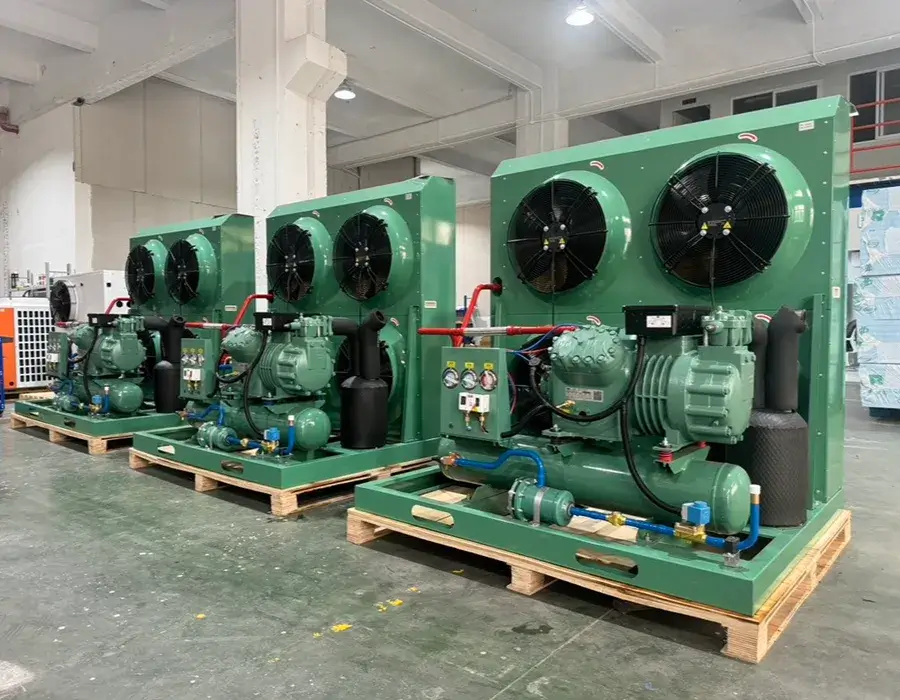
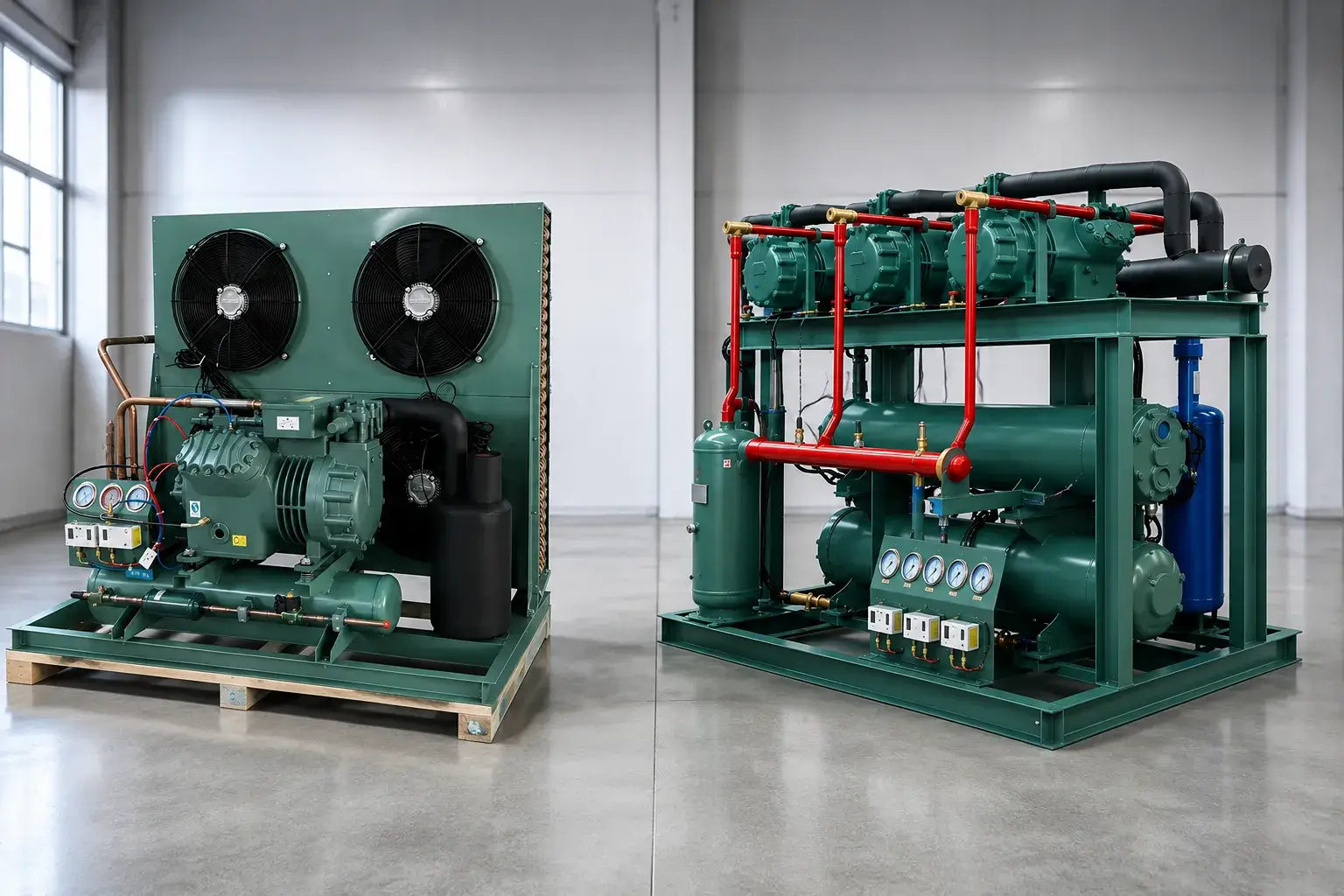
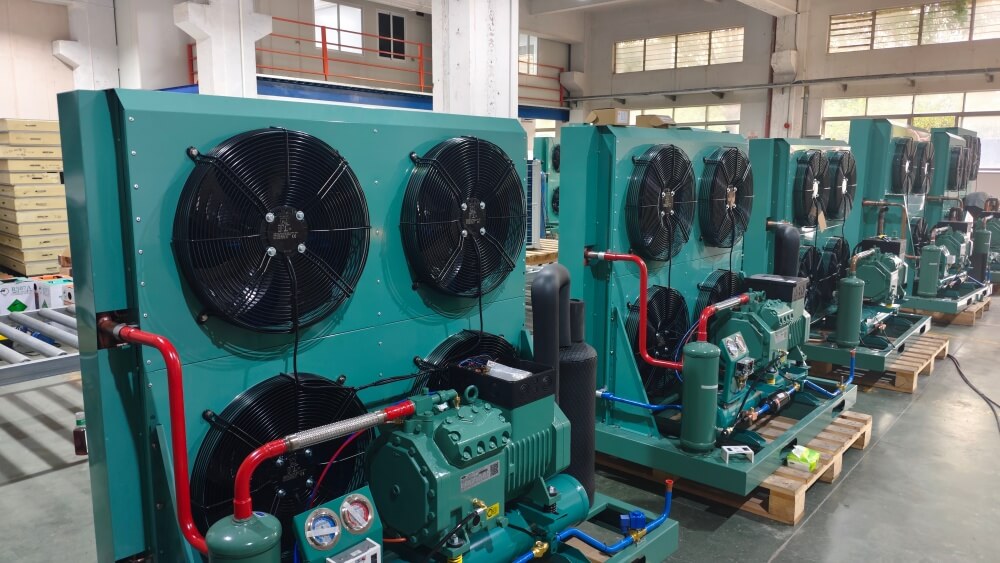
An air-cooled condensing unit combines the compressor and condenser into a compact assembly. It is commonly used for cold rooms and commercial refrigeration applications where air-cooled heat rejection is practical.
Evaporative Condensing Unit
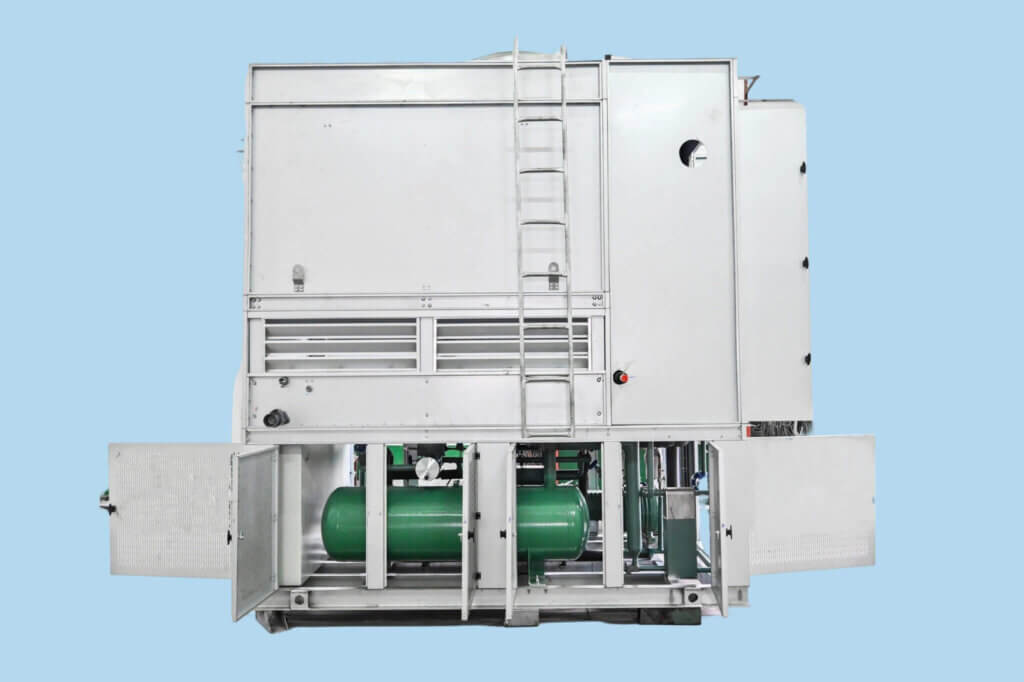
An evaporative condensing unit uses evaporative cooling to reject heat from the refrigeration system. It can be considered for applications requiring higher refrigeration capacity or improved condenser performance under suitable operating conditions.
Compressor Rack System
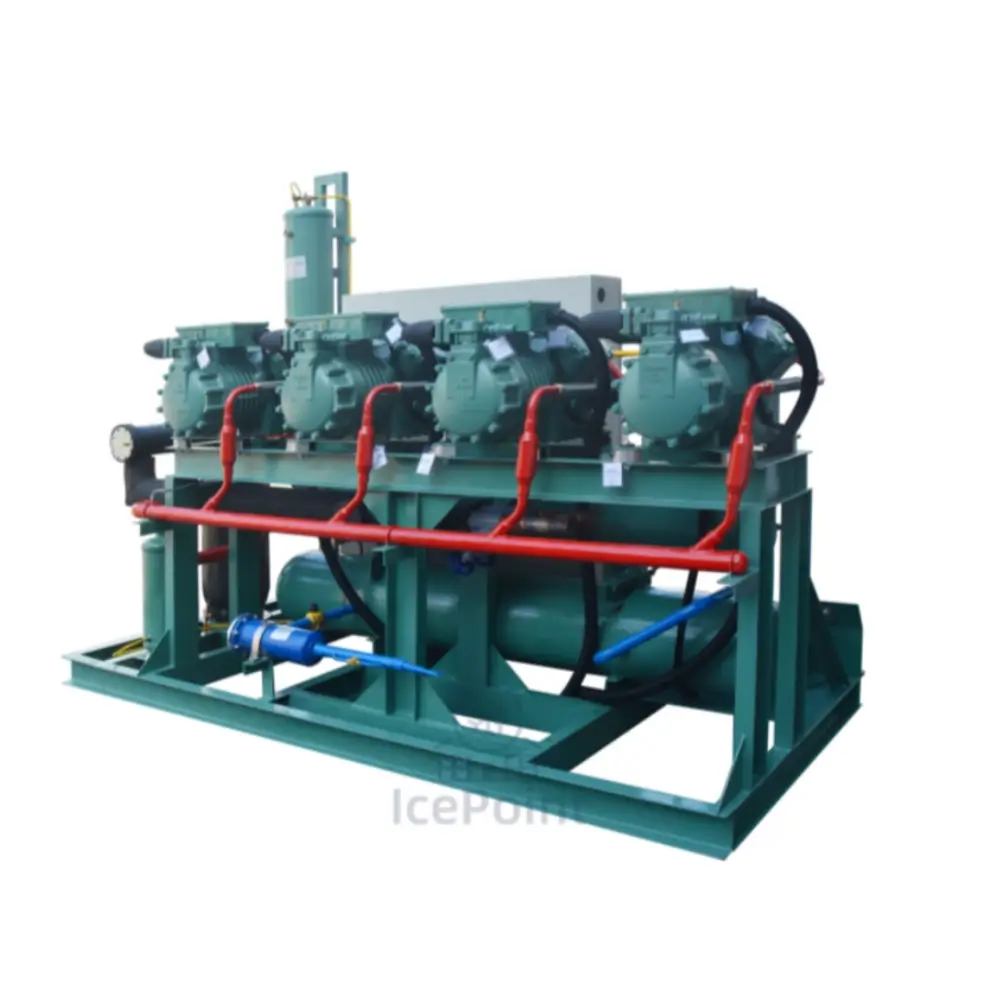
A compressor rack system combines multiple compressors into one refrigeration system. It is suitable for larger cold storage facilities, distribution centers, and projects with multiple temperature zones or varying cooling loads.
Screw Compressor Unit
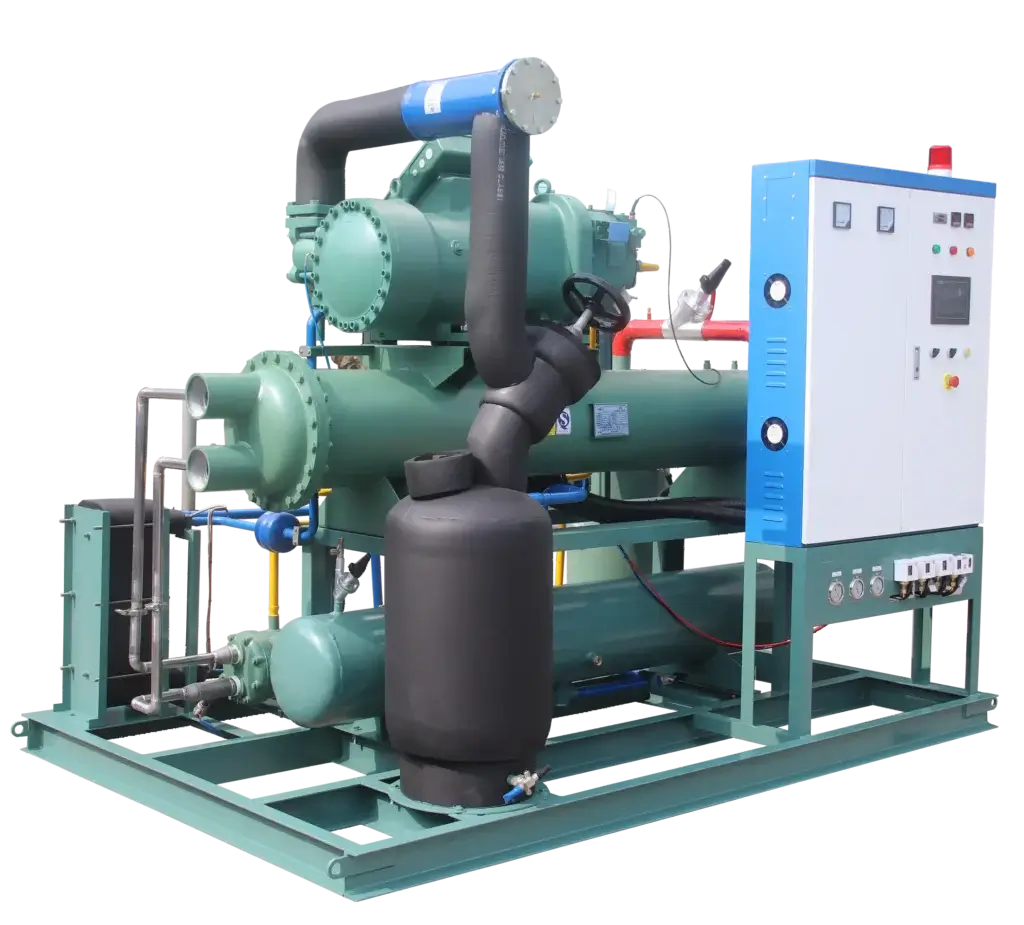
Screw compressor units are designed for larger industrial refrigeration applications where substantial and continuous refrigeration capacity is required. They can be configured according to the project temperature and capacity requirements.
Ammonia Refrigeration Unit
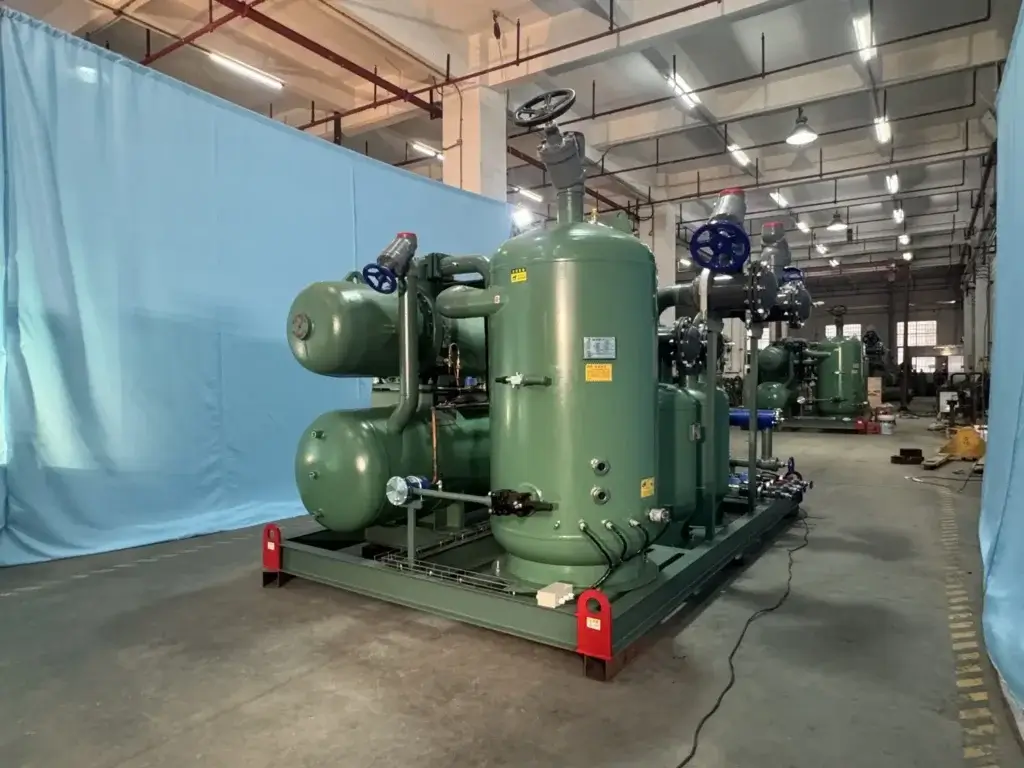
Ammonia refrigeration units are used in certain large-scale industrial refrigeration applications. System design requires appropriate engineering, safety measures, and component selection because ammonia has different operating and safety requirements from many common refrigerants.
How to Choose a Refrigeration Unit for Cold Storage
Selecting a refrigeration unit based only on cold room volume is not sufficient. The same-size room can require very different refrigeration capacity depending on the product entering the room, daily throughput, door openings, ambient temperature, and required cooling time.
Match the Refrigeration Unit to the Required Temperature
The refrigeration unit must be suitable for the required operating condition.
Typical applications include:
| Application | Typical Room Temperature |
|---|---|
| Chiller Room | 0°C to +10°C |
| Freezer Room | -18°C to -25°C |
| Blast Freezer | -30°C to -40°C |
These ranges are general application references rather than fixed design standards. Actual system selection must consider the required room temperature together with the evaporating temperature, condensing temperature, refrigerant, and operating conditions.
Room temperature and evaporating temperature should not be treated as the same value. This distinction is important when selecting a compressor and calculating the actual refrigeration capacity.
Calculate the Actual Refrigeration Load
The required refrigeration capacity depends on the complete heat load of the cold room.
Heat can enter the system through:
- Products entering the room
- Walls, ceiling, and floor
- Cold room doors
- People working inside
- Lighting
- Evaporator fans
- Ambient heat infiltration
For many food-processing applications, product load can be one of the most significant factors.
For example, a freezer storing products that have already been frozen requires a different refrigeration capacity from a system that receives fresh products every day and must reduce their temperature rapidly.
Consider Product Entering Temperature and Pull-Down Time
The temperature of the product when it enters the cold room has a direct effect on refrigeration demand.
Pull-down time refers to the time required to reduce a product from its entering temperature to the required target temperature. A facility with a short pull-down requirement may need substantially more refrigeration capacity than a similar room used only for stable frozen storage.
Daily product quantity, product thickness, packaging, loading method, and required freezing time should therefore be included in the refrigeration calculation.
Refrigeration Unit Temperature Range
Refrigeration units can be configured for different temperature applications, from chilled storage to low-temperature freezing.
Typical cold storage applications include:
- Chiller rooms: approximately 0°C to +10°C
- Freezer rooms: approximately -18°C to -25°C
- Blast freezers: approximately -30°C to -40°C
The actual design temperature depends on the product, process, storage requirements, and local operating conditions. The refrigeration unit should be selected based on the complete system design rather than the room temperature alone.
Refrigeration Unit Cost
There is no single standard price for a refrigeration unit because industrial and commercial projects are normally configured according to specific requirements.
Major cost factors include:
- Refrigeration capacity
- Compressor type and brand
- Condenser type
- Evaporator configuration
- Required temperature
- Control system
- Refrigerant
- Cold room size
- Project customization
It is also important to distinguish initial equipment cost from operating cost. A lower purchase price does not necessarily mean a lower total project cost if the system consumes more energy or requires more frequent maintenance.
For B2B projects, comparing complete technical configurations is more useful than comparing the price of individual refrigeration units.
Refrigeration Unit Maintenance
Regular maintenance helps maintain refrigeration performance and reduces the risk of unexpected downtime.
Typical maintenance tasks include:
- Compressor inspection
- Condenser cleaning
- Evaporator inspection
- Refrigerant system checking
- Electrical inspection
- Temperature controller checking
- Defrost system inspection
How Often Should a Refrigeration Unit Be Serviced?
There is no universal service interval for every refrigeration system. Maintenance frequency depends on operating hours, environmental conditions, system capacity, and usage intensity.
Facilities with continuous industrial operation should establish a preventive maintenance schedule based on the actual equipment and operating conditions.
Frequently Asked Questions About Refrigeration Units
What Are the 7 Components of a Refrigeration System?
Common components include the compressor, condenser, expansion device, evaporator, refrigerant piping, control system, and protection devices. The exact configuration varies by system design.
What Are the Four Basic Principles of Refrigeration?
The basic refrigeration cycle consists of compression, condensation, expansion, and evaporation. These processes allow the system to absorb heat from the refrigerated space and reject it to the surrounding environment.
What Is the Difference Between a Refrigeration Unit and a Refrigeration System?
A refrigeration unit is a specific equipment assembly that provides refrigeration capacity. A refrigeration system is the complete arrangement, which can include the unit, evaporator, piping, controls, and other components required for the application.
How Do I Choose the Right Refrigeration Unit?
Start with the required temperature and calculate the actual heat load. Then consider product load, room size, entering product temperature, pull-down time, ambient temperature, operating schedule, and energy efficiency.
Conclusion: How Do You Choose the Right Refrigeration Unit for Cold Storage?
The right refrigeration unit depends on more than cold room size. Temperature, refrigeration load, product conditions, pull-down requirements, operating environment, system configuration, and energy efficiency should all be considered during equipment selection.
Icepoint provides customized refrigeration solutions for cold storage, food processing, and industrial applications, with equipment configurations designed according to project temperature, capacity, and operating requirements. Contact our refrigeration experts to discuss your project and request a customized solution or quotation.