Introduction
Choosing the right cold storage solution is critical for businesses in food processing, cold chain logistics, supermarkets, catering, and temperature-controlled warehousing. Different products require different storage temperatures, freezing speeds, and preservation methods. Using an unsuitable refrigeration system may lead to quality loss, higher energy consumption, and reduced operational efficiency.
A professional cold room is not simply a low-temperature storage space. It is an engineered refrigeration system designed according to product requirements, storage capacity, airflow circulation, insulation performance, and operating conditions.
Among industrial refrigeration solutions, the three most common options are chiller room, freezer room, and blast freezer room. Although they all use refrigeration technology, their purposes are different.
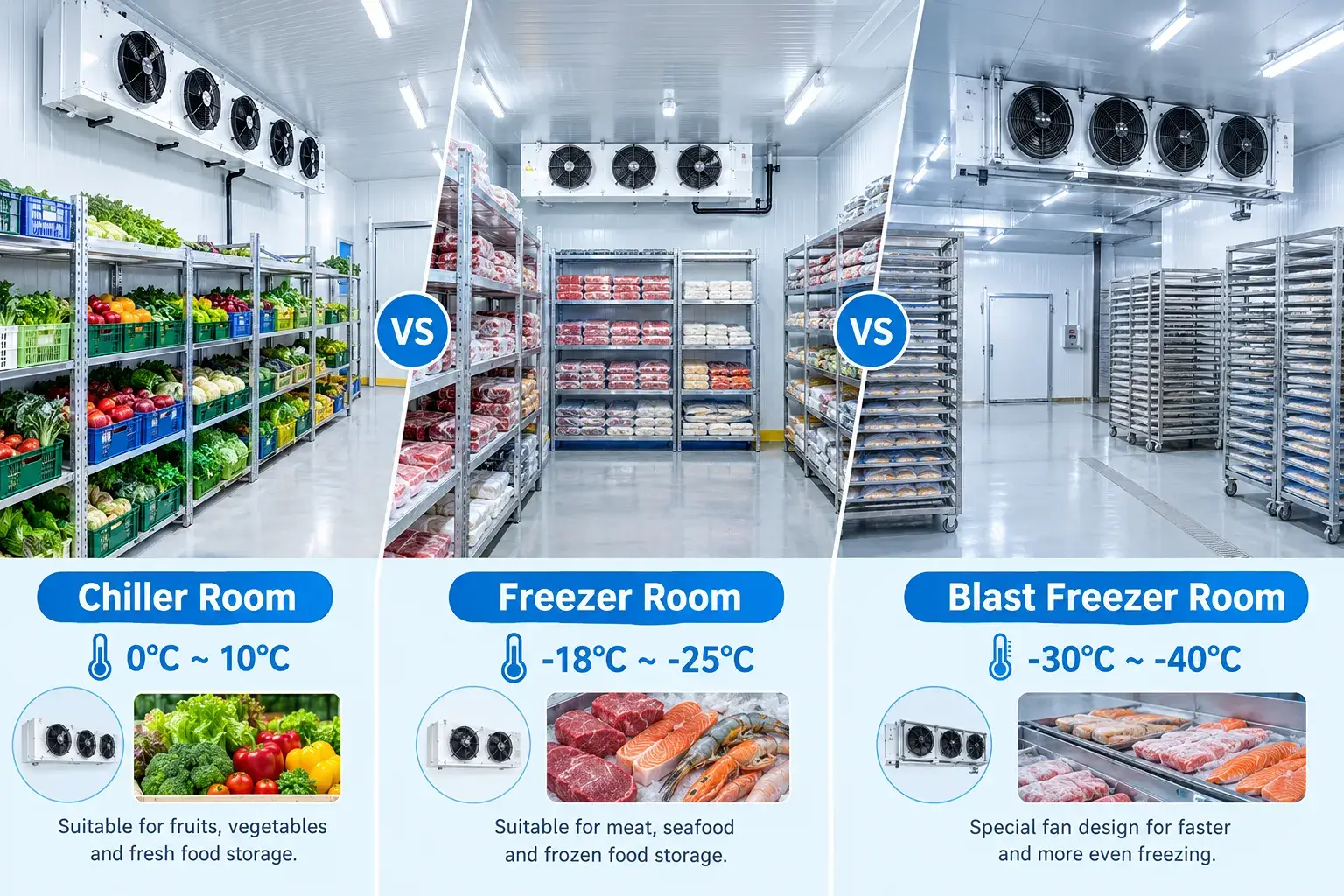
A chiller room focuses on maintaining freshness, a freezer room is designed for long-term frozen storage, while a blast freezer room provides rapid freezing for food processing applications.
This article explains the differences between these cold room solutions, including temperature ranges, working principles, equipment design, applications, and how to select the right system for your business.
What Are Cold Rooms?
A cold room is a temperature-controlled storage system that uses refrigeration equipment to maintain specific environmental conditions for temperature-sensitive products.
A complete cold room solution normally includes:
- Refrigeration unit
- Evaporator
- Insulated cold room panels
- Temperature control system
- Air circulation system
Based on temperature requirements and storage purposes, industrial cold rooms are mainly divided into three types:
- Chiller Room
- Freezer Room
- Blast Freezer Room
These systems are not alternatives to each other. Instead, they are designed for different stages of the cold chain.
For example:
- Chiller rooms maintain fresh products before distribution or processing.
- Freezer rooms store frozen products under stable low temperatures.
- Blast freezer rooms rapidly freeze fresh products before frozen storage.
A professional cold room design should consider product characteristics, storage capacity, temperature requirements, and energy efficiency.
What Is a Chiller Room?
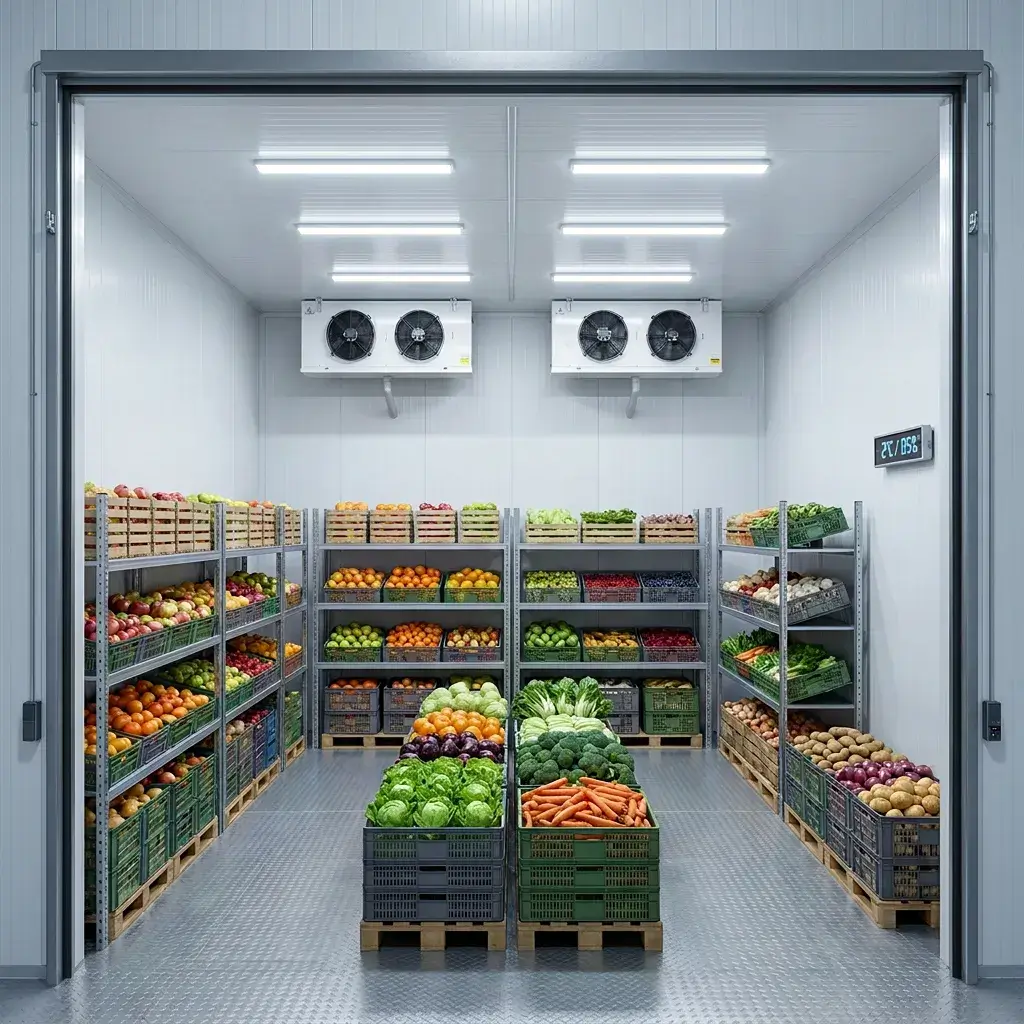
A chiller room is a refrigerated storage space designed to keep products at chilled temperatures without freezing.
The main purpose of a chiller room is to slow down product deterioration, maintain freshness, and extend short-term storage life.
Typical operating temperature:
0°C to +10°C
Chiller rooms are suitable for products that require stable cooling conditions, including:
- Fresh vegetables
- Fruits
- Dairy products
- Fresh meat
- Beverages
A well-designed chiller room provides stable temperature control, proper humidity management, and uniform airflow circulation.
For businesses handling fresh products, a reliable chiller room helps reduce spoilage and maintain product quality throughout storage and distribution.
What Is a Freezer Room?
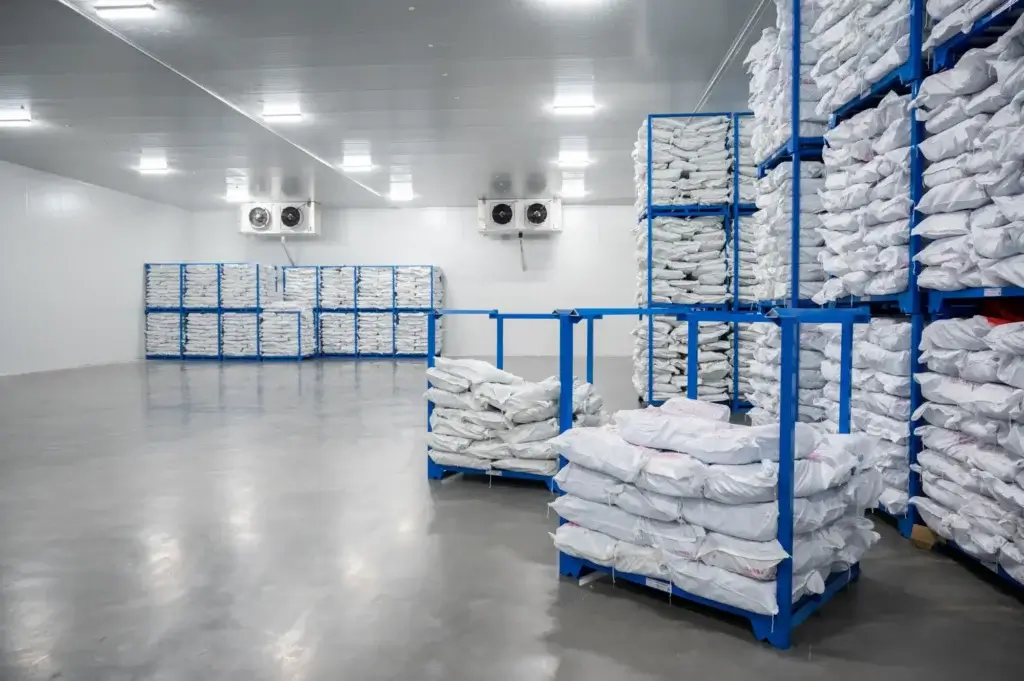
A freezer room is an industrial refrigeration system designed for storing already frozen products at stable sub-zero temperatures.
Unlike a blast freezer room, a freezer room is not mainly used for rapid freezing. Its primary function is maintaining frozen products in good condition for long-term storage.
Typical operating temperature:
-18°C to -25°C
Freezer rooms are commonly used for:
- Frozen meat storage
- Seafood storage
- Ice cream storage
- Frozen food warehouses
The key requirements of a freezer room include reliable refrigeration performance, effective insulation, and accurate temperature control.
For frozen product suppliers and logistics companies, a stable freezer room is essential for maintaining cold chain reliability.
What Is a Blast Freezer Room?
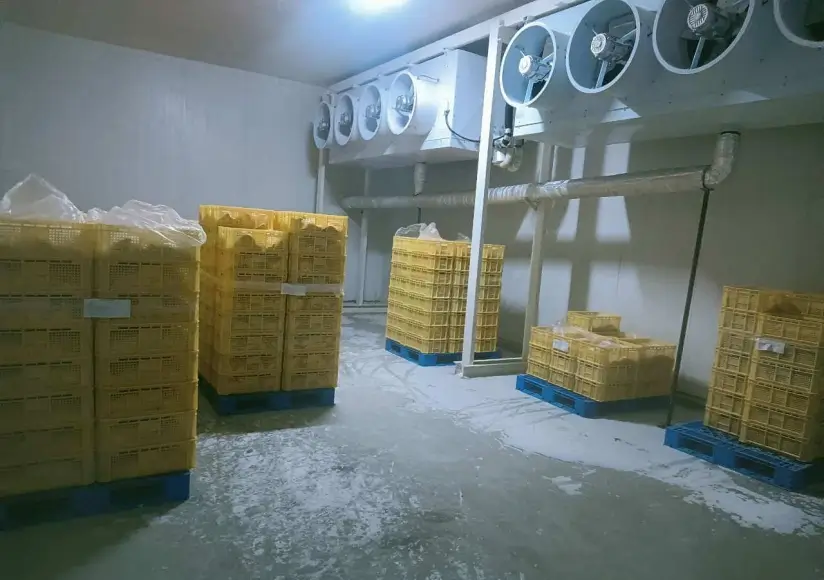
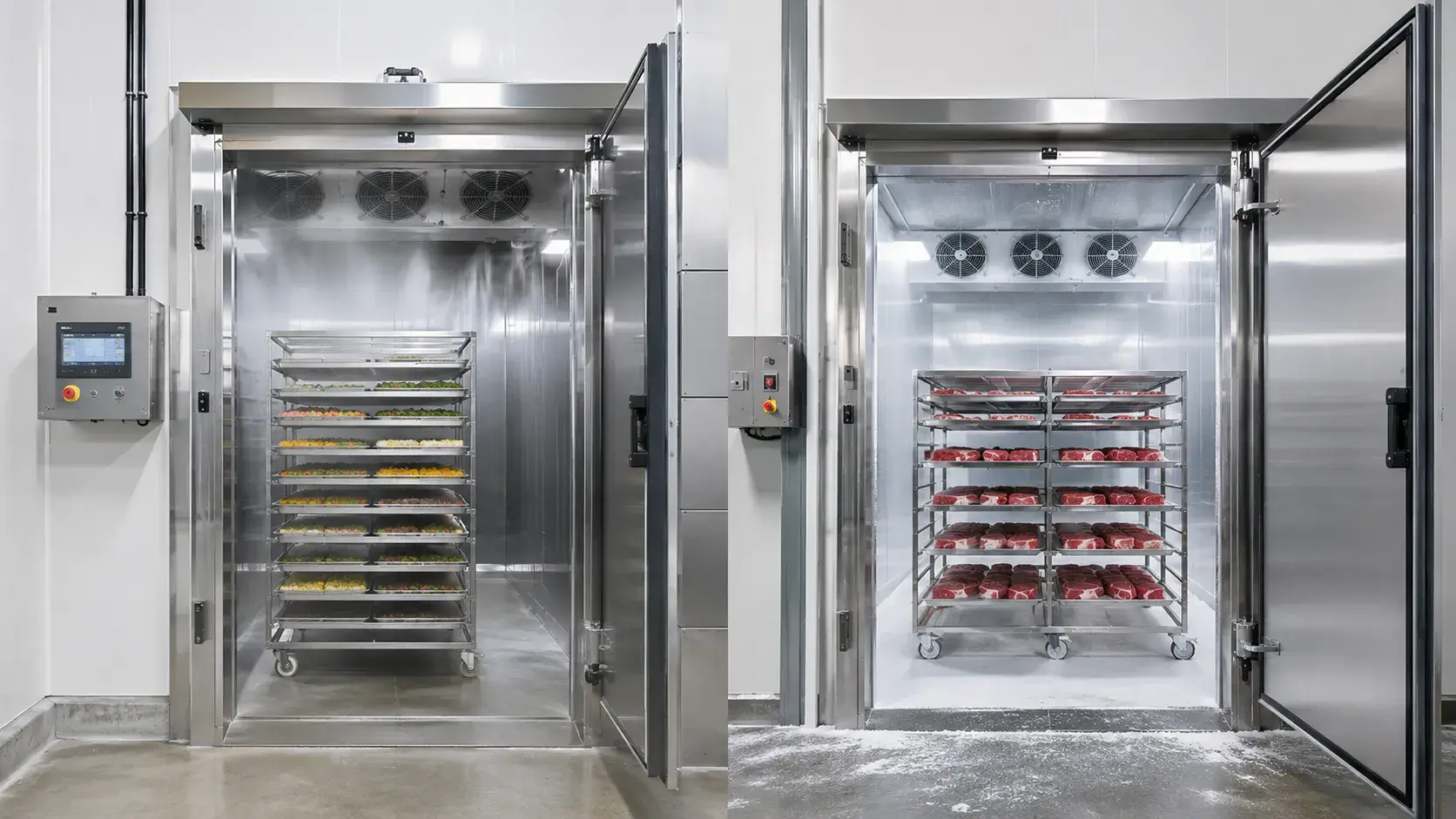
A blast freezer room is a high-performance freezing system designed to rapidly reduce product temperature through low-temperature air and high-speed airflow circulation.
Unlike freezer rooms that focus on storage, blast freezer rooms are mainly used during food production to quickly freeze fresh products.
Typical operating temperature:
-30°C to -40°C
The main purpose of blast freezing is to remove product heat quickly and reduce large ice crystal formation, which helps protect food texture, appearance, and quality.
Blast freezer rooms are widely used in:
- Meat processing plants
- Seafood factories
- Ready meal production
- Food manufacturing facilities
Icepoint provides customized blast freezer room solutions based on product type, freezing capacity, room size, and production requirements.
Chiller Room vs Freezer Room vs Blast Freezer Room: Key Differences
| Comparison | Chiller Room | Freezer Room | Blast Freezer Room |
|---|---|---|---|
| Main Purpose | Fresh product preservation | Frozen product storage | Rapid product freezing |
| Temperature Range | 0°C to +10°C | -18°C to -25°C | -30°C to -40°C |
| Cooling Speed | Normal cooling | Stable frozen storage | High-speed freezing |
| Product Condition | Fresh products | Frozen products | Fresh products requiring freezing |
| Main Application | Fresh storage | Long-term storage | Food processing |
In simple terms:
- Chiller room keeps products fresh without freezing.
- Freezer room keeps frozen products at a stable temperature.
- Blast freezer room quickly freezes products before storage or transportation.
For many food companies, these three systems work together as part of a complete cold chain process.
Cold Room Temperature Comparison
Temperature selection is one of the most important factors when choosing a refrigeration system.
Chiller Room Temperature
A chiller room normally operates between:
0°C to +10°C
It is designed to prevent product deterioration while maintaining freshness.
The exact temperature depends on the product type, humidity requirements, and storage period.
Freezer Room Temperature
A freezer room normally operates between:
-18°C to -25°C
This temperature range helps maintain frozen products during long-term storage.
Stable temperature control is important to prevent quality loss caused by temperature fluctuations.
Blast Freezer Temperature
A blast freezer room normally operates between:
-30°C to -40°C
The lower temperature and stronger airflow allow faster heat removal from products.
Rapid freezing helps:
- Reduce ice crystal size
- Maintain food texture
- Reduce moisture loss
- Improve product quality
How Do Cold Room Systems Work?
Although chiller rooms, freezer rooms, and blast freezer rooms use similar refrigeration principles, their performance requirements are different.
The basic refrigeration process includes:
- Compressor generates cooling capacity.
- Refrigerant transfers heat through the refrigeration cycle.
- Evaporator releases cold air into the room.
- Fans circulate air evenly.
- The control system maintains the required temperature.
The main difference is cooling intensity and airflow performance.
A chiller room requires stable cooling.
A freezer room requires continuous low-temperature operation.
A blast freezer room requires high cooling capacity and strong air circulation to achieve rapid freezing.
A professional industrial freezing system must be designed according to product size, freezing time, loading method, and production capacity.
Cold Room Equipment and Design Considerations
A reliable cold storage system depends on the correct selection of refrigeration components.
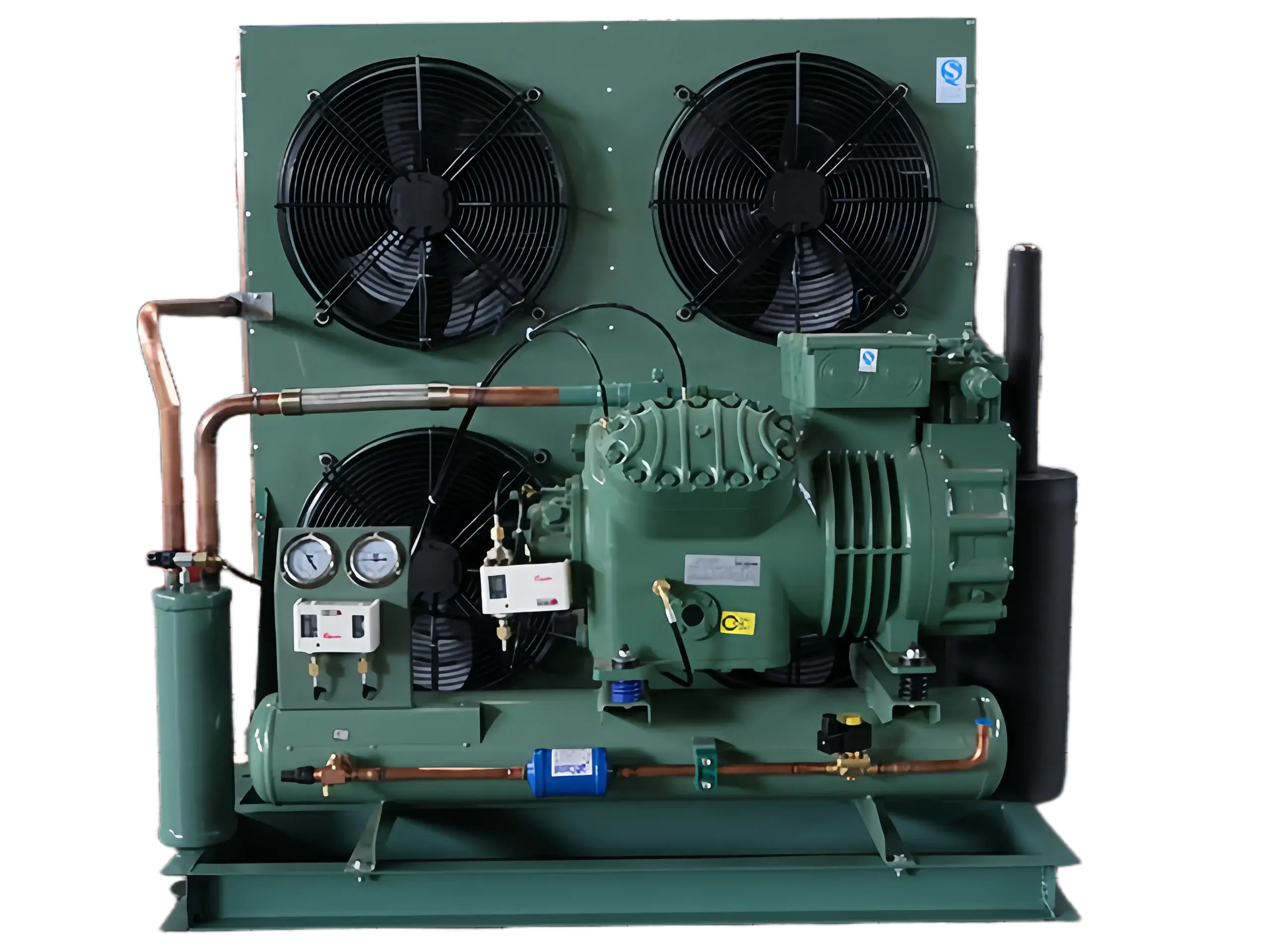
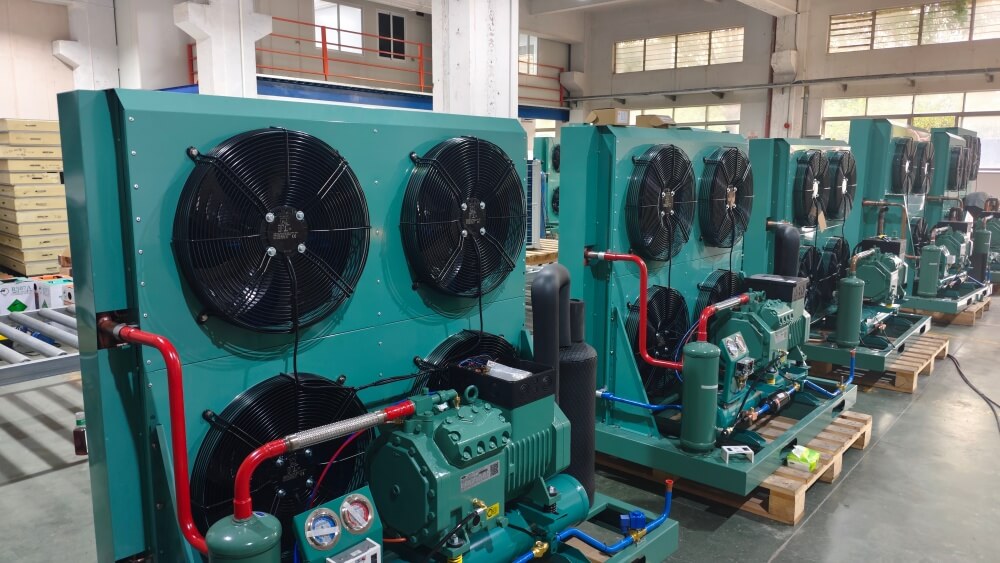
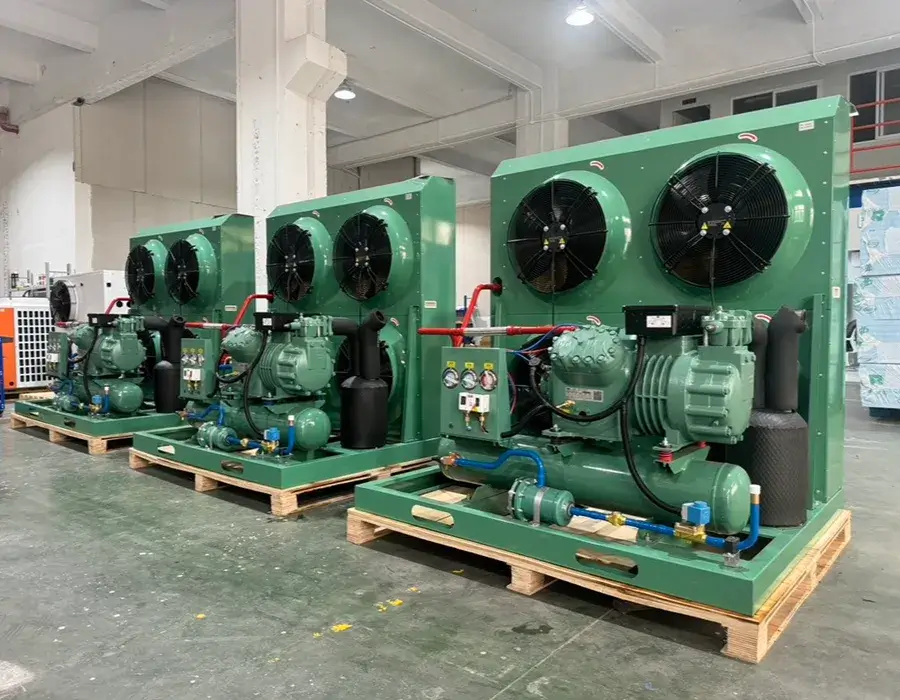
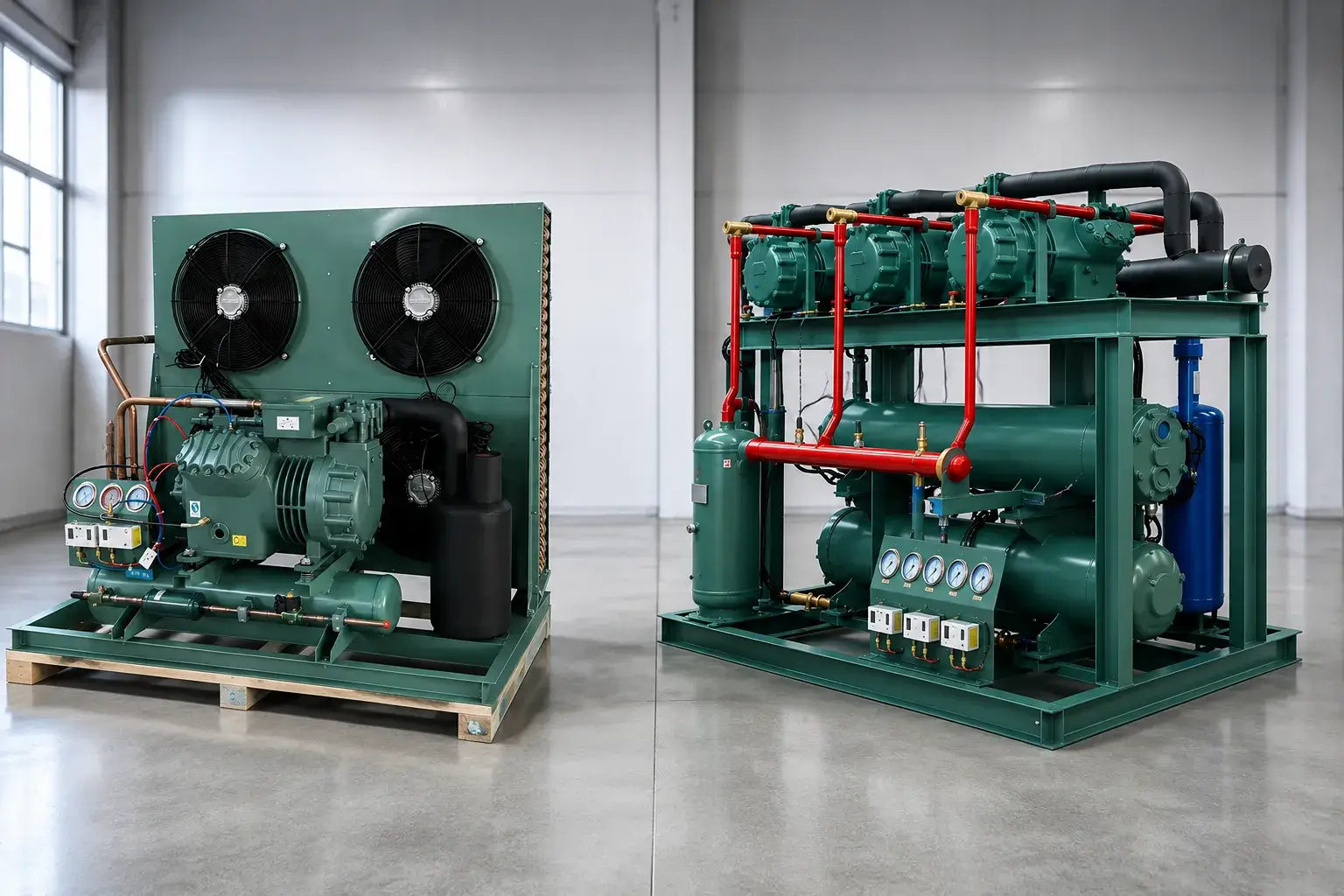
Refrigeration Unit
The refrigeration unit provides the cooling capacity required by the cold room.
Main components include:
- Compressor
- Condensing unit
- Refrigeration circuit
The system configuration should match the required temperature range and operating conditions.
Evaporator and Air Circulation System
The evaporator transfers cooling energy into the room.
Different applications require different evaporator designs:
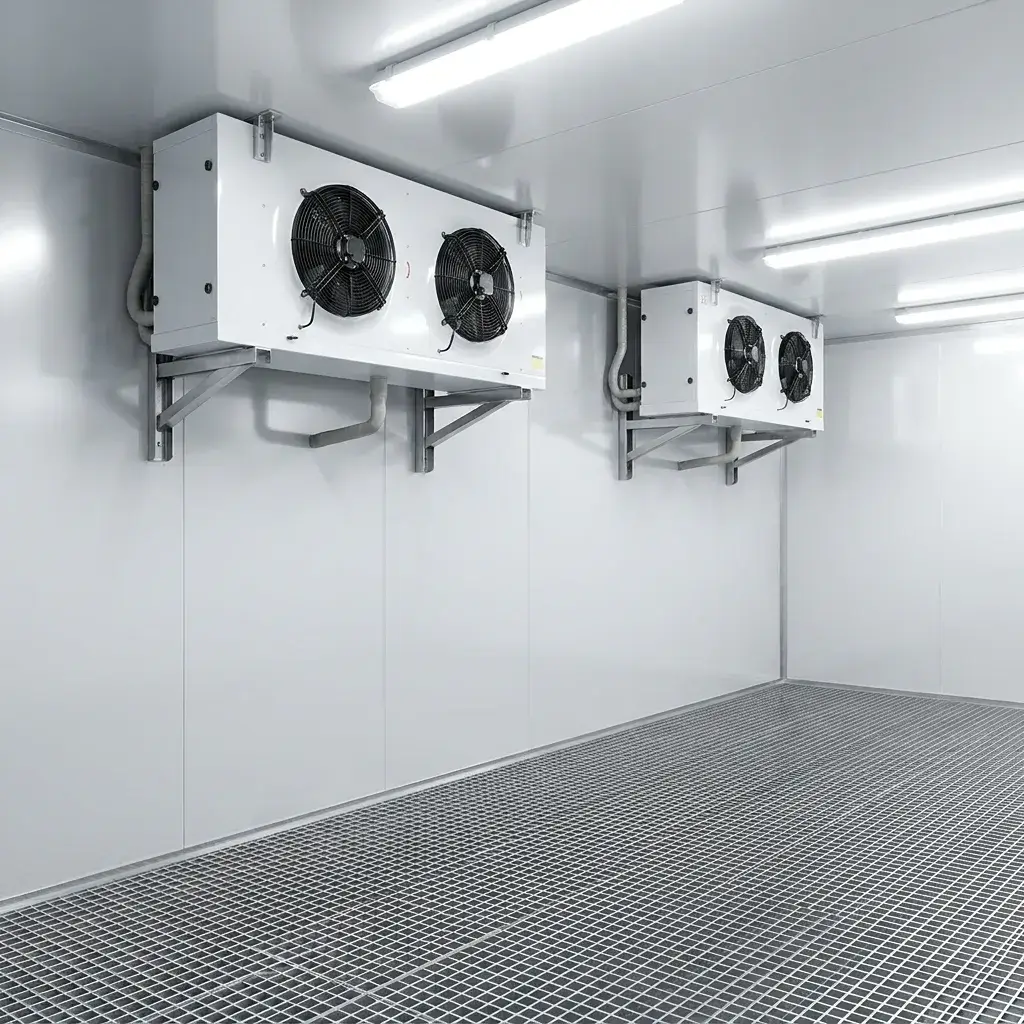
- Chiller rooms use standard air coolers for stable cooling.
- Freezer rooms use low-temperature evaporators.
- Blast freezer rooms use high-airflow evaporators for faster freezing.
Proper airflow distribution is essential for maintaining uniform temperatures.
Insulated Cold Room Panels
Cold room panels reduce heat transfer and improve energy efficiency.
Common insulation materials include:
- PU panels
- PIR panels
Important design factors include:
- Panel thickness
- Installation quality
- Insulation performance
Good insulation reduces energy consumption and improves system stability.
Temperature Control System
Modern cold rooms use intelligent control systems, including:
- Digital temperature controllers
- PLC control systems
- Automatic defrost systems
- Alarm monitoring
These systems help maintain stable temperatures and improve operational reliability.
Applications of Cold Room Solutions
Different industries require different cold storage solutions.
Food Processing Industry
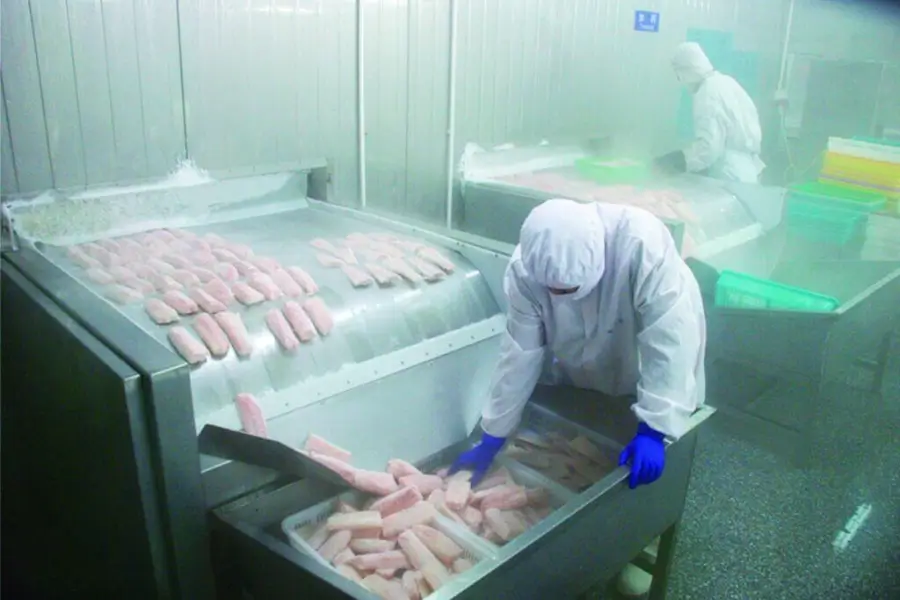
Cold rooms are widely used in:
- Meat processing
- Seafood processing
- Ready meal production
- Food manufacturing
Typical applications:
- Chiller rooms for fresh product storage
- Blast freezer rooms for rapid freezing
- Freezer rooms for frozen product storage
For example, a seafood factory may use blast freezing after processing and freezer storage before export transportation.
Cold Chain Logistics
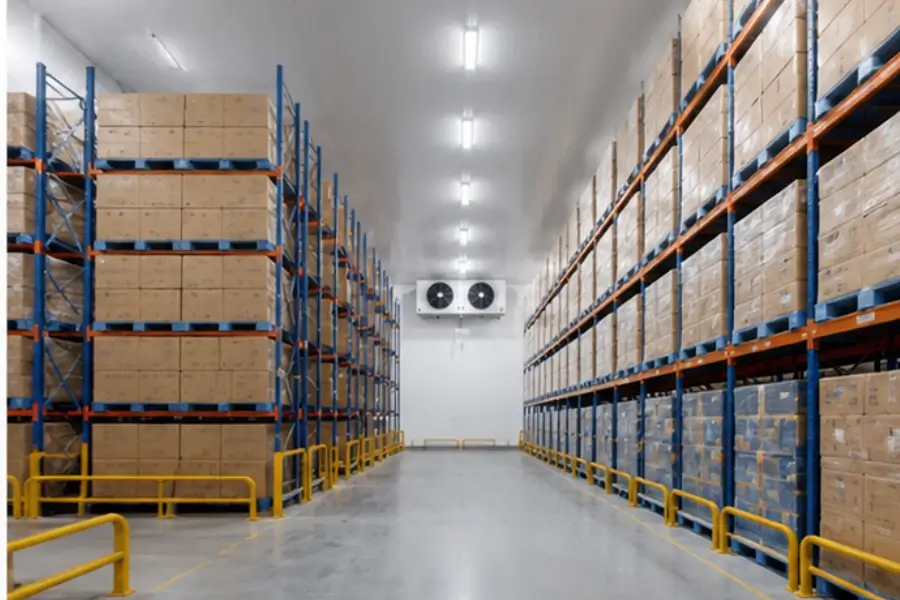
Cold storage warehouses and distribution centers require reliable temperature-controlled environments.
Applications include:
- Frozen food warehouses
- Distribution centers
- Export storage facilities
Different stages require different solutions:
- Fresh products → Chiller room
- Frozen products → Freezer room
- Newly processed products → Blast freezer room
Commercial Refrigeration
Supermarkets, restaurants, and catering businesses use cold rooms for:
- Ingredient storage
- Frozen food storage
- Beverage cooling
A suitable refrigeration solution helps businesses reduce waste and improve food safety.
How to Choose the Right Cold Room Solution?
The correct cold room depends on your product requirements and business process.
Choose a chiller room when you need:
- Fresh product preservation
- Short-term storage
- Temperature above freezing
Choose a freezer room when you need:
- Frozen product storage
- Long-term preservation
- Stable low temperatures
Choose a blast freezer room when you need:
- Rapid freezing
- Food processing support
- Better freezing quality
Before selecting a system, consider:
- Product type
- Required temperature
- Storage capacity
- Daily production volume
- Freezing time
- Energy efficiency
- Refrigeration system configuration
Icepoint provides customized cold room solutions for food processing companies, seafood businesses, meat cold storage projects, and cold chain logistics applications.
Frequently Asked Questions
What Is the Difference Between a Chiller Room and a Blast Freezer Room?
A chiller room maintains fresh products at chilled temperatures, usually 0°C to +10°C. A blast freezer room rapidly freezes products at approximately -30°C to -40°C.
What Is the Difference Between a Freezer Room and a Blast Freezer Room?
A freezer room stores frozen products, while a blast freezer room is used for rapid freezing during production.
What Temperature Is a Freezer Room?
A freezer room usually operates between -18°C and -25°C for long-term frozen storage.
What Temperature Is a Blast Freezer?
A blast freezer normally operates between -30°C and -40°C depending on product requirements.
What Is the Difference Between a Walk-in Cooler and a Walk-in Freezer?
A walk-in cooler is designed for chilled storage, while a walk-in freezer is designed for frozen storage below freezing temperature.
Conclusion: Choosing the Right Cold Room Solution
Chiller rooms, freezer rooms, and blast freezer rooms serve different purposes in modern cold chain systems.
- Chiller rooms maintain freshness.
- Freezer rooms provide stable frozen storage.
- Blast freezer rooms deliver rapid freezing performance.
Selecting the right solution requires careful consideration of temperature requirements, product characteristics, storage capacity, and energy efficiency.
With professional cold room design and customized refrigeration solutions, Icepoint helps global customers build reliable systems for food processing, seafood storage, meat cold storage, and cold chain applications.
Contact Icepoint today to get a customized cold room solution or request an RFQ for your refrigeration project.