Introduction
Food safety and temperature control are critical factors for restaurants, hotels, central kitchens, and food processing factories. During food preparation and production, products often need to be cooled or frozen quickly to maintain quality, improve safety, and extend shelf life.
Traditional cooling methods may take too long, allowing food to remain in unsafe temperature zones and increasing the risk of quality loss. This is why professional rapid cooling and freezing systems have become essential parts of modern cold chain solutions.
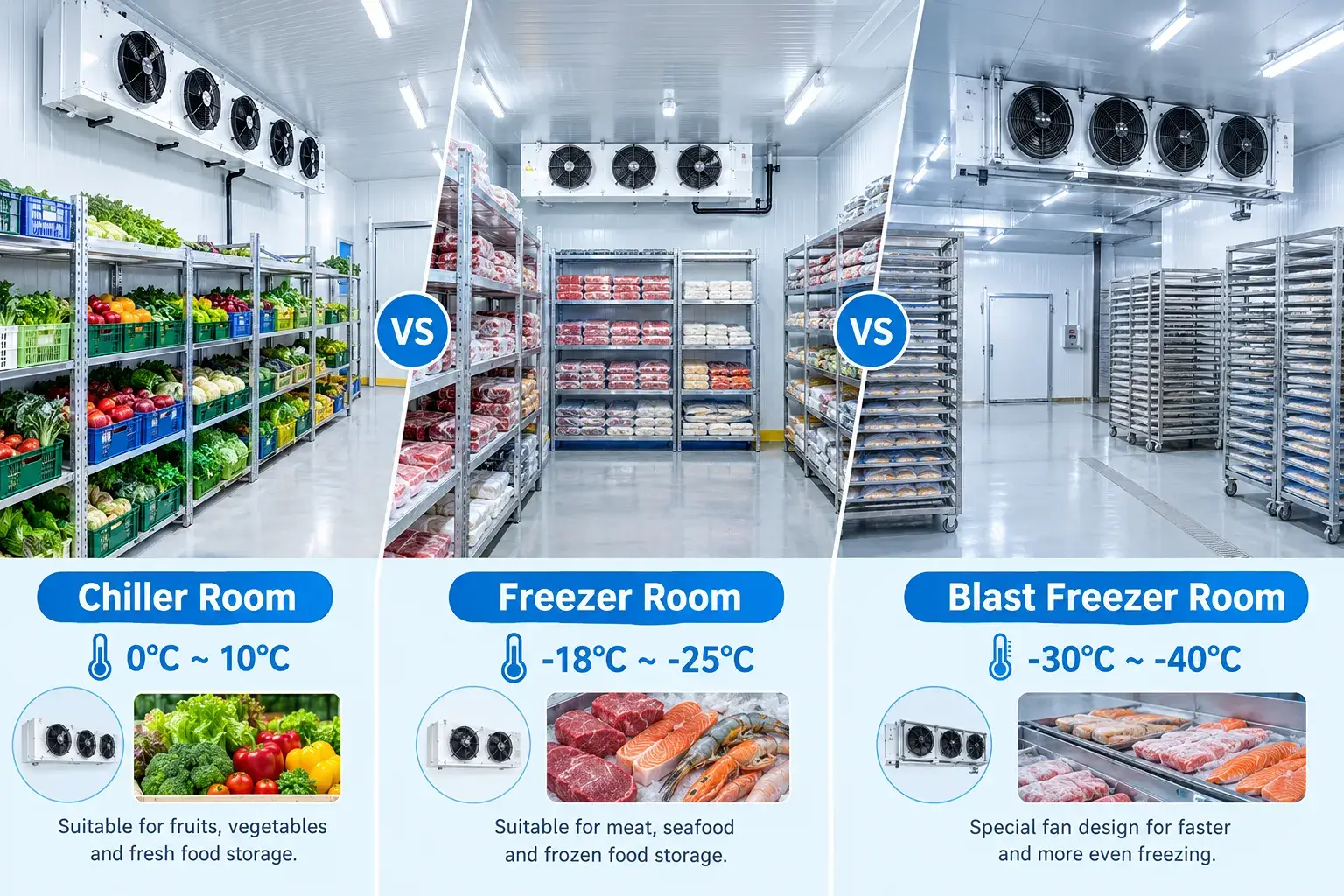
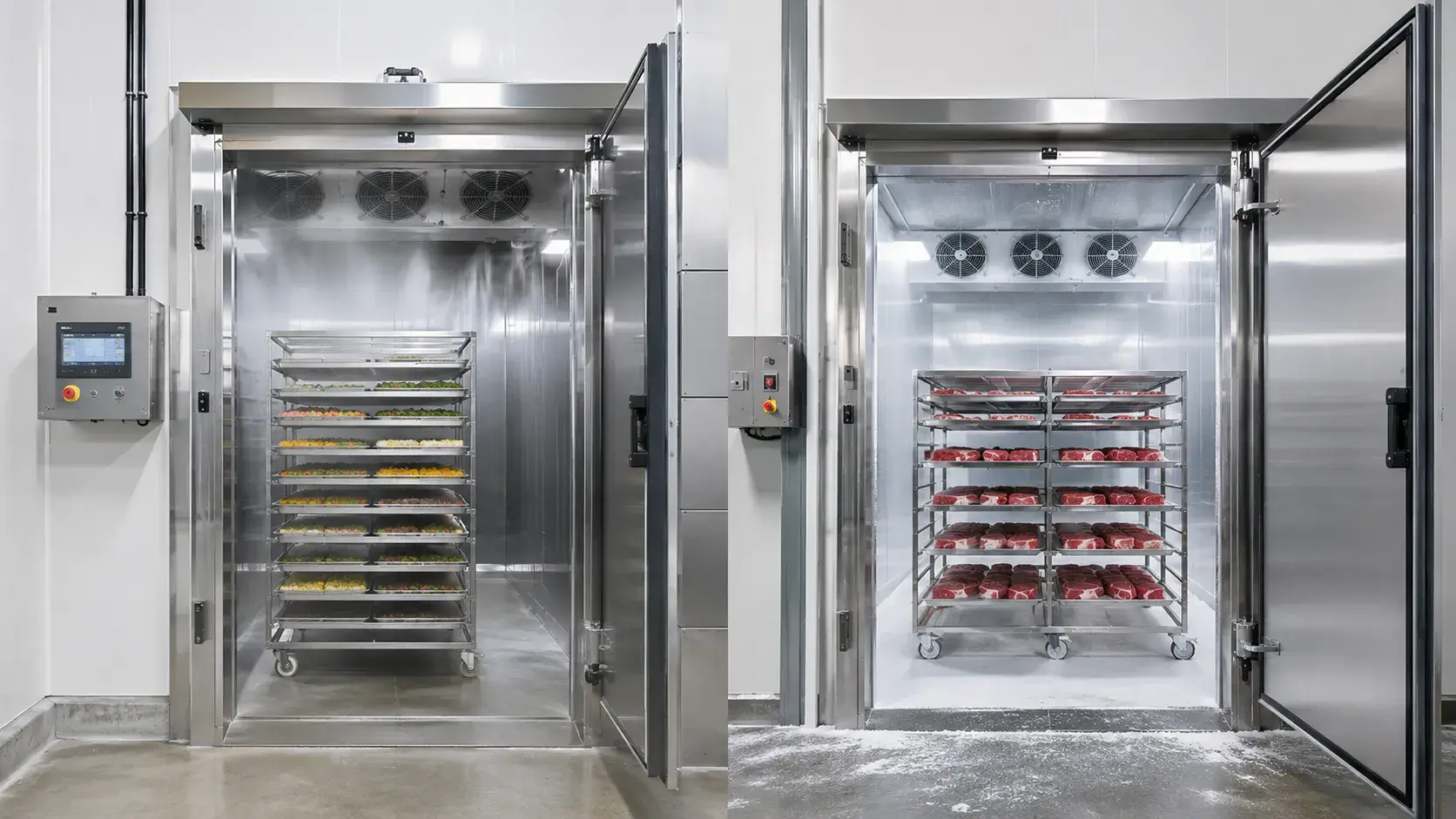
Two commonly used systems are blast chiller rooms and blast freezer rooms. Although both use low-temperature air circulation and high-speed airflow technology, their functions are different.
A blast chiller room quickly reduces food temperature while keeping products chilled, while a blast freezer room rapidly freezes products for long-term frozen storage.
This article explains the differences between blast chiller and blast freezer systems, including temperature ranges, working principles, equipment, applications, and how to choose the right solution.
What Is a Blast Chiller Room?
A blast chiller room is a refrigeration system designed to rapidly cool cooked food, fresh products, and prepared meals by using cold air circulation and high airflow.
Unlike freezing equipment, a blast chiller does not freeze products. Its purpose is to quickly reduce product temperature and maintain food quality under chilled conditions.
Typical blast chilling temperature:
0°C to +3°C
Blast chiller rooms are widely used for:
- Cooked food
- Ready meals
- Bakery products
- Fresh meat
- Catering products
For restaurants, hotels, and central kitchens, blast chilling helps improve food safety, reduce bacterial growth risk, and increase production efficiency.
How Does a Blast Chiller Room Work?
A blast chiller room removes heat from products through a combination of refrigeration technology and forced air circulation.
The process includes:
- The refrigeration system generates low-temperature air.
- High-speed fans circulate cold air around products.
- Heat is quickly removed from the food.
- Products reach the required chilled temperature.
- Products are transferred to refrigerated storage.
The main advantage of blast chilling is reducing the time food spends in unsafe temperature ranges while maintaining freshness and quality.
What Is a Blast Freezer Room?
A blast freezer room is an industrial freezing system designed to rapidly freeze fresh products using ultra-low-temperature air and high airflow circulation.
Unlike blast chillers, blast freezers change the product condition from fresh to frozen.
Typical blast freezer temperature:
-30°C to -40°C
Blast freezer rooms are mainly used for:
- Meat processing
- Seafood freezing
- Frozen food production
- Food export preparation
Rapid freezing helps reduce ice crystal formation, protect product texture, and improve frozen product quality.
How Does a Blast Freezer Room Work?
A blast freezer room uses a high-capacity refrigeration system to remove product heat quickly.
The freezing process includes:
- Ultra-low-temperature air is generated by the refrigeration system.
- High airflow evaporators improve heat exchange.
- Powerful fans circulate cold air around products.
- Product temperature rapidly decreases below freezing point.
- Products enter frozen storage.
Compared with normal freezer storage, blast freezing focuses on speed and freezing quality.
Blast Chiller vs Blast Freezer: Key Differences
| Item | Blast Chiller Room | Blast Freezer Room |
|---|---|---|
| Main Purpose | Rapid cooling | Rapid freezing |
| Temperature | 0°C to +3°C | -30°C to -40°C |
| Product Condition | Chilled products | Frozen products |
| Ice Crystal Formation | No | Yes |
| Main Users | Restaurants, hotels, central kitchens | Food factories, seafood and meat processors |
The main difference is:
Blast chiller:
- Reduces temperature quickly.
- Keeps products refrigerated.
- Does not freeze food.
Blast freezer:
- Rapidly freezes products.
- Prepares products for frozen storage.
- Supports cold chain transportation.
Blast Chiller and Blast Freezer Equipment
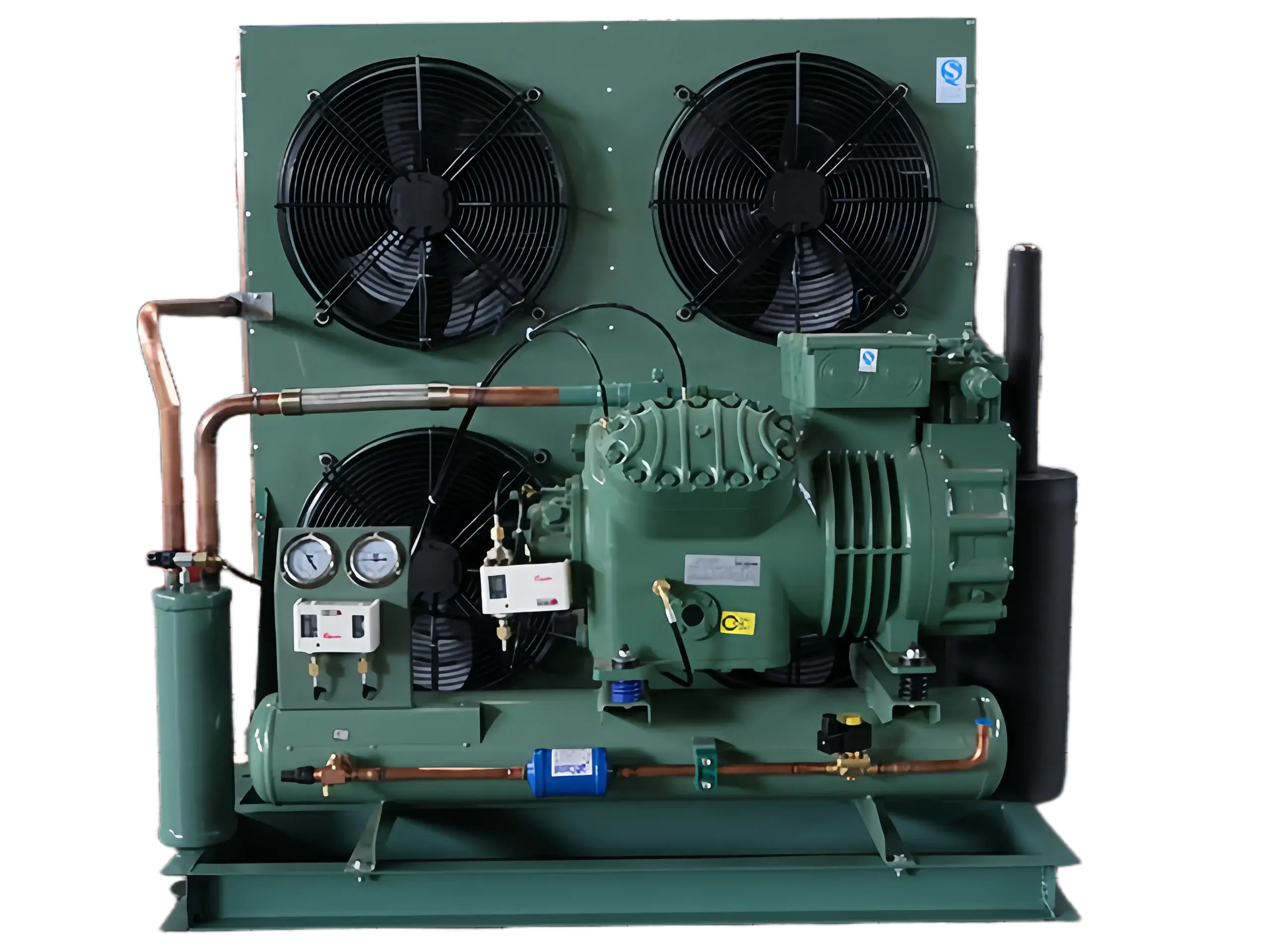
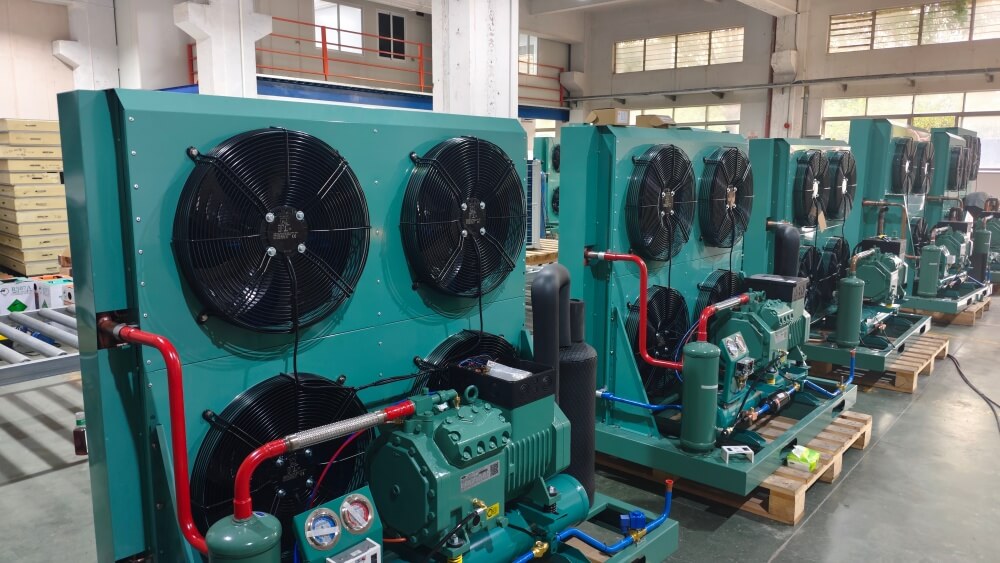
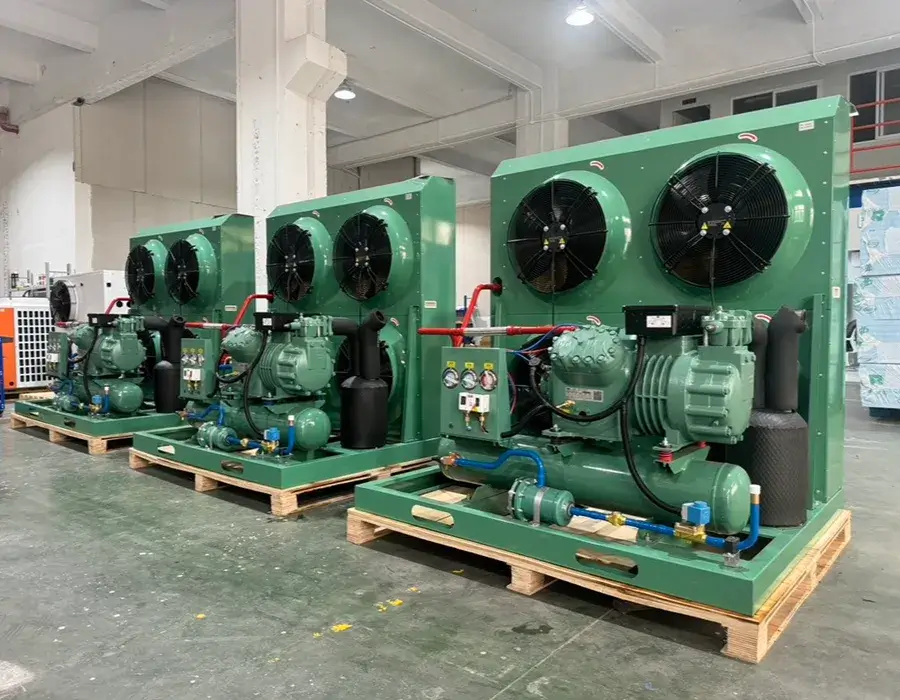
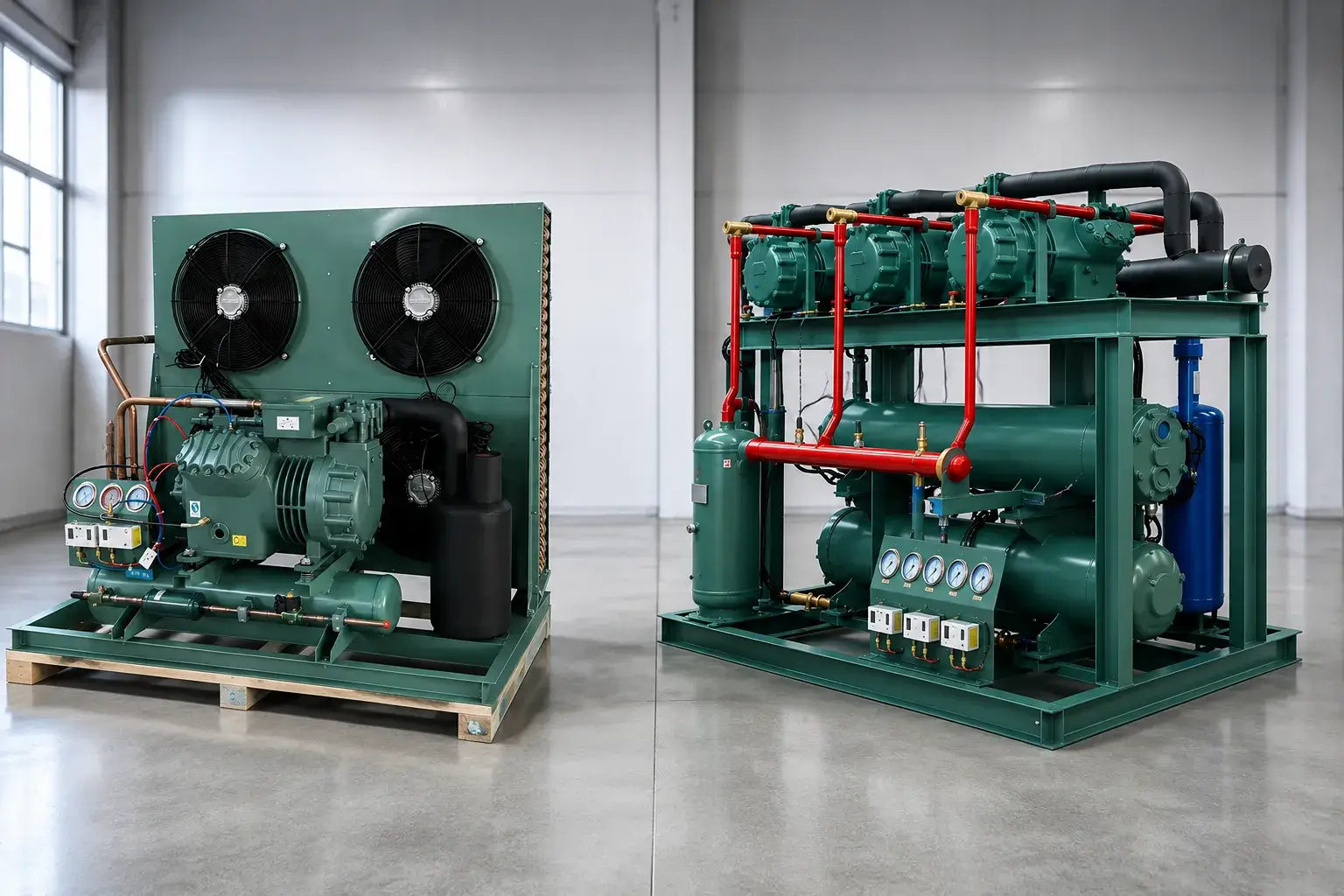
A complete rapid cooling or freezing system includes several key components.
Refrigeration System
The refrigeration system provides cooling capacity through:
- Compressor
- Condensing unit
- Refrigeration circuit
The system configuration depends on:
- Required temperature
- Product quantity
- Cooling or freezing capacity
High Airflow Evaporator
The evaporator plays an important role in heat transfer.
Blast chiller systems usually use efficient air coolers for stable cooling performance.
Blast freezer systems require:
- High airflow evaporator
- Large heat exchange capacity
- Strong air circulation
These designs improve cooling speed and freezing efficiency.
Temperature Control System
Modern systems include:
- Digital temperature controller
- PLC control
- Automatic defrost system
- Alarm monitoring
These features help maintain accurate temperature control and improve operational reliability.
Applications of Blast Chiller and Blast Freezer
Restaurants and Central Kitchens
Blast chiller rooms are commonly used for:
- Cooked food cooling
- Meal preparation
- Food safety management
They help large-scale kitchens improve workflow and maintain consistent quality.
Food Processing Industry
Blast freezer rooms are widely used in:
- Meat processing plants
- Seafood factories
- Frozen food manufacturers
They provide rapid freezing after production and support long-distance cold chain transportation.
Hotels and Catering Businesses
Hotels and catering companies use blast chilling technology to:
- Improve food preparation efficiency
- Reduce food waste
- Extend chilled storage time
How to Choose the Right Solution?
Choosing between a blast chiller room and a blast freezer room depends on your production requirements.
Choose a blast chiller room when you need:
- Rapid cooling without freezing
- Cooked food temperature reduction
- Chilled product storage
Suitable for:
- Restaurants
- Hotels
- Central kitchens
Choose a blast freezer room when you need:
- Rapid freezing
- Frozen product preparation
- Long-term frozen storage
Suitable for:
- Meat processors
- Seafood factories
- Frozen food manufacturers
Before selecting equipment, consider:
- Product type
- Required temperature
- Production capacity
- Room size
- Cooling/freezing time
- Energy efficiency
Icepoint provides customized blast chiller and blast freezer solutions based on customer requirements, including cold room design, refrigeration equipment selection, manufacturing, and technical support.
Frequently Asked Questions
What Is the Difference Between Blast Chiller and Blast Freezer?
A blast chiller rapidly cools products without freezing, usually at 0°C to +3°C. A blast freezer rapidly freezes products at around -30°C to -40°C.
Can a Blast Chiller Freeze Food?
No.A blast chiller is designed for rapid cooling, not freezing. A blast freezer should be used when products need to be frozen.
What Temperature Is Blast Chilling?
Blast chilling temperature is usually:0°C to +3°C
What Temperature Is Blast Freezing?
Blast freezer temperature is usually:-30°C to -40°C
Conclusion: Choosing the Right Blast Chiller or Blast Freezer Solution
Blast chiller rooms and blast freezer rooms serve different purposes in modern food cold chain systems.
A blast chiller provides rapid cooling, improves food safety, and maintains chilled product quality.
A blast freezer provides rapid freezing, improves frozen product quality, and supports long-term storage.
Selecting the right solution requires considering product type, temperature requirements, production capacity, and energy efficiency.
Icepoint provides complete blast chiller and blast freezer solutions, from cold room design and refrigeration equipment selection to manufacturing and technical support. Contact our refrigeration experts today to get a customized solution and request your project quotation.