Choosing the right air-cooled condensing unit is an important part of designing a reliable refrigeration system. The unit must provide enough capacity to handle the actual heat load while operating efficiently under the required temperature and ambient conditions.
For cold storage, commercial refrigeration, and food processing projects, selecting a unit only by compressor horsepower or cold room volume can lead to an incorrect result. A small unit may struggle to maintain the required temperature, while an oversized unit can increase equipment cost, energy consumption, and compressor cycling.
A better approach is to start with the actual refrigeration load and operating conditions, then select the compressor, condenser, refrigerant, and other system components accordingly.
This guide explains how to select the right air-cooled condensing unit by examining key factors such as refrigeration capacity, evaporation and condensing temperatures, compressor performance, condenser sizing, and refrigerant selection. In addition, it covers application-specific requirements and outlines the essential information needed to obtain an accurate quotation.
What Is an Air-Cooled Condensing Unit?
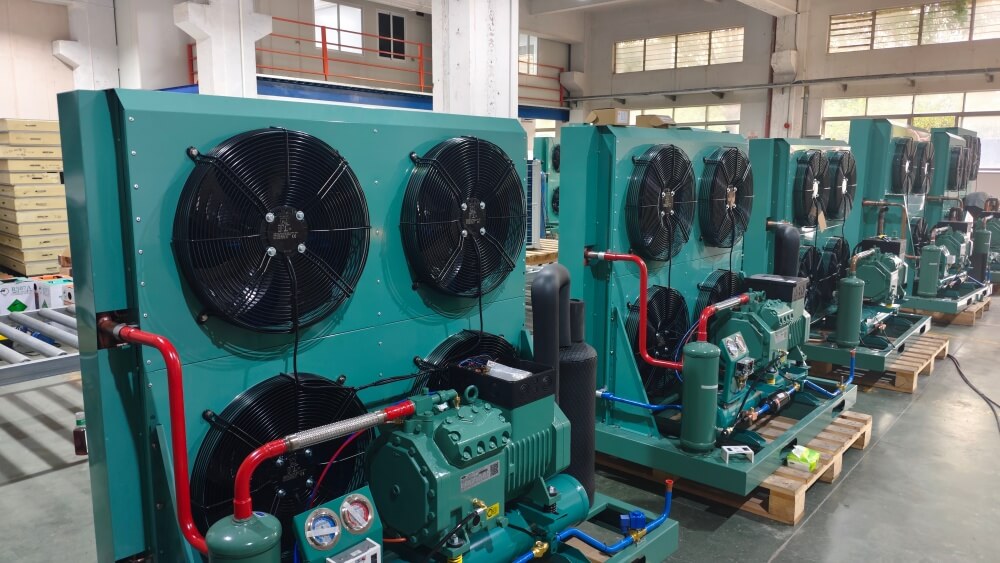
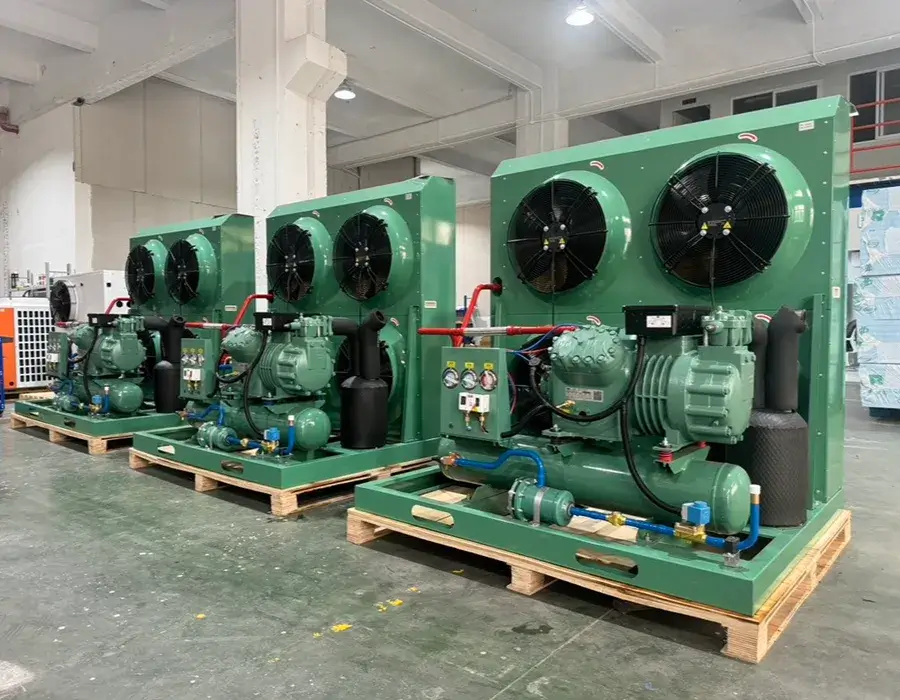
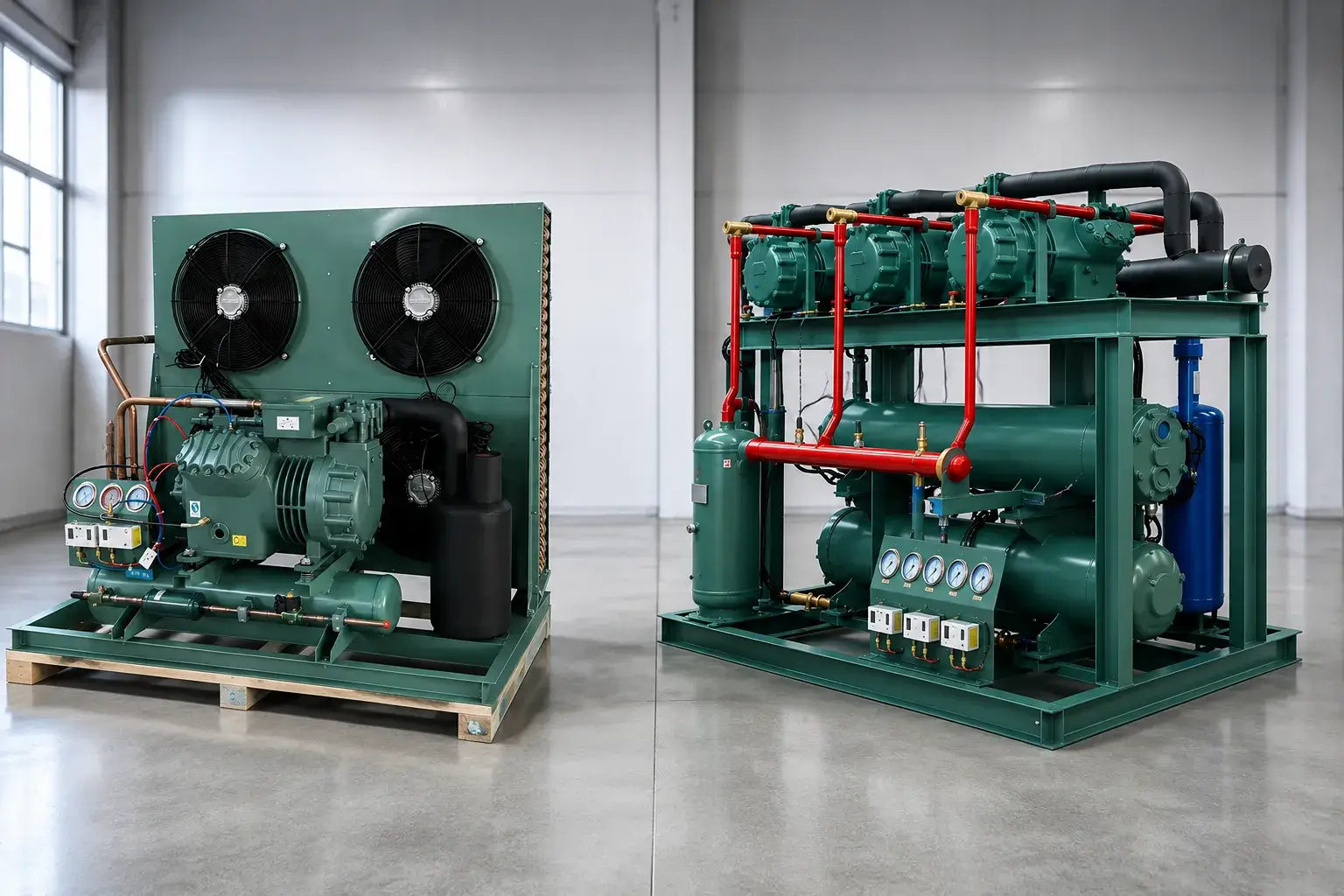
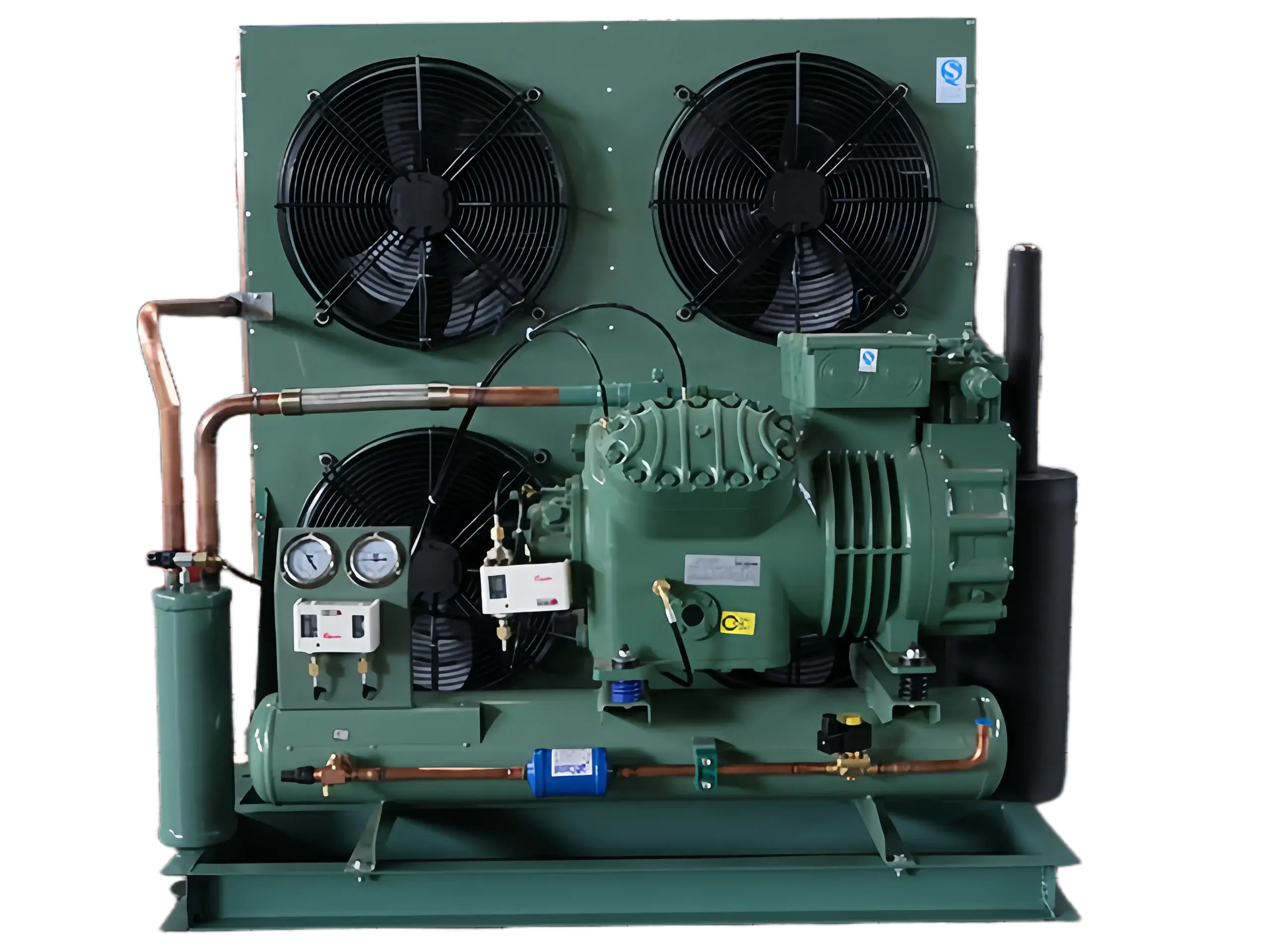
An air-cooled condensing unit is a packaged refrigeration assembly that normally includes a compressor, air-cooled condenser, condenser fan, receiver, and control and protection components.
The compressor raises the pressure of the refrigerant, while the condenser rejects heat to the surrounding air. The receiver and control components support refrigerant management and stable system operation.
A condensing unit is only one part of a complete refrigeration system. Depending on the project, the system also requires an evaporator, expansion device, refrigerant piping, electrical controls, and other components.
Therefore, the condensing unit should be selected as part of the complete refrigeration system, rather than considered as a standalone piece of equipment.
What Information Is Needed to Select a Condensing Unit?
The selection process should begin with the actual application and heat load, not compressor horsepower alone.
The main project parameters include:
- Required room temperature
- Required refrigeration capacity
- Room length, width, and height
- Product type and quantity
- Product entering temperature
- Target product temperature
- Required cooling or freezing time
- Evaporation temperature
- Condensing temperature
- Design ambient temperature
- Refrigerant type
- Operating hours
- Door opening frequency
- Insulation performance
- Installation and ventilation conditions
These factors are closely related; therefore, even cold rooms with the same dimensions may require different condensing units depending on the product load, incoming product temperature, required pull-down time, and ambient temperature.
Step 1: Determine the Refrigeration Load
The first engineering step is to determine how much heat the refrigeration system needs to remove.
However, cold room volume alone is not enough to select the right equipment accurately. Even if two rooms have the same volume, their refrigeration requirements may differ significantly depending on the products being stored, insulation performance, door opening frequency, ambient conditions, and operating schedules.
The main cooling loads can include:
- Transmission load — heat entering through walls, ceiling, floor, doors, and other surfaces
- Product load — heat removed from products entering the refrigerated space
- Infiltration load — heat and moisture entering when doors are opened
- Internal load — heat generated by people, lighting, motors, fans, and other equipment
- Equipment load — heat released by equipment operating inside the refrigerated area
- Pull-down load — additional capacity required to reduce product temperature within a specified period
A simplified design relationship is:
Required Refrigeration Capacity ≈ Total Heat Load × Design Margin
The actual calculation depends on the project and operating conditions. The final condensing unit should provide sufficient capacity at the specified evaporation and condensing temperatures.
Why Product Load Matters
Product load can be one of the most important factors in food storage and processing applications.
For example, a storage room receiving products that are already close to the target temperature may have a relatively moderate product load. A food processing facility receiving large quantities of warm products several times a day may require substantially more refrigeration capacity.
The calculation should therefore consider:
- Daily product quantity
- Product entering temperature
- Target product temperature
- Required cooling or freezing time
- Production schedule
When products must be cooled or frozen within a limited period, the pull-down requirement needs to be included in the equipment selection.
Step 2: Confirm the Evaporation and Condensing Temperatures
Refrigeration capacity depends on operating conditions. Compressor horsepower by itself does not tell you how much cooling capacity the system will provide.
The two key temperatures are:
- Evaporation temperature
- Condensing temperature
The evaporation temperature is related to the required room temperature and evaporator operating conditions. Lower-temperature applications generally place greater demands on the compressor and refrigeration system.
The condensing temperature is influenced by the ambient temperature and condenser performance. Because an air-cooled condenser rejects heat directly to the surrounding air, the design ambient temperature is particularly important.
The same compressor can provide different refrigeration capacities at different evaporation and condensing temperatures.
For this reason, compressor performance should always be checked at the actual design conditions, rather than selected from nominal HP alone.
Step 3: Check the Design Ambient Temperature
Air-cooled condensing units depend on surrounding air to reject heat. The local design ambient temperature therefore has a direct effect on condenser performance and system operating conditions.
The selection should take into account:
- Design outdoor temperature
- Installation location
- Airflow direction
- Ventilation
- Condenser clearance
- Hot-air recirculation
A poorly ventilated installation can cause the condenser to draw in its own hot discharge air. This can raise the condensing temperature and pressure and reduce system efficiency.
This is particularly important in hot climates. The condenser should be selected according to the actual local design ambient temperature rather than an average outdoor temperature.
Step 4: Select the Compressor Based on Actual Performance
Compressor horsepower provides a basic indication of compressor size, but it does not directly represent refrigeration capacity.
Compressor selection should be based on:
- Required refrigeration capacity
- Evaporation temperature
- Condensing temperature
- Refrigerant
- Operating range
- Compressor efficiency
- Application conditions
For example, a compressor can provide significantly different refrigeration capacity at -10°C and -30°C evaporation temperatures even when the compressor model is unchanged.
Before confirming a compressor, check the manufacturer's performance data for the selected:
- Refrigerant
- Evaporation temperature
- Condensing temperature
- Operating condition
This provides a more reliable basis for equipment selection than compressor HP alone.
Step 5: Size the Air-Cooled Condenser
The condenser must reject the heat absorbed by the evaporator as well as the heat associated with compressor operation.
Therefore:
Condenser Heat Rejection ≠ Refrigeration Capacity
In simplified terms, condenser heat rejection is approximately related to the refrigeration capacity plus compressor power input under the same operating conditions.
Condenser selection should consider:
- Refrigeration capacity
- Compressor power input
- Refrigerant
- Condensing temperature
- Design ambient temperature
- Required heat rejection capacity
Condenser Heat Exchange and Airflow
The performance of an air-cooled condenser depends on both the heat exchanger and the airflow system.
Important factors include:
- Heat exchange surface area
- Airflow rate
- Fan capacity
- Ambient temperature
- Condensing temperature
- Condenser cleanliness
A large heat exchanger cannot deliver its expected performance if airflow is insufficient. Likewise, dust and debris can restrict airflow and reduce heat transfer.
The condenser capacity and actual installation conditions should therefore be considered together.
Step 6: Select the Refrigerant and System Configuration
Refrigerant selection affects compressor performance, operating temperature, system design, and component compatibility.
The refrigerant should be evaluated according to:
- Required temperature range
- Compressor compatibility
- Local regulations
- Environmental requirements
- Equipment specifications
The final configuration may also include:
- Receiver
- Filter drier
- Sight glass
- Pressure controls
- Electrical protection
- Defrost-related controls or components
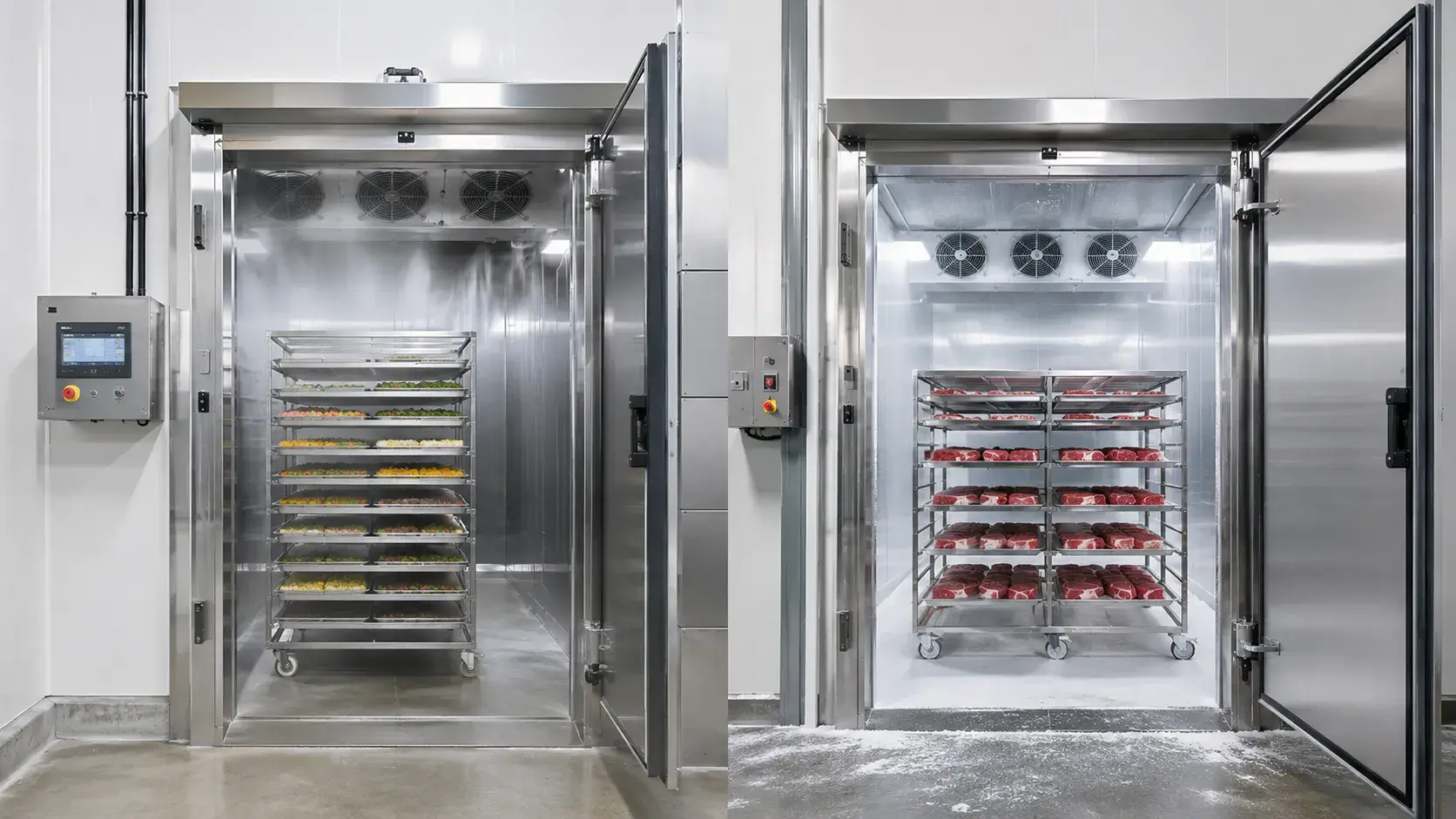
For example, a low-temperature freezer normally requires a different compressor operating range and defrost arrangement from a medium-temperature chiller room.
The compressor, condenser, refrigerant, evaporator, controls, and operating conditions should therefore be considered as one complete refrigeration system.
Air-Cooled Condensing Unit Selection for Different Applications
Different refrigeration applications create different load profiles. The appropriate condensing unit depends on the actual product, temperature requirements, operating schedule, and installation conditions.
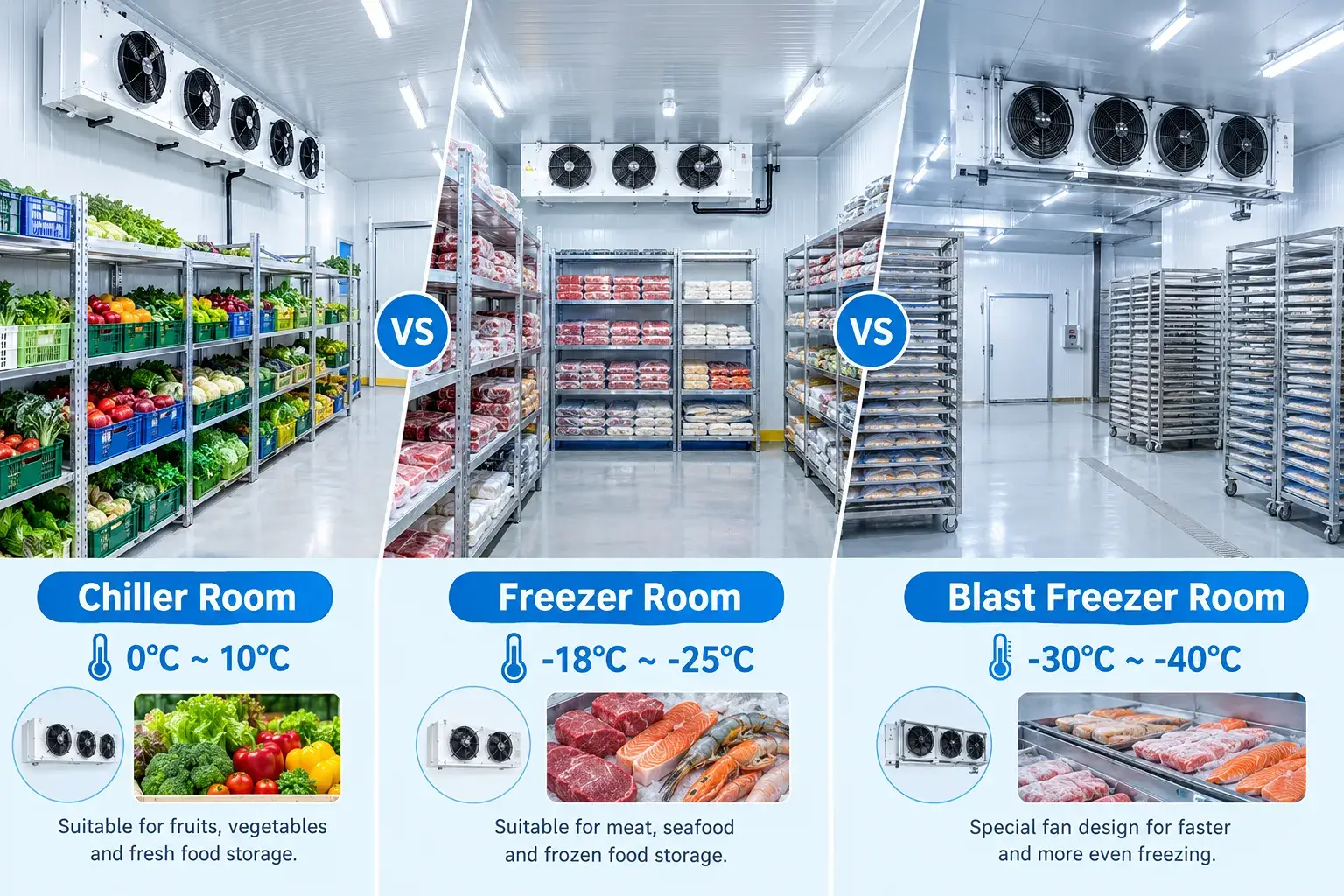
Chiller Rooms
Chiller rooms are commonly used for fresh food and other products requiring medium-temperature storage.
Important selection factors include:
- Required room temperature
- Product load
- Product entering temperature
- Door opening frequency
- Daily operating schedule
Frequent product loading and door opening can increase both product and infiltration loads.
Freezer Rooms
Freezer rooms operate at lower temperatures and generally require refrigeration equipment capable of operating under lower evaporation conditions.
The design should consider:
- Required room temperature
- Evaporation temperature
- Refrigeration capacity
- Product loading
- Defrost requirements
- Insulation performance
- Operating hours
Good insulation reduces heat transfer through the room enclosure and helps keep the refrigeration load under control.
Walk-In Freezers
Walk-in freezers can experience significant changes in load during daily operation, particularly when products are frequently loaded or doors are opened.
Key parameters include:
- Door opening frequency
- Product loading volume
- Product entering temperature
- Pull-down requirements
- Daily operating hours
The condensing unit should be matched to the actual operating pattern rather than selected from room size alone.
Food Processing Applications
Food processing facilities often have more demanding and variable refrigeration loads than standard storage rooms.
The refrigeration design may need to account for:
- Large quantities of incoming products
- Warm product temperatures
- Batch production
- Short cooling or freezing times
- Production schedules
- Frequent loading and unloading
In these applications, the product load and pull-down load can be more important than the physical size of the cold room.
Common Mistakes When Choosing a Condensing Unit
Choosing Only by Compressor Horsepower
Compressor HP does not directly define refrigeration capacity.
The actual capacity changes with refrigerant, evaporation temperature, condensing temperature, and other operating conditions.
Always verify the manufacturer's performance data at the required design conditions.
Using Cold Room Volume as the Only Selection Factor
Room volume provides useful information, but it does not represent the complete refrigeration load.
Product temperature, product quantity, door usage, insulation, ambient conditions, and required cooling time must also be considered.
Ignoring Design Ambient Temperature
A condenser selected for a moderate ambient temperature may not provide the same performance in a hot climate.
For air-cooled systems, the local design ambient temperature should be included in condenser and compressor selection.
Oversizing the Condensing Unit
A larger unit does not automatically mean better performance.
Excessive capacity can increase:
- Initial equipment cost
- Energy consumption
- Compressor cycling
- Operating inefficiency
A reasonable design margin should be used instead of excessive oversizing.
Ignoring Future Operating Conditions
Future changes should be considered when they are already part of the customer's plan.
Potential changes may include:
- Higher daily product volume
- Longer operating hours
- More frequent door opening
- Cold room expansion
- Additional processing equipment
Including foreseeable changes during the initial design can reduce the need for costly modifications later.
Air-Cooled Condensing Unit Selection Process
A practical selection process can be summarized as:
Application → Room Conditions → Heat Load → Refrigeration Capacity → Evaporation & Condensing Conditions → Compressor → Condenser → Refrigerant & Components → Installation Check
Each step depends on the information collected during the previous step.
This is why a reliable condensing unit quotation normally requires more information than simply the cold room size or compressor HP.
What Information Should You Provide for a Condensing Unit Quotation?
For an accurate quotation, prepare the following project information:
| Parameter | Information Required |
|---|---|
| Application | Chiller / Freezer / Food Processing |
| Room Temperature | Required operating temperature |
| Room Size | Length × Width × Height |
| Product Type | Meat / Seafood / Fruit / Vegetable / Dairy / Other |
| Product Load | Daily product quantity or processing capacity |
| Product Temperature | Entering and target temperature |
| Pull-Down Time | Required cooling or freezing time |
| Ambient Temperature | Local design outdoor temperature |
| Refrigerant | Required or preferred refrigerant |
| Operating Hours | Daily running hours |
| Door Usage | Opening frequency |
| Installation | Indoor / Outdoor / Ventilation conditions |
| Power Supply | Voltage / Phase / Frequency |
Additional information such as insulation thickness, door dimensions, evaporator conditions, and defrost method can further improve the accuracy of the system design.
The more complete the project information, the more accurately the refrigeration supplier can match the condensing unit to the actual load and operating conditions.
Frequently Asked Questions About Air-Cooled Condensing Units
How Do I Choose the Right Air-Cooled Condensing Unit?
Start with the actual heat load andrequired refrigeration capacity. Then match the condensing unit to the evaporation temperature, condensing temperature, refrigerant, ambient conditions, application, operating schedule, and installation environment.
Can I Choose a Condensing Unit Based on Compressor HP?
Compressor HP alone is not sufficient. The actual refrigeration capacity depends on the refrigerant and operating conditions. Always check compressor performance data at the required evaporation and condensing temperatures.
How Do I Calculate the Required Condensing Unit Capacity?
Begin by calculating the major heat loads, including transmission, product, infiltration, internal, equipment, and pull-down loads. The final refrigeration capacity should then be determined based on the actual operating conditions and an appropriate design margin.
How Does Ambient Temperature Affect an Air-Cooled Condensing Unit?
Higher ambient temperatures make heat rejection more difficult for an air-cooled condenser. This can increase condensing temperature and pressure and reduce system efficiency. The condenser should therefore be selected according to the local design ambient temperature.
What Information Does a Refrigeration Manufacturer Need for Selection?
At minimum, provide the application, room dimensions, required temperature, product type and quantity, entering product temperature, target temperature, required cooling or freezing time, ambient temperature, refrigerant, operating hours, and installation conditions.
Conclusion: Choosing the Right Air-Cooled Condensing Unit
Selecting an air-cooled condensing unit should follow an engineering-based process rather than a simple HP or room-volume calculation.
The key sequence is:
Heat Load → Refrigeration Capacity → Operating Conditions → Compressor → Condenser → Refrigerant & System Configuration
The most important parameters include:
- Required refrigeration capacity
- Room and product temperatures
- Evaporation and condensing temperatures
- Refrigerant type
- Design ambient temperature
- Product load
- Pull-down requirements
- Operating schedule
- Installation conditions
Therefore, for cold storage, food processing, and industrial refrigeration projects, the condensing unit should be selected based on the actual application requirements, rather than relying solely on standard capacity tables.
Icepoint can evaluate project parameters and provide a one-stop refrigeration solution covering cooling load assessment, condensing unit selection, system configuration, equipment manufacturing, and cold storage project implementation.
For your project, provide the room size, required temperature, product type, product load, entering product temperature, target temperature, required cooling or freezing time, ambient temperature, and power supply. Our refrigeration team can use these parameters to develop a suitable condensing unit and complete refrigeration system configuration.