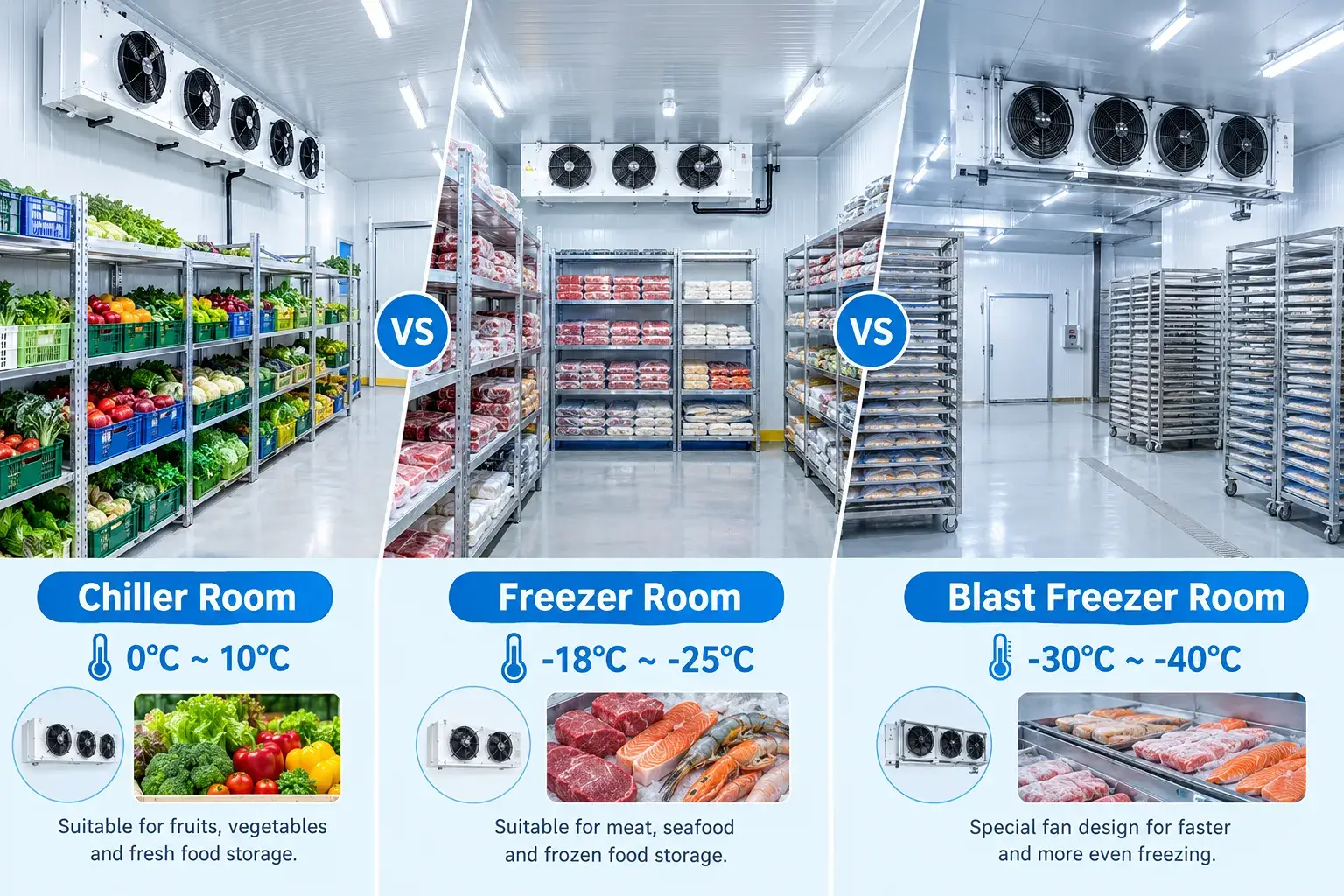
An air-cooled condensing unit is widely used in commercial refrigeration, cold storage, and food processing, but selecting one based only on compressor horsepower or cold room size can lead to poor system performance. If the unit cannot reject heat effectively, condensing pressure can rise, energy consumption can increase, and the refrigeration system may struggle to maintain the required temperature. For this reason, the condensing unit needs to be matched to the actual refrigeration load, operating temperature, ambient conditions, and application.
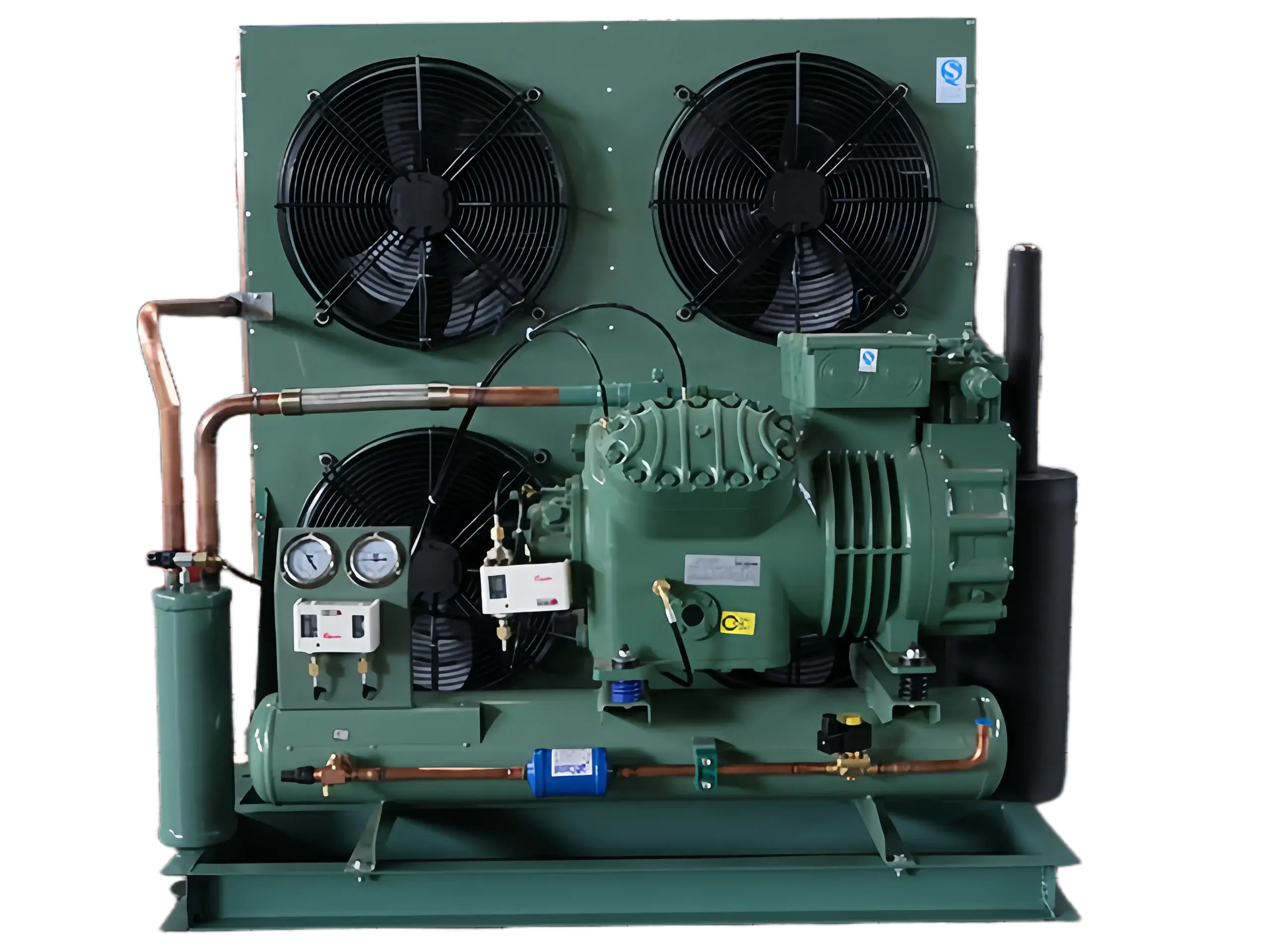
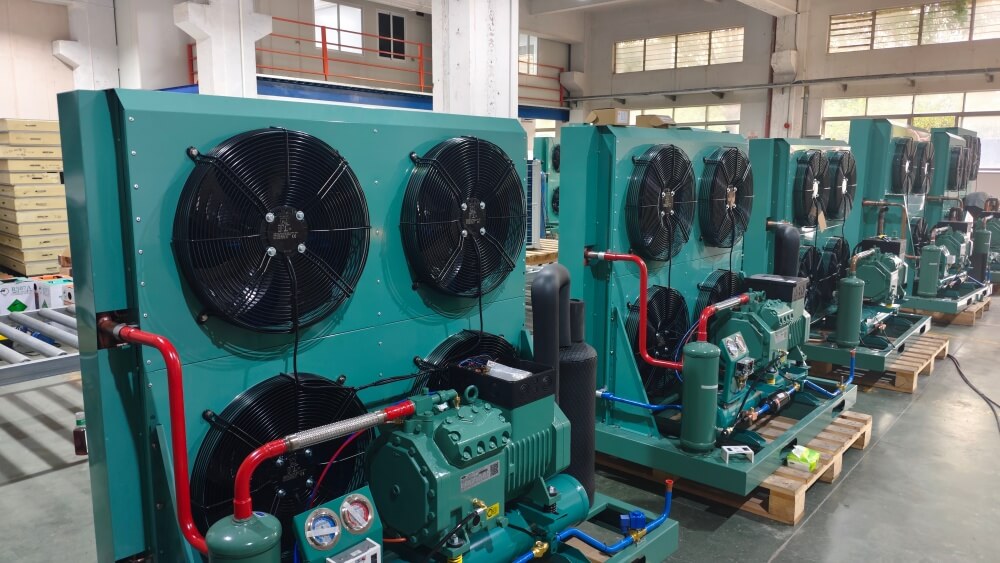
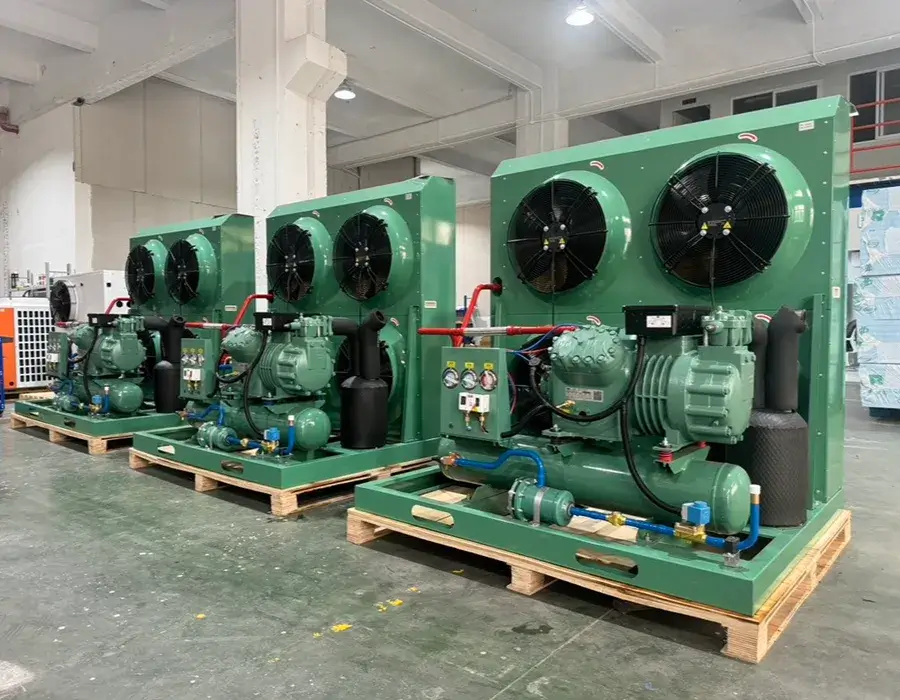
An air-cooled condensing unit is a refrigeration assembly that uses ambient air to remove heat from the refrigerant. A typical unit includes a compressor, air-cooled condenser, condenser fan, receiver, and control and protection components. It is commonly used with evaporators installed in chiller rooms, freezer rooms, walk-in freezers, food storage rooms, and other refrigerated spaces.
This article explains how an air-cooled condensing unit works, its main components and structural configurations, common applications, advantages and limitations, and the key factors to consider when selecting and maintaining one.
What Is an Air-Cooled Condensing Unit?
An air-cooled condensing unit is the part of a refrigeration system responsible for compressing refrigerant and rejecting the heat carried by the refrigerant to the surrounding air.
The compressor receives low-pressure refrigerant vapor from the evaporator and raises its pressure and temperature. The high-pressure refrigerant then enters the air-cooled condenser, where condenser fans force ambient air across the condenser coil. Heat is transferred from the refrigerant to the air, allowing the refrigerant to condense into a high-pressure liquid before continuing through the refrigeration circuit.
A typical air-cooled condensing unit consists of:
- Compressor
- Air-cooled condenser
- Condenser fan
- Liquid receiver
- Control and protection components
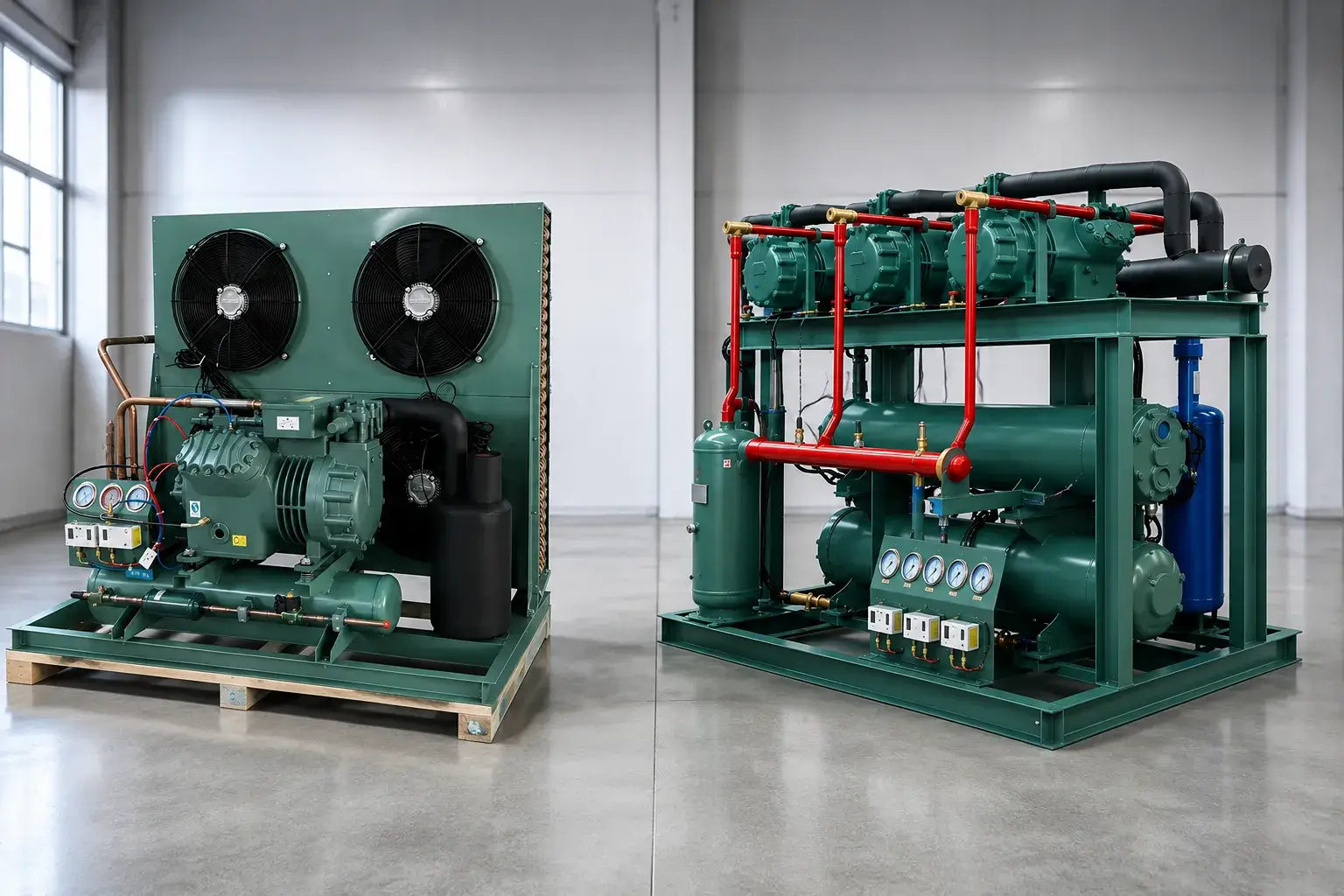
The actual configuration can vary according to refrigeration capacity, refrigerant, temperature requirement, compressor type, and project conditions.
How Does an Air-Cooled Condensing Unit Work?
The refrigeration cycle can be simplified as:
Evaporator → Compressor → Condenser → Expansion Device → Evaporator
The evaporator absorbs heat from the refrigerated space. The resulting low-pressure refrigerant vapor returns to the compressor, where it is compressed and sent to the condenser.
Inside the air-cooled condenser, the high-temperature refrigerant releases heat to ambient air. Fans maintain airflow across the condenser coil, improving heat transfer and allowing the refrigerant to change from vapor to liquid.
The high-pressure liquid refrigerant then passes through an expansion device. Its pressure and temperature are reduced before it enters the evaporator again. The cycle continues as long as the refrigeration system is operating.
How Does the Air-Cooled Condenser Remove Heat?
The term air-cooled refers to the heat rejection method. Unlike water-cooled systems, the condenser uses surrounding air rather than cooling water as the heat-transfer medium.
Condenser fans draw or push air across the coil surface. The refrigerant inside the coil transfers heat to this moving air. Ambient temperature, airflow volume, condenser surface area, coil cleanliness, and installation conditions all affect heat rejection.
This is particularly important in hot climates. When ambient temperature rises, the condenser has less temperature difference available for heat rejection, which can increase condensing pressure and affect compressor power consumption.
Main Components of an Air-Cooled Condensing Unit
The performance of a condensing unit depends on how its main components work together rather than on the compressor alone.
Compressor
The compressor is the driving component of the refrigeration cycle. It compresses low-pressure refrigerant vapor and maintains the pressure difference required for refrigerant circulation.
Compressor type and capacity should be selected according to the required refrigeration capacity, evaporating temperature, condensing conditions, refrigerant, and operating schedule. Different projects may use different compressor brands or configurations depending on technical and commercial requirements.
Air-Cooled Condenser and Fans
The condenser transfers heat from the refrigerant to ambient air. The condenser fans provide the airflow required for forced heat exchange.
Coil surface area, fin configuration, fan capacity, air temperature, and airflow conditions all influence condenser performance. A condenser that is undersized for the operating conditions may result in higher condensing pressure and reduced system efficiency.
Receiver and Refrigeration Circuit
The liquid receiver stores refrigerant and helps accommodate changes in refrigerant volume during different operating conditions. Refrigeration piping connects the condensing unit with the evaporator and other components in the system.
Proper piping design is important for refrigerant flow, oil return, pressure loss, and overall system reliability.
Control and Protection System
Controls and protection devices help keep the refrigeration system within its intended operating range. Common components include:
- High- and low-pressure protection
- Temperature control
- Electrical protection
- Safety controls
Larger systems may also use PLC-based controls, monitoring functions, and alarm systems.
Types of Air-Cooled Condensing Units
Air-cooled condensing units can use different structural configurations depending on installation space, required heat-transfer area, and airflow requirements.
H-Type Units
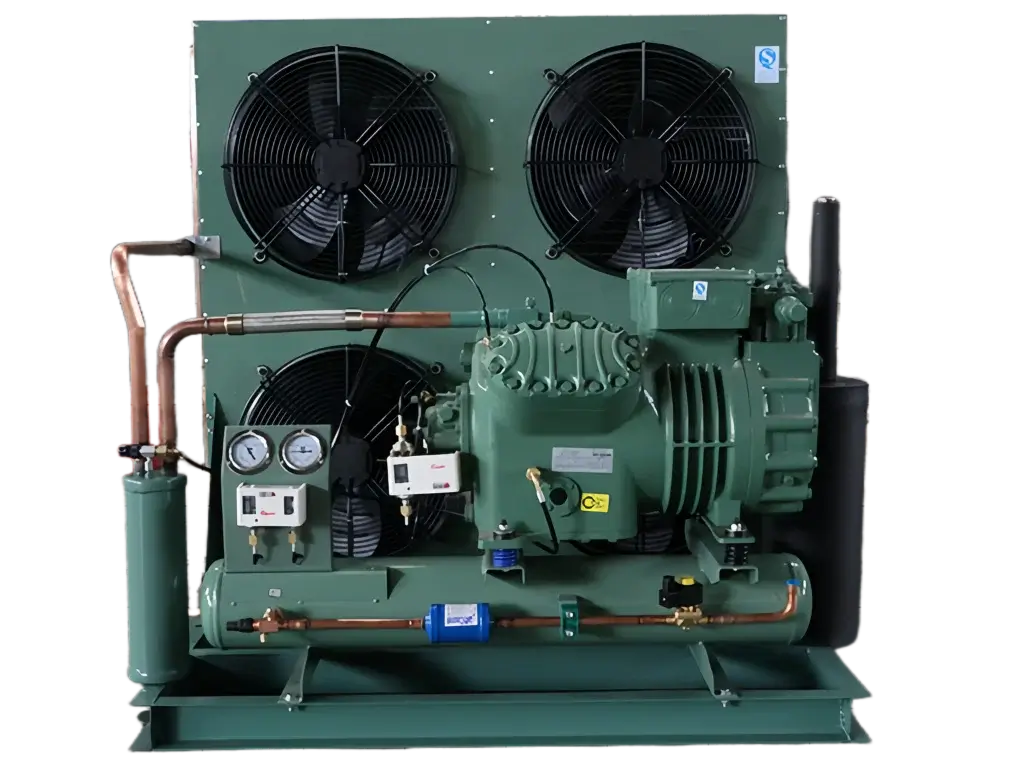
H-type units use a horizontal coil arrangement and generally have a relatively low profile. This configuration can be useful where installation height is restricted.
V-Type Units
V-type units arrange the condenser coils in a V-shaped configuration. This design can provide a larger heat-transfer area within a practical footprint and is suitable for applications requiring higher condenser capacity.
U-Type Units
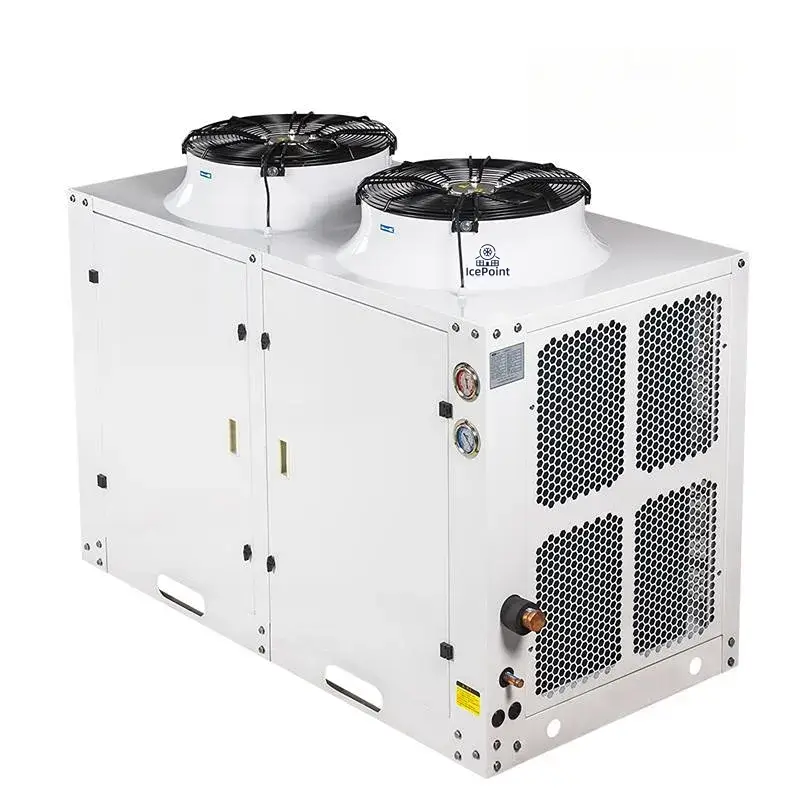
U-type units use a wrapped or U-shaped coil arrangement to make efficient use of the available installation space. The configuration can also help control airflow direction around the condenser.
The best structural configuration depends on the required capacity, available space, ambient conditions, and system design rather than the shape alone.
Where Are Air-Cooled Condensing Units Used?
Air-cooled condensing units are suitable for a wide range of refrigeration applications when the required temperature and refrigeration capacity fall within the unit's design conditions.
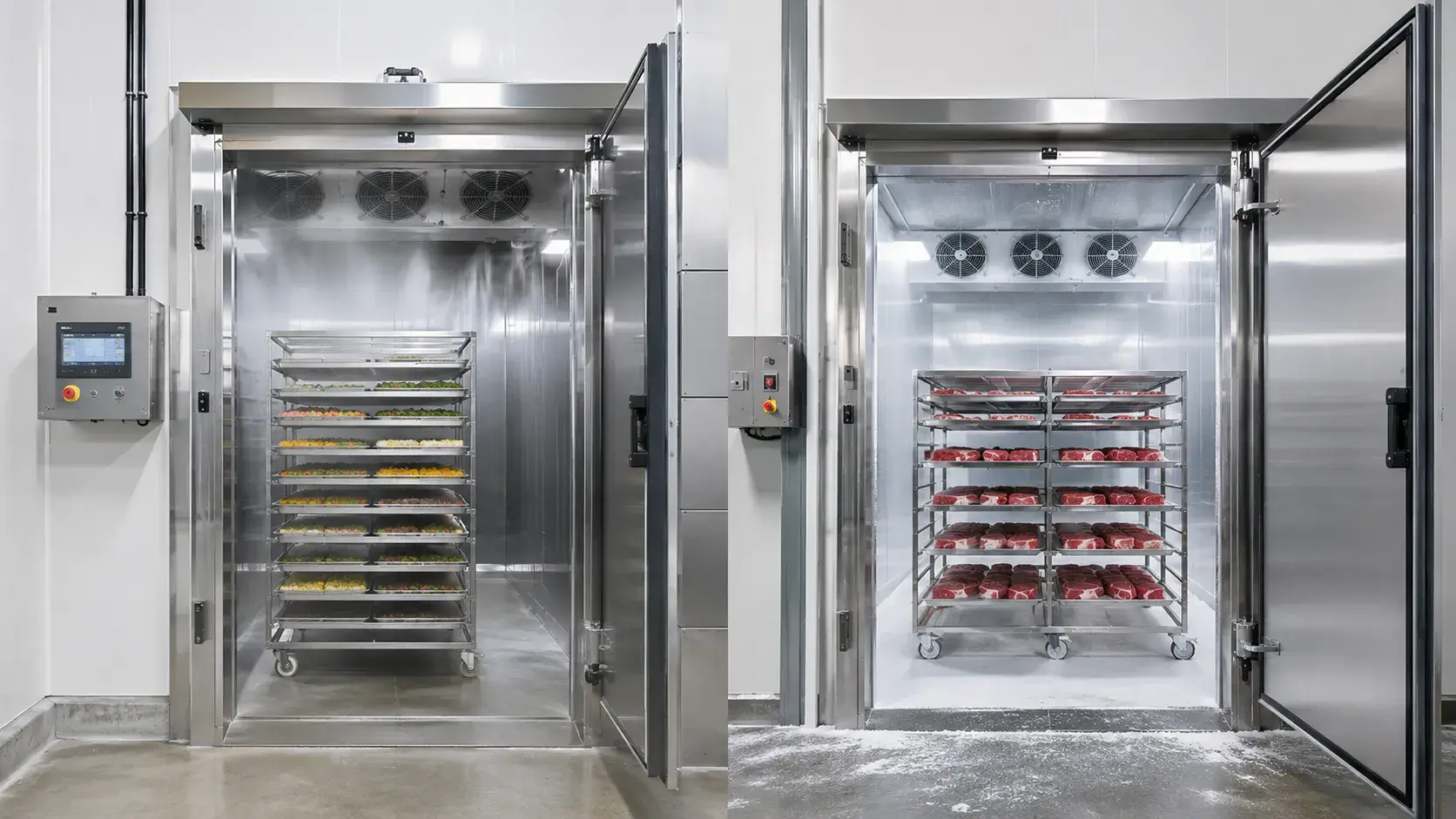
Cold Storage Applications
They can be used for:
- Chiller rooms
- Freezer rooms
- Walk-in freezers
- Food storage rooms
The unit should be selected according to room temperature, cooling capacity, product load, room size, and operating conditions. A freezer receiving a large quantity of warm products, for example, can require considerably more refrigeration capacity than a room used mainly to hold products that are already frozen.
Food Processing Applications
Food processing facilities may use air-cooled condensing units for meat processing, seafood processing, food factories, and cold-chain facilities.
The required system configuration depends on the production process. Product entering temperature, daily throughput, cooling or freezing requirements, and required pull-down time can all affect the refrigeration load.
Commercial Refrigeration Applications
Common commercial applications include:
- Supermarkets
- Restaurants
- Catering businesses
- Commercial food storage
For these projects, compact installation, straightforward maintenance, and reliable temperature control can be important factors when selecting the refrigeration equipment.
Benefits and Limitations of Air-Cooled Condensing Units
Benefits of Air-Cooled Condensing Units
Air-cooled systems do not require a cooling-water circuit, which can simplify installation and reduce water-related maintenance. They can also be installed in different locations when sufficient ventilation and service access are available.
Other practical advantages include relatively simple maintenance, flexible installation, and suitability for a broad range of commercial and cold storage applications.
Limitations to Consider
Performance is affected by ambient temperature. In hot weather, the temperature difference between the condenser and surrounding air becomes smaller, which can increase condensing pressure.
Condenser fans also generate operating noise, and the unit needs adequate clearance for airflow. Installing the condenser in an enclosed or poorly ventilated area can reduce heat rejection performance and increase operating costs.
How to Choose an Air-Cooled Condensing Unit
A condensing unit should not be selected only by compressor horsepower or cold room area. The basic selection should consider:
- Required refrigeration capacity
- Evaporation temperature
- Ambient temperature
- Refrigerant
- Compressor type
- Application requirements
The required refrigeration capacity is particularly important. Product load, transmission through the room structure, door openings, internal equipment, and other heat sources should be evaluated as part of the refrigeration calculation.
Evaporation temperature also needs to be distinguished from room temperature. For example, a cold room operating at a specified storage temperature does not mean the evaporator or compressor should simply be selected at the same temperature.
For projects requiring detailed refrigeration load calculations, compressor matching, or model selection, a separate engineering assessment should be carried out based on the complete operating conditions.
How Long Does an Air-Cooled Condensing Unit Last?
There is no single service-life figure that applies to every air-cooled condensing unit. Equipment quality, operating load, ambient temperature, installation quality, maintenance, and operating hours all influence service life.
A unit operating continuously in a hot and dusty environment will experience different conditions from one installed in a clean, well-ventilated area with a moderate load.
Correct equipment selection, proper installation, clean condenser coils, adequate airflow, and preventive maintenance can help reduce unnecessary stress on the refrigeration system.
Air-Cooled Condensing Unit Maintenance
Regular maintenance is important for maintaining heat-transfer performance and preventing avoidable equipment problems.
Routine Maintenance Checklist
Typical maintenance tasks include:
- Cleaning condenser coils
- Checking condenser fans
- Inspecting electrical connections
- Checking the refrigerant system
- Monitoring operating pressure
- Inspecting compressor condition
The condenser deserves particular attention because dirt and restricted airflow directly affect heat rejection. Keeping the condenser clean and maintaining sufficient airflow are two basic requirements for stable condensing performance.
Maintenance requirements vary according to operating hours, environmental conditions, system capacity, and application. Industrial installations with long operating hours should use a preventive maintenance schedule rather than relying only on corrective repairs.
Frequently Asked Questions About Air-Cooled Condensing Units
What Is an Air-Cooled Condensing Unit?
It is a refrigeration equipment assembly that uses a compressor and air-cooled condenser to reject refrigerant heat to ambient air. It is commonly used for cold storage, food processing, and commercial refrigeration.
How Does an Air-Cooled Condensing Unit Work?
The compressor raises refrigerant pressure, the condenser rejects heat to ambient air, and the expansion device reduces refrigerant pressure before it returns to the evaporator. The evaporator then absorbs heat from the refrigerated space.
What Are the Different Types of Air-Cooled Condensers?
Air-cooled condensers can use natural convection or forced convection. Commercial and industrial refrigeration units commonly use forced-air cooling with condenser fans because it provides more controlled heat transfer.
What Is the Average Lifespan of an Air-Cooled Condensing Unit?
There is no universal lifespan. Equipment quality, operating conditions, ambient temperature, installation, maintenance, and operating load all affect service life.
There is no universal lifespan. Equipment quality, operating conditions, ambient temperature, installation, maintenance, and operating load all affect service life.
Yes. It can be used for chiller rooms, freezer rooms, walk-in freezers, and other food storage applications. The unit must be correctly matched to the required temperature, refrigeration capacity, refrigerant, and ambient conditions.
Conclusion: Choosing the Right Air-Cooled Condensing Unit
An air-cooled condensing unit provides the heat-rejection and compression functions required by many commercial and industrial refrigeration systems. Its performance depends on the compressor, condenser, fans, controls, operating conditions, and the way the complete refrigeration system is designed.
For a reliable cold storage project, selection should be based on refrigeration capacity, temperature requirement, ambient temperature, refrigerant, compressor configuration, and installation conditions rather than room size alone. Icepoint can support projects from refrigeration system design and condensing unit configuration to equipment manufacturing and technical support, helping customers develop a refrigeration solution suited to their actual operating requirements.