Introduction
The beverage industry is changing rapidly. Consumers increasingly demand products that are fresher, healthier, and less processed. Cold-pressed juices, cold brew coffee, kombucha, functional beverages, craft beer, and premium wines are becoming important growth categories across retail, foodservice, and e-commerce channels.
Unlike shelf-stable beverages, temperature-sensitive beverages such as fresh juices, cold brew coffee, fermented drinks, craft beer, and premium beverages require controlled cold storage to maintain quality.
For beverage manufacturers and distributors, cold storage is no longer simply a refrigerated room used to keep products cold. It has become a critical component of quality control, inventory management, and supply chain performance.
This article explains beverage storage temperature requirements, cold room design principles, refrigeration system selection, and cold chain logistics strategies that help beverage businesses maintain product quality while improving operational efficiency.
Why Beverage Cold Storage Matters
Many beverage quality problems do not originate during production. They occur later, when products are exposed to unsuitable temperatures during storage or transportation.
Common consequences of poor temperature management include:
- Flavor deterioration
- Aroma loss
- Oxidation
- Color changes
- Reduced shelf life
- Product returns and customer complaints
For temperature-sensitive beverages, the objective of cold storage is not only preservation. It is to slow down natural quality degradation and maintain product consistency throughout the supply chain.
As beverage distribution networks expand and delivery times increase, maintaining a stable cold chain becomes increasingly important.
Beverage Storage Temperature Guide
Different beverage categories require different storage environments. Selecting the correct temperature range is the foundation of any cold storage project.
| Beverage Type | Recommended Storage Temperature |
| Cold-Pressed Juice | 0°C to 4°C |
| Smoothies | 0°C to 4°C |
| Cold Brew Coffee | 0°C to 4°C |
| Kombucha | 2°C to 5°C |
| Functional Beverages | 2°C to 6°C |
| Ready-to-Drink Coffee | 0°C to 4°C |
| Craft Beer | 2°C to 6°C |
| Wine | 10°C to 15°C |
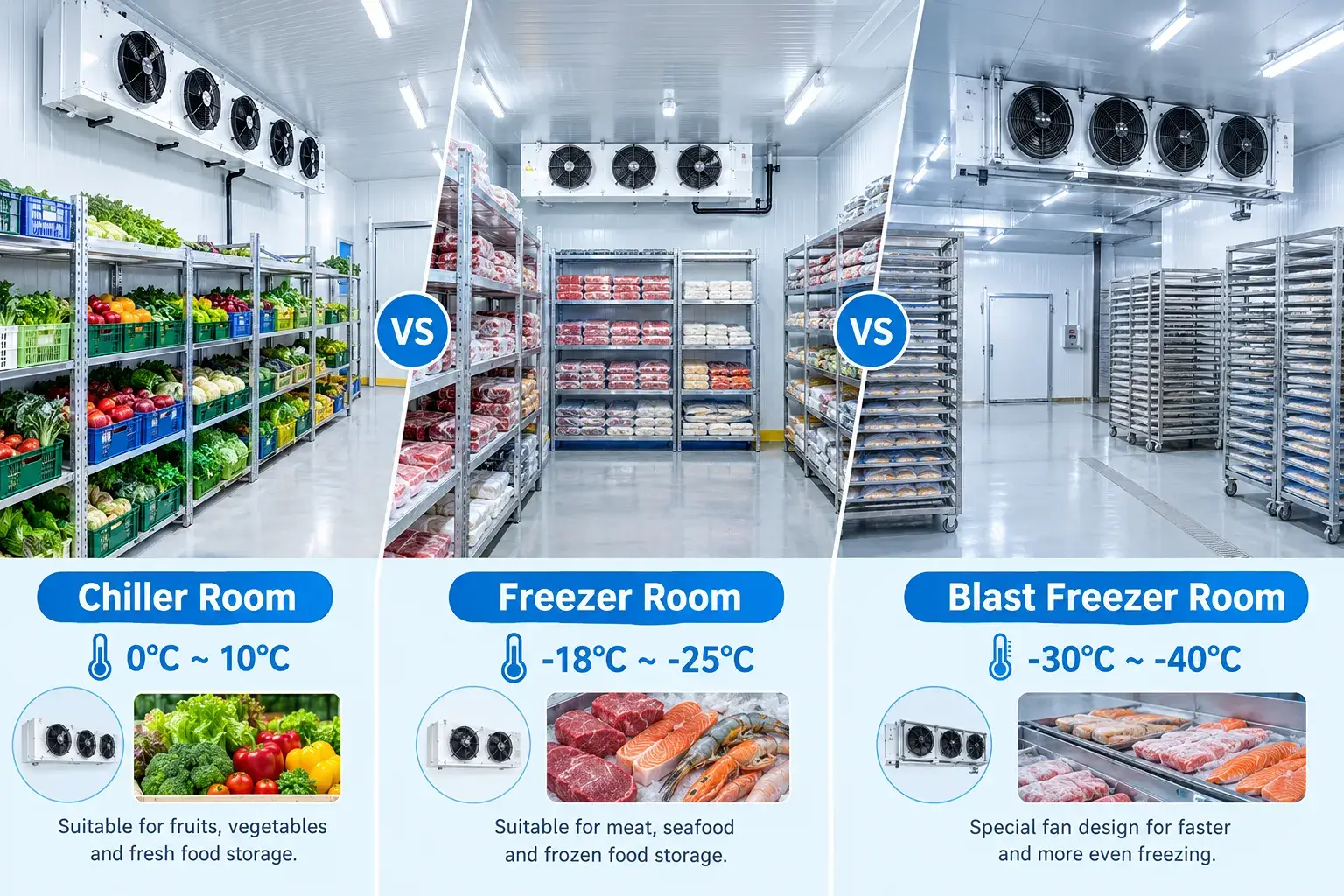
Because storage requirements vary significantly between products, many beverage facilities utilize multiple temperature zones instead of relying on a single cold room.
Understanding Beverage Quality Risks
Temperature Fluctuation
One of the most overlooked issues in beverage storage is temperature instability.
A product stored continuously at 4°C generally maintains better quality than a product repeatedly cycling between 2°C and 8°C.
Temperature fluctuations can accelerate:
- Oxidation
- Flavor degradation
- Color changes
- Microbial growth
- Shelf-life reduction
In beverage storage, temperature stability is often more important than achieving the lowest possible temperature.
Oxygen Exposure
Oxygen is a major contributor to beverage deterioration.
Products particularly sensitive to oxidation include:
- Cold-pressed juice
- Cold brew coffee
- Craft beer
- Functional beverages
Effective packaging and controlled storage environments help reduce oxidation and preserve flavor.
Light Exposure
Exposure to light can negatively affect beverage quality.
Potential issues include:
- Nutrient degradation
- Flavor instability
- Color fading
- Oxidative reactions
For premium beverages, storage design should minimize unnecessary light exposure.
Beverage Cold Chain Workflow
A successful beverage cold chain begins long before products enter the storage room.
A typical beverage cold chain process includes:
Production → Rapid Cooling → Quality Inspection → Cold Storage → Order Picking → Dispatch Buffer → Refrigerated Transportation → Distribution
Each stage must maintain temperature continuity to prevent quality loss.
Rapid Cooling After Production
Freshly produced beverages often contain residual heat from processing and packaging operations.
Rapid cooling helps:
- Stabilize product temperature
- Reduce microbial growth risks
- Lower refrigeration loads
- Improve shelf-life performance
For many beverage applications, rapid cooling is the first critical step in the cold chain.
Cold Storage
After cooling, products are transferred into refrigerated storage.
Key objectives include:
- Maintaining stable temperatures
- Minimizing temperature fluctuations
- Supporting inventory rotation
- Preserving product quality
Distribution and Transportation
Cold chain failures frequently occur during loading and transportation.
Risk points include:
- Warehouse-to-truck transfers
- Long-distance transportation
- Last-mile delivery
- Temporary storage locations
Proper cold chain planning reduces these risks and protects product integrity.
Beverage Cold Room Design Considerations
Design Around Product Flow
Many cold storage projects focus primarily on building dimensions.
A more effective approach is to design around product movement.
Typical beverage facility layout:
Production Area → Rapid Cooling Zone → Storage Area → Dispatch Zone
This configuration reduces handling time, improves logistics efficiency, and minimizes temperature exposure.
Temperature Zoning
Different beverages often require different environmental conditions.
A beverage facility may include:
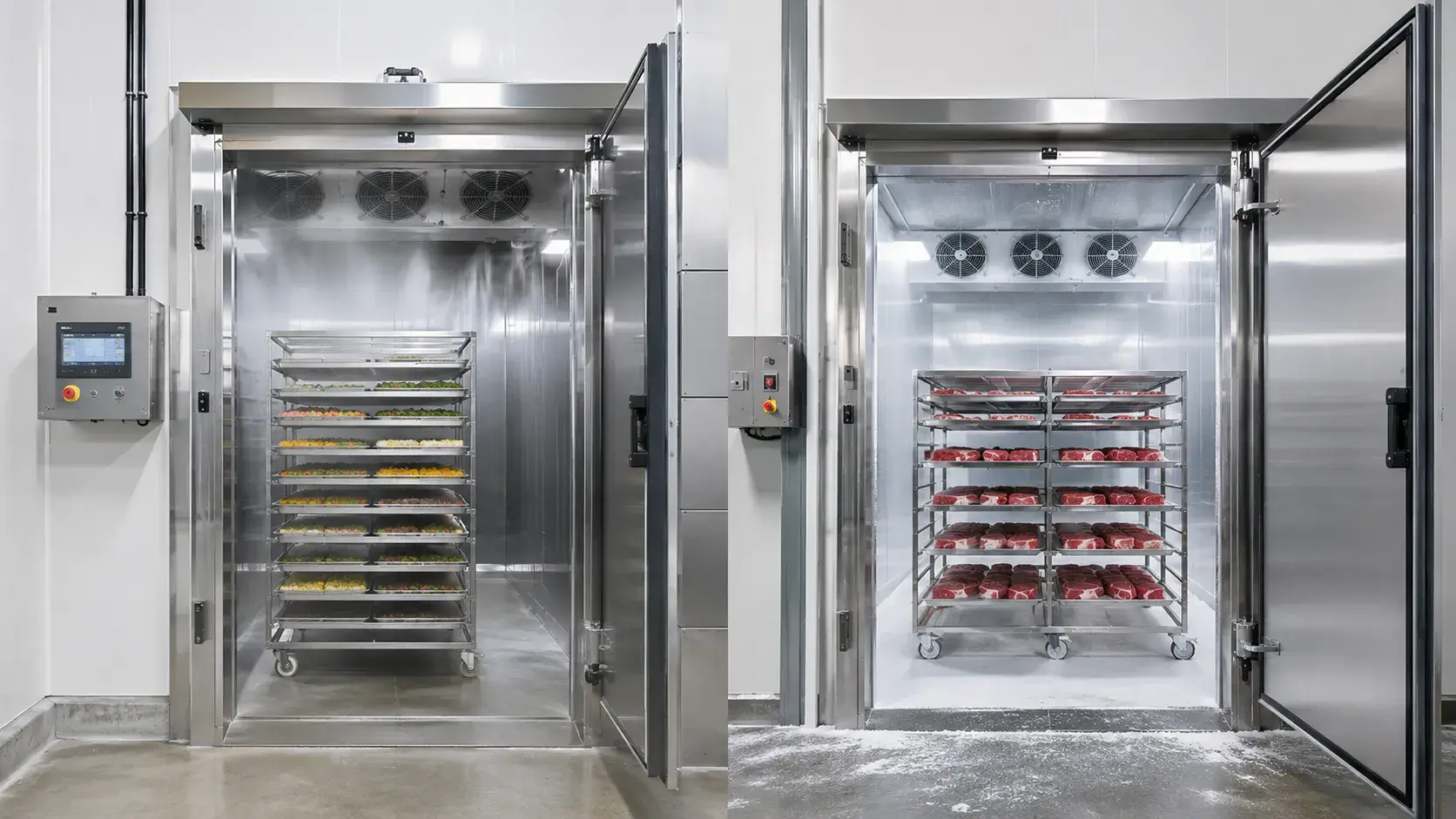
Rapid Cooling Room
Used immediately after production.
Purpose:
- Reduce product temperature quickly
- Minimize heat entering storage areas
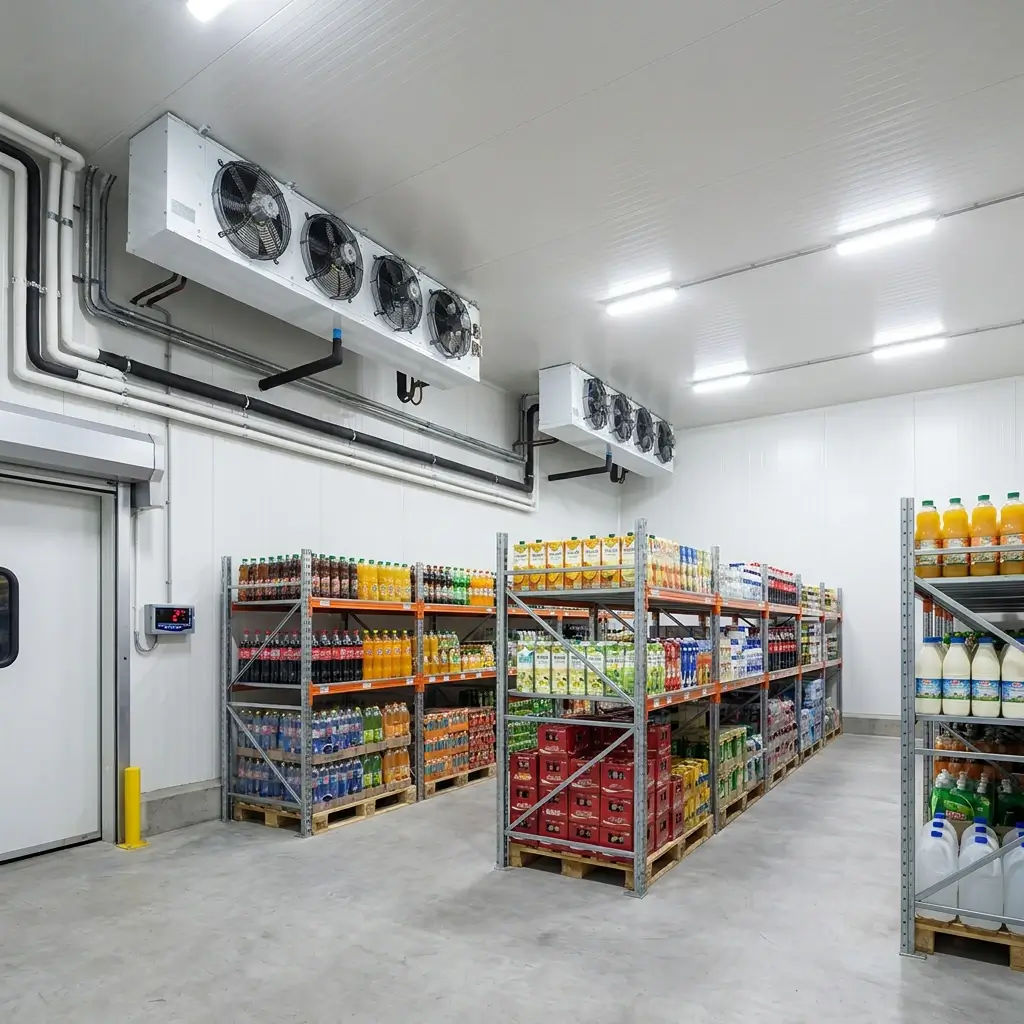
Main Refrigerated Storage
Used for routine inventory storage.
Requirements:
- Stable temperatures
- Consistent airflow
- Controlled humidity
Wine Storage Area
Designed specifically for:
- 10°C–15°C storage
- Humidity control
- Reduced vibration
Dispatch Buffer Area
Used before loading.
Benefits:
- Reduced thermal shock
- Faster loading operations
- Improved temperature retention
Airflow Management
Uniform airflow is essential in beverage cold rooms.
Poor airflow can create:
- Hot spots
- Uneven temperatures
- Condensation
- Packaging damage
Proper evaporator placement and airflow design help maintain consistent product temperatures throughout the storage area.
Humidity Control
Humidity management is particularly important for bottled and packaged beverages.
Excess humidity may cause:
- Label peeling
- Carton deformation
- Surface condensation
- Packaging deterioration
Cold room design should balance temperature and humidity control simultaneously.
Refrigeration System Selection
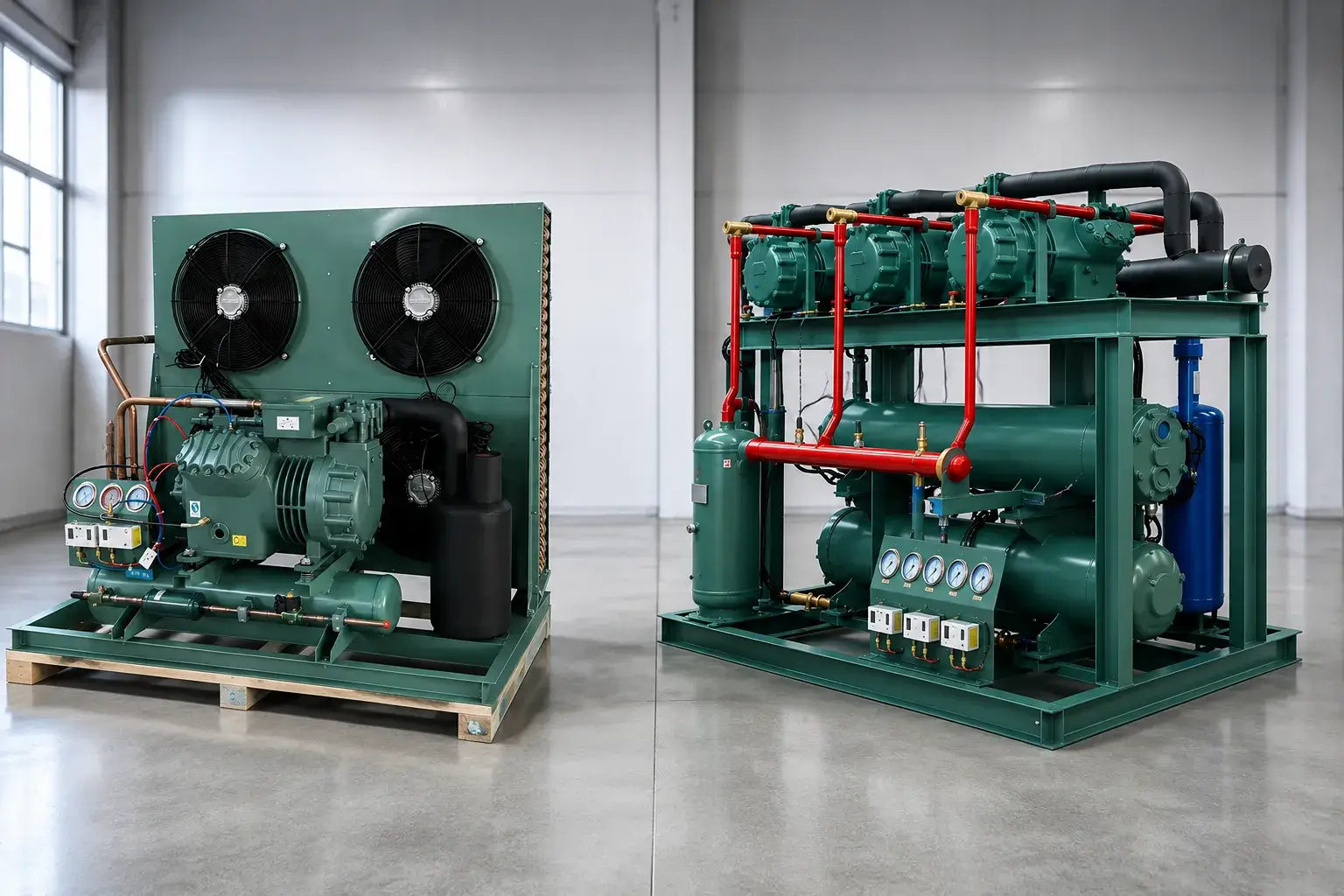
Selecting the appropriate refrigeration system depends on facility size, throughput, and operating requirements.
Small Beverage Facilities
Suitable solutions:
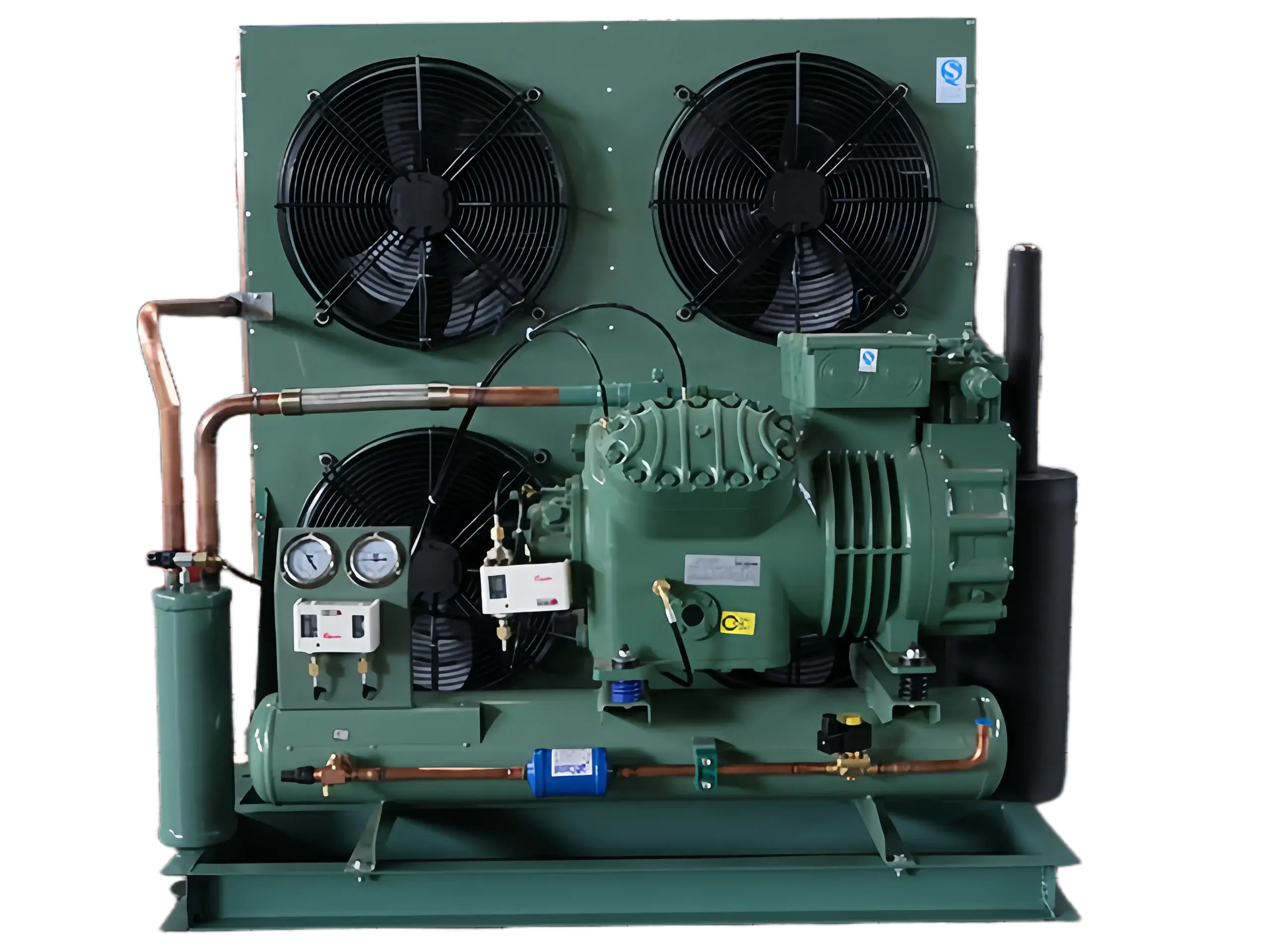
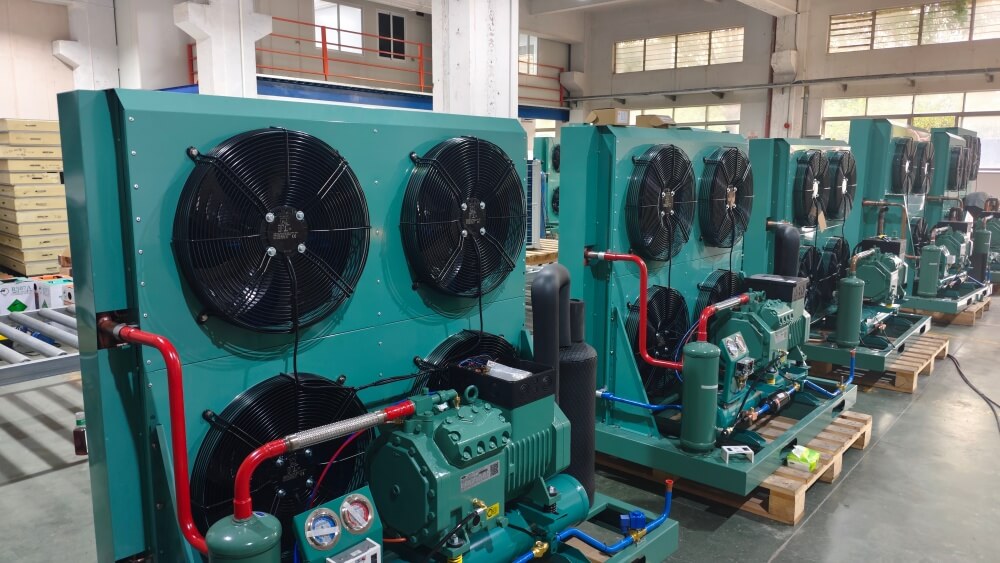
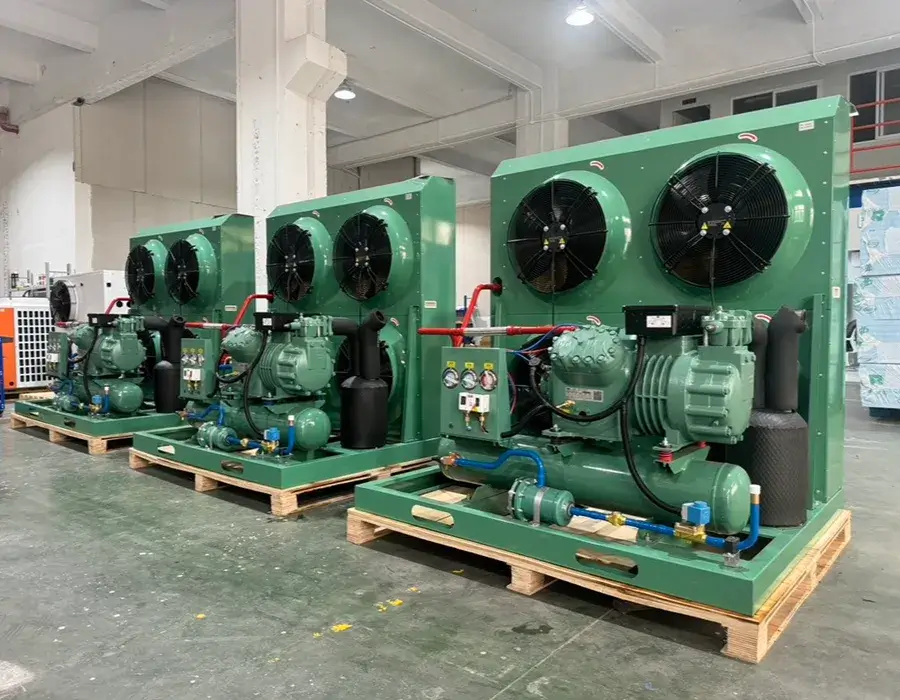
- Monoblock refrigeration units
- Split refrigeration systems
Advantages:
- Lower investment cost
- Faster installation
- Flexible expansion
Medium Beverage Processing Plants
Typical requirements:
- Multiple storage rooms
- Higher cooling loads
- Better temperature control
Common solution:
- Parallel compressor systems
Advantages:
- Improved efficiency
- Better reliability
- Scalable capacity
Large Beverage Distribution Centers
Large facilities often require:
- Centralized refrigeration plants
- Multi-temperature storage zones
- High-throughput operation
Advantages:
- Maximum energy efficiency
- Long-term operational stability
- Simplified facility management
Beverage Industry Applications
Cold-Pressed Juice Production
Typical requirements:
- 0°C–4°C storage
- Rapid cooling after filling
- High product turnover
Primary concern:
- Shelf-life preservation
Cold Brew Coffee Facilities
Typical requirements:
- Stable refrigeration
- Oxygen exposure control
- Consistent storage conditions
Primary concern:
- Aroma retention
Craft Beer Warehouses
Typical requirements:
- 2°C–6°C storage
- High inventory turnover
- Distribution support
Primary concern:
- Flavor consistency
Wine Distribution Centers
Typical requirements:
- 10°C–15°C temperature control
- Humidity management
- Long-term storage stability
Primary concern:
- Product aging quality
Common Beverage Cold Storage Mistakes
Focusing Only on Temperature
Many facilities monitor average temperatures while ignoring fluctuations.
In practice:
Temperature Stability > Temperature Setting
Using a Single Temperature Room
Different beverages have different storage requirements.
A single storage temperature often compromises product quality.
Ignoring Door Opening Frequency
Frequent door openings can cause:
- Heat infiltration
- Condensation
- Frost formation
- Energy waste
High-speed insulated doors and loading buffers help reduce these problems.
Lack of Real-Time Monitoring
Without continuous monitoring, temperature deviations may remain unnoticed until product quality has already been affected.
Modern facilities increasingly use:
- IoT sensors
- Cloud monitoring platforms
- Automated alarms
- Data logging systems
Frequently Asked Questions
What is the ideal temperature for beverage cold storage?
Most refrigerated beverages are stored between 0°C and 4°C. Beer, wine, and specialty beverages may require different temperature ranges.
Why is temperature stability important?
Repeated temperature fluctuations accelerate oxidation, flavor loss, and shelf-life reduction.
Can all beverages be stored in the same cold room?
Not always. Products such as wine, beer, juice, and coffee often require different storage conditions.
How can beverage manufacturers reduce product losses?
By combining proper refrigeration, packaging protection, temperature monitoring, and cold chain logistics management.
Beverage Cold Storage Solutions We Provide
We design and supply customized cold storage systems for beverage manufacturers, distributors, and logistics operators worldwide.
Our solutions support:
- Cold-Pressed Juice Facilities
- Cold Brew Coffee Production Plants
- Beverage Processing Factories
- Craft Breweries
- Wine Storage Facilities
- Beverage Distribution Centers
Our Services Include
- Beverage Cold Room Design
- Multi-Temperature Zone Planning
- Refrigeration System Selection
- Energy-Efficient Refrigeration Solutions
- Airflow & Humidity Optimization
- Cold Chain Logistics Planning
- Temperature Monitoring Systems
Discuss Your Beverage Cold Storage Project
Whether you are building a new beverage factory, expanding storage capacity, upgrading a brewery warehouse, or planning a beverage distribution center, selecting the right cold storage system is critical for product quality and long-term operational performance.
Share your beverage type, storage temperature requirements, production volume, and facility layout with our engineering team. We can help develop a customized cold room and refrigeration solution tailored to your operation.