Introduction
The demand for fresh, raw, frozen, and refrigerated pet food is growing as pet owners look for better nutrition and higher-quality products.
A properly designed pet food cold storage system helps maintain stable temperatures, extend shelf life, reduce product waste, and ensure safe distribution throughout the supply chain.
Compared with dry pet food, fresh and frozen products contain more moisture and natural ingredients, making them more sensitive to temperature changes. Reliable cold storage and refrigeration are essential to preserve product quality and safety.
From cold room design and refrigeration equipment to temperature monitoring and hygiene control, a complete pet food cold storage solution helps manufacturers, distributors, and retailers maintain product quality from production to delivery.
Why Pet Food Requires Professional Cold Storage Solutions
Pet food products have different storage requirements depending on their ingredients, processing methods, and target shelf life.
Fresh pet food and raw pet food are particularly sensitive because they contain:
- Fresh meat and animal proteins
- High moisture content
- Natural ingredients
- Limited preservatives
These characteristics make temperature control a critical factor throughout the supply chain.
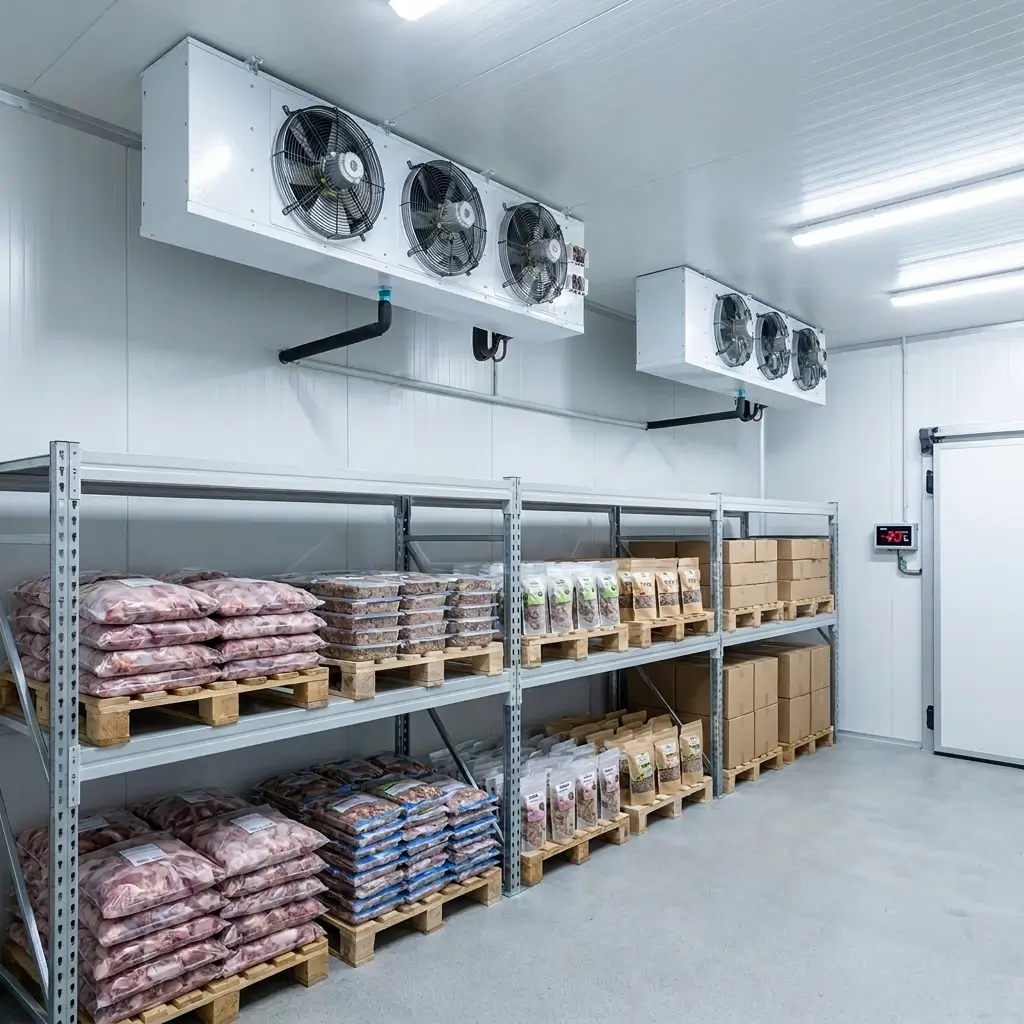
A professional pet food cold room provides a controlled environment where temperature, humidity, airflow, and sanitation conditions can be managed effectively.
The main objectives of pet food cold storage include:
- Maintaining product freshness
- Preventing microbial growth
- Preserving nutritional quality
- Extending product shelf life
- Supporting food safety compliance
For premium pet food brands, refrigeration is not only a storage requirement but also a key part of product quality assurance.
Pet Food Cold Storage Temperature Requirements
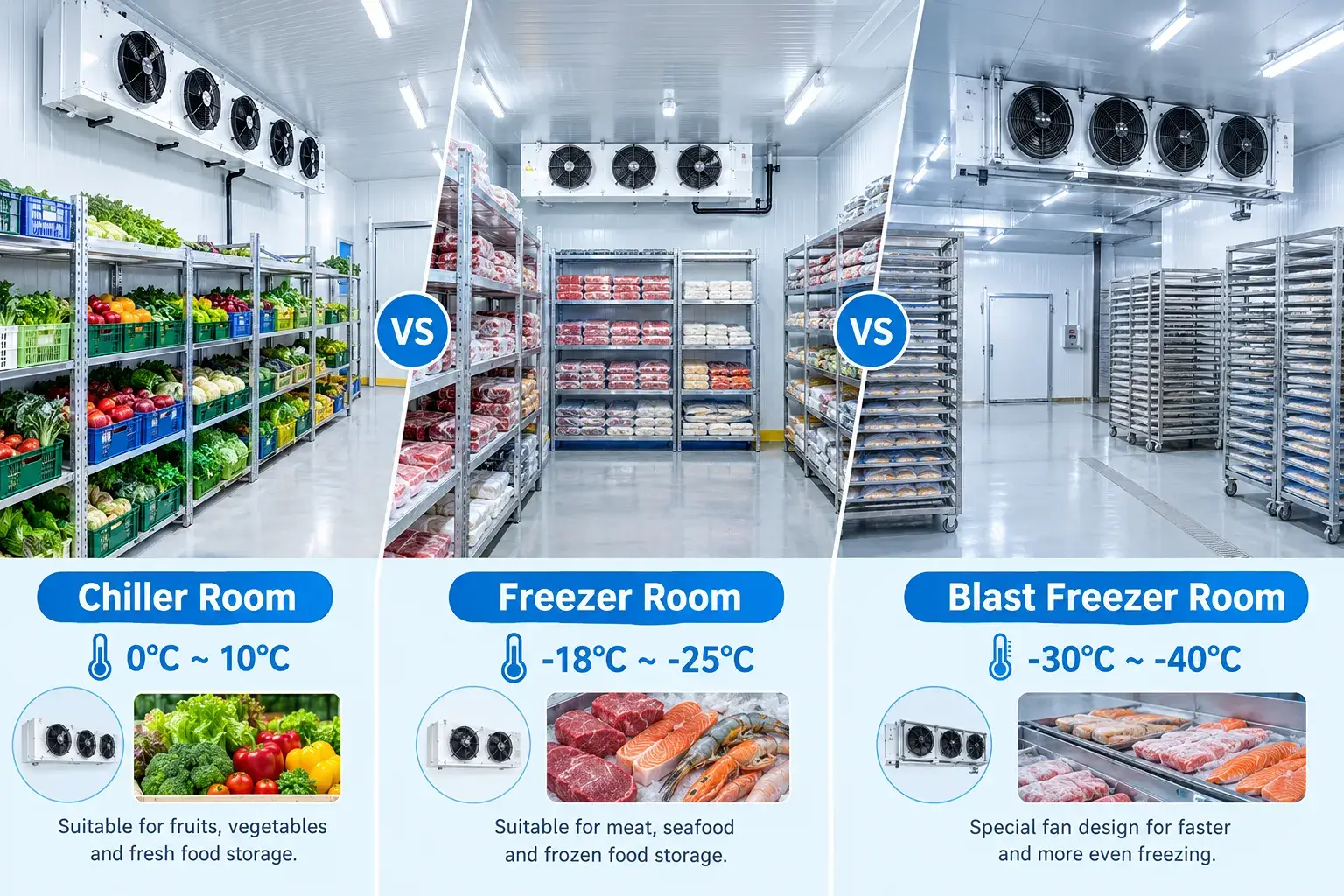
Different pet food categories require different temperature environments. Selecting the correct storage temperature is essential for maintaining quality and extending shelf life.
Pet Food Storage Temperature Requirements for Fresh and Frozen Products
| Product Type | Typical Applications | Recommended Temperature | Cold Room Design Considerations |
| Fresh Dog Food | Fresh meat-based dog food, vegetable-based formulas, and refrigerated pet meals | 0°C to 4°C | Precise temperature control, stable airflow, and reduced temperature fluctuations |
| Fresh Cat Food | High-protein refrigerated cat food products | 0°C to 4°C | Stable cooling environment to maintain freshness and product quality |
| Cooked Pet Meals | Ready-to-eat or cooked pet food requiring chilled storage | 0°C to 4°C | Rapid cooling capability and effective microbial growth control |
| Veterinary Diet Pet Food | Special nutrition products developed for specific health requirements | 0°C to 4°C | Strict temperature management and reliable monitoring systems |
| Frozen Raw Pet Food | Frozen raw diets, frozen meat ingredients, minimally processed pet food | -18°C to -25°C | High-performance refrigeration system, rapid cooling capacity, and stable low-temperature operation |
| Frozen Meat Formula Pet Food | Beef, chicken, fish, and other animal protein-based frozen products | -18°C to -25°C | Large-capacity storage design and reduced temperature fluctuations |
| Frozen Complete Pet Meals | Fully formulated frozen pet food products | -18°C to -25°C | Long-term storage capability and high-quality insulation system |
| Frozen Pet Treats | Frozen snacks and specialty pet food products | -18°C to -25°C | Flexible storage zoning and efficient inventory management |
Complete Pet Food Cold Chain System and Storage Solutions
A complete pet food cold chain covers every stage from raw material receiving to final product distribution. Each stage requires specific temperature-controlled solutions to maintain product quality, ensure food safety, and extend shelf life.
A professional pet food refrigeration system integrates cold storage rooms, cooling areas, blast freezing systems, temperature monitoring, and transportation solutions to maintain continuous temperature control throughout the supply chain.
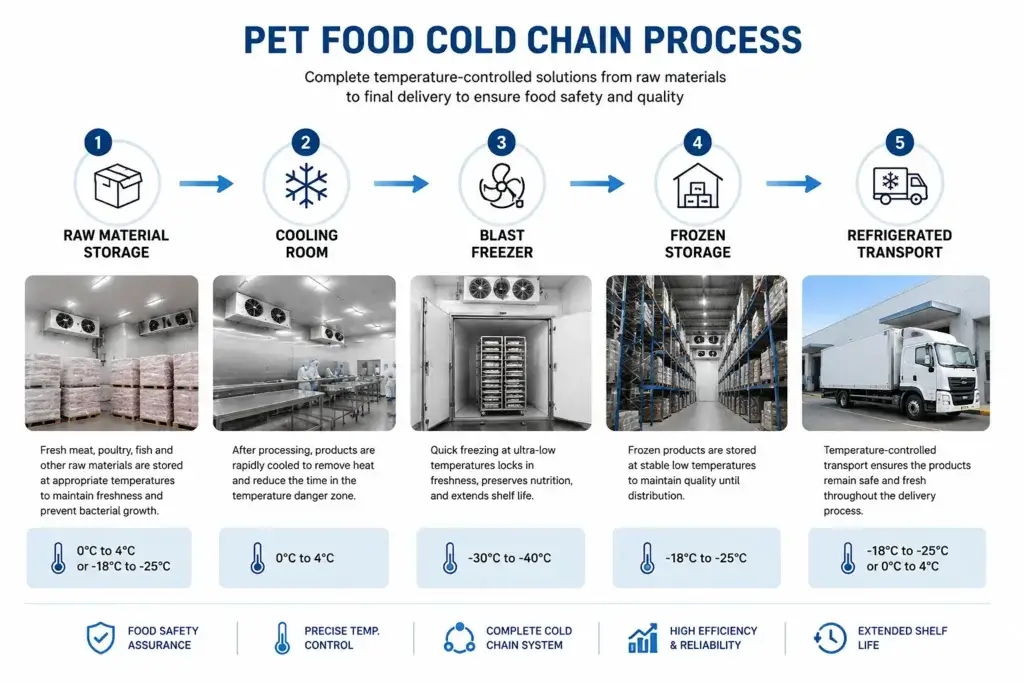
Pet Food Cold Chain Process
1.Raw Material Storage Solution
The cold chain begins when raw materials arrive at the production facility.
Common ingredients include:
- Beef
- Chicken
- Fish
- Poultry products
- Frozen meat ingredients
Depending on product requirements, manufacturers may use:
- Refrigerated storage rooms
- Frozen storage rooms
- Pre-cooling areas
For companies producing raw diets, effective raw pet food refrigeration is especially important because fresh meat ingredients require strict temperature control to reduce bacterial risks and maintain quality.
Key Design Requirements:
| Requirement | Purpose |
| Separate storage zones | Prevent cross-contamination between different ingredients |
| Easy-clean surfaces | Support hygiene management |
| Temperature monitoring | Maintain stable storage conditions |
| Efficient airflow circulation | Ensure uniform temperature distribution |
2.Processing Cooling and Pre-Freezing Solution
After preparation, pet food products usually require rapid cooling before packaging, freezing, or storage.
The purpose is to quickly remove product heat and reduce the time products remain in temperature ranges where bacteria can multiply.
Common solutions include:
- Cooling rooms
- Temperature-controlled processing areas
- Blast freezing rooms
Key Benefits:
| Benefit | Function |
| Improve food safety | Reduce bacterial growth risks |
| Maintain product texture | Protect product quality |
| Preserve nutritional value | Reduce quality loss |
| Prepare products for freezing | Improve freezing efficiency |
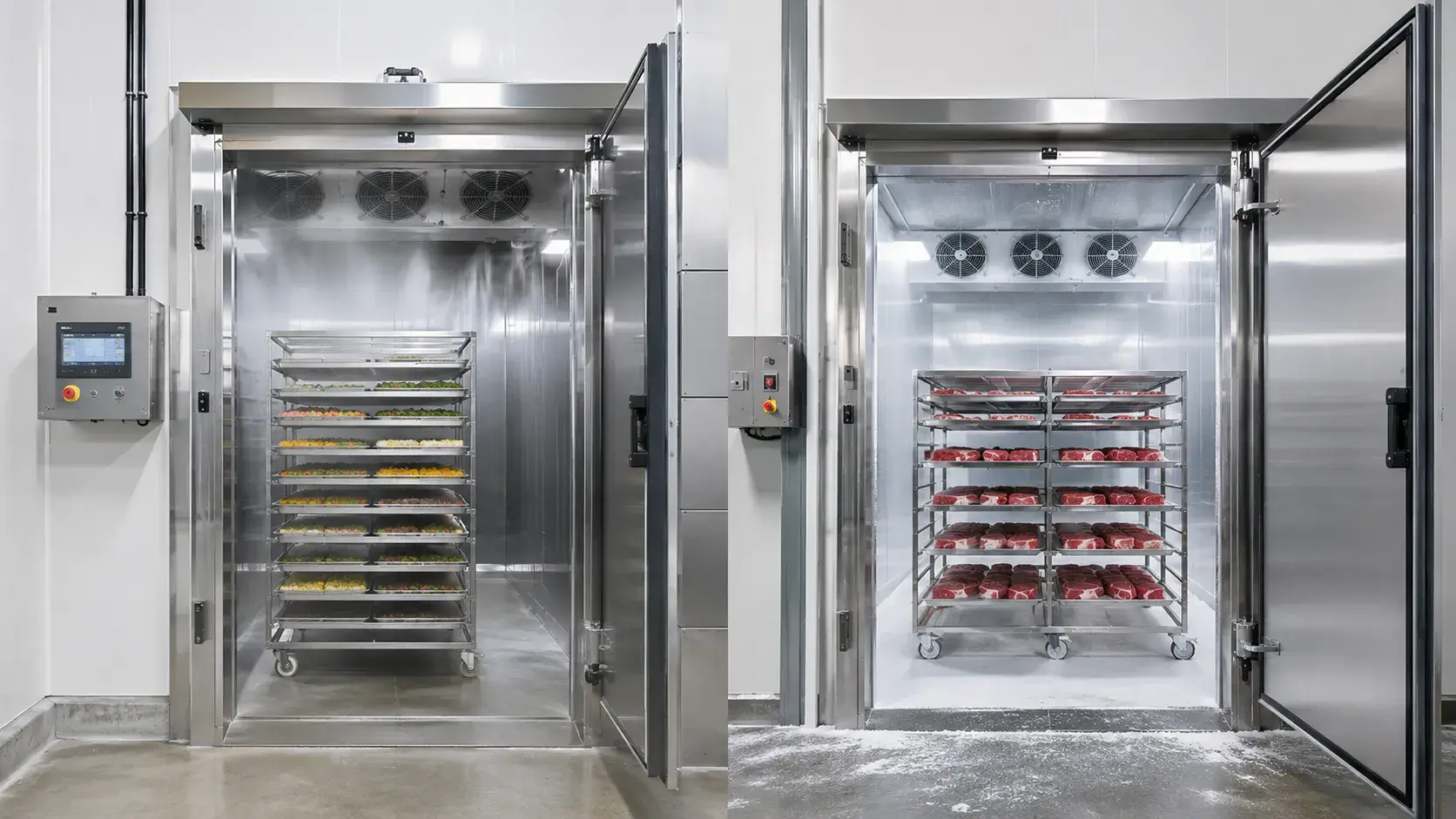
3.Blast Freezing Solution
Blast freezing is an important stage for frozen pet food production.
It is used for:
- Frozen raw diets
- Frozen complete meals
- Frozen pet treats
Recommended operating temperature:
-30°C to -40°C
Main advantages:
- Rapid temperature reduction
- Better product preservation
- Reduced ice crystal formation
- Improved frozen product quality
Blast freezing room design should consider:
- Product loading quantity
- Freezing time requirements
- Air circulation
- Refrigeration capacity
4.Finished Product Storage Solution
After processing and packaging, finished products require controlled storage before distribution.
Different products require different temperature zones.
| Product Type | Storage Solution | Temperature |
| Fresh pet food | Fresh pet food cold room | 0°C to 4°C |
| Refrigerated pet meals | Chilled storage room | 0°C to 4°C |
| Frozen raw pet food | Frozen pet food storage room | -18°C to -25°C |
| Frozen pet treats | Freezer storage room | -18°C to -25°C |
5.Pet Food Warehouse and Distribution Cold Storage Solution
As pet food companies expand their distribution networks, large-scale cold storage becomes increasingly important.
A pet food warehouse cold storage solution is designed for:
- Large inventory capacity
- Long-term storage
- Regional distribution
- Efficient order fulfillment
Typical applications include:
| Application | Storage Requirements |
| Pet food manufacturing plant | Raw material storage, processing cooling, finished product storage |
| Frozen pet food warehouse | Large-scale frozen storage, industrial refrigeration |
| Distribution center | Multiple temperature zones, fast loading and unloading |
| Retail storage | Compact cold storage solutions |
6.Temperature-Controlled Transportation
The final stage of the cold chain is transportation.
During delivery, temperature control must continue to prevent product quality deterioration.
Important considerations include:
- Refrigerated vehicles
- Temperature monitoring
- Loading procedures
- Delivery time management
A complete cold chain ensures products remain within required temperature ranges from production to customers.
Pet Food Refrigeration System Design
A reliable pet food refrigeration system is not only about selecting refrigeration equipment. It requires a complete engineering approach based on product characteristics, storage capacity, operating conditions, and energy efficiency requirements.
A properly designed system should maintain stable temperatures while reducing operating costs and ensuring long-term reliability.
The main factors considered during refrigeration system design include:
- Product type
- Required storage temperature
- Cold room volume
- Daily product loading capacity
- Door opening frequency
- Local climate conditions
- Energy consumption targets
Selecting the Right Refrigeration Equipment
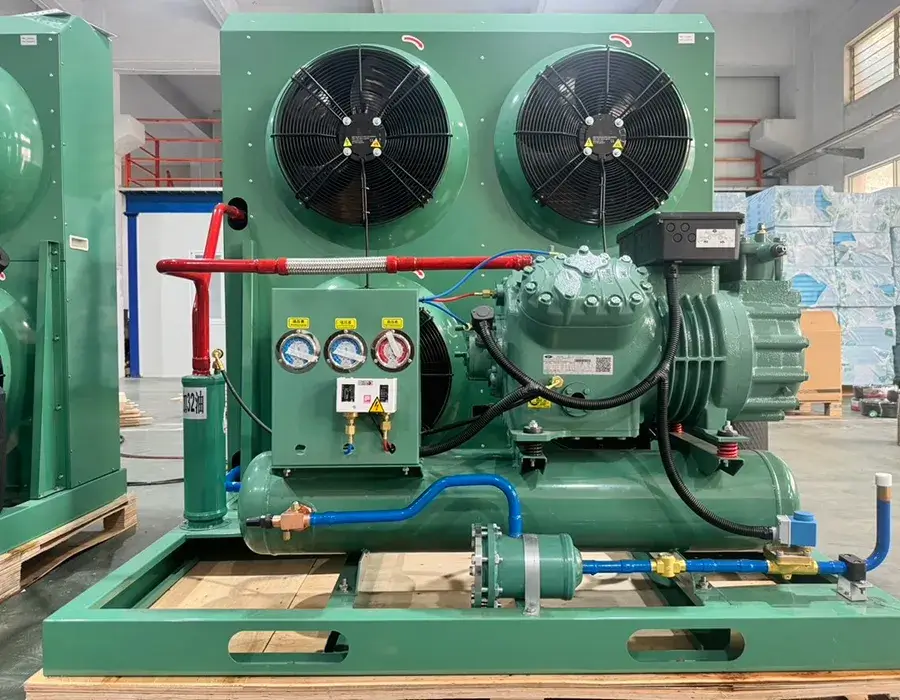
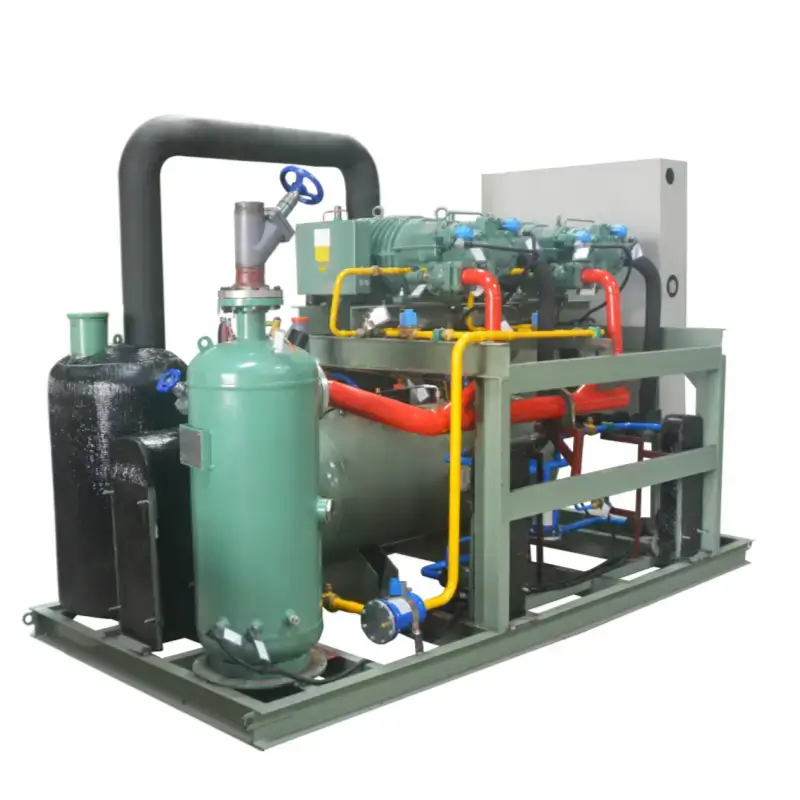
The refrigeration system is the core component of any pet food cold storage facility.
A complete system usually includes:
- Compressors
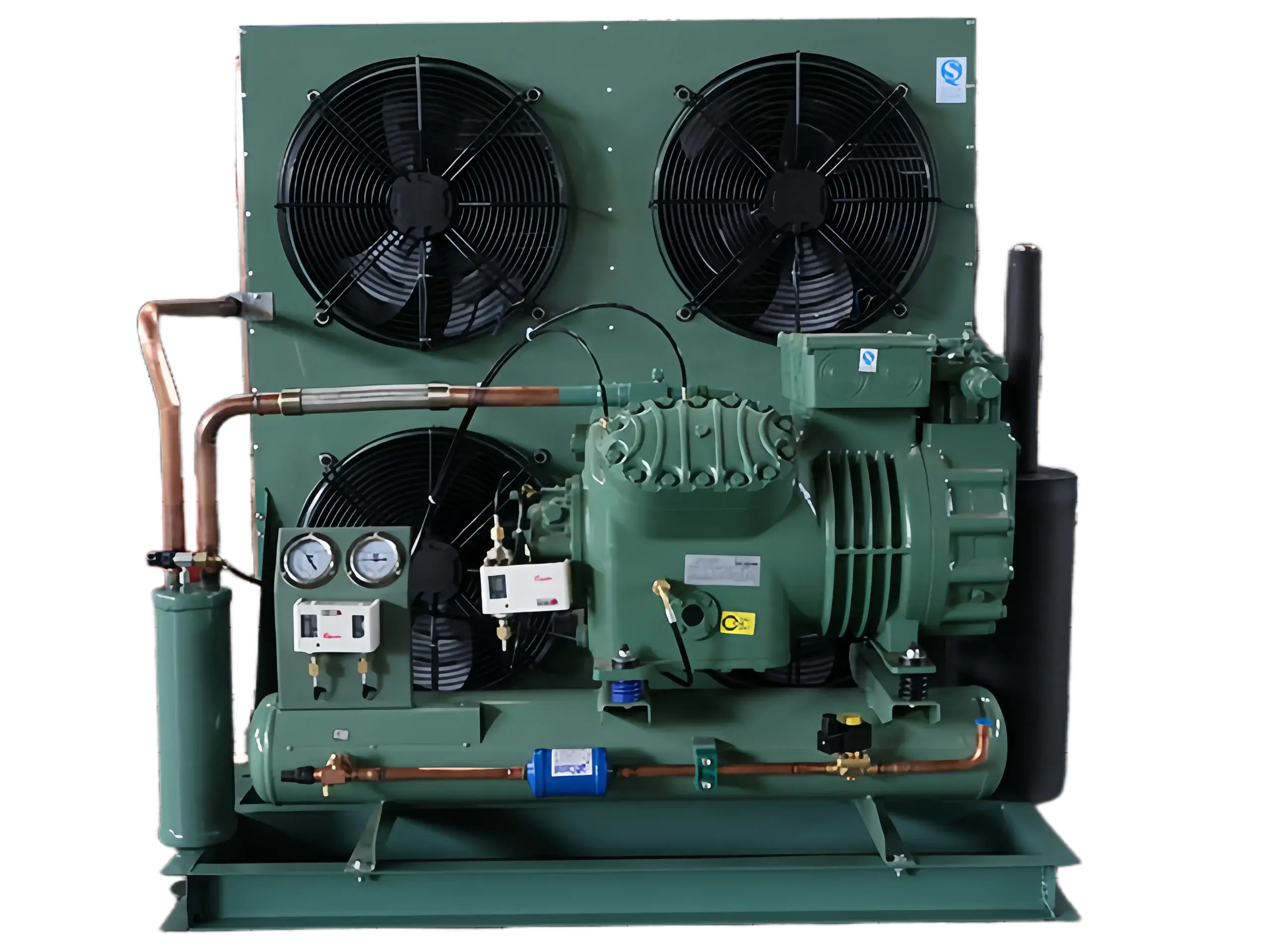
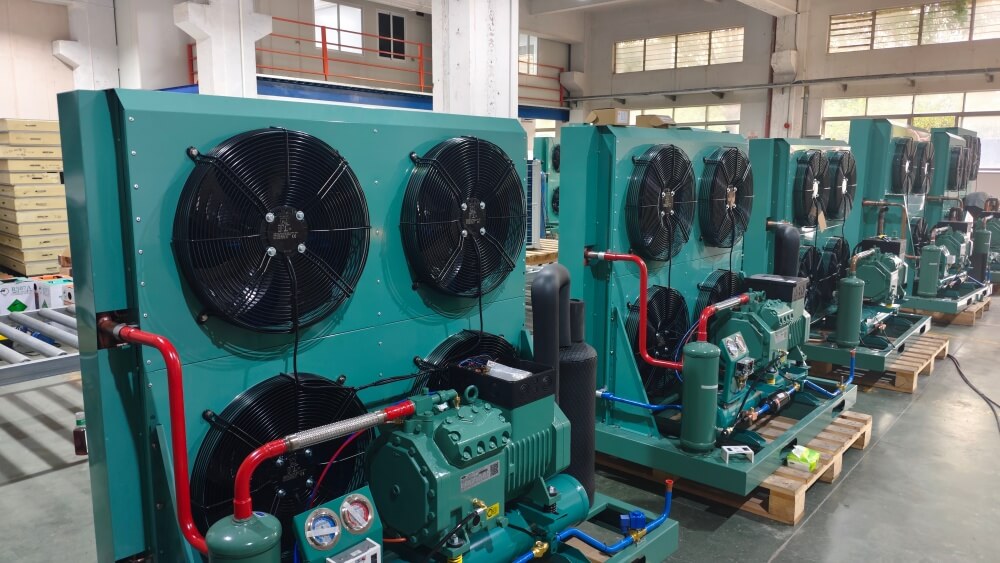
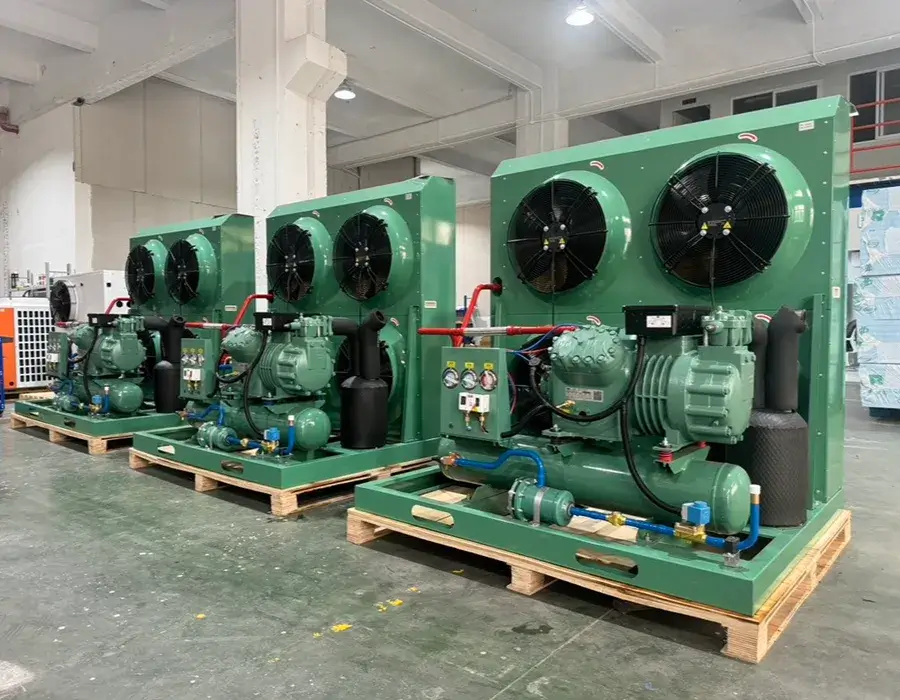
- Condensing units
- Evaporators
- Refrigeration controllers
- Electrical control systems
Different applications require different refrigeration configurations.
For example:
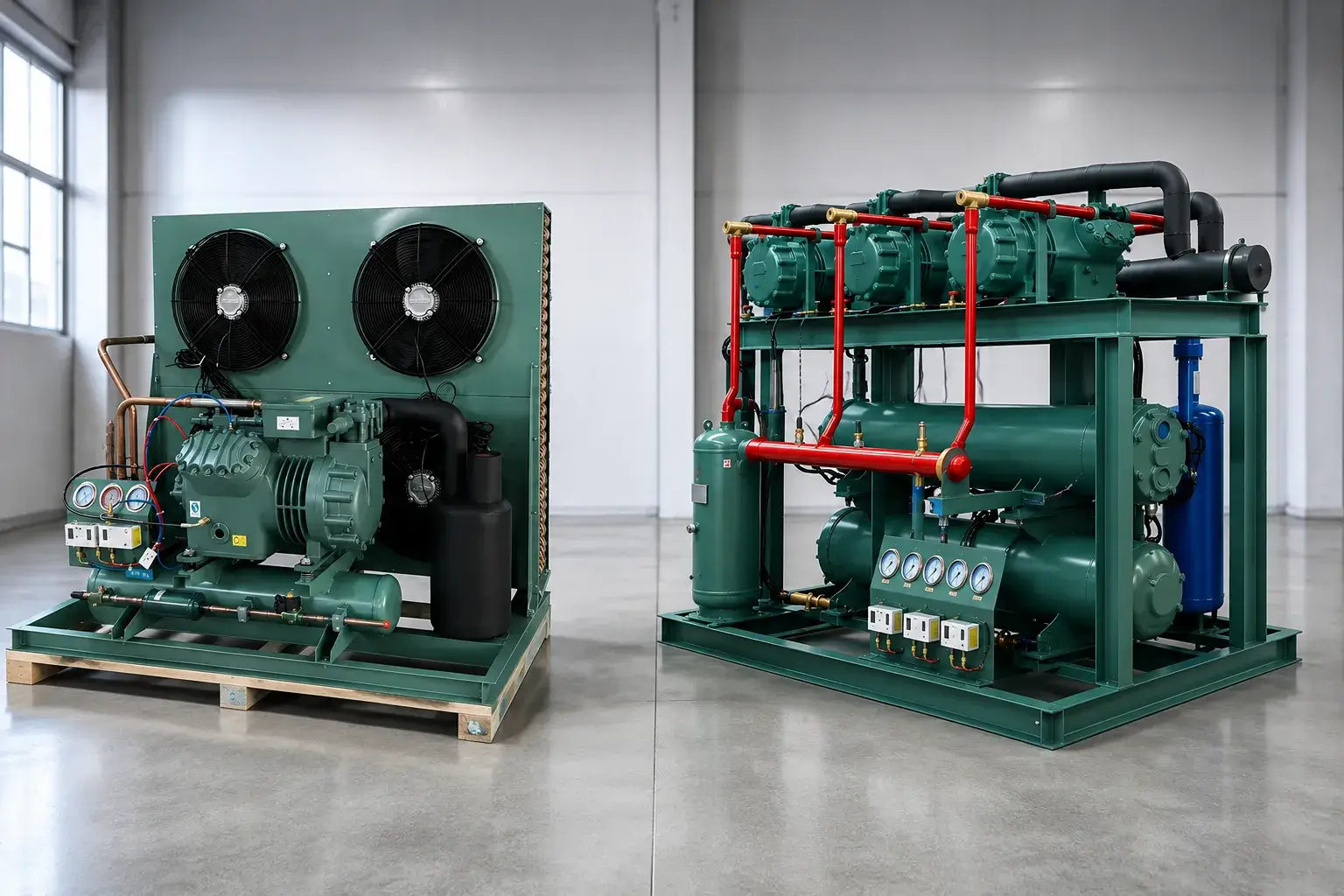
A small pet food storage room may use a compact condensing unit, while a large frozen pet food warehouse may require industrial refrigeration equipment with higher capacity and multiple compressors.
Equipment selection should consider:
Cooling Capacity
The refrigeration capacity must match:
- Room size
- Product heat load
- Pull-down requirements
- Operating conditions
An undersized system may struggle to maintain temperature, while an oversized system may increase unnecessary energy consumption.
Temperature Stability
Frozen pet food storage requires stable low temperatures.
The system should be capable of maintaining:
- Consistent cooling performance
- Uniform temperature distribution
- Reliable operation during peak loads
Energy Efficiency
Since cold storage facilities operate continuously, energy efficiency has a direct impact on operating costs.
Energy-saving solutions may include:
- High-efficiency compressors
- Variable capacity control
- Optimized evaporator operation
- Intelligent temperature management
Cold Room Structure and Insulation Design
The performance of a pet food cold room depends not only on refrigeration equipment but also on the quality of the cold room structure.
A well-designed cold room should minimize heat transfer and prevent external conditions from affecting internal temperatures.
Important design elements include:
Insulation Panels
Common insulation materials include:
- PU sandwich panels
- PIR sandwich panels
- Food-grade insulated panels
High-quality insulation helps:
- Reduce cooling losses
- Improve energy efficiency
- Maintain stable temperatures
- Reduce compressor workload
Cold Room Doors
Cold room doors are one of the main areas where heat enters the storage environment.
Proper door design should include:
- Good sealing performance
- Durable materials
- Anti-condensation features
- Suitable opening frequency design
For warehouses with frequent loading operations, high-speed doors or air curtains may help reduce cold air loss.
Floor Insulation
For low-temperature freezer rooms, floor insulation is especially important.
A proper floor system helps prevent:
- Heat infiltration
- Frost formation
- Structural damage
This is particularly important for large frozen pet food warehouses operating at temperatures below -18°C.
Hygiene and Food Safety Requirements for Pet Food Cold Rooms
Refrigeration performance alone is not enough to ensure safe pet food storage.
Cold room design must also consider hygiene, sanitation, and contamination prevention.
Cold Room Zoning and Cross-Contamination Prevention
A professional pet food facility should separate different operational areas.
Recommended zones include:
| Cold Room Zone | Main Use | Examples |
| Raw Material Area | Store incoming ingredients | Meat ingredients, frozen materials, incoming products |
| Processing Area | Support production processes | Preparation, mixing, cooling |
| Finished Product Area | Store completed products | Packaged products, ready-to-distribute goods |
| Shipping Area | Prepare products for delivery | Order preparation, transportation connection |
Food-Grade Materials and Sanitary Design
Cold rooms used for pet food should use materials suitable for food-related environments.
Important requirements include:
- Easy-to-clean surfaces
- Moisture resistance
- Corrosion resistance
- Hygienic construction
Common solutions include:
- Food-grade insulated panels
- Stainless steel components
- Smooth interior surfaces
A sanitary design reduces cleaning difficulty and supports long-term operation.
HACCP and Traceability Management
Many pet food manufacturers follow international food safety management systems, including:
- HACCP
- ISO 22000
- FSMA requirements
Cold chain records are important because they provide evidence of:
- Temperature control
- Product safety
- Storage conditions
- Transportation history
A complete temperature monitoring system supports quality audits and product traceability.
Smart Technology for Modern Pet Food Cold Chain Management
Digital technology is becoming increasingly important in modern refrigeration systems.
IoT Temperature Monitoring
Smart monitoring systems allow operators to check conditions remotely.
Functions include:
- Real-time temperature monitoring
- Data storage
- Remote access
- Abnormal condition detection
This allows companies to respond quickly before temperature problems affect products.
Automated Alarm and Data Management
Advanced systems can automatically send alerts when:
- Temperature exceeds limits
- Refrigeration equipment fails
- Power interruptions occur
Frequently Asked Questions
What temperature should refrigerated pet food be stored at?
Refrigerated pet food is typically stored at 0°C to 4°C to maintain freshness, control microbial growth, and preserve product quality. The exact storage temperature may vary depending on the product type, ingredients, and processing methods.
Why is cold chain important for raw pet food?
Cold chain is essential for raw pet food because it helps prevent harmful bacteria growth, reduce contamination risks, and maintain product safety and nutritional value. A reliable raw pet food refrigeration system ensures stable temperature control throughout storage and transportation while supporting food safety requirements such as HACCP.
How long can frozen pet food be stored safely?
Frozen pet food can generally be stored safely for several months at -18°C or below, depending on the product formulation, packaging quality, and storage conditions. Maintaining stable freezing temperatures helps extend shelf life while preserving product quality.
What temperature is required for frozen pet food storage?
Frozen pet food is commonly stored at -18°C to -25°C. Stable low-temperature conditions help prevent quality deterioration, reduce freezer burn, and maintain the nutritional value of frozen products during long-term storage.
What should be considered when designing a pet food cold room?
A professional pet food cold room should consider factors including product characteristics, storage capacity, temperature requirements, refrigeration system selection, insulation performance, hygiene standards, and temperature monitoring. Customized cold room design ensures reliable operation, energy efficiency, and consistent cold chain performance.
What makes cold chain a competitive advantage?
A reliable pet food refrigeration system helps companies maintain consistent product quality, improve food safety, and extend shelf life. An efficient cold chain also supports premium product positioning, strengthens brand trust, and provides a competitive advantage in the growing pet food market.
How much does a pet food cold storage room cost?
Cost depends on: Storage capacity Temperature requirements Insulation thickness Refrigeration system Installation conditions
How large should a pet food cold storage room be?
Depends on: Daily production Inventory requirements Distribution model
Why Choose Icepoint for Pet Food Cold Storage Solutions
Icepoint provides customized pet food cold storage solutions for manufacturers, warehouses, and distribution companies worldwide.
Our solutions include:
- Cold room design
- Refrigeration system selection
- Equipment supply
- Temperature monitoring
- Technical support
We design reliable solutions for:
- Fresh pet food cold rooms
- Frozen pet food storage facilities
- Raw pet food refrigeration systems
- Pet food warehouse cold storage
With professional engineering and customized design, Icepoint helps customers improve cold chain efficiency, reduce operating costs, and maintain stable product quality.
Contact Icepoint for a customized pet food cold storage solution designed for your production, storage, and distribution needs.